Tooth Anatomy: Complete Guide To Parts, Tissues, And Care
Understanding teeth anatomy: from enamel to roots and their vital functions.
Understanding Teeth: Anatomy and Structure
Teeth are complex biological structures essential for chewing, speaking, and maintaining overall oral health. Each tooth is a carefully organized system of different tissues working together to perform vital functions. Understanding the anatomy of your teeth helps you better appreciate the importance of proper dental care and recognize when something might need professional attention.
Main Parts of a Tooth
A tooth consists of several distinct parts, each with specific functions and characteristics. These components work together to create a strong, durable structure that can withstand the forces of everyday chewing and last a lifetime with proper care.
The Crown
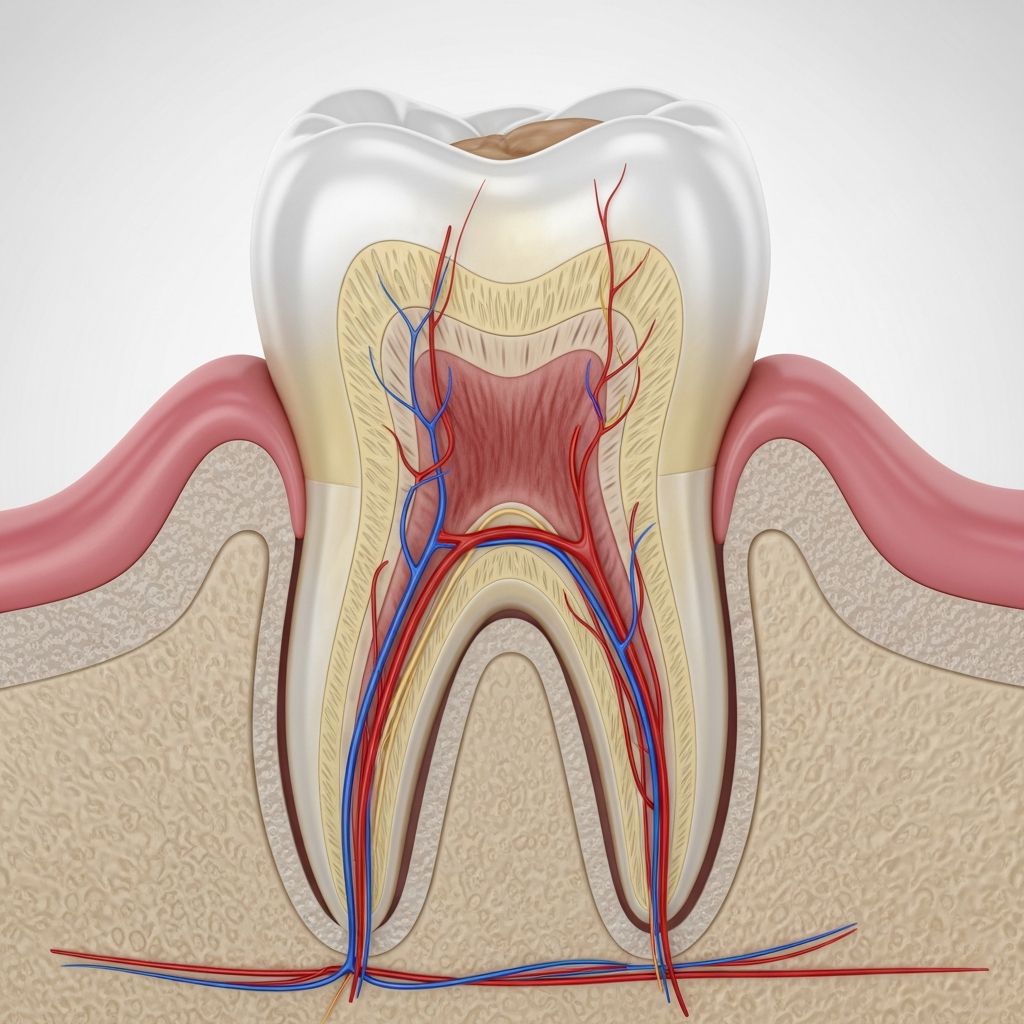
The crown is the visible portion of your tooth that extends above the gumline, also called the gingiva. This is the part you see when you smile or look in the mirror. The crown is covered by a hard, crystalline substance called enamel, which protects the interior structures of the tooth. The crown serves as the functional part of the tooth used for biting and chewing food.
The Root
The root is the portion of the tooth that extends below the gumline into the jawbone. It anchors the tooth securely in place and is not visible in a healthy mouth. The root is covered by cementum, a bonelike substance that helps attach the tooth to the jawbone through the periodontal ligament. Most teeth have one or more roots, depending on their type and location in the mouth.
The Pulp
At the center of your tooth lies the pulp, a jelly-like substance containing nerves, blood vessels, and connective tissue. The pulp chamber is located in the crown, while root canals extend through the roots. These structures provide nutrients to the tooth and give it sensation. The pulp is what keeps your tooth alive by supplying vital nutrients and allowing you to feel temperature, pressure, and pain.
Tooth Tissue Layers
Your teeth are composed of different tissue layers, each serving a specific protective and functional purpose. Understanding these layers helps explain why tooth sensitivity occurs and why dental problems can develop.
Enamel: The Hardest Substance
Tooth enamel is the outermost layer of your tooth and the hardest substance in the entire human body. This remarkable tissue is composed of approximately 95% minerals, primarily calcium and phosphorus, which bond together to form ultra-strong crystalline structures. Enamel is a translucent, crystalline substance that protects the underlying dentin and pulp from decay, temperature extremes, and physical damage. Although incredibly hard, enamel is not living tissue and cannot repair itself once damaged. This is why protecting your enamel through proper oral hygiene and dietary habits is so important.
Dentin: The Support Layer
Underneath the enamel lies dentin, a yellowish substance that makes up the bulk of your tooth structure. Unlike enamel, dentin contains organic material, ground substance, and nerve fibers, making it somewhat softer and more susceptible to decay. Dentin is honeycombed with tiny tubules that radiate from the pulp chamber to the outer surface. These tubules contain fluid and nerve extensions, which is why exposed dentin causes tooth sensitivity. When you feel sharp pain from hot, cold, or sweet foods, it’s often because these tubules have been exposed through enamel erosion or gum recession.
Cementum: The Root Covering
Related Stories



The root of your tooth is covered with cementum, a specialized bone-like tissue that differs slightly from enamel. Cementum is softer than enamel and covers the root from the point where it emerges from the crown to the tip of the root. This tissue helps anchor the tooth to the periodontal ligament and jawbone, and it plays a crucial role in keeping teeth secure.
Supporting Structures
Teeth don’t exist in isolation; they’re supported by a network of surrounding tissues that keep them anchored and healthy.
The Periodontal Ligament
The periodontal ligament is a network of elastic connective tissue fibers that connect the cementum of the root to the alveolar bone of the jaw. This ligament serves two critical functions: it acts as an attachment apparatus that holds the tooth firmly in place, and it functions as a shock absorber that distributes the forces of chewing throughout the jawbone. Without this ligament, your teeth would either fall out or become damaged from the pressure of normal chewing.
The Gingiva (Gums)
The gingiva, commonly called gums, is the pink tissue that surrounds your teeth above and below the gumline. Healthy gums form a tight seal around each tooth, protecting the underlying bone and periodontal ligament from bacteria and food particles. The gums consist of two main parts: the attached gingivae, which is firmly bound to the underlying bone, and the marginal gingivae, which forms the gum line visible between your teeth and gums.
The Alveolar Bone
The alveolar bone is the portion of the jawbone that holds and supports your teeth. This bone is living tissue that constantly remodels itself in response to the forces placed upon it. When teeth are lost, this bone begins to deteriorate because it no longer receives the stimulation it needs to maintain its structure.
Tooth Development and Formation
The development of teeth is a complex biological process that begins before birth and continues into adulthood. Understanding how teeth form helps explain why some dental problems occur and why early dental care is important.
How Teeth Are Formed
Enamel is formed by specialized cells called ameloblasts, while dentin is produced by cells called odontoblasts. During tooth development, enamel grows outward from the junction between enamel and dentin, while dentin grows inward toward the pulp chamber. The pulp is formed from nerves and blood vessels in the developing jawbone. As the crown develops, the root begins to form and lengthens as the tooth continues to develop. After the crown is fully formed, ameloblasts rest on the outer surface of the enamel, while odontoblasts line the internal cavity of the pulp chamber.
Types of Teeth and Their Functions
Adult humans typically have 32 teeth divided into four categories, each designed for specific functions.
Incisors
Incisors are the eight front teeth (four on top and four on bottom) designed for cutting and biting into food. They have a single root and a sharp, blade-like edge.
Canines
Canines are the pointed teeth located next to the incisors. There are four canines (one in each quadrant of your mouth), and they’re designed for tearing and gripping food.
Premolars
Premolars, also called bicuspids, have two cusps (pointed ridges) and are designed for crushing and tearing food. Adults typically have eight premolars.
Molars and Wisdom Teeth
Molars are the largest teeth with multiple cusps designed for grinding and crushing food. Most adults have 12 molars, including four wisdom teeth. Wisdom teeth are your last set of adult teeth to erupt and are located at the very back of your mouth, one in each quadrant. Most wisdom teeth have two to three roots, though some can have four. The roots of wisdom teeth vary considerably from person to person, often fusing together to form one cone-shaped root or curling and splaying in different directions.
Wisdom Teeth: Special Considerations
Wisdom teeth, also called third molars, deserve special attention because they often cause problems and may need to be removed.
Why Wisdom Teeth Are Problematic
In the course of human evolution, our jaws have become shorter, but the number of teeth has remained the same. As a result, wisdom teeth are the last to develop and often don’t have adequate space in the jaw to erupt normally. They may grow at irregular angles or become impacted, meaning they become stuck against adjacent teeth and cannot erupt properly. In about 8 out of 10 people, at least one wisdom tooth doesn’t come in at all, which is considered a normal variation.
Impacted Wisdom Teeth
When wisdom teeth lock and push against the second molars and are unable to erupt normally, the condition is called impaction. Impacted wisdom teeth can cause pain, swelling, infection, and damage to adjacent teeth. In many cases, impacted wisdom teeth must be removed by a dental professional.
Frequently Asked Questions
Q: What is the hardest part of a tooth?
A: Tooth enamel is the hardest substance in the human body. It protects the inner layers of your tooth from decay and damage, though it cannot repair itself once damaged.
Q: Why do teeth become sensitive?
A: Tooth sensitivity occurs when the protective enamel layer wears away or when gums recede, exposing the dentin underneath. The tiny tubules in dentin contain nerve extensions that trigger pain when exposed to hot, cold, sweet, or acidic stimuli.
Q: Can a tooth grow back after it falls out?
A: Adult teeth cannot regenerate once lost. This is why preventing tooth loss through proper oral hygiene, regular dental checkups, and protective measures is so important. If a tooth is lost, replacement options include dental implants, bridges, or dentures.
Q: What happens if the pulp becomes exposed?
A: If tooth pulp becomes exposed through decay, cracks, or trauma, it can become infected. Exposed pulp requires professional treatment, which may include a pulpotomy, pulpectomy, or root canal therapy to save the tooth and prevent the infection from spreading.
Q: How many teeth should adults have?
A: Most adults have 32 permanent teeth, including four wisdom teeth. However, not everyone develops wisdom teeth, and some people have them removed, which is a normal variation.
Q: What causes wisdom teeth problems?
A: Due to evolutionary changes that shortened our jaws, wisdom teeth often don’t have enough room to erupt properly. This can cause impaction, pain, infection, and damage to adjacent teeth, sometimes requiring extraction.
The Importance of Protecting Your Teeth
Understanding the complex anatomy of your teeth underscores why proper dental care is essential. Each component of your tooth serves a vital function, and damage to any part can compromise the entire structure. By maintaining good oral hygiene, visiting your dentist regularly, protecting your enamel from erosion, and addressing dental problems promptly, you can keep your teeth healthy and functional throughout your lifetime.
References
- Teeth — EBSCO Research Starters Health and Medicine. 2024. https://www.ebsco.com/research-starters/health-and-medicine/teeth
- Wisdom Teeth: Function & Location — Cleveland Clinic. 2024. https://my.clevelandclinic.org/health/body/23223-wisdom-teeth
- Tooth Enamel: What It Is, Function & Care — Cleveland Clinic. 2024. https://my.clevelandclinic.org/health/body/24798-tooth-enamel
- What Is Tooth Pulp? — Cleveland Clinic. 2024. https://my.clevelandclinic.org/health/body/24659-tooth-pulp
- What Are Gums (Gingivae)? — Cleveland Clinic. 2024. https://my.clevelandclinic.org/health/body/24972-gums
Similar Articles








Read full bio of Sneha Tete