Teeth Whitening: Professional Treatment & At-Home Options
Explore professional and at-home teeth whitening methods to achieve a brighter smile safely and effectively.
Understanding Teeth Whitening
Teeth whitening is a cosmetic dental procedure designed to lighten the color of your teeth and remove surface stains. This popular treatment can significantly enhance your smile and boost your confidence. Whether you choose professional treatment at a dentist’s office or opt for at-home solutions, understanding the various whitening methods available will help you make an informed decision about which option best suits your needs, lifestyle, and budget.
The effectiveness of teeth whitening depends on several factors, including the natural color of your teeth, the type of stains present, and the whitening method chosen. Most people can achieve visible results, though the degree of whitening varies from person to person.
Professional In-Office Teeth Whitening
Professional teeth whitening performed by a dentist is one of the most effective and fastest ways to achieve noticeably whiter teeth. This treatment uses a bleaching solution that is significantly stronger than over-the-counter products, allowing for more dramatic and immediate results.
How Professional Whitening Works
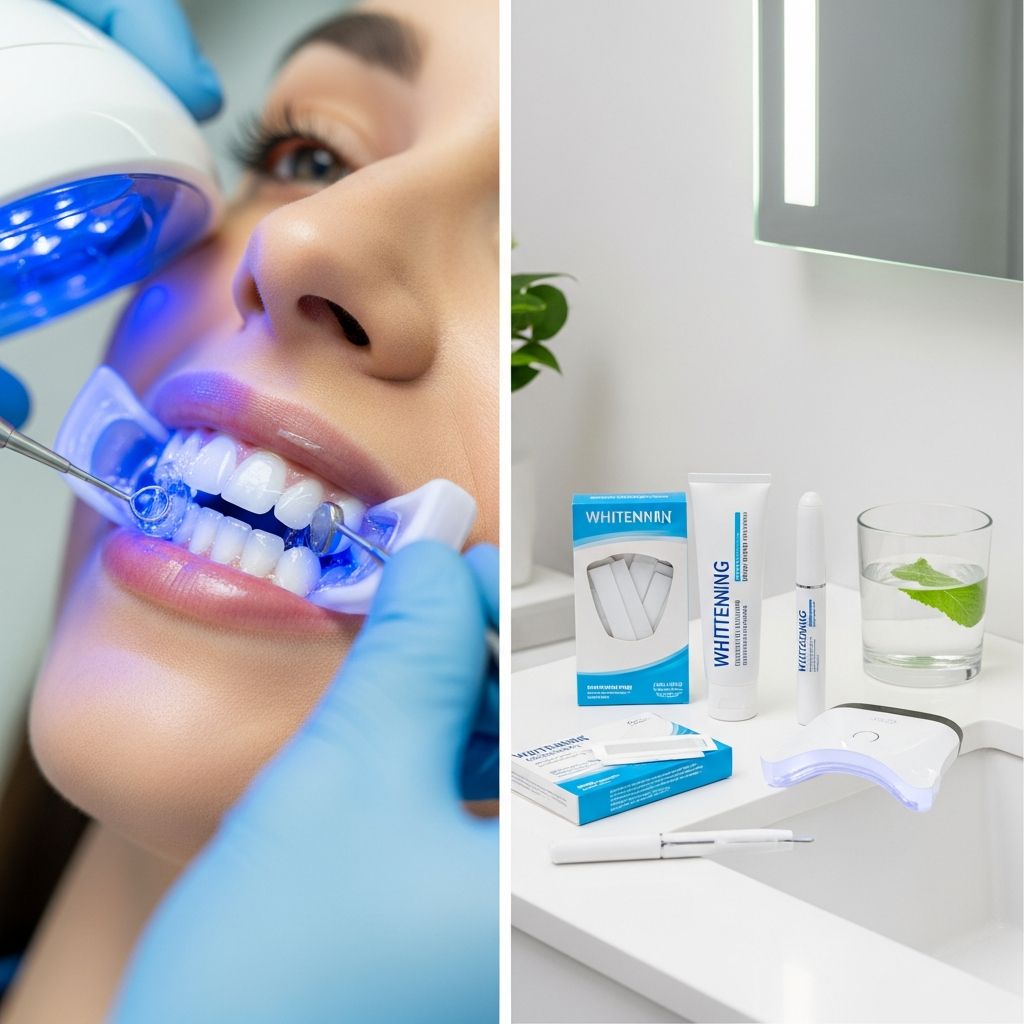
During an in-office whitening procedure, your dentist begins with a thorough cleaning to remove plaque and tartar buildup. A protective barrier is then applied to your gums to prevent irritation from the bleaching agent. The dentist carefully applies the whitening gel directly to the surface of each tooth and may use a special light or heat to activate and enhance the whitening process. This combination of professional-grade bleach, proper application, and activation techniques allows for superior results compared to at-home methods.
Results and Duration
Professional in-office whitening typically produces dramatic results, with teeth generally becoming three to eight shades brighter. Some advanced techniques, such as the Zoom whitening system, can achieve results of up to 10 shades whiter in a single visit. Most in-office treatments require 30 to 60 minutes per session, though some comprehensive systems can be completed in a single 2-hour appointment. Results from professional whitening can last several months to over a year with proper maintenance.
Cost Considerations
Professional in-office teeth whitening typically ranges from $500 to $1,000 per treatment, depending on the specific procedure and your location. While this represents a significant investment compared to at-home options, many patients find the faster results and professional supervision justify the expense. It’s important to note that most dental insurance plans do not cover cosmetic whitening treatments.
At-Home Teeth Whitening Options
For those seeking more affordable alternatives or preferring to whiten their teeth at home, several effective options are available. These range from professional-grade custom trays to over-the-counter products.
Custom Professional Trays
Your dentist can create custom-fitted whitening trays made specifically for your teeth. These trays are designed to fit perfectly over your teeth for comfortable use and optimal coverage. Your dentist will provide professional-grade whitening gel for use with these trays, typically requiring application for one and a half to three hours daily or overnight. Custom trays offer better results than generic options because they ensure even gel distribution and maximum contact with tooth surfaces. Treatment duration typically ranges from several days to two weeks, depending on the concentration of the whitening agent and your desired results.
Related Stories



Over-the-Counter Whitening Products
Several effective whitening products are available without a prescription. Whitening strips and gels contain peroxide-based bleaching agents and are applied directly to teeth using a brush or thin strip. Most require application once or twice daily for 10 to 14 days and can lighten teeth by one to two shades. Results typically last four or more months with proper maintenance.
Whitening rinses contain hydrogen peroxide and are used twice daily for 60 seconds each time. These products provide modest whitening benefits and are less effective than other methods due to the brief contact time between the whitening agent and tooth surfaces. Whitening chewing gums help prevent new stains from forming after consuming staining substances like coffee, tea, or tobacco but provide minimal active whitening benefits.
Natural Whitening Approaches
While professional treatments are most effective, several natural practices can help your teeth appear cleaner and whiter. Brushing with whitening toothpaste containing baking soda or fluoride twice daily removes surface stains. Regular flossing prevents plaque buildup between teeth where stains can develop. Drinking fluoridated water strengthens enamel and supports overall oral health. These methods work best as preventive measures to maintain existing whiteness rather than as standalone whitening treatments.
Important Safety Considerations
Potential Side Effects
Teeth whitening is generally safe when performed by qualified dental professionals or when using approved products as directed. However, some individuals may experience temporary tooth sensitivity or mild gum irritation. Sensitivity typically occurs because whitening solutions can temporarily dehydrate teeth and affect the protective enamel layer. Your dentist can recommend appropriate treatments or adjust whitening strength to minimize these effects.
It’s crucial to follow manufacturer instructions carefully and use only products labeled as approved by the American Dental Association. Improper use of whitening products, especially high-concentration bleaching agents left on teeth too long, can cause enamel damage and increased sensitivity.
Who Should Not Whiten Their Teeth
Certain individuals should avoid whitening treatments or consult their dentist first. People with untreated gum disease, cavities, or other oral health issues should address these conditions before attempting whitening. Additionally, whitening treatments do not work on tooth-colored composite bondings, porcelain crowns, or dental implants and could potentially damage these restorations. If you have extensive dental work, veneers or additional crown procedures may be the only way to achieve uniform whiteness across all visible teeth.
Pre-Whitening Dental Assessment
Before beginning any whitening treatment, schedule a consultation with your dentist. Your dentist will evaluate your current dental health, identify any underlying issues that need treatment, and discuss your whitening goals. This assessment helps determine which whitening method will be most effective for your specific situation and prevents potential complications.
During this consultation, discuss the natural shade of your teeth and realistic expectations for results. Your dentist can explain how much lighter your teeth can actually become, as there are limits to whitening based on your natural tooth color. If you have discoloration from certain medications or internal staining, your dentist may recommend alternative cosmetic treatments like dental bonding or veneers.
Maintaining Your Whitening Results
Daily Oral Hygiene Practices
Maintaining your whitened teeth requires consistent daily care. Brush your teeth twice daily with a soft-bristled toothbrush using whitening toothpaste to avoid damaging your enamel. Hard-bristled brushes can wear away protective enamel and cause sensitivity. Floss at least once daily to remove plaque and debris from between teeth where stains can develop. Using a whitening mouthwash can help remove surface stains and prevent new ones from forming.
Dietary Habits for Long-Lasting Results
Certain foods and beverages are notorious for staining teeth. Coffee, tea, red wine, dark berries, and acidic drinks can cause discoloration. Tobacco products also significantly stain teeth. To preserve your whitening results, limit consumption of these staining substances. When you do consume them, drink plenty of water afterward to rinse away staining particles. Chewing sugar-free gum after meals stimulates saliva production and helps neutralize acids that can stain teeth.
Rather than sipping staining beverages throughout the day, consume them within a shorter timeframe to minimize exposure to tooth surfaces. Using a straw when drinking coffee or tea can help protect your teeth by directing the liquid away from visible tooth surfaces.
Professional Maintenance
Schedule regular professional cleanings with your dentist every six months. During these visits, your dentist can polish away surface stains and assess how well your whitening results are holding up. Regular cleanings help remove tartar buildup that at-home brushing cannot address, keeping your teeth brighter naturally.
Touch-Up Treatments
Even with excellent care, your teeth’s whiteness will gradually fade over time. Most patients need touch-up whitening treatments every six to twelve months, depending on their diet, lifestyle habits, and desired level of whiteness. Touch-up sessions are shorter and less expensive than initial whitening procedures, making them an effective way to maintain your bright smile long-term.
Your dentist can recommend a personalized maintenance schedule based on your individual circumstances. Some patients prefer annual whitening treatments before special events, while others choose more frequent touch-ups to maintain maximum brightness. Professional whitening trays provided by your dentist can be reused for touch-up treatments at home, allowing you to maintain results between professional visits.
Choosing the Right Whitening Method for You
The best teeth whitening method depends on your specific circumstances, needs, and budget. If you want the fastest and most dramatic results, professional in-office whitening is your best option. If cost is a primary concern and you’re willing to wait longer for results, at-home options with custom trays or over-the-counter products may be more appropriate. Your dental health also plays a significant role in determining which method is suitable for you.
Before beginning any whitening treatment, consult with your dentist about which methods are safe and effective for your teeth. Discuss your whitening goals, any previous dental treatments you’ve had, and your budget. This conversation will help you and your dentist develop a whitening plan that delivers the results you want while protecting your oral health.
Frequently Asked Questions
Q: Can teeth whitening damage my teeth?
A: When performed correctly by dental professionals or using approved products as directed, teeth whitening is safe. However, improper use of harsh whitening products or leaving bleach on teeth too long can cause enamel damage and increased sensitivity through tooth dehydration and mineral loss. Always follow instructions carefully and consult your dentist if you experience concerning symptoms.
Q: How long do teeth whitening results last?
A: Professional in-office whitening results typically last several months to over a year, depending on your diet and habits. At-home strip and gel results usually last four or more months. Most patients benefit from touch-up treatments every six to twelve months to maintain optimal whiteness.
Q: Will whitening work on crowns or fillings?
A: No, teeth whitening will not lighten porcelain crowns, tooth-colored composite bondings, or dental implants. Whitening only affects natural tooth structure. If you have extensive dental work, discuss alternative cosmetic options like veneers with your dentist to achieve uniform whiteness.
Q: Is professional whitening better than over-the-counter products?
A: Professional whitening is generally more effective because it uses stronger bleaching solutions and professional-grade application techniques. Results are more dramatic and faster than over-the-counter options. However, at-home products are more affordable and work adequately for many people, especially when combined with professional maintenance treatments.
Q: Can I whiten my teeth if I have gum disease or cavities?
A: No, you should address any gum disease, cavities, or other oral health issues before attempting whitening treatments. These conditions need professional treatment first, as whitening could exacerbate existing problems or cause discomfort.
Q: What can I do to prevent tooth sensitivity from whitening?
A: Your dentist can provide whitening products in different strengths to minimize sensitivity. Some mouthwashes and rinses help reduce sensitivity. Most people experience little to no sensitivity, but if you have sensitive teeth, discuss this with your dentist before beginning treatment.
Q: Is research showing teeth whitening is safe?
A: Yes, research published by the National Institutes of Health confirms that teeth whitening is safe and effective when provided by qualified dental practitioners. Studies support the safety of professional whitening procedures when performed correctly.
References
- Teeth Whitening and Bleaching Treatments — WebMD. 2024. https://www.webmd.com/oral-health/teeth-whitening-and-bleaching
- How to Maintain Professional Whitening Between Dental Visits — 360 Dental Group. October 17, 2025. https://www.360dentalgroup.com/2025/10/17/how-to-maintain-professional-whitening-between-dental-visits/
- What Teeth Whitening Services Do You Offer? — Johns Hopkins Dentistry. 2024. https://johnhopkinsdds.com/what-teeth-whitening-services-do-you-offer/
- Safety and Efficacy of Tooth Whitening — National Institutes of Health. 2024. https://www.nih.gov/
- Dental Care Services — Johns Hopkins Aramco Healthcare. 2024. https://www.jhah.com/en/care-services/dental-care/
Similar Articles








Read full bio of medha deb