Temporal Lobe: Function, Location & Anatomy
Understand the temporal lobe's critical role in memory, hearing, language, and emotion processing.
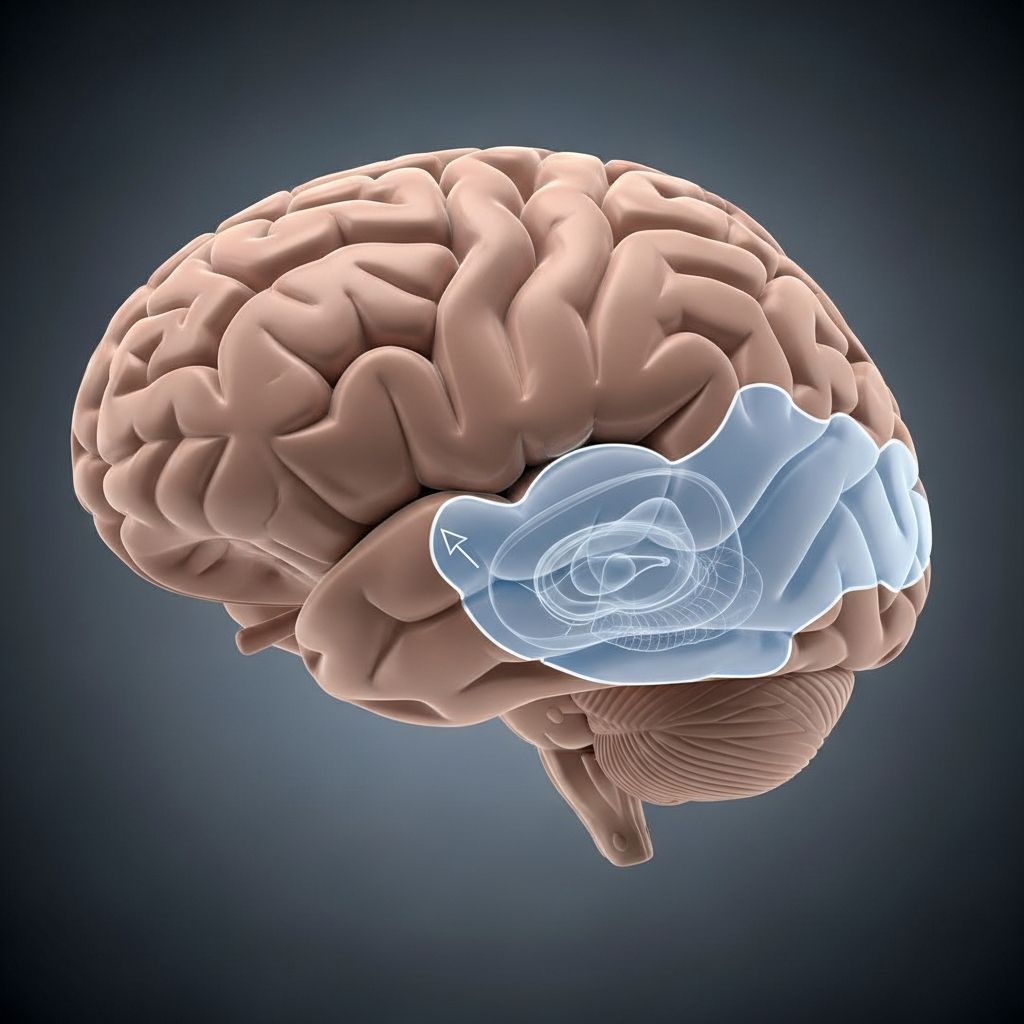
Understanding the Temporal Lobe
The temporal lobe is one of the four major lobes of the cerebral cortex and plays a vital role in some of the most important functions your brain performs. Located at the bottom of your cerebrum near your temples and ears, the temporal lobe is responsible for processing information that helps you understand the world around you, communicate effectively, and retain memories. This specialized region of your brain handles a remarkable array of functions that directly impact your daily life, from recognizing faces and understanding speech to forming new memories and processing emotions.
Location of the Temporal Lobe
The temporal lobe is situated on the side of your head, positioned below your parietal lobe and behind your frontal lobe. It extends from just above your ear toward the front of your brain and is protected by the temporal bone of your skull. You have two temporal lobes, one on each side of your brain, with the left temporal lobe typically being the dominant hemisphere in most people, particularly those who are right-handed.
Deep within the temporal lobe lies the hippocampus, a seahorse-shaped structure that is approximately 5 centimeters long and serves as the brain’s primary memory center. This critical structure is responsible for converting short-term memories into long-term memories and helping you navigate and understand your environment spatially.
Primary Functions of the Temporal Lobe
The temporal lobe orchestrates several essential cognitive and sensory processes that enable you to function effectively in your environment:
Memory Processing
One of the temporal lobe’s most crucial functions is memory management. This region processes both short-term and long-term memories, converting temporary information into lasting knowledge that shapes your identity and experiences. The hippocampus, situated deep within the temporal lobe, plays a central role in this process, determining which information is significant enough to retain and transforming fleeting thoughts into durable memories.
Language and Speech
The temporal lobe is essential for understanding and producing language. It contains Wernicke’s area, a specialized region typically located on the left temporal lobe that helps you comprehend spoken language and understand the meaning behind words and sounds. This area processes not just the words themselves, but also the tone, rhythm, and nuances of speech that convey meaning and emotion. When you listen to someone speak, your temporal lobe deciphers the sounds and transforms them into understandable language.
Auditory Processing
Because the temporal lobes are located near your ears, they evolved to be particularly adept at processing auditory information. This region analyzes sounds, distinguishes between different tones, and helps you identify important acoustic information in your environment. Whether you’re listening to music, recognizing a friend’s voice, or responding to warning sounds, your temporal lobe is continuously working to interpret what you hear.
Visual Processing and Recognition
The temporal lobe also contributes to visual processing, particularly the recognition of complex visual information. The right temporal lobe specializes in processing visual memories, such as faces and images, enabling you to recognize people you know and remember visual scenes. This function is critical for social interaction and navigating your physical environment.
Emotional Processing
Through its connection to the limbic system, the temporal lobe plays an important role in processing emotions and assigning emotional significance to experiences. This allows your brain to remember events not just factually but also emotionally, which is why certain memories feel more vivid or meaningful than others.
Related Stories



Key Structures Within the Temporal Lobe
Wernicke’s Area
Located in the left temporal lobe (in most right-handed individuals), Wernicke’s area is a specialized region that processes language comprehension. This area allows you to understand spoken language by linking speech sounds to previously learned linguistic patterns. Damage to Wernicke’s area can result in Wernicke’s aphasia, a condition where individuals can speak but struggle to convey meaningful content or understand what others are saying.
The Hippocampus
The hippocampus is perhaps the most famous structure within the temporal lobe. This seahorse-shaped region is the brain’s memory headquarters, responsible for consolidating information from short-term to long-term memory storage. It’s also involved in spatial navigation, helping you understand and remember the layout of your environment.
The Amygdala
Also located within the temporal lobe, the amygdala is crucial for processing emotions, particularly fear and emotional significance. This structure helps your brain quickly assess whether a situation is threatening or safe and plays a role in emotional memory formation.
Left vs. Right Temporal Lobe
| Function | Left Temporal Lobe | Right Temporal Lobe |
|---|---|---|
| Memory Type | Verbal memory (words, names, language-based information) | Visual memory (faces, images, scenes) |
| Language Processing | Speech comprehension and production; dominant in most right-handed people | Tone, rhythm, and emotional aspects of speech |
| Primary Dominance | Usually dominant hemisphere | Non-dominant hemisphere |
| Recognition | Understanding words and naming objects | Recognizing faces and visual patterns |
How the Temporal Lobe Works With Other Brain Regions
The temporal lobe doesn’t function in isolation but rather works in concert with other brain regions to create complex cognitive processes. For example, when you hear a word, your temporal lobe processes the auditory information, your frontal lobe helps you formulate a response, and your parietal lobe integrates this information with other sensory inputs. This interconnected network demonstrates how specialized each brain region is while remaining fundamentally interdependent.
Conditions Affecting the Temporal Lobe
Temporal Lobe Epilepsy
Temporal lobe epilepsy (TLE) is the most common type of focal epilepsy, characterized by seizures originating in the temporal lobe. These seizures result from abnormal electrical activity and can affect the functions associated with this region, including memory, language, and emotion regulation.
Damage and Injury Effects
Damage to the temporal lobe can result from various causes including:
- Head trauma or traumatic brain injury
- Stroke or cerebrovascular accident
- Brain tumors
- Autoimmune diseases
- Developmental conditions like dyslexia
- Neurodegenerative diseases such as Alzheimer’s disease
Symptoms of Temporal Lobe Damage
Damage to the temporal lobe can produce various symptoms depending on which part is affected:
- Difficulty understanding or producing speech
- Memory problems or memory loss
- Changes in personality or mood
- Difficulty recognizing faces or objects
- Emotional disturbances
- Seizures or abnormal electrical activity
- Problems with auditory processing
- Difficulties with language comprehension or word retrieval
Neuroplasticity and Recovery
One remarkable feature of the brain is its ability to adapt and reorganize itself, a phenomenon known as neuroplasticity. If the temporal lobe is damaged, particularly in children and young adults, other brain regions may gradually take over some of its functions. This capacity for compensation is more pronounced in younger brains, which retain greater flexibility than older brains. However, the extent of recovery varies significantly depending on the severity and location of the damage, as well as the individual’s age at the time of injury.
Temporal Lobe and Memory Formation
The temporal lobe’s role in memory formation is fundamental to understanding how you learn and retain information. When you experience something new, the hippocampus within your temporal lobe works to encode that experience, tagging it with emotional significance through the amygdala and integrating it with existing knowledge. This process transforms a fleeting moment into a memory that can be retrieved later, forming the basis of your personal history and identity.
The Importance of Temporal Lobe Health
Understanding the temporal lobe’s critical functions emphasizes the importance of protecting this brain region. Activities that promote overall brain health, such as regular physical exercise, cognitive stimulation, adequate sleep, and a healthy diet, can help maintain temporal lobe function. Additionally, preventing head injuries through the use of safety equipment and being aware of stroke risk factors can help preserve this vital brain region.
Frequently Asked Questions
Q: What happens if only one temporal lobe is damaged?
A: If one temporal lobe is damaged, the other may partially compensate for lost functions, though the extent of recovery depends on the severity of damage and the individual’s age. The dominant temporal lobe (usually the left) plays a larger role in language processing, so damage to this side may have more significant effects on speech and language comprehension.
Q: How does the temporal lobe differ from other brain lobes?
A: While the frontal lobe controls executive functions and movement, the parietal lobe handles sensory processing, and the occipital lobe manages vision, the temporal lobe specializes in memory, auditory processing, language comprehension, and emotion regulation. The temporal lobe’s proximity to the ears makes it particularly suited for sound processing.
Q: Can temporal lobe problems affect personality?
A: Yes, temporal lobe damage can significantly affect personality and behavior. Because this region processes emotions and is connected to structures like the amygdala, damage can result in mood changes, increased irritability, or alterations in how a person perceives themselves and their relationships.
Q: Is Wernicke’s area the only language center in the temporal lobe?
A: While Wernicke’s area is the most well-known language center in the temporal lobe, responsible for language comprehension, other parts of the temporal lobe also contribute to language processing. The right temporal lobe processes the emotional tone and rhythm of speech, which are crucial aspects of language understanding.
Q: How quickly can temporal lobe damage symptoms appear?
A: Symptoms can appear immediately following acute injury like stroke or trauma, or they may develop gradually in progressive conditions like Alzheimer’s disease. Seizure disorders affecting the temporal lobe may develop over time and can fluctuate in severity.
Q: What tests can detect temporal lobe problems?
A: Healthcare providers use various diagnostic tools including MRI, CT scans, EEG (for seizure activity), neuropsychological testing, and blood tests to evaluate temporal lobe function and identify abnormalities or damage.
References
- Cerebral Cortex: What It Is, Function & Location — Cleveland Clinic. 2024. https://my.clevelandclinic.org/health/articles/23073-cerebral-cortex
- Temporal Lobe — EBSCO Research Starters. 2024. https://www.ebsco.com/research-starters/health-and-medicine/temporal-lobe
- Temporal Lobe Epilepsy (TLE): Causes, Symptoms & Treatment — Cleveland Clinic. 2024. https://my.clevelandclinic.org/health/diseases/17778-temporal-lobe-seizures
- Hippocampus: What It Is, Function, Location & Damage — Cleveland Clinic. 2024. https://my.clevelandclinic.org/health/body/hippocampus
- Brain: Parts, Function, How It Works & Conditions — Cleveland Clinic. 2024. https://my.clevelandclinic.org/health/body/22638-brain
- Cerebrum: What It Is, Function & Anatomy — Cleveland Clinic. 2024. https://my.clevelandclinic.org/health/body/23083-cerebrum
Similar Articles








Read full bio of Sneha Tete