Temporal Triangular Alopecia: Causes, Diagnosis & Treatment
Understanding temporal triangular alopecia: A comprehensive guide to this non-scarring hair loss condition.
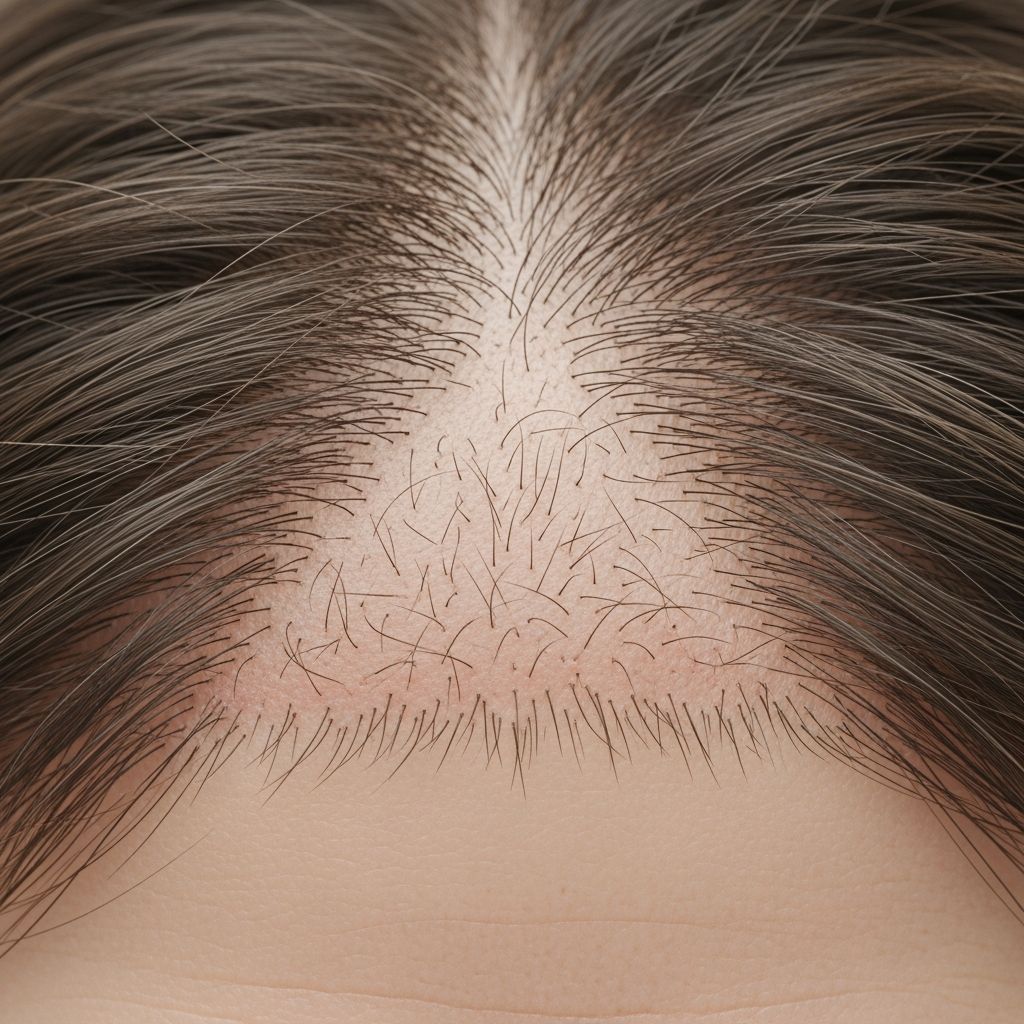
Temporal Triangular Alopecia: Overview
Temporal triangular alopecia (TTA), also known as congenital triangular alopecia, is a non-scarring form of hair loss that presents as a distinctive triangular, oval, or lancet-shaped patch of baldness on the scalp. This condition typically affects the frontotemporal region, which includes the areas around the temples and the frontal scalp. Unlike many other forms of alopecia, temporal triangular alopecia is nonprogressive, meaning it does not worsen over time and remains stable throughout a person’s lifetime.
The condition was first described in medical literature over a century ago, in 1905, yet its exact etiology remains incompletely understood. Despite this, temporal triangular alopecia has gained recognition as a distinct dermatological condition that requires careful diagnosis to distinguish it from other forms of hair loss.
Prevalence and Gender Distribution
Temporal triangular alopecia affects individuals across all age groups, from infants to adults, though it is often noticed in childhood or early adulthood. One significant characteristic of this condition is its lack of gender predilection, meaning it occurs in men and women at approximately equal rates. This contrasts sharply with male pattern baldness, which is far more common in men due to hormonal factors.
Research indicates that approximately 79% of patients present with unilateral hair loss (affecting one side), while 18.5% experience bilateral involvement (both sides), and only 2.5% develop occipital alopecia (hair loss at the back of the head). These patterns are consistent across multiple studies and help clinicians in diagnosis.
What Causes Temporal Triangular Alopecia?
The precise cause of temporal triangular alopecia remains a mystery in dermatological science, though several theories have been proposed. Initially, experts believed the condition was purely congenital—present at birth due to genetic factors. However, emerging evidence suggests that many cases are acquired, developing later in life rather than being innate from birth.
Some researchers hypothesize that temporal triangular alopecia may result from abnormal or incomplete development of the epidermis, the outermost layer of skin. Others propose that the condition may reflect mosaicism or be inherited as a paradominant trait, though these genetic mechanisms are not fully understood.
Temporal triangular alopecia is not caused by DHT (dihydrotestosterone), the hormone responsible for male and female pattern baldness. This distinction is crucial because it means that standard hair loss treatments designed to block DHT production or action are ineffective for this condition.
Associated Disorders and Syndromes
While the primary cause of temporal triangular alopecia is unknown, dermatologists have identified several disorders and syndromes that frequently occur alongside this condition. These include:
- Congenital hip dislocation (CHD)
- Iris nevi (freckles on the eyes)
- Klippel-Trenaunay syndrome
- Noonan syndrome with multiple lentigines
- Pai syndrome
- Phakomatosis pigmentovascularis (PPV)
- Turner syndrome
- Spina bifida
- Down’s syndrome (in rare cases)
Related Stories



If you have one of these underlying conditions and notice signs of hair loss in the frontotemporal region, it is important to consult with a healthcare provider for proper evaluation.
How Temporal Triangular Alopecia Differs from Other Hair Loss Conditions
Temporal Triangular Alopecia vs. Male Pattern Baldness
Although both conditions can result in a receding hairline appearance, temporal triangular alopecia and male pattern baldness have several major differences:
| Feature | Temporal Triangular Alopecia | Male Pattern Baldness |
|---|---|---|
| Cause | Unknown (not DHT-related) | DHT sensitivity and genetics |
| Pattern | Triangular or oval patch at temples | Even receding hairline, progressive crown loss |
| Progression | Nonprogressive; stable over time | Progressive; worsens with age |
| Gender | Equal in men and women | More common in men |
| Treatment Response | Resistant to DHT-blocking medications | Responsive to DHT inhibitors and minoxidil |
Standard male pattern baldness treatments, such as finasteride and minoxidil, are generally ineffective for temporal triangular alopecia because the condition does not involve DHT-related hair follicle miniaturization.
Temporal Triangular Alopecia vs. Alopecia Areata
Temporal triangular alopecia is often misdiagnosed as alopecia areata due to superficial similarities. However, key differences help distinguish between them:
- Onset: Temporal triangular alopecia typically presents from birth or early childhood with permanent hair loss, whereas alopecia areata can develop at any stage in life
- Reversibility: Alopecia areata can spontaneously regrow hair in affected areas, while temporal triangular alopecia involves permanent non-regrowth
- Location: Temporal triangular alopecia most commonly affects the temples and frontal region, while alopecia areata can develop anywhere on the scalp
- Pattern: Temporal triangular alopecia presents as a single, well-defined patch, whereas alopecia areata often involves multiple scattered areas
Temporal Triangular Alopecia vs. Traction Alopecia
Traction alopecia results from repeated tension on hair follicles, typically caused by tight hairstyles, weaves, or extensions. In contrast, temporal triangular alopecia is not caused by external mechanical forces and cannot be prevented through hairstyle modifications.
Symptoms and Clinical Presentation
Temporal triangular alopecia is typically asymptomatic, meaning it causes no pain, itching, or other subjective symptoms. Many patients do not seek medical treatment because the condition causes no physical discomfort. The primary concern is cosmetic rather than medical.
The condition presents as a well-demarcated area of baldness, most commonly in one location (unilateral) but occasionally in two locations (bilateral). The affected area may be:
- Triangular in shape
- Oval or elliptical
- Lancet-shaped (narrow and pointed)
The patch typically remains the same size throughout life, as the condition is nonprogressive. The skin within the affected area appears normal with no inflammation, scarring, or visible abnormalities.
Diagnosis
Temporal triangular alopecia is diagnosed primarily through clinical examination of the scalp. A dermatologist can usually identify the characteristic appearance and location of the hair loss without requiring additional testing. Biopsy is not necessary for diagnosis and is rarely performed.
The diagnostic process typically involves:
- Visual inspection of the scalp to identify the characteristic triangular or oval patch
- Assessment of location (typically frontotemporal region)
- Determination of whether the patch is unilateral or bilateral
- Confirmation that the patch is nonprogressive and remains unchanged
- Exclusion of other conditions such as alopecia areata or traction alopecia
In some cases, dermoscopy or hair pull testing may be performed to confirm the diagnosis and rule out other conditions. However, these tests are not essential for diagnosis.
Treatment Options
Medical Management
Unfortunately, medical treatment of temporal triangular alopecia has proven largely ineffective. Topical or intralesional corticosteroids, commonly used for other forms of alopecia, have not demonstrated efficacy for this condition. Similarly, minoxidil, a topical medication used for male and female pattern baldness, has shown only transient improvement in rare cases, with hair regrowth not sustained after treatment cessation.
Because temporal triangular alopecia is not DHT-dependent, medications such as finasteride (Propecia) that work by blocking DHT production are ineffective. Standard hair loss medications should not be used as they offer no benefit and may delay appropriate treatment planning.
Surgical Treatment: Hair Transplantation
Hair transplant surgery is currently the most effective and only long-lasting treatment for temporal triangular alopecia. This procedure involves:
- Surgically removing healthy hair follicles from areas of the scalp not affected by alopecia (typically the back and sides)
- Transplanting these follicles into the affected frontotemporal region
- Using advanced techniques such as follicular unit transplantation (FUT) or follicular unit extraction (FUE)
Hair transplant surgery for temporal triangular alopecia offers several advantages:
- Permanence: Transplanted hair follicles are genetically programmed to continue growing permanently
- Natural appearance: When performed by experienced surgeons, results appear natural and blend seamlessly with existing hair
- Long-term success: Long-term sustained benefits have been reported after 6 years of follow-up
- Outpatient procedure: Hair transplantation is typically performed as an outpatient procedure with minimal downtime
However, hair transplantation is an elective cosmetic procedure and should only be considered when the patient desires improvement in appearance. The timing of surgery is typically postponed until late childhood or adolescence to allow the patient to participate in treatment decisions.
Surgical Excision
In addition to hair transplantation, surgical excision of the affected area may provide satisfactory cosmetic results in selected cases. This approach involves surgically removing the bald patch and closing the wound with sutures, effectively reducing the visible area of baldness. However, this method may result in a linear scar and is less commonly used than hair transplantation.
Counseling and Reassurance
For many patients with temporal triangular alopecia, the most appropriate initial management is counseling and reassurance. Since the condition is asymptomatic, nonprogressive, and benign, many patients do not require any treatment. Understanding the benign nature of the condition and that it will not worsen over time can alleviate patient anxiety.
Parents of children with temporal triangular alopecia should be informed of the exact nature of the condition to avoid unnecessary investigations, harmful treatments, or excessive concern.
Prognosis
The prognosis for temporal triangular alopecia is excellent in terms of the condition’s health impact. The alopecia:
- Does not progress or worsen over time
- Causes no physical symptoms or complications
- Does not indicate underlying systemic disease in most cases
- Remains stable throughout the individual’s lifetime
The primary concern is cosmetic rather than medical. Many patients choose to manage the condition through hairstyling techniques, hair coverings, or acceptance of the appearance rather than pursuing surgical intervention.
When to Seek Medical Consultation
You should consult a dermatologist if you:
- Notice a triangular or oval patch of hair loss near your temples or in the frontal region
- Have a family history of associated syndromes or conditions listed above
- Are concerned about the appearance of hair loss
- Want to explore treatment options such as hair transplantation
- Have one of the associated syndromes and develop frontotemporal hair loss
Early diagnosis helps avoid unnecessary treatments and allows for informed discussion about available options.
Frequently Asked Questions
Q: Is temporal triangular alopecia permanent?
A: Yes, temporal triangular alopecia is typically permanent in the sense that hair does not spontaneously regrow in the affected area. However, the condition itself is nonprogressive and does not worsen over time. Hair transplantation can provide a permanent cosmetic solution.
Q: Can temporal triangular alopecia be inherited?
A: Most cases of temporal triangular alopecia appear sporadically without a family history. However, there have been rare familial cases reported, suggesting a possible genetic component in some individuals.
Q: Will hair loss medications like minoxidil or finasteride help temporal triangular alopecia?
A: No. These medications work by targeting DHT, which is not involved in temporal triangular alopecia. They are ineffective for this condition and should not be used.
Q: At what age should hair transplantation be considered?
A: Hair transplantation is typically recommended for late childhood or adolescence when the patient can participate in treatment decisions. Early surgery in young children is generally avoided until the patient can consent to the procedure.
Q: Can temporal triangular alopecia be mistaken for male pattern baldness?
A: Yes, it can be misdiagnosed, but key differences help distinguish them. Temporal triangular alopecia presents as a single, stable, triangular patch affecting both men and women equally, whereas male pattern baldness is progressive, DHT-dependent, and more common in men.
Q: Is there a cure for temporal triangular alopecia?
A: There is no medical cure, but hair transplantation offers an effective permanent cosmetic solution. Many patients choose not to pursue treatment as the condition causes no health problems.
References
- Temporal Triangular Alopecia in Adulthood — Hims. Accessed January 2026. https://www.forhims.co.uk/blog/triangular-alopecia
- What is Temporal Triangular Alopecia? — Belgravia Centre. Accessed January 2026. https://www.belgraviacentre.com/blog/what-is-temporal-triangular-alopecia
- Congenital Triangular Alopecia — PubMed Central/National Institutes of Health. https://pmc.ncbi.nlm.nih.gov/articles/PMC4502474/
- Understanding Triangular Alopecia — HRBR. Accessed January 2026. https://www.hrbr.ie/blog/understanding-triangular-alopecia/
- Temporal Triangular Alopecia: Causes, Symptoms and Treatment — Wimpole Clinic. Accessed January 2026. https://wimpoleclinic.com/blog/triangular-alopecia/
Similar Articles








Read full bio of Sneha Tete