Tennis Elbow: Causes, Symptoms & Treatment Options
Complete guide to understanding tennis elbow, its causes, symptoms, and effective treatment strategies.
Understanding Tennis Elbow (Lateral Epicondylitis)
Tennis elbow, medically known as lateral epicondylitis, is a painful condition affecting the outside of the elbow that develops from overuse of the forearm muscles and tendons. Despite its name, you don’t need to play tennis to develop this condition—in fact, only about 5% of people with tennis elbow actually play the sport. The name comes from the frequency of the injury among tennis players, but it affects people in various professions and those engaged in repetitive arm activities. This condition represents one of the most common overuse syndromes affecting the elbow, causing pain and weakness that can significantly impact daily activities.
What Is Lateral Epicondylitis?
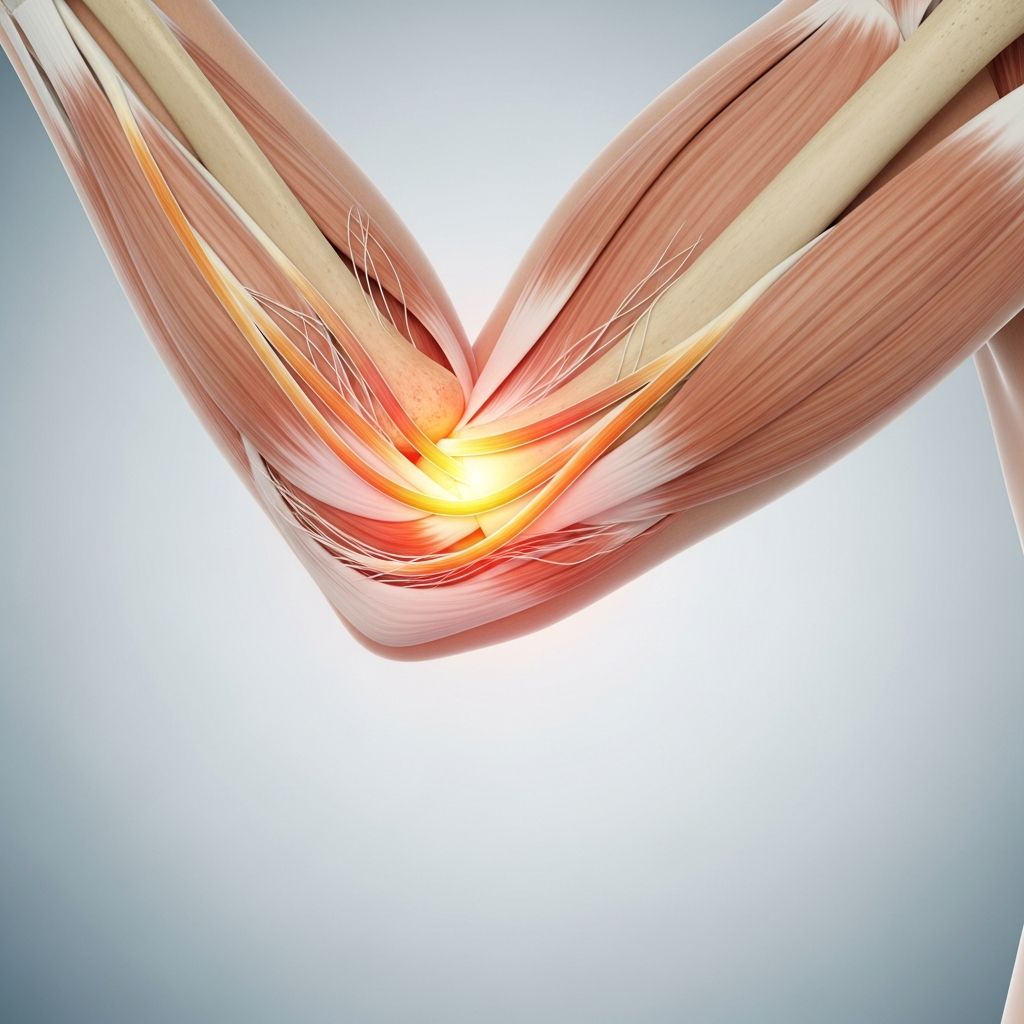
Lateral epicondylitis occurs when the tendons connecting your forearm muscles to your elbow become inflamed or damaged. The term breaks down as follows: “epicondylitis” refers to inflammation in the tendon, while “lateral” indicates the inflammation is on the outer side of your elbow. The primary muscle involved is the extensor carpi radialis brevis (ECRB), which helps stabilize your wrist when your elbow is straight. When this muscle becomes weakened from overuse, microscopic tears develop in the tendon where it attaches to the lateral epicondyle—the bony bump on the outside of your elbow.
Causes of Tennis Elbow
Repetitive Strain and Overuse
The primary cause of tennis elbow is repetitive strain from activities involving loaded and repeated gripping or wrist extension. The condition develops gradually as extra stress builds up over time from the same motion repeated too frequently. This repetitive use causes tiny tears in the tendon, which eventually leads to noticeable symptoms. The damage typically occurs at the point where the extensor tendon attaches to the humerus bone in your upper arm.
Common Activities That Trigger Tennis Elbow
While tennis players can develop this condition through repetitive backhand motions, many other activities cause tennis elbow. These include:
- Computer use and typing
- Painting and decorating
- Carpentry and construction work
- Plumbing and pipe work
- Repetitive turning of screwdrivers or wrenches
- Butchering and meat processing
- Racquet sports like squash and badminton
- Heavy lifting with improper technique
- Forceful forearm rotation or vibration exposure
Mechanism of Injury
Tennis elbow develops through eccentric overload of the common extensor tendon. This occurs when muscles contract while lengthening, creating significant stress on the tendon attachment. Unlike a sudden injury, tennis elbow typically results from chronic contractile overloads that stress the tendon near its attachment on the humerus. Over time, these repetitive stresses cause hyaline degeneration and fibroplastic changes within the tendon tissue. The region where the ECRB tendon attaches is also relatively hypovascular (has limited blood supply), which reduces the tendon’s ability to respond adequately to repeated forces and heal properly.
Symptoms of Tennis Elbow
Characteristic Pain Pattern
Tennis elbow symptoms develop gradually, usually starting as mild discomfort that slowly worsens over weeks and months. Most people don’t associate their initial symptoms with a specific injury event. The hallmark symptom is localized pain or burning on the outer part of your elbow, directly over the lateral epicondyle. This pain can radiate upward along your upper arm and downward along the outside of your forearm, and in rare cases, may extend to your third and fourth fingers.
Common Signs and Symptoms
People with tennis elbow typically experience:
- Pain or burning sensation on the outer elbow
- Weak grip strength in the affected arm
- Tenderness when touching the lateral epicondyle
- Pain with resisted wrist or middle-finger extension
- Difficulty with gripping small objects like pens
- Pain when performing twisting motions
- Occasional nighttime pain or aching
- Reduced flexibility in wrist extensor muscles
Related Stories



Activities That Worsen Symptoms
Symptoms often intensify during specific forearm activities and everyday tasks. Turning a doorknob, opening a jar, shaking hands, lifting a pan, pouring a kettle, or using a computer mouse can all trigger or aggravate pain. Even activities requiring minimal grip strength may cause discomfort. Your dominant arm is most commonly affected, though both arms can develop tennis elbow. In severe cases, pain may occur even at rest.
Diagnosis of Tennis Elbow
Clinical Examination
A healthcare provider diagnoses tennis elbow through a physical examination and medical history. During the examination, your doctor will palpate the lateral epicondyle to locate tenderness and may perform specific tests for pain with resisted wrist extension or gripping. They’ll assess your grip strength and check for reduced flexibility in your forearm muscles. The examination also screens for other potential causes such as nerve entrapment or referred pain from your neck or shoulder, which may present with similar symptoms.
Imaging Studies
While a clinical diagnosis is usually sufficient, your healthcare provider may order imaging tests if diagnosis remains unclear. X-rays can rule out other conditions or bone-related issues. Ultrasound imaging can visualize the tendon and identify areas of degeneration or inflammation. Magnetic resonance imaging (MRI) may be used in complex cases to evaluate tendon structure in detail. However, many cases are diagnosed and managed effectively without imaging.
Treatment Options for Tennis Elbow
Conservative Management
The majority of tennis elbow cases resolve with conservative treatment. The foundation of treatment involves load management and activity modification. Rest the affected arm by avoiding or modifying activities that aggravate symptoms. Applying ice to the area can reduce inflammation and pain, particularly during the acute phase. Over-the-counter nonsteroidal anti-inflammatory drugs (NSAIDs) like ibuprofen or naproxen can help manage pain and reduce inflammation.
Physical Therapy and Rehabilitation
Physical therapy plays a crucial role in tennis elbow recovery. A physical therapist will develop an exercise program to strengthen the forearm muscles and improve flexibility, particularly focusing on the extensor muscles and posterior shoulder. Eccentric exercises, where muscles lengthen while contracting, have shown particular effectiveness for tennis elbow. Therapy may include:
- Strengthening exercises for forearm muscles
- Stretching routines to improve flexibility
- Wrist stabilization exercises
- Grip-strengthening activities
- Postural correction and ergonomic training
Bracing and Support
Wearing an elbow brace or tennis elbow strap can reduce strain on the affected tendon by distributing forces away from the attachment point. These braces are particularly helpful during activities that trigger symptoms. Proper arm positioning and ergonomic adjustments at work or during leisure activities help prevent symptom aggravation and promote healing.
Advanced Treatment Options
For cases that don’t respond to conservative treatment, several advanced options exist. Corticosteroid injections can provide temporary relief by reducing inflammation, though they’re typically reserved for patients who haven’t improved with physical therapy. Platelet-rich plasma (PRP) injections and autologous blood injections are emerging treatments that may stimulate healing. Extracorporeal shockwave therapy (ESWT) uses acoustic waves to promote tendon healing. In rare cases where conservative treatments fail, surgery may be considered to release the affected tendon and remove degenerative tissue.
Recovery and Prognosis
Timeline for Healing
Tennis elbow is typically self-limited, meaning most cases resolve on their own with appropriate treatment. Studies show that approximately nine out of ten people make a full recovery within one year when following appropriate management strategies. Most patients see improvement within 6-8 weeks of starting conservative treatment, though complete healing may take several months. The timeline varies depending on the severity of the condition, the individual’s age and health status, and adherence to treatment recommendations.
Factors Affecting Recovery
Several factors influence recovery speed and success. Early intervention generally leads to faster resolution. Consistent adherence to physical therapy exercises and activity modification significantly improves outcomes. Continuing activities that aggravate the condition can prolong symptoms and delay recovery. Age, overall health, and the nature of your occupation or hobbies also play roles in determining recovery time.
Prevention of Tennis Elbow
Proper Technique and Ergonomics
Preventing tennis elbow starts with proper technique during sports and activities. If you play tennis, ensure you’re using correct form, particularly for backhand strokes. Position your elbow and wrist properly to avoid excessive strain. At work, maintain proper ergonomics by keeping your wrist in a neutral position and avoiding awkward arm positions during repetitive tasks. Regularly adjust your workstation to promote proper alignment.
Strengthening and Flexibility
Regular strengthening and stretching exercises can prevent tennis elbow development. Strong forearm muscles better tolerate repetitive stress. Maintain flexibility in your wrist, forearm, and shoulder muscles. If your job involves repetitive arm movements, perform regular stretching and strengthening exercises as preventive measures.
Activity Management
Take regular breaks during repetitive activities to prevent overuse. Gradually increase the intensity and duration of new activities rather than jumping into high-demand tasks immediately. Use proper equipment when available—for example, ergonomic computer keyboards and mice can reduce strain during typing. Use appropriate tools and equipment designed to reduce vibration and strain on your arms.
When to Seek Medical Attention
While many cases of tennis elbow improve with self-care, you should consult a healthcare provider if:
- Symptoms persist despite rest and home treatment for more than one week
- Pain is severe or significantly affects your daily functioning
- Symptoms progressively worsen despite conservative treatment
- You experience numbness or tingling in your forearm or hand
- The condition affects your ability to work or enjoy activities
- You’ve had previous episodes that recurred
Frequently Asked Questions
Q: Can I continue working if I have tennis elbow?
A: Many people can continue working with modifications. Adjusting your technique, taking frequent breaks, and using supportive equipment can help manage symptoms while working. However, if your job involves the activity causing tennis elbow, you may need to temporarily modify or limit those tasks during recovery.
Q: How long does tennis elbow take to heal?
A: Most cases resolve within 6-12 weeks with appropriate treatment. However, complete healing can take several months. Recovery depends on the severity of your condition, your adherence to treatment, and whether you modify activities that aggravate symptoms.
Q: Will I need surgery for tennis elbow?
A: Surgery is rarely necessary. Most cases resolve with conservative treatment. Surgery is typically considered only after conservative treatments have failed for 6-12 months or longer.
Q: Can tennis elbow return after it heals?
A: Yes, tennis elbow can recur if you return to the same activities that caused it without proper prevention strategies. Maintaining strengthening exercises, using proper technique, and following ergonomic principles can help prevent recurrence.
Q: Is tennis elbow the same in both arms?
A: While similar in nature, tennis elbow affecting different arms may have different underlying causes. Your dominant arm is typically affected, but if your job or hobby primarily uses your non-dominant arm in a repetitive way, that arm may be affected instead or both arms may develop the condition.
References
- Tennis Elbow (Lateral Epicondylitis) — American Academy of Orthopaedic Surgeons (AAOS). 2024. https://orthoinfo.aaos.org/en/diseases–conditions/tennis-elbow-lateral-epicondylitis/
- Lateral Epicondylitis (Tennis Elbow) — National Center for Biotechnology Information (NCBI), StatPearls. 2024. https://www.ncbi.nlm.nih.gov/books/NBK431092/
- Tennis Elbow: Symptoms, Causes & Treatments — Mayo Clinic. 2024. https://www.mayoclinic.org/diseases-conditions/tennis-elbow/symptoms-causes/syc-20351987
- Lateral Epicondylitis — Physiopedia. 2024. https://www.physio-pedia.com/Lateral_Epicondylitis
- Tennis Elbow — Symptoms, Causes and Treatment — Healthdirect. 2024. https://www.healthdirect.gov.au/tennis-elbow
- Lateral Epicondylitis — Merck Manuals. 2024. https://www.merckmanuals.com/home/injuries-and-poisoning/sports-injuries/lateral-epicondylitis
Similar Articles








Read full bio of medha deb