Tennis Elbow: 5 Proven Treatments And Prevention Tips
Understand tennis elbow (lateral epicondylitis): symptoms, causes, treatments, and prevention for effective pain relief and recovery.
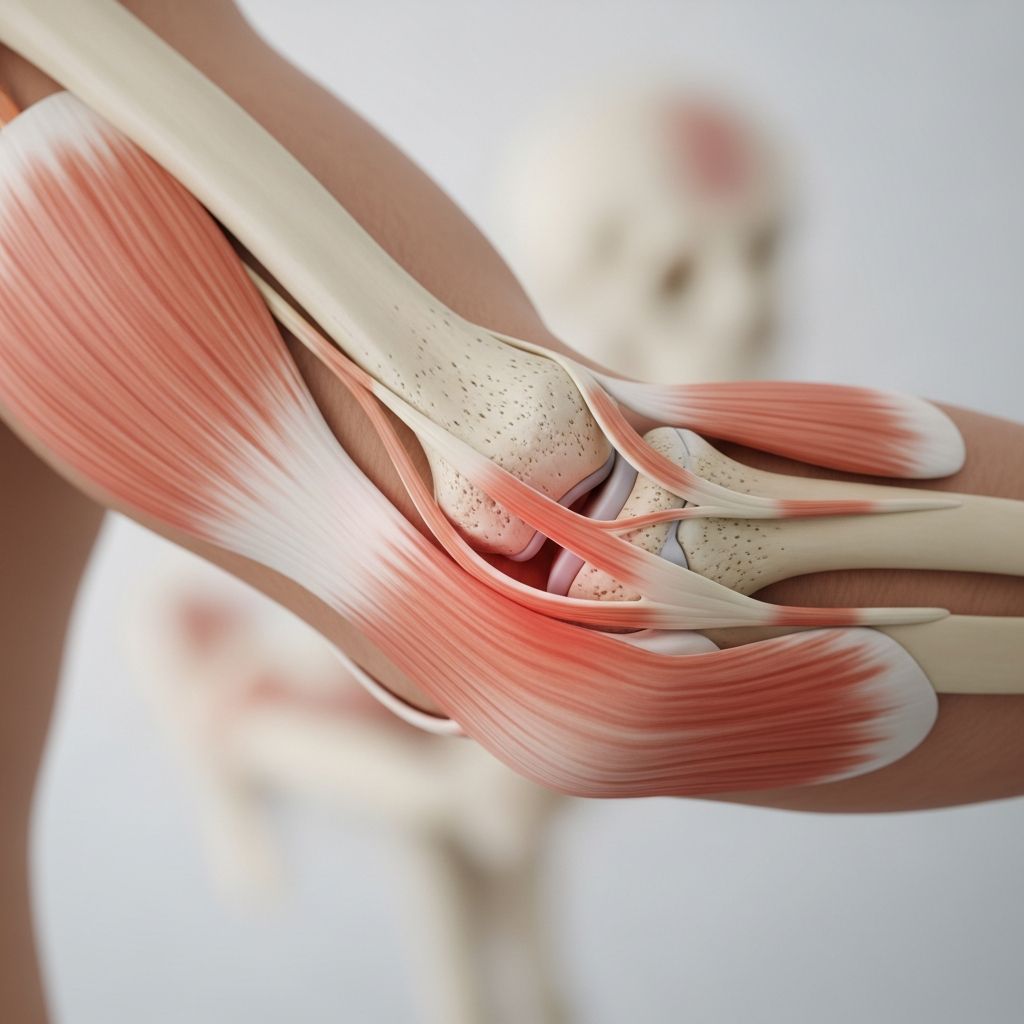
Tennis elbow, or lateral epicondylitis, is a painful condition affecting the tendons on the outside of the elbow, often due to overuse rather than tennis playing. It involves degeneration or microtears in the extensor carpi radialis brevis (ECRB) tendon where it attaches to the lateral epicondyle.
What is tennis elbow?
Tennis elbow develops when the forearm muscles and tendons that attach to the outer elbow bone (lateral epicondyle) become irritated from repeated use. Despite the name, only about 5% of cases occur in tennis players; it commonly affects plumbers, painters, carpenters, butchers, and others with repetitive wrist extension or gripping tasks. The condition arises from eccentric overload on the ECRB tendon during activities like wrist extension against resistance.
Symptoms typically start mildly and worsen over weeks to months without a single injury event. Pain is the hallmark, located 1-2 cm below the outer elbow bony prominence, radiating to the forearm or wrist. It worsens with gripping, lifting, or forearm rotation.
Symptoms of tennis elbow
The primary symptom is pain on the outside of the elbow, often burning or aching, aggravated by daily activities. Common signs include:
- Pain or tenderness directly over the lateral epicondyle or extensor tendons.
- Weak grip strength, making it hard to hold objects like a racket, wrench, or cup.
- Forearm stiffness or weakness, especially in the morning or after rest.
- Pain with extension activities: shaking hands, turning doorknobs, or lifting with palm down.
- Radiating pain into the upper arm, forearm, or fingers; occasional night pain.
Symptoms develop gradually, affecting the dominant arm most (up to both arms), and peak after repetitive strain. Weakness results from pain inhibition rather than true muscle damage.
Who gets tennis elbow?
Tennis elbow affects 1-3% of the population, peaking in ages 40-60, more common in women and manual workers. Half of tennis players experience elbow pain, 75% true tennis elbow, due to poor technique or equipment.
Risk factors include:
- Repetitive occupations: plumbing, painting, carpentry, butchery, typing.
- Sports: racket sports (tennis backhand), squash, badminton with wrist flicking.
- Lifestyle: smoking, obesity, daily repetitive motion >2 hours, handling loads >20kg.
- Technique issues: tight grip, improper form, overtraining.
Non-athletes comprise most cases from everyday overuse.
Causes of tennis elbow
Tennis elbow results from repetitive microtrauma to the ECRB tendon origin, leading to degeneration (tendinosis) rather than acute inflammation. Key causes:
- Overuse/strain: Repeated forearm muscle tensing for wrist extension and radial deviation.
- Poor mechanics: Tennis backhand with wrist flick, overhead strokes stressing elbow.
- Equipment: Heavy rackets, tight strings, improper grip size.
- Other factors: Muscle imbalance, falls on outstretched arm, arthritis.
No clear cause in many cases; tendon fibers breakdown from chronic tensile overload.
When to see a doctor for tennis elbow
Consult a doctor if pain persists >6 weeks despite rest, interferes with work/sleep, or includes swelling, redness, fever (infection risk), or numbness (nerve issue). Seek immediate care for trauma, inability to straighten arm, or severe weakness. Early intervention prevents chronicity; 80-90% recover spontaneously in 1-2 years, but treatment accelerates relief.
Related Stories



Diagnosis of tennis elbow
Diagnosis is clinical, based on history and exam. No routine imaging unless atypical.
Physical tests:
- Cozen’s test: Pain with resisted wrist extension, elbow extended, forearm pronated.
- Mill’s test: Pain on passive wrist flexion and forearm pronation with elbow extended.
- Middle finger extension test: Pain with resisted middle finger extension.
- Grip strength measurement; palpation of lateral epicondyle.
Investigations: Elbow X-ray rules out fracture/arthritis; ultrasound/MRI shows tendon thickening/tears if needed. Differentiate from golfer’s elbow, radial tunnel syndrome, cervical radiculopathy.
Treatment of tennis elbow
90% improve non-surgically within 12 months; focus on pain relief, activity modification, rehab.
Self-help for tennis elbow
Start with conservative measures:
- Rest/Activity modification: Avoid aggravating tasks 4-6 weeks; use other arm.
- Ice/heat: Ice 10-20 min 3-4x/day; heat for stiffness.
- Pain relief: Paracetamol, ibuprofen (if no contraindications).
- Bracing: Counterforce strap 2-3 inches below elbow reduces tendon load.
- Exercises: Gentle stretching, progressive strengthening after pain subsides.
Physiotherapy for tennis elbow
Core treatment: eccentric exercises for tendon remodeling. Regimen:
- Stretching: Wrist flexors/extensors 3×30 sec, 4x/day.
- Strengthening: Eccentric wrist extension with 1-2lb weight, 3 sets of 15, 3x/day; progress to Tyler’s kit.
- Manual therapy: Soft tissue massage, joint mobilization.
- Other: Ultrasound, laser, acupuncture (limited evidence).
8-12 weeks yields 80% success.
Further treatments for tennis elbow
If no improvement after 6-12 weeks physio:
- Steroid injections: Corticosteroid + local anesthetic into tendon; quick relief but risks recurrence, tendon weakening.
- PRP injections: Platelet-rich plasma promotes healing; emerging evidence.
- Shockwave therapy: Extracorporeal shockwave stimulates repair; moderate evidence.
- Surgery: Last resort (5%); open/arthroscopic release of ECRB origin, debridement; 85-95% success post-rehab.
| Treatment | Success Rate | Timeline |
|---|---|---|
| Self-help/Rest | 50-70% | 6-12 weeks |
| Physiotherapy | 80-90% | 8-12 weeks |
| Steroid Injection | 70% short-term | Immediate, but 50% recur |
| PRP/Shockwave | 60-80% | 3-6 months |
| Surgery | 85-95% | 3-6 months recovery |
Prevention of tennis elbow
Prevent recurrence:
- Proper technique/equipment in sports/work.
- Strengthen forearms: wrist curls, grip exercises 2-3x/week.
- Warm-up/stretch before activity.
- Alternate tasks; use ergonomic tools.
- Maintain fitness; avoid overload.
Frequently Asked Questions (FAQs)
Q: How long does tennis elbow last?
A: Most resolve in 6-12 months with treatment; 80-90% spontaneously in 1-2 years.
Q: Is tennis elbow permanent?
A: Rarely; early treatment prevents chronicity.
Q: Can I still play sports with tennis elbow?
A: Modify activity; rest until pain-free, then gradual return with rehab.
Q: What’s the difference between tennis elbow and golfer’s elbow?
A: Tennis elbow affects outer elbow (extensors); golfer’s inner (flexors).
Q: Do steroid injections cure tennis elbow?
A: Provide short-term relief but high recurrence; not curative alone.
References
- Elbow Tendonitis | Causes and Treatment — OrthoIndy Blog. 2020-03-04. https://blog.orthoindy.com/2020/03/04/what-causes-elbow-tendonitis-and-how-do-you-treat-it/
- Tennis Elbow (Lateral Epicondylitis) — American Academy of Orthopaedic Surgeons (AAOS). Accessed 2026. https://orthoinfo.aaos.org/en/diseases–conditions/tennis-elbow-lateral-epicondylitis/
- Causes and Prevention of Tennis Elbow — OrthoVirginia. Accessed 2026. https://www.orthovirginia.com/blog/causes-and-prevention-of-tennis-elbow/
- Tennis elbow – Symptoms and causes — Mayo Clinic. Accessed 2026. https://www.mayoclinic.org/diseases-conditions/tennis-elbow/symptoms-causes/syc-20351987
- Lateral Epicondylitis (Tennis Elbow) — StatPearls, NCBI Bookshelf (National Center for Biotechnology Information). 2023-06-26. https://www.ncbi.nlm.nih.gov/books/NBK431092/
Similar Articles








Read full bio of Sneha Tete