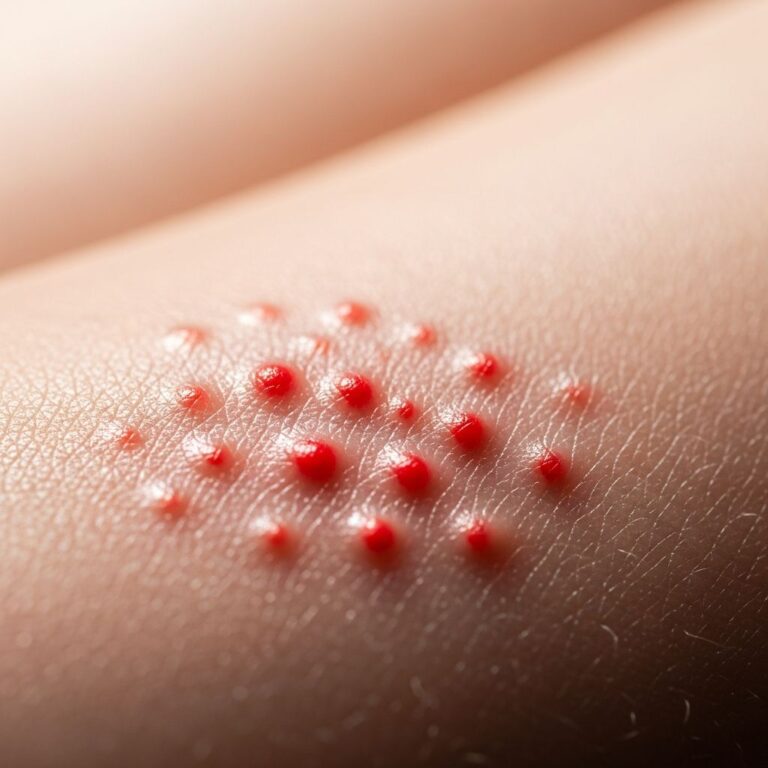
Terra Firma–Forme Dermatosis: What You Need To Know
Understanding terra firma-forme dermatosis: a benign skin condition mimicking dirt, removable only by alcohol wipes.
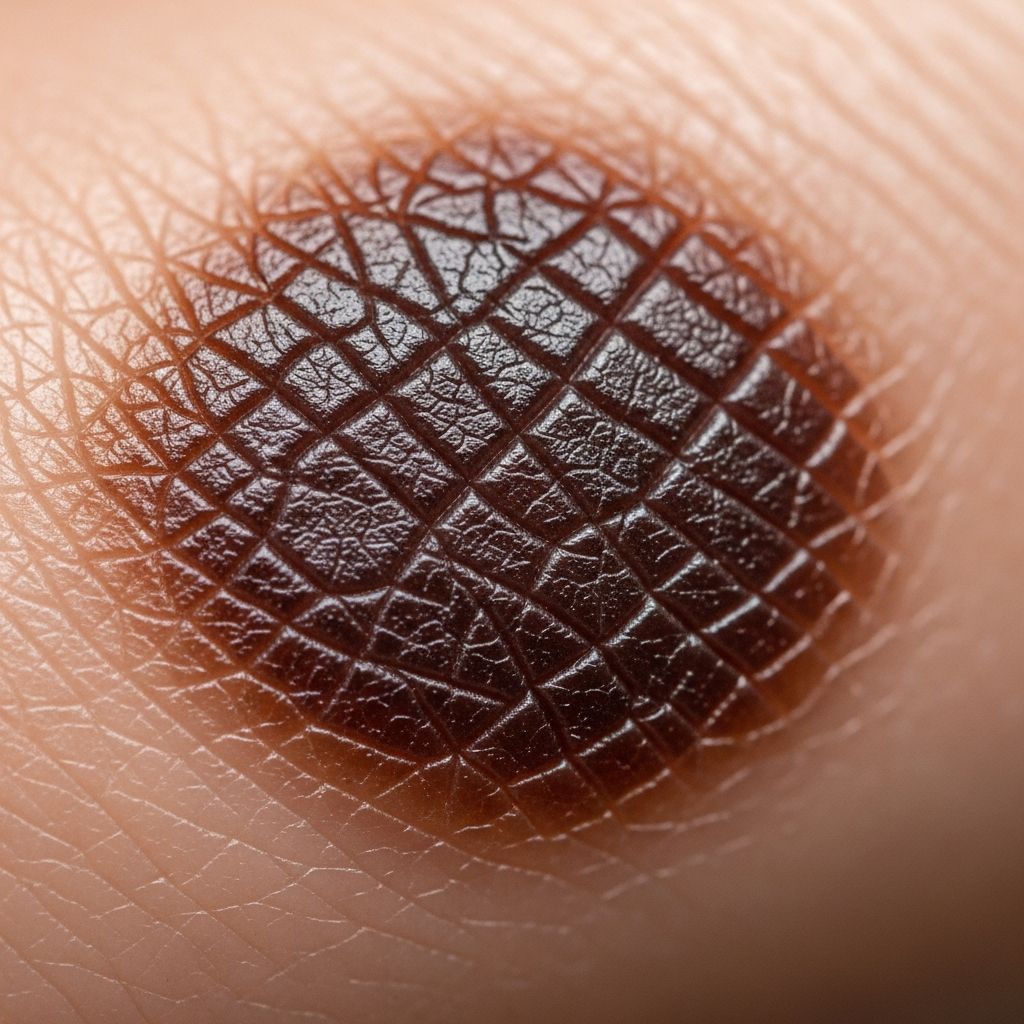
Terra firma–forme dermatosis (TFFD), also known as Duncan’s dirty dermatosis, is a benign, acquired cutaneous condition characterized by asymptomatic hyperpigmented, dirt-like patches that cannot be washed off with soap and water but disappear instantly upon swabbing with 70% isopropyl alcohol.
What is terra firma–forme dermatosis?
TFFD represents a distinctive keratinization disorder first described in 1987 by Duncan et al. The term ‘terra firma’ derives from Latin, meaning ‘dry land,’ aptly describing the firm, soil-like adherence of the scaly plaques to the skin. This idiopathic dermatosis manifests as brownish-grey to black, velvety or verrucous patches resembling accumulated dirt, primarily affecting children and adolescents but occurring across all ages.
Clinically, lesions appear as discrete or confluent macules, patches, or plaques with a characteristic ‘cornflake-like’ or reticulated scaling. They are non-pruritic, non-tender, and symmetrically distributed, evoking a sense of uncleanliness that prompts repeated but futile washing attempts. Prevalence data from retrospective analyses indicate high occurrence in pediatric populations, with mean onset around 10 years, though adult cases, including on atypical sites like areolae, are documented.
Who gets terra firma–forme dermatosis?
TFFD predominantly affects children and young adults, with studies reporting 88.6% of cases in those under 18 years. No significant gender, racial, or geographic predispositions are established; it occurs worldwide without regard to ethnicity or comorbidities. Familial clustering is rare, and no genetic mutations are linked, though syndromic associations remain speculative.
- Age distribution: Peak in school-aged children (average 10.4 years); 10-20% in adults.
- Risk factors: None definitively identified; possible links to atopic dermatitis or xerosis, but unproven.
- Prevalence: Likely underrecognized due to misdiagnosis as neglect or other pigmentary disorders.
What causes terra firma–forme dermatosis?
The precise aetiology of TFFD remains elusive, classified as an idiopathic keratinization anomaly. Pathogenic theories center on delayed keratinocyte maturation, leading to incomplete squame formation, melanin retention, and accumulation of sebum, sweat, corneocytes, and microbes in trauma-prone areas.
Proposed mechanisms include:
- Abnormal desquamation in skin folds (neck, axillae) with poor hygiene access.
- Retention of epidermal melanin and keratin globules, forming adhesive scales.
- Environmental contributors like soap residues, oily emollients, or sun exposure, impairing normal shedding.
- No infectious, endocrine, or neoplastic basis; not contagious.
Histologically, TFFD shows compact lamellar hyperkeratosis with whorls, follicular plugging, papillomatosis, basal melanin increase, and occasional pityrosporum spores—distinguishing it from simple dirt. Parakeratosis is absent.
What are the clinical features of terra firma–forme dermatosis?
Lesions present as asymptomatic, hyperpigmented plaques mimicking grime, with hues from light brown to black. Common morphologies include:
- Verrucous, cornflake-like scales (classic).
- Reticulated or papillomatous plaques (less common).
- Keratotic papules resistant to standard alcohol wipes (rare variant).
Favorite sites:
| Site | Frequency |
|---|---|
| Neck (nape) | Most common (~50-70%) |
| Trunk (chest, abdomen, flanks) | ~40% |
| Axillae, groin | ~20% |
| Extremities, face | <10% |
Symptoms are absent; cosmetic distress and psychosocial impact (anxiety, embarrassment) may arise if untreated. Progression is slow; lesions persist indefinitely without intervention.
Diagnosis
TFFD diagnosis hinges on the pathognomonic
alcohol swab test
: firm rubbing with 70% isopropyl or ethyl alcohol abrades the lesion, revealing normal underlying skin instantly—unlike soap/water failure.Related Stories



Dermoscopy: Polygonal brown scales in mosaic/whorled patterns aids non-invasive confirmation.
Histopathology (rarely needed):
- Lamellar hyperkeratosis (whorled).
- Keratin plugs, globules.
- Basal hyperpigmentation (Fontana-Masson positive).
- Papillomatosis, no inflammation.
Biopsy avoided to prevent scarring; reserved for atypical/recalcitrant cases.
Differential diagnosis
TFFD mimics several conditions; alcohol test differentiates most:
| Condition | Key Features | Distinguisher |
|---|---|---|
| Dermatosis neglecta | Crusts from sebum/debris; any age, hygiene-related. | Removable with soap/water; no whorls histologically. |
| Acanthosis nigricans | Velvety neck thickening; obesity/DM-linked. | Not alcohol-removable; true hyperplasia. |
| Postinflammatory hyperpigmentation | Tan-brown macules post-inflammation. | History of insult; fades over time. |
| Confluent reticulated papillomatosis | Reticulated trunk plaques; possible fungal. | May respond to antifungals. |
| Tinea versicolor | Hyperpigmented scaly patches. | KOH positive; Woods lamp. |
| Seborrhoeic keratosis | Stuck-on warty lesions. | Persistent post-alcohol; dermoscopy. |
Treatment
Therapeutic wiping with 70% isopropyl alcohol on gauze/cotton is curative, often in one session. Recurrence possible; repeat as needed. No systemic therapy required; benign course.
- Technique: Vigorous bidirectional rubbing until clearance (10-30 seconds).
- Alternatives: Ethyl alcohol, salicylic acid pads for resistant cases.
- Adjuncts: Emollients post-treatment; education on prevention (regular exfoliation).
Avoid unnecessary biopsies/endocrine workups. Cosmetic resolution boosts quality of life.
Frequently asked questions
Is terra firma-forme dermatosis contagious?
No, TFFD is not infectious or transmissible; it’s a localized keratinization issue.
Does terra firma-forme dermatosis resolve on its own?
Untreated lesions persist indefinitely but are easily removable without scarring.
Can adults get terra firma-forme dermatosis?
Yes, though less common than in children; sites like areolae reported.
What if alcohol wipe doesn’t work?
Rare keratotic variant may require scraping (e.g., microscope slide); consider biopsy.
Is terra firma-forme dermatosis linked to obesity or diabetes?
No direct link; mimics acanthosis nigricans but lacks associations.
References
- A case of terra firma—forme dermatosis — Contemporary Pediatrics. 2023. https://www.contemporarypediatrics.com/view/a-case-of-terra-firma-forme-dermatosis
- Terra Firme-Forme Dermatosis Diagnostic Sign and Treatment — NIH/PMC. 2019-05-29. https://pmc.ncbi.nlm.nih.gov/articles/PMC6514525/
- Terra firma-forme dermatosis — VisualDx. 2024. https://www.visualdx.com/visualdx/diagnosis/terra+firma-forme+dermatosis?diagnosisId=54937&moduleId=101
- Acanthosis nigricans or terra firma-forme dermatosis? — NIH/PMC. 2023. https://pmc.ncbi.nlm.nih.gov/articles/PMC10331252/
- Terra Firma-Forme Dermatosis, Keratotic Form — DermSquared. 2023. https://skin.dermsquared.com/skin/article/view/396
- A Hyperpigmented Patch That Remains Despite Washing — Consultant360. 2023. https://www.consultant360.com/article/consultant360/dermatology/hyperpigmented-patch-remains-despite-washing-soap-and-water
- Terra Firma–Forme Dermatosis: Clinical Insights — Wiley Online Library. 2024. https://onlinelibrary.wiley.com/doi/10.1155/crpe/9349324
Similar Articles








Read full bio of medha deb