Terry’s Nails: Causes, Symptoms, and Treatment
Understanding Terry's nails: Learn about this nail condition, its causes, and when to seek medical care.
What Are Terry’s Nails?
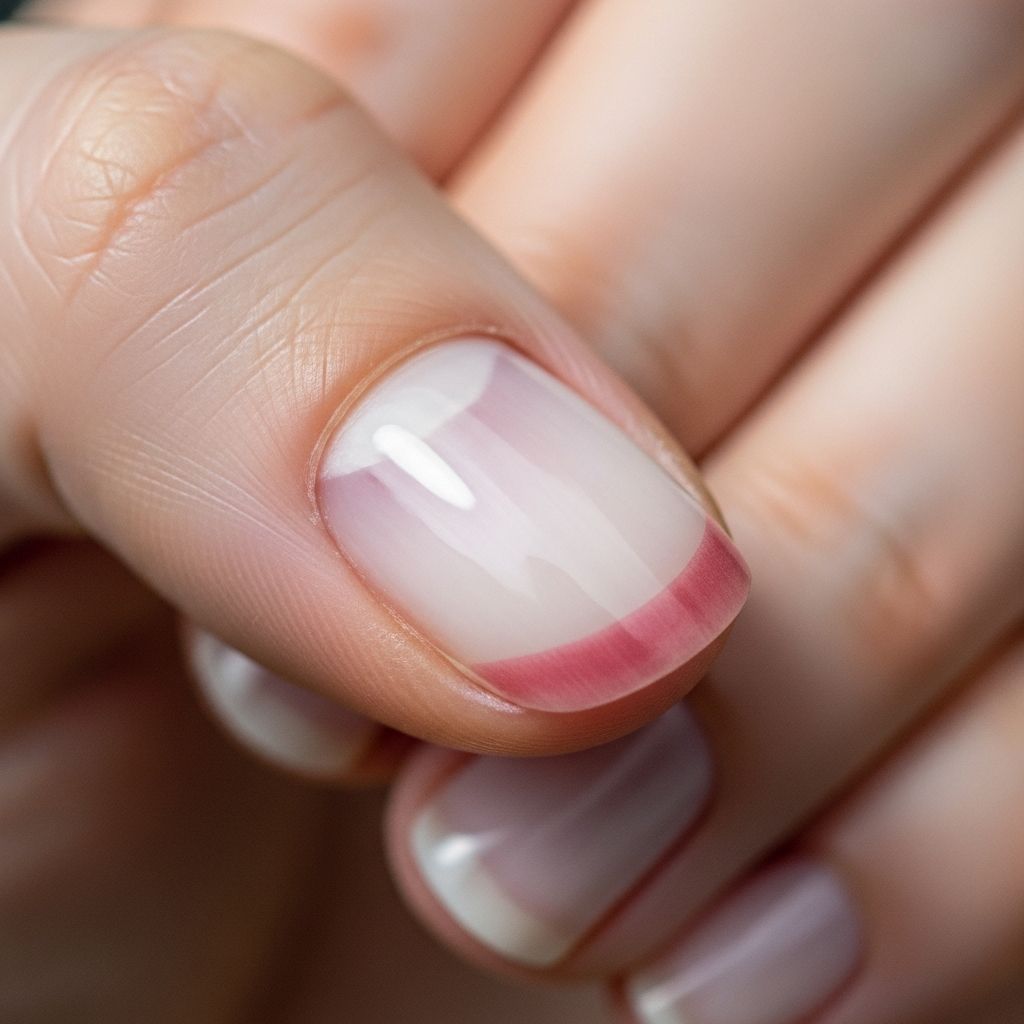
Terry’s nails is a nail condition characterized by a distinctive change in nail appearance that affects the fingernails and sometimes toenails. The condition presents as a whitening or opacification of most of the nail bed, with a narrow band of normal, pink, or brown nail remaining at the tip of the nail. The affected nails have a ground glass appearance, and the lunula (the half-moon shaped area at the base of the nail above the cuticle) becomes obliterated or disappears entirely. This condition typically affects all the fingernails bilaterally, meaning it occurs on both hands in a symmetrical pattern.
The name “Terry’s nails” comes from Dr. Richard Terry, who first described this symptom in 1954. During his research, Terry discovered that 82 out of 100 consecutive patients with cirrhosis (scarring of the liver) also had white nails, establishing a significant association between this nail abnormality and liver disease.
Causes and Risk Factors
Underlying Mechanism
Terry’s nails are classified as an “apparent leukonychia,” meaning the whitened appearance of the nail is due to changes in the nail bed itself rather than the nail plate. The exact pathophysiology remains not fully understood, but medical experts believe the condition results from specific changes within the nail bed structure. It is thought that Terry’s nails occur when there is a decrease in the number of blood vessels (reduced vascularity) combined with an increase in connective tissue growth within the nail bed. Nail bed biopsies have revealed telangiectasias (small dilated blood vessels) in the distal band, further supporting the theory of microvascular involvement in this condition.
Associated Medical Conditions
While Terry’s nails can occur naturally as part of the aging process, they frequently signal an underlying medical condition that requires attention. The condition is most commonly associated with liver disease, particularly cirrhosis. However, Terry’s nails can be linked to numerous other serious health conditions:
- Chronic kidney disease or chronic renal failure
- Congestive heart failure
- Type 2 diabetes
- Viral hepatitis
- HIV infection
- Peripheral vascular disease
- Skin conditions including vitiligo, tuberculosis, or tuberculoid leprosy
- COVID-19
When Terry’s nails appear in conjunction with these conditions, they often serve as an outward clinical sign that warrants further investigation and proper medical management of the underlying disease.
Natural Aging
It is important to note that Terry’s nails may also occur naturally as you age, even without any underlying health conditions. This age-related presentation means that the presence of Terry’s nails does not automatically indicate a serious medical problem, but medical evaluation remains advisable to rule out associated conditions.
Clinical Presentation and Symptoms
Characteristic Appearance
Terry’s nails present with specific visual characteristics that make them recognizable. The nails appear predominantly white or opaque, resembling a “ground glass” appearance, and this whitening involves nearly the entire nail bed. The most distinctive feature is the preservation of a narrow band (typically 0.5–3 mm wide) of normal, pink or dark brown nail at the very tip of the fingernail, which represents normal nail bed tissue. The lunula, which is normally visible as a lighter crescent at the nail base, becomes obliterated and disappears from view due to the extensive opacification. This pattern occurs bilaterally and symmetrically across all fingernails.
Related Stories



Pattern and Distribution
The condition characteristically affects all ten fingernails in a symmetrical manner, with both hands showing identical patterns. In some cases, toenails may also be affected. The white discoloration extends from the cuticle line almost to the tip, with the distinctive narrow pink or brown band remaining at the distal edge.
Diagnosis
Clinical Examination
Diagnosis of Terry’s nails is primarily clinical, based on the characteristic appearance of the nails during physical examination. A healthcare provider will look for the specific pattern of whitening, the obliteration of the lunula, and the narrow band of normal nail at the tip. The condition typically becomes apparent during routine nail inspection as part of a comprehensive physical examination.
Associated Tests
Since Terry’s nails can indicate an underlying medical condition, healthcare providers will typically recommend diagnostic tests to evaluate for associated diseases. These tests may include blood tests, imaging studies, or other investigations depending on which conditions are suspected based on the patient’s medical history and other symptoms.
Differential Diagnosis
It is important to differentiate Terry’s nails from other nail conditions that may present with similar appearances. Healthcare providers must distinguish Terry’s nails from other forms of leukonychia (whiteness of the nail) and from conditions like Lindsay’s nails (which present with a different pattern of discoloration related to chronic kidney disease). A careful examination helps establish the correct diagnosis and guide appropriate management.
Treatment and Management
Direct Treatment Options
Terry’s nails themselves do not require specific direct treatment, as the condition is not harmful to nail health or function. The whitened appearance is purely cosmetic and does not cause pain, discomfort, or physical problems. Since Terry’s nails primarily serve as a clinical indicator of another condition rather than being a primary disease requiring treatment, the focus shifts to managing any underlying causes.
Managing Underlying Conditions
The primary approach to managing Terry’s nails involves identifying and treating the underlying medical condition responsible for the nail changes. For example, if Terry’s nails result from cirrhosis or liver disease, the treatment will focus on managing liver disease. Similarly, for patients with chronic kidney disease, management involves addressing kidney function and related complications. For those with congestive heart failure, appropriate cardiac management becomes the priority. Treatment protocols vary depending on the specific underlying condition and may include medications, lifestyle modifications, dietary changes, or other medical interventions as prescribed by a healthcare provider.
Does Pressing on the Nails Help?
Some individuals have wondered whether applying pressure to the affected nails might temporarily reduce the discoloration. While pressure may cause temporary blanching of the nail, this does not provide therapeutic benefit for Terry’s nails syndrome, and the discoloration returns once pressure is released.
When to See a Healthcare Provider
Although Terry’s nails are not inherently harmful, medical evaluation is strongly recommended if you notice this condition developing on your nails. It is important to consult a healthcare provider because:
- Terry’s nails can be an outward sign of a serious underlying medical condition
- Early diagnosis of associated conditions allows for timely treatment
- Proper medical assessment helps distinguish age-related changes from disease-related changes
- Healthcare providers can recommend appropriate diagnostic testing and monitoring
Schedule an appointment with your doctor promptly if you notice the characteristic whitening pattern and narrow band at the tip of your nails, especially if you have any symptoms suggesting underlying health problems.
Frequently Asked Questions
Q: Does Terry’s nails indicate a vitamin deficiency?
A: No, Terry’s nails does not typically occur due to vitamin deficiency. The condition is either a natural result of aging or associated with underlying health conditions such as liver disease, kidney disease, or heart failure. If you have concerns about vitamin deficiency, speak with your healthcare provider about appropriate testing and supplementation if needed.
Q: Can stress cause Terry’s nails?
A: No, there is no evidence that stress directly causes Terry’s nails syndrome. However, stress can worsen other nail problems such as infections, ridges, and brittleness. If you have Terry’s nails, focus on identifying and treating any underlying medical conditions rather than stress management alone.
Q: Are Terry’s nails contagious?
A: No, Terry’s nails are not contagious. This is a nail condition reflecting changes in nail bed structure and is not caused by infection or any transmissible agent.
Q: Can Terry’s nails go away on their own?
A: Terry’s nails may improve if the underlying medical condition causing them is successfully treated. For example, if liver function improves or kidney disease is managed effectively, the nail appearance may normalize. However, if Terry’s nails result from natural aging, they may persist as a normal part of the aging process.
Q: Should I be worried if I have Terry’s nails?
A: While Terry’s nails themselves are not harmful, you should have them evaluated by a healthcare provider because they can indicate an underlying health condition requiring medical attention. However, not all cases of Terry’s nails indicate serious disease—some occur naturally with aging. Professional evaluation helps determine whether further investigation or treatment is needed.
Key Takeaways
Terry’s nails represent an important clinical sign that warrants proper medical attention. Understanding this condition helps ensure that any associated underlying health problems are identified and appropriately managed. Key points to remember include:
- Terry’s nails are characterized by extensive whitening of the nail with a narrow band of normal nail at the tip
- The condition can occur naturally with aging but may also indicate serious underlying medical conditions
- Liver disease and cirrhosis show the strongest association with Terry’s nails
- Other conditions commonly associated include kidney disease, heart failure, and diabetes
- Direct treatment of Terry’s nails is not necessary, but managing any underlying condition is essential
- Medical evaluation is recommended if you develop this nail pattern
The importance of thorough nail inspection during physical examinations cannot be overstated, as nails often reflect the overall health status of the body and can provide valuable diagnostic clues about systemic disease.
References
- Terry’s Nails: A Sign of Systemic Disease — National Center for Biotechnology Information (NCBI/PMC). 2017. https://www.ncbi.nlm.nih.gov/pmc/articles/PMC5448267/
- What Causes Terry’s Nails and How Do You Treat Them? — Healthline. https://www.healthline.com/health/terrys-nails
- Terry’s Nails — The Chelsea Clinic. https://thechelseaclinic.uk/terrys-nails-2/
- Terry’s Nails: Symptoms, Causes, And Treatment — HealthMatch. https://healthmatch.io/liver-disease/terrys-nails
- Terry’s nails: Appearance, causes, and treatment — Medical News Today. https://www.medicalnewstoday.com/articles/terrys-nails
- How Finger Nails indicate Terry Nails Syndrome? — Sri Ramakrishna Hospital. https://www.sriramakrishnahospital.com/blog/liver-transplant/how-finger-nails-indicate-terry-nails-syndrome/
- 7 fingernail problems not to ignore — Mayo Clinic. https://www.mayoclinic.org/healthy-lifestyle/adult-health/in-depth/7-fingernail-problems-not-to-ignore/art-20546860
Similar Articles








Read full bio of Sneha Tete