Testosterone: What It Does and Doesn’t Do
Understanding testosterone's true role in male health, function, and aging
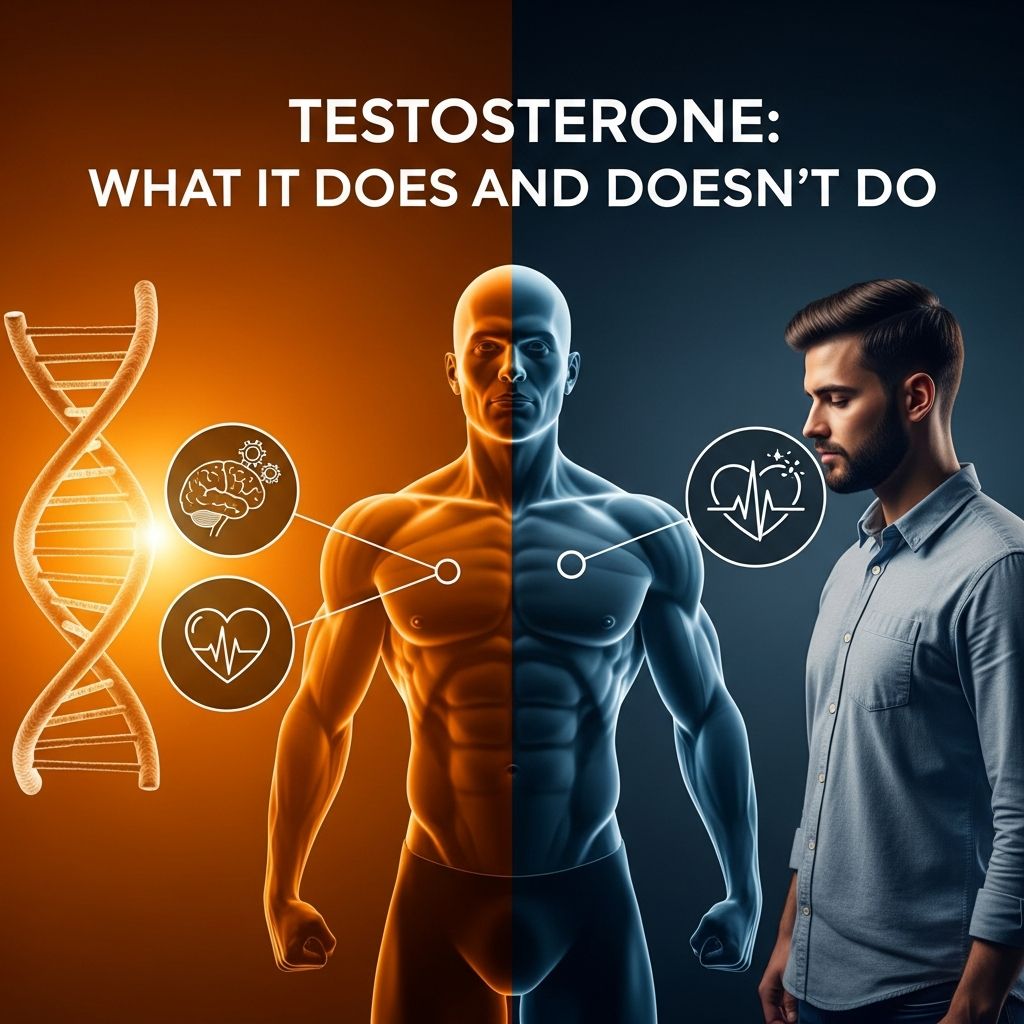
Testosterone is perhaps the most misunderstood hormone in the male body. Often portrayed as a simple driver of aggression and virility, this potent steroid hormone actually plays a far more complex and nuanced role in men’s health and physiology. Understanding what testosterone genuinely does—and equally important, what it doesn’t do—is essential for men making informed decisions about their health as they age.
Understanding Testosterone’s Role in the Male Body
Testosterone is fundamentally responsible for establishing and maintaining male characteristics throughout life. This powerful hormone coordinates multiple biological systems through its interaction with androgen receptors found throughout the body. When testosterone binds to these receptors, it enters the cell nucleus and interacts with DNA, altering the rate at which proteins are produced from various genes.
The hormone’s effects begin well before adulthood. During puberty, testosterone stimulates the growth of the genitals, drives the development of facial and body hair, deepens the voice, and promotes the growth of skeletal muscle. Beyond these visible changes, testosterone plays critical roles in:
- Sperm production and reproductive function
- Sexual function, including libido and erectile capability
- Red blood cell production and oxygen-carrying capacity
- Bone density maintenance and skeletal strength
- Mood regulation and emotional well-being
- Cognitive function and mental clarity
- Muscle mass development and maintenance
The Natural Decline of Testosterone With Age
One of the most consistent and predictable aspects of male aging is the gradual decline in testosterone production. Beginning around age 40, testosterone levels typically decrease at a rate of approximately 1% per year. This slow but steady decline is part of normal physiology, reflecting the gradual age-related decrease in testicular function.
As men progress through their 50s, 60s, and beyond, this decline can become more noticeable. Some men experience characteristic symptoms of lower testosterone, including:
- Reduced sex drive and overall sense of vitality
- Erectile dysfunction or decreased sexual performance
- Diminished energy levels and fatigue
- Loss of muscle mass and strength
- Decreased bone density and increased fracture risk
- Anemia or reduced red blood cell production
- Mood changes, including depression or irritability
However, it is crucial to understand that not all men experience these symptoms at the same age or to the same degree. Some men maintain robust testosterone levels and vitality well into their later years, while others may notice changes relatively early.
Measuring Testosterone: The Challenge of Definition
One of the primary challenges in addressing testosterone-related health concerns is the lack of universal agreement on what constitutes “low” testosterone. The Endocrine Society generally considers total testosterone levels below 300 ng/dL to be low, though this represents a guideline rather than a fixed clinical threshold.
The determination of whether a man has low testosterone involves two complementary approaches:
Related Stories



Blood Testing
Laboratory measurement provides biochemical data about testosterone levels. Total testosterone measures all the hormone present in the bloodstream, while free testosterone specifically measures the hormone available and readily accessible to cells. Free testosterone represents only a small fraction of total testosterone but often provides a better indicator of biological activity.
Clinical Symptoms
Characteristic signs and symptoms provide important clinical context. The correlation between blood test results and symptoms is far from perfect—some men with low testosterone levels experience no symptoms, while others with borderline levels may report significant concerns.
Testosterone Replacement Therapy: Benefits and Considerations
For men with clinically confirmed low testosterone, hormone replacement therapy can offer multiple benefits. Research has demonstrated that testosterone-replacement therapy may improve:
- Sexual desire and erectile function
- Mood and emotional well-being
- Cognitive function and mental clarity
- Muscle mass and physical strength
- Bone density and skeletal health
- Red blood cell production
These improvements can significantly enhance quality of life and overall well-being for men experiencing symptomatic hypogonadism. Some men who previously failed to respond to erectile dysfunction medications experience adequate function when their testosterone levels are normalized.
Understanding the Risks and Concerns
While testosterone replacement therapy offers genuine benefits for appropriate candidates, medical professionals must carefully consider potential risks. One of the most significant concerns historically involves the relationship between testosterone and prostate cancer risk.
Prostate Cancer Risk
The long-held concern that testosterone stimulates prostate cancer has been extensively investigated. Current evidence suggests that the rate of prostate cancer in men receiving testosterone-replacement therapy is approximately 1% per year, which is comparable to the rate observed in age-matched men undergoing routine prostate cancer screening. However, intriguingly, research has also shown that men with very low testosterone levels—those in the lowest third of testosterone values—may have approximately double the odds of having a positive prostate biopsy compared to men with higher testosterone levels.
This paradoxical finding suggests that the relationship between testosterone and prostate cancer may be more nuanced than previously believed, and that extremely low testosterone may itself represent a risk factor for prostate cancer development.
Blood Viscosity and Hematocrit
Another monitored concern involves the hematocrit—the percentage of red blood cells in the bloodstream. Testosterone can increase hematocrit levels, and if this increase becomes excessive, the blood may become too viscous or thick. This could theoretically predispose men to stroke or blood clotting events. Careful monitoring of hematocrit levels helps minimize this risk.
Debunking Common Testosterone Myths
Much popular understanding of testosterone is built on misconceptions. Scientific evidence contradicts several widely held beliefs about this hormone.
Myth: Higher Testosterone Always Means Better Athletic Performance
Despite common assumptions, research shows that male athletes with high testosterone do not necessarily outperform those with lower testosterone levels. While testosterone does increase muscle mass and strength in the normal to high range, athletic performance depends on numerous other factors including training, technique, genetics, and mental preparation.
Myth: Testosterone Exclusively Drives Aggression and Dominance
While testosterone influences behavior, it does not simply cause aggression or dominance in a straightforward manner. Human behavior results from complex interactions between hormones, genes, culture, and environment. Testosterone influences numerous behavioral and physiological systems, but its effects are coordinated and context-dependent rather than simplistic.
Myth: Lower Testosterone Means Less Masculinity
A pervasive myth suggests that lower testosterone levels indicate weakness or reduced masculinity. Research reveals a more sophisticated reality: men who spend significant time in parenting and childcare roles experience naturally lower testosterone levels—a physiological adaptation that facilitates nurturing behavior and family engagement. This represents an evolutionary adaptation supporting paternal caregiving rather than any diminishment of masculinity.
Testosterone and Male Reproductive States
Recent research has revealed that men, like women, experience distinct reproductive states characterized by different testosterone levels and physiological functions. Rather than maintaining constant testosterone levels throughout life, men’s hormonal profiles shift based on life circumstances and behavioral states.
One recognized reproductive state might be termed “mating mode,” characterized by higher testosterone levels and physiology oriented toward seeking mates. In contrast, the “parenting mode” involves lower testosterone levels that facilitate caregiving behavior and paternal involvement.
This understanding has profound implications. Men who spend considerable time in low-testosterone parenting states over their lifetime may experience lower long-term testosterone exposure, potentially reducing their long-term risk for testosterone-related diseases such as prostate cancer or osteoporosis.
Determining Candidacy for Testosterone Replacement
Identifying which men would benefit from testosterone-replacement therapy requires careful clinical evaluation combining laboratory testing, symptom assessment, and consideration of individual health circumstances. Medical professionals must weigh the potential benefits against individual risk factors and underlying health conditions.
The decision to pursue testosterone replacement should never be based solely on age, nor should it be withheld from men who genuinely need it based on overstated concerns about safety. Instead, individualized evaluation considering both objective biochemical markers and subjective symptom burden provides the most appropriate clinical approach.
Long-Term Health Implications of Testosterone Status
Emerging research suggests that testosterone levels may have broader implications for overall health and longevity than previously recognized. Studies indicate that men with low testosterone experience increased all-cause mortality rates compared to men with normal testosterone levels. A study conducted by the Veterans Administration reported dramatically increased mortality rates associated with low testosterone, though the mechanisms underlying this association require further investigation.
These findings suggest that maintaining adequate testosterone levels may contribute to general health and longevity in ways that extend beyond the hormone’s classical functions in reproduction and male sexual characteristics.
The Importance of Individualized Assessment
Perhaps the most critical takeaway regarding testosterone and men’s health is that assessment and management must be individualized. Just as no two men age identically, no standardized approach applies equally to all men regarding testosterone evaluation and potential treatment.
Factors to consider include age, symptom burden, laboratory testosterone values, presence or absence of contraindications, personal health priorities, and overall health status. Some men benefit tremendously from testosterone-replacement therapy, experiencing restoration of vitality and function. Others maintain adequate testosterone levels and require no intervention. Still others may benefit from addressing underlying conditions affecting testosterone production or sensitivity rather than hormone replacement alone.
Frequently Asked Questions
Q: At what age should men typically expect testosterone levels to begin declining?
A: Testosterone levels typically begin declining around age 40, decreasing at approximately 1% per year. However, the rate and degree of decline vary significantly among individuals.
Q: Is testosterone replacement therapy safe for long-term use?
A: When appropriately prescribed and carefully monitored by qualified healthcare providers, testosterone replacement therapy can be safe for long-term use. However, regular monitoring of hematocrit, prostate-specific antigen, and symptoms remains essential.
Q: Can testosterone replacement therapy help with erectile dysfunction?
A: For men with documented low testosterone, testosterone replacement can improve erectile function. Approximately one-third of men who previously failed to respond to erectile dysfunction medications experience adequate function with testosterone restoration alone.
Q: Does testosterone cause prostate cancer?
A: Current evidence does not support the belief that testosterone-replacement therapy significantly increases prostate cancer risk beyond baseline age-related risk. Interestingly, very low testosterone may itself represent a risk factor for prostate cancer development.
Q: How do lower testosterone levels in fathers affect their health?
A: Fathers who spend significant time in parenting roles experience naturally lower testosterone levels. This adaptation facilitates caregiving behavior and may provide long-term health benefits by reducing cumulative testosterone exposure and associated disease risks.
Conclusion
Testosterone is a complex and powerful hormone that plays multifaceted roles in male health, sexuality, strength, and overall well-being. Understanding what testosterone genuinely does—and equally important, what it doesn’t do—is essential for navigating health decisions throughout the lifespan. Rather than viewing testosterone simplistically as a marker of masculinity or strength, modern medicine recognizes it as one component of a complex physiological system that changes with age and life circumstances. For men concerned about testosterone levels or experiencing symptoms of deficiency, consultation with qualified healthcare providers can determine whether testing or treatment is appropriate, based on individual circumstances rather than age alone or popular misconceptions.
References
- A Harvard Expert Shares His Thoughts on Testosterone Replacement Therapy — Age and Ed, Department of Urology, Harvard Medical School. 2018. https://agemed.org/e-journal/feature-article-november-2018-a-harvard-expert-shares-his-thoughts-on-testosterone-replacement-therapy/
- Harvard experts on testosterone, fathering — Harvard Magazine. September 2011. https://www.harvardmagazine.com/2011/09/fatherhood-affects-testosterone
- Testosterone: The Hormone that Dominates and Divides Us — Carole Hooven, Lecturer, Department of Human Evolutionary Biology, Harvard University. Harvard University. 2021. https://www.youtube.com/watch?v=cbMjHLpc0Sc
Similar Articles








Read full bio of medha deb