Tetrachromacy: The Science of Superhuman Color Vision
Discover how tetrachromacy gives some people the ability to see millions more colors than the average person.
What Is Tetrachromacy?
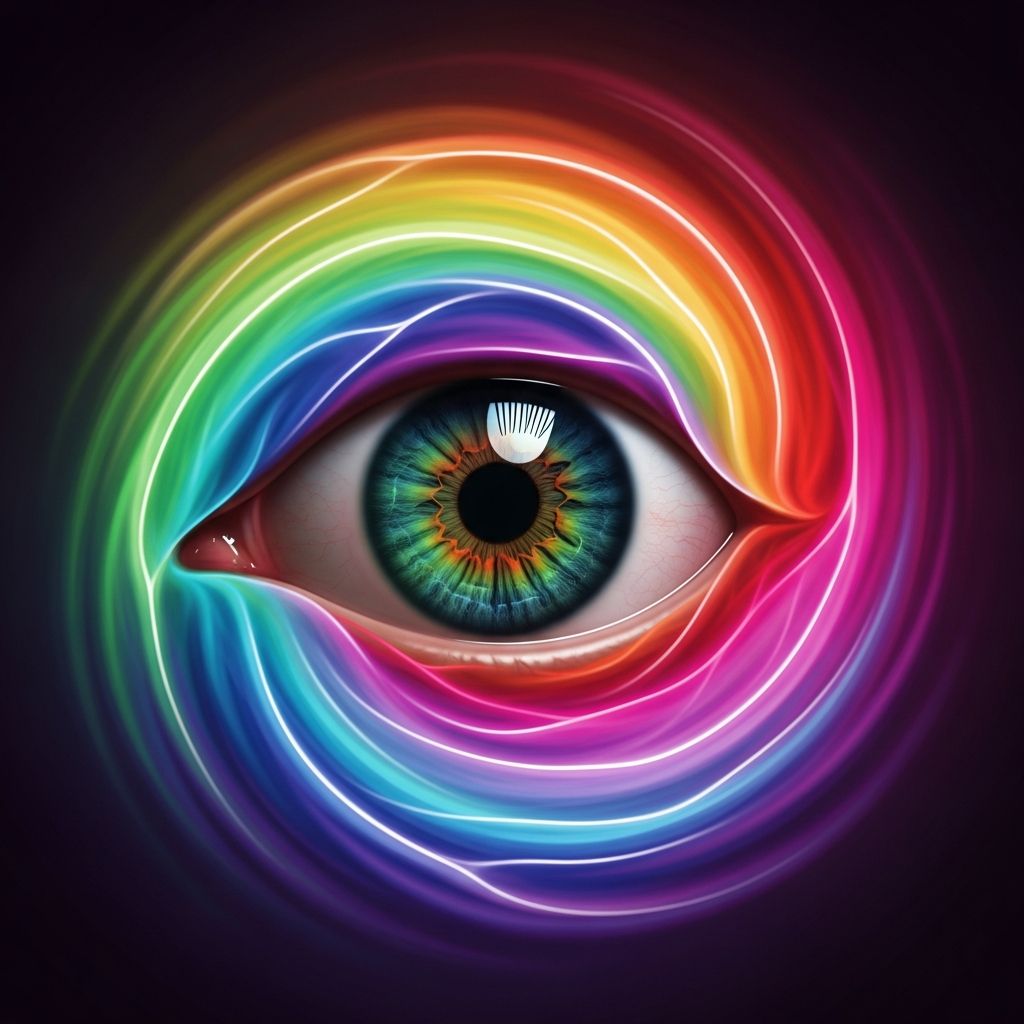
Tetrachromacy is a rare genetic condition that gives certain individuals, almost exclusively females, the ability to perceive a vastly expanded range of colors. Most people have three types of cone photoreceptors in their eyes, which allow them to distinguish between several million colors. Tetrachromats, however, possess four types of cones, enabling them to see up to 100 million colors—far more than the average human.
How Does Tetrachromacy Work?
Color vision in humans is made possible by specialized cells in the retina called cones. These photoreceptors are sensitive to different wavelengths of light, which the brain interprets as color. The three main types of cones are:
- S-cones: Sensitive to short wavelengths (blue)
- M-cones: Sensitive to medium wavelengths (green)
- L-cones: Sensitive to long wavelengths (red)
Most people are trichromats, meaning they have three types of cones. Tetrachromats, on the other hand, have a fourth type of cone, usually most sensitive to wavelengths in the orange range. This extra cone is the result of a genetic mutation and allows tetrachromats to distinguish subtle differences in color that are invisible to trichromats.
Why Is Tetrachromacy So Rare?
Tetrachromacy is rare because it requires a specific genetic mutation that only occurs in females. The gene responsible for the L-cone is located on the X chromosome. Males have only one X chromosome, so a mutation in this gene typically results in some form of color blindness. Females, however, have two X chromosomes. If one X chromosome carries a mutated version of the L-cone gene, the female can have both normal and mutated L-cones, resulting in four types of cones.
Despite this, not all females with the genetic mutation develop true tetrachromacy. For tetrachromacy to be fully functional, two additional conditions must be met:
- The fourth cone must have a different sensitivity than the other three.
- The brain must be able to process the additional color information from the fourth cone.
Types of Tetrachromacy
Experts have identified two main types of tetrachromacy:
- Weak Tetrachromacy: The brain cannot fully process the input from the fourth cone. Individuals with weak tetrachromacy may be slightly better than average at distinguishing between shades, but they do not experience the full spectrum of colors.
- Strong Tetrachromacy: The brain processes the input from the fourth cone, allowing the individual to distinguish up to 100 million colors. Strong tetrachromacy is extremely rare, and only a few confirmed cases have been documented.
How Many Colors Can Tetrachromats See?
The number of colors a person can see depends on the number of cone types they possess:
| Condition | Number of Cone Types | Estimated Colors Seen |
|---|---|---|
| Dichromacy (Color Blindness) | 2 | ~10,000 |
| Trichromacy (Typical Vision) | 3 | 1–10 million |
| Tetrachromacy | 4 | Up to 100 million |
Can Tetrachromacy Be Tested?
Currently, there is no reliable method to test for tetrachromacy outside of specialized research settings. Many websites claim to offer online tetrachromacy tests, but these are not scientifically valid. The main reasons for this are:
- Most digital devices cannot display the full range of colors that tetrachromats can see.
- Testing requires highly specialized hardware and controlled lighting conditions.
- DNA testing can identify the genetic mutation, but it cannot confirm whether the brain processes the additional color information.
Related Stories



Researchers use a combination of DNA testing and specialized color vision tests in controlled environments to confirm tetrachromacy. These tests are typically conducted at research centers or hospitals affiliated with universities.
What Does Tetrachromacy Look Like?
People with tetrachromacy experience the world in a way that is difficult for trichromats to imagine. They can distinguish subtle differences in color that appear identical to most people. For example, two shades of green that look the same to a trichromat might appear distinctly different to a tetrachromat.
The extra cone is usually most sensitive to orange-like colors, which means tetrachromats may have an enhanced ability to perceive shades in this part of the spectrum. However, the full extent of their color vision is still not fully understood, as research in this area is ongoing.
How Common Is Tetrachromacy?
Experts estimate that up to 12% of females may carry the genetic mutation that could lead to tetrachromacy. However, not all of these individuals will develop true tetrachromacy. The actual number of people with strong tetrachromacy is believed to be extremely low, with only a few confirmed cases documented in scientific literature.
Can Males Be Tetrachromats?
True tetrachromacy is almost exclusively found in females due to the genetic mechanism involved. Males have only one X chromosome, so a mutation in the L-cone gene typically results in color blindness rather than tetrachromacy. However, there are rare cases of males with tetrachromacy, usually due to genetic anomalies such as Klinefelter syndrome (XXY chromosomes).
What Are the Implications of Tetrachromacy?
Tetrachromacy has several potential implications:
- Art and Design: Tetrachromats may have a unique advantage in fields that require a keen eye for color, such as painting, photography, and fashion design.
- Scientific Research: Studying tetrachromacy can provide insights into the genetics of color vision and the brain’s ability to process complex sensory information.
- Medical Applications: Understanding tetrachromacy may lead to new treatments for color blindness and other vision disorders.
Frequently Asked Questions (FAQs)
Q: Can tetrachromacy be tested at home?
A: No, there are no reliable home tests for tetrachromacy. Online tests are not scientifically valid, and accurate testing requires specialized equipment and controlled conditions.
Q: Are all females with the genetic mutation tetrachromats?
A: No, not all females with the genetic mutation develop true tetrachromacy. The brain must also be able to process the additional color information from the fourth cone.
Q: Can tetrachromacy be inherited?
A: Yes, tetrachromacy is caused by a genetic mutation and can be inherited. However, the inheritance pattern is complex and depends on the specific genes involved.
Q: Is tetrachromacy a form of color blindness?
A: No, tetrachromacy is the opposite of color blindness. While color blindness reduces the ability to distinguish colors, tetrachromacy enhances it.
Q: Can tetrachromacy be treated or corrected?
A: Tetrachromacy is a genetic trait and does not require treatment. It is not a disorder but rather a rare variation in human vision.
References
- Tetrachromacy: What It Is, What It Looks Like & Tests — Cleveland Clinic. 2024-08-14. https://my.clevelandclinic.org/health/articles/tetrachromacy
- Photoreceptors (Rods & Cones): Anatomy & Function — Cleveland Clinic. 2024-05-06. https://my.clevelandclinic.org/health/body/photoreceptors-rods-and-cones
- Some People Might See ‘Invisible’ Colors That No One Else Can — IFLScience. 2023-05-15. https://www.iflscience.com/some-people-might-see-invisible-colors-that-no-one-else-can-76439
Similar Articles








Read full bio of Sneha Tete