Tetralogy Of Fallot: 4 Heart Defects Explained
Comprehensive guide to Tetralogy of Fallot: symptoms, causes, diagnosis, treatment, and long-term care for this congenital heart defect.
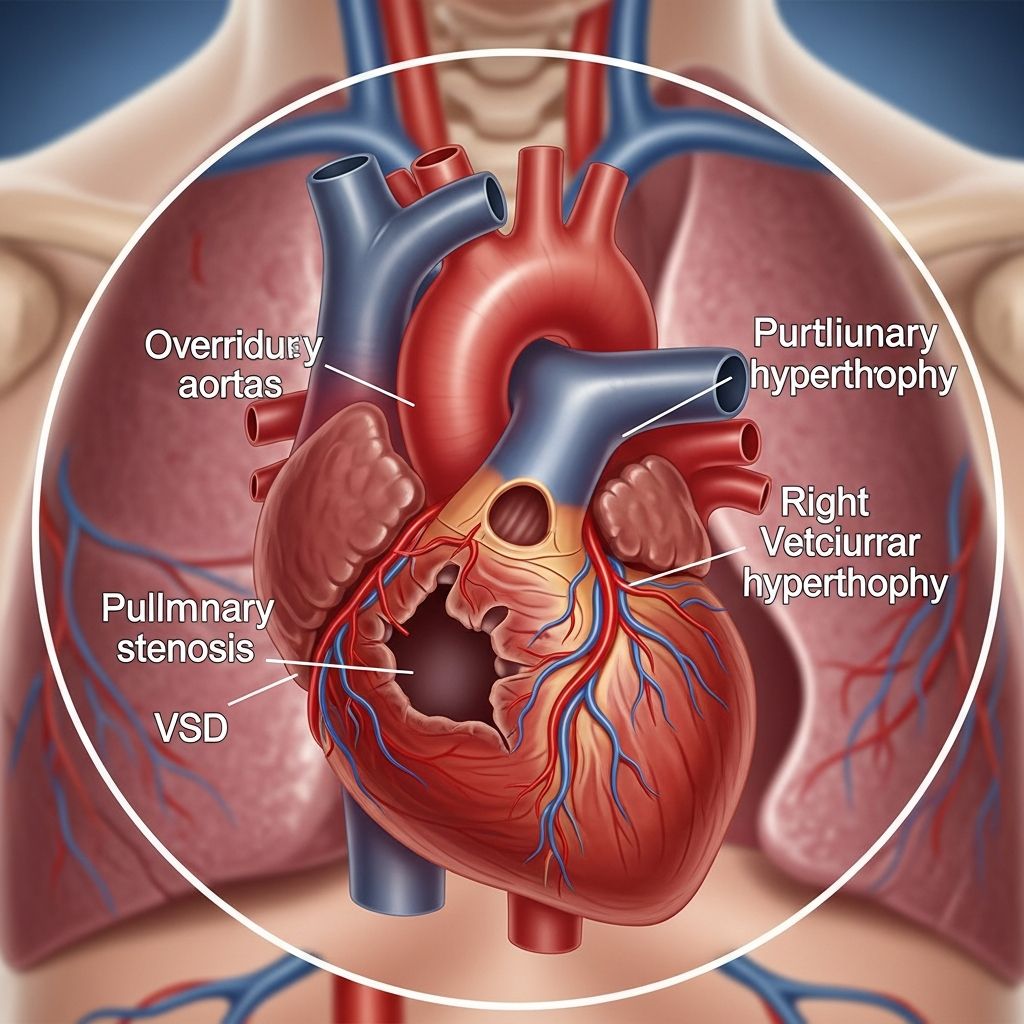
Tetralogy of Fallot (TOF) is the most common cyanotic congenital heart defect, comprising 5-7% of all congenital heart diseases, characterized by four specific anatomical heart abnormalities present at birth that disrupt normal blood flow and oxygenation.
What Is Tetralogy of Fallot?
**Tetralogy of Fallot (TOF)**, named after French physician Étienne-Louis Arthur Fallot who described it in 1888, involves a rare combination of four congenital heart defects that alter blood circulation, leading to reduced oxygen delivery to the body and characteristic bluish skin discoloration known as cyanosis. This condition affects approximately 1 in 2,500 to 3,700 live births, making it a significant focus in pediatric cardiology.
In a healthy heart, oxygen-poor blood from the body enters the right atrium, flows to the right ventricle, and is pumped through the pulmonary artery to the lungs for oxygenation. Oxygen-rich blood then returns to the left atrium, left ventricle, and is distributed via the aorta. TOF disrupts this by creating a right-to-left shunt, mixing oxygen-poor blood into systemic circulation.
The four defects include:
- Ventricular Septal Defect (VSD): A large hole in the septum between the left and right ventricles allows mixing of oxygenated and deoxygenated blood.
- Pulmonary Stenosis: Narrowing of the pulmonary valve or right ventricular outflow tract obstructs blood flow to the lungs.
- Overriding Aorta: The aorta is positioned over both ventricles instead of solely the left, receiving mixed blood.
- Right Ventricular Hypertrophy: Thickening of the right ventricle wall due to increased workload from obstruction.
Severity depends on the degree of pulmonary stenosis; mild cases may present later, while severe ones cause immediate symptoms.
Symptoms of Tetralogy of Fallot
Symptoms typically appear in infancy, with cyanosis being the hallmark sign—a bluish tint to skin, lips, and nails due to low blood oxygen. Infants may exhibit:
- Shortness of breath or rapid breathing, especially during feeding or crying.
- Poor feeding, weight gain failure, and growth delays (failure to thrive).
- Heart murmur: A harsh systolic murmur audible via stethoscope from turbulent flow.
- Clubbing of fingers and toes in chronic cases.
- Fussiness, irritability, tiring easily, and palpitations.
**Tet Spells (Hypercyanotic Attacks):** These acute episodes, peaking at 2-4 months, involve sudden severe cyanosis, restlessness, gasping, and dyspnea triggered by crying, feeding, or agitation. Caused by dynamic right ventricular outflow obstruction and increased right-to-left shunting, spells may lead to loss of consciousness, seizures, or hemiparesis. Infants adopt knee-chest positions; older children squat instinctively to increase pulmonary blood flow.
In mild TOF, children may be acyanotic initially (pink tet), becoming cyanotic later. Associated conditions like atrial septal defect or DiGeorge syndrome increase complexity.
Causes and Risk Factors
TOF arises from abnormal embryonic heart development between weeks 4-7 of gestation, involving conotruncal defects from neural crest cell migration failure. Genetic factors play a role:
- 22q11 deletion (DiGeorge syndrome) in 15-20% of cases.
- Down syndrome association.
- Familial recurrence risk of 2-5%; offspring risks include prematurity and other CHDs.
Environmental risks include maternal diabetes, phenylketonuria, rubella, or teratogen exposure, though most cases are sporadic. No single cause; multifactorial with genetic predisposition.
Diagnosis of Tetralogy of Fallot
Related Stories



Prenatal diagnosis via fetal echocardiography detects anomalies in 50-70% of cases. Postnatally:
- Pulse Oximetry: Reveals low oxygen saturation (<95%).
- Echocardiography: Gold standard, visualizing all four defects, shunt direction, and arch anatomy.
- Chest X-ray: Boot-shaped heart from right ventricular hypertrophy and small pulmonary artery.
- ECG: Shows right axis deviation and hypertrophy.
- Cardiac MRI/Catheterization: For complex cases assessing coronary arteries and pulmonary status.
Early diagnosis is critical to prevent complications like spells or heart failure.
Treatment for Tetralogy of Fallot
Treatment is surgical; palliative procedures precede complete repair.
Palliative Interventions:
- Prostaglandin E1 to maintain ductus arteriosus patency in duct-dependent pulmonary flow.
- Blalock-Taussig-Thomas shunt for temporary pulmonary flow increase.
Complete Repair: Typically at 3-6 months, involves VSD patch closure, relief of right ventricular outflow tract obstruction (infundibular resection, patch augmentation), and addressing the overriding aorta. Success rates exceed 95%; early repair reduces long-term issues.
Tet Spell Management: Knee-chest position, oxygen, morphine, fluids, beta-blockers (propranolol), phenylephrine for vasoconstriction.
Long-Term Outcomes and Complications
Post-repair, 85-90% of patients reach adulthood with good quality of life, though lifelong cardiology follow-up is essential. Key complications:
| Complication | Description | Management |
|---|---|---|
| Pulmonary Regurgitation | Valve incompetence post-repair leading to right ventricular dilation. | Pulmonary valve replacement (10-20 years post-repair). |
| Arrhythmias | Ventricular tachycardia, atrial fibrillation; sudden death risk 0.2%/year. | Antiarrhythmics, ICDs, blood thinners. |
| Right Ventricular Dysfunction | From chronic volume overload. | Medications, reoperations. |
| Aortic Root Dilation | Progressive aneurysm risk. | Serial imaging, surgery if needed. |
Exercise restrictions initially, then tailored; pregnancy possible with counseling. Neurodevelopmental delays from cyanosis or genetics affect 20-30%.
Living With Tetralogy of Fallot
Patients need endocarditis prophylaxis pre-repair, vaccinations, and activity per specialist advice. Psychological support addresses body image from scars. Regular echoes, Holter monitors, and stress tests monitor progression. With adherence, most lead active lives.
Frequently Asked Questions (FAQs)
Can Tetralogy of Fallot be cured?
Yes, complete surgical repair cures the structural defects, though lifelong monitoring is required for complications like pulmonary regurgitation.
What causes tet spells in TOF?
Tet spells result from increased right-to-left shunting due to dynamic infundibular spasm, reduced systemic resistance, or triggers like crying.
Is TOF hereditary?
Partially; recurrence risk is 2-5% in siblings, higher with genetic syndromes like 22q11 deletion.
When is surgery performed for TOF?
Complete repair at 3-6 months ideally; earlier if severe cyanosis or spells.
What is the prognosis after TOF repair?
Excellent, with >90% survival to adulthood; main issues are reintervention for valve issues and arrhythmias.
References
- Tetralogy of Fallot – Symptoms and causes — Mayo Clinic. 2023-10-26. https://www.mayoclinic.org/diseases-conditions/tetralogy-of-fallot/symptoms-causes/syc-20353477
- Tetralogy of Fallot — NORD (National Organization for Rare Disorders). 2023-07-12. https://rarediseases.org/rare-diseases/tetralogy-of-fallot/
- Tetralogy of Fallot — Merck Manuals. 2024-05-01. https://www.merckmanuals.com/home/children-s-health-issues/birth-defects-of-the-heart/tetralogy-of-fallot
- Tetralogy of Fallot — StatPearls, NCBI Bookshelf. 2023-08-08. https://www.ncbi.nlm.nih.gov/books/NBK513288/
- Tetralogy of Fallot — American Heart Association. 2024-02-15. https://www.heart.org/en/health-topics/congenital-heart-defects/about-congenital-heart-defects/tetralogy-of-fallot
Similar Articles








Read full bio of medha deb