Tetralogy of Fallot: Symptoms, Causes & Treatment
Understanding Tetralogy of Fallot: A comprehensive guide to this congenital heart condition, its diagnosis, and treatment options.
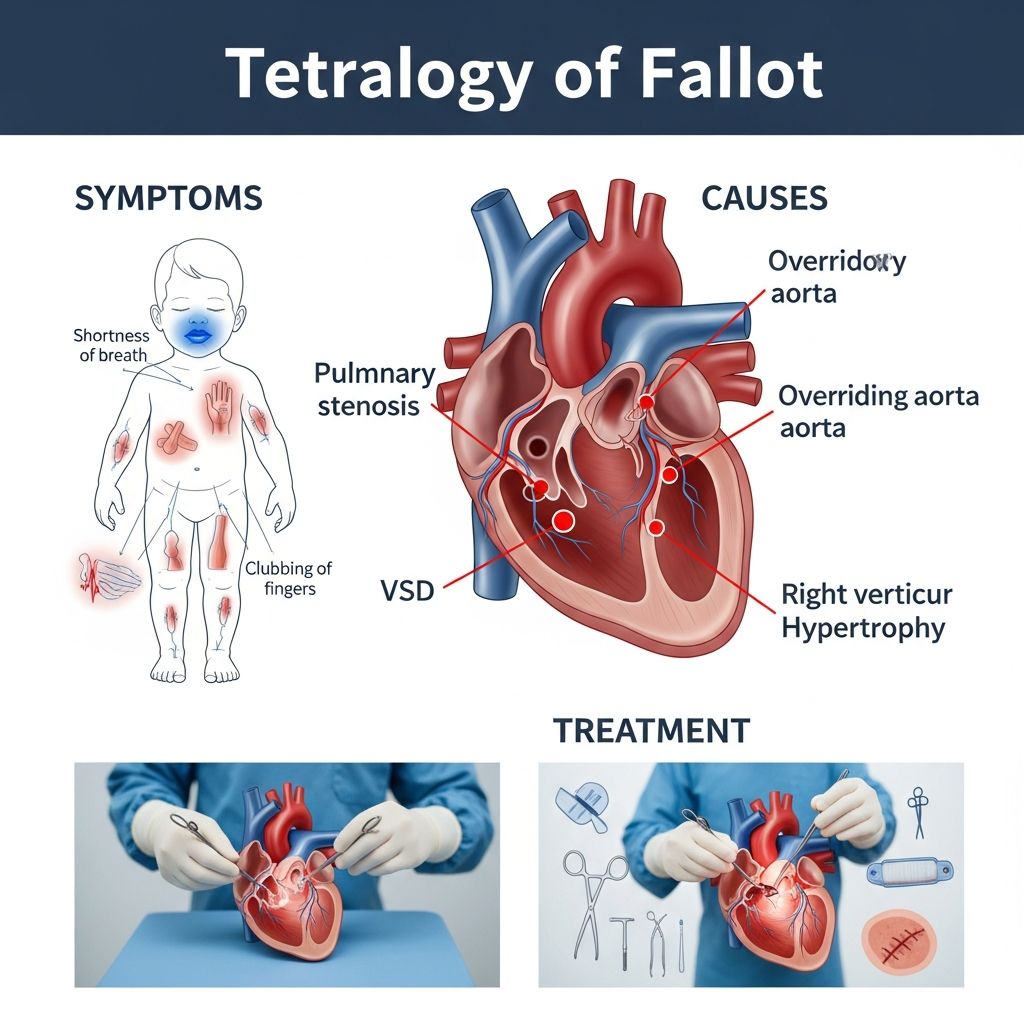
Understanding Tetralogy of Fallot
Tetralogy of Fallot (ToF) is a congenital heart condition, which means it is present at birth. This rare but serious cardiac disorder affects approximately 1 in 3,600 live births and accounts for about 3.5% of all infants born with congenital heart disease, making it the most common cyanotic heart defect in children who survive to school age. The condition makes it difficult for your baby’s heart to send enough oxygen-rich blood to the entire body because of four distinct structural abnormalities in the heart.
Understanding Tetralogy of Fallot is crucial for parents and caregivers, as early diagnosis and treatment can significantly improve outcomes and quality of life. While this condition once posed serious challenges for survival, modern surgical techniques and comprehensive cardiac care have transformed the prognosis for children born with ToF. Many patients now reach adulthood and live fulfilling lives with appropriate medical management and follow-up care.
The Four Anatomical Features of Tetralogy of Fallot
Tetralogy of Fallot is defined by four distinct anatomic abnormalities that work together to compromise heart function and oxygen delivery:
- Pulmonary Stenosis: Narrowing of the pulmonary valve and the passage it controls, which can be subvalvular, valvular, or both. This narrowing restricts blood flow from the right ventricle to the lungs.
- Ventricular Septal Defect (VSD): A hole in the wall (septum) that divides the two lower chambers (ventricles) of the heart. This allows deoxygenated blood from the right ventricle to mix with oxygenated blood in the left ventricle.
- Right Ventricular Hypertrophy: Thickening of the right ventricle wall as it works harder to pump blood through the narrowed pulmonary valve, causing the chamber to enlarge and become less efficient.
- Overriding Aorta: The aorta, which normally arises from the left ventricle, is positioned over the ventricular septal defect in patients with ToF. This rightward deviation allows the aorta to receive blood from both ventricles rather than exclusively from the left ventricle.
These four features combine to create a significant obstruction to pulmonary blood flow and result in deoxygenated blood bypassing the lungs and entering the systemic circulation, leading to the characteristic bluish discoloration of the skin and lips.
Symptoms of Tetralogy of Fallot
The symptoms of Tetralogy of Fallot can range from mild to severe and typically worsen over time without treatment. Parents and caregivers should be aware of the following signs and symptoms that may indicate their child has ToF.
Symptoms in Infants and Children
Children with Tetralogy of Fallot may experience:
- Cyanosis: A bluish tint to the skin, lips, and fingernails caused by insufficient oxygen in the blood
- Shortness of breath, particularly during feeding or crying
- Poor feeding and failure to gain weight appropriately
- Fatigue and reduced activity tolerance
- Clubbing of fingers and toes as a long-term consequence of chronic hypoxia
- “Tet spells”: Episodes of severe cyanosis and difficulty breathing that can occur suddenly
- Squatting behavior: Older children may instinctively squat to improve blood flow to the lungs
Symptoms in Adults
Rarely, some individuals do not receive a diagnosis during childhood and may develop symptoms of Tetralogy of Fallot as adults. These symptoms can include:
- Cyanosis and bluish skin discoloration
- Chest pain or discomfort
- Heart palpitations
- Fainting or syncope episodes
- Exercise intolerance and inability to participate in strenuous activities
- Generalized decline in functional capacity
Diagnosis of Tetralogy of Fallot
Diagnosis of Tetralogy of Fallot typically begins with a physical examination and is confirmed with specialized cardiac imaging. Healthcare providers use a variety of diagnostic tools to identify the condition and assess its severity.
Physical Examination
During a physical examination, a healthcare provider will carefully listen to your child’s heart using a stethoscope. If your child has Tetralogy of Fallot, the provider will most likely hear a characteristic heart murmur caused by the abnormal blood flow through the septal defect and stenotic pulmonary valve.
Related Stories



Diagnostic Tests
Healthcare providers may use the following tests to diagnose and evaluate Tetralogy of Fallot:
- Echocardiography: An ultrasound of the heart that creates detailed images of the heart structure and blood flow, allowing providers to visualize all four anatomical abnormalities
- Chest X-ray: Imaging that may show characteristic features such as a right-sided aortic arch (present in about 25% of ToF patients) or a “boot-shaped” heart silhouette
- Electrocardiogram (ECG): A test that records the electrical activity of the heart and may show patterns consistent with right ventricular hypertrophy
- Cardiac Catheterization: A specialized procedure in which a catheter is threaded through blood vessels to the heart, allowing measurement of pressures and oxygen levels in different heart chambers
- Pulse Oximetry: A non-invasive measurement of oxygen saturation in the blood, which is typically lower than normal in patients with ToF
- Magnetic Resonance Imaging (MRI): Advanced imaging that provides detailed three-dimensional views of heart structure for surgical planning
Treatment Options for Tetralogy of Fallot
Treatment for Tetralogy of Fallot involves both medical management and surgical intervention. The goal of treatment is to restore normal blood flow through the heart and ensure adequate oxygen delivery to the body.
Medical Management
As a first step in Tetralogy of Fallot treatment, healthcare providers may prescribe medications to ease symptoms and stabilize the patient’s condition before surgery. These medications include:
- Beta-blockers: Medications that improve blood flow and reduce the frequency and severity of tet spells by decreasing heart rate and the force of heart contractions
- Prostaglandin E1: A medication that keeps the patent ductus arteriosus open, allowing blood to bypass the obstructed pulmonary valve
- Supplemental oxygen: Extra oxygen therapy to increase oxygen saturation in the blood
Surgical Intervention
Surgery is the definitive treatment for Tetralogy of Fallot. Typically, three to six months after birth, infants can undergo corrective surgery to repair the four anatomical defects and restore normal blood flow through the heart. The primary surgical approach is Early Primary Surgical Repair (EPSR), which offers several advantages.
Early Primary Surgical Repair ideally restores normal cardiovascular anatomy and physiology, resolves chronic cyanosis, and promotes normal neurological development during a critical period of rapid brain development in early infancy. This approach also may restore normal development of the pulmonary vasculature and alveoli in patients with diminished pulmonary perfusion. During surgery, the cardiac surgeon will typically:
- Repair or enlarge the pulmonary valve and outflow tract to relieve stenosis
- Close the ventricular septal defect with a patch
- Reduce right ventricular hypertrophy as necessary
Managing Tet Spells
Tet spells are episodes of severe cyanosis and difficulty breathing that can occur in infants with untreated or incompletely treated Tetralogy of Fallot. These episodes can be frightening but can be managed effectively with appropriate interventions.
When your baby experiences a tet spell and has trouble breathing, place them into a squatting position by gently pushing their knees toward their chest. This maneuver helps increase systemic vascular resistance and redirects more blood to the lungs, temporarily improving oxygen saturation. Keeping your baby calm and avoiding unnecessary stress can also help prevent or minimize tet spells. If tet spells occur frequently or become severe, contact your healthcare provider immediately as medication adjustments or earlier surgery may be necessary.
Long-term Complications and Follow-up Care
While surgical repair of Tetralogy of Fallot is highly successful, patients require lifelong medical care and monitoring to manage potential long-term complications. Some adults who had surgery as infants may develop issues that require additional medical care or surgery in adulthood.
Pulmonary Valve Insufficiency
The most significant long-term complication following repair of Tetralogy of Fallot is severe pulmonary valve insufficiency, which can lead to right ventricular systolic dysfunction. This complication is the overwhelming reason for repeat surgery in patients with previously repaired ToF. Pulmonary insufficiency predisposes patients to cardiac arrhythmias and increases the risk of sudden cardiac death, which is 25 to 100 times higher in patients with significant pulmonary insufficiency compared to the general population.
Arrhythmias and Sudden Cardiac Death
Patients with repaired Tetralogy of Fallot remain at risk for ventricular arrhythmias and sudden cardiac death throughout their lives. Research has demonstrated that moderate or severe pulmonary insufficiency is the main hemodynamic abnormality in patients who develop ventricular tachycardia and sudden death. An increase in QRS duration greater than 3.5 milliseconds per year predicts ventricular arrhythmia and sudden death risk.
Lifelong Monitoring and Care
Your baby needs lifelong care for congenital heart disorders like Tetralogy of Fallot. Regular follow-up appointments with a pediatric cardiologist are essential to monitor heart function, detect complications early, and adjust treatment as needed. Adults should also consult with their cardiologist before having surgery on a different part of their body, as cardiac considerations must be taken into account for any surgical procedure.
Quality of Life After Treatment
With appropriate surgical repair and comprehensive lifelong cardiac care, most patients with Tetralogy of Fallot can enjoy good quality of life and pursue many normal activities. Regular exercise, appropriate diet, and close follow-up with cardiologists help patients maintain their health and well-being. Many adults who had surgery as children are able to work, travel, and participate in meaningful activities, demonstrating that Tetralogy of Fallot need not severely limit life potential when properly managed.
Frequently Asked Questions (FAQs)
Q: What causes Tetralogy of Fallot?
A: Tetralogy of Fallot is a congenital condition, meaning the four heart defects develop before birth. While the exact cause is not always known, genetic factors and maternal conditions during pregnancy may play a role in its development.
Q: How common is Tetralogy of Fallot?
A: Tetralogy of Fallot occurs in approximately 1 in 3,600 live births and represents about 3.5% of all infants born with congenital heart disease, making it the most common cyanotic heart defect.
Q: Can Tetralogy of Fallot be cured?
A: While surgery cannot completely “cure” Tetralogy of Fallot, early surgical repair can successfully restore more normal heart anatomy and physiology, significantly improving symptoms and quality of life. However, lifelong medical follow-up is necessary to manage potential complications.
Q: What is the prognosis for children with Tetralogy of Fallot?
A: With modern surgical techniques and comprehensive cardiac care, most children with Tetralogy of Fallot who receive appropriate treatment have excellent outcomes and can live long, active lives. Many reach adulthood without significant limitations.
Q: Can adults with Tetralogy of Fallot participate in sports and exercise?
A: Many adults with repaired Tetralogy of Fallot can participate in regular exercise and some sports, though the specific recommendations depend on the individual’s cardiac status. Consultation with a cardiologist is important to determine appropriate activity levels.
Q: What should I do if my child has a tet spell?
A: If your child experiences a tet spell with difficulty breathing and severe cyanosis, place them in a squatting position by gently pushing their knees toward their chest. Keep them calm and contact your healthcare provider. If the episode is severe or prolonged, seek emergency medical care immediately.
Q: Does Tetralogy of Fallot run in families?
A: While most cases of Tetralogy of Fallot occur sporadically, there may be a genetic component. Families with a history of congenital heart disease should discuss genetic counseling with their healthcare provider.
Q: How often should adults with repaired Tetralogy of Fallot see a cardiologist?
A: The frequency of follow-up visits depends on individual circumstances and complications, but most adults with repaired ToF require regular cardiac evaluations at least annually or as recommended by their cardiologist to monitor for complications like pulmonary insufficiency and arrhythmias.
References
- Tetralogy of Fallot — Cleveland Clinic Journal of Medicine. 2010-11. https://www.ccjm.org/content/ccjom/77/11/821.full.pdf
- Tetralogy of Fallot (ToF): Symptoms, Causes & Treatment — Cleveland Clinic. 2025-03-13. https://my.clevelandclinic.org/health/diseases/22343-tetralogy-of-fallot
- Surgical Management of Symptomatic Neonates with Tetralogy of Fallot — Cleveland Clinic. https://consultqd.clevelandclinic.org/surgical-management-of-symptomatic-neonates-with-tetralogy-of-fallot
- Outcomes of complete surgical repair versus palliative intervention in neonates with Tetralogy of Fallot — Pediatric Research. https://onlinelibrary.wiley.com/doi/full/10.1002/ped4.12348
- Comparison of Long-term Postoperative Sequelae in Patients with Tetralogy of Fallot and Isolated Pulmonary Valve Stenosis — National Center for Biotechnology Information. https://pmc.ncbi.nlm.nih.gov/articles/PMC4127401/
Similar Articles








Read full bio of medha deb