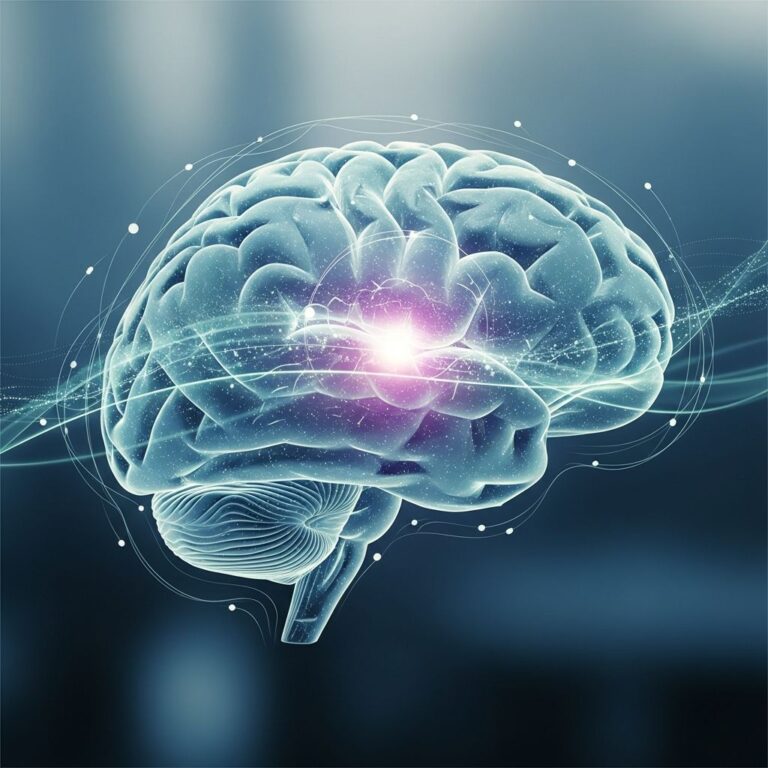
Thalamus: What It Is, Function & Disorders
Discover how the thalamus acts as your brain's relay station for sensory and motor signals.
What Is the Thalamus?
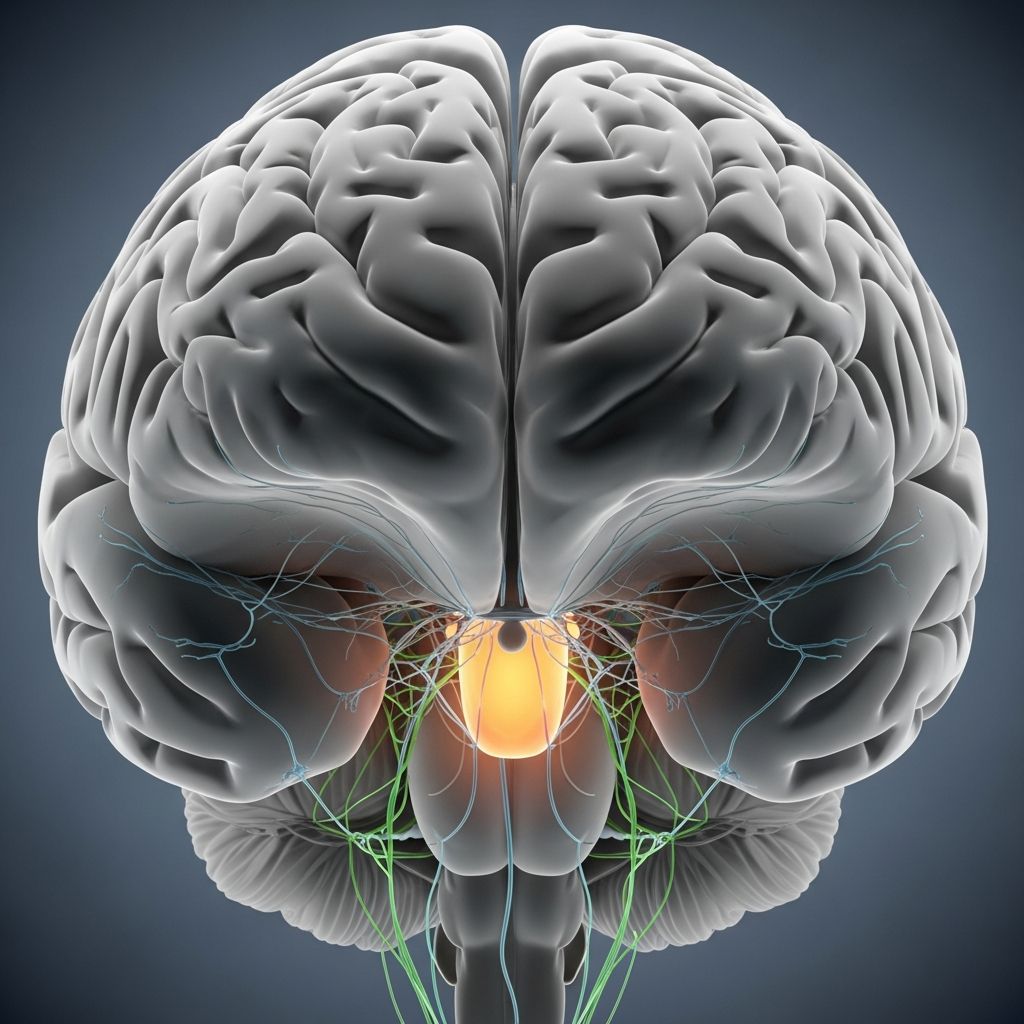
The thalamus is an egg-shaped structure located deep within the center of your brain that plays a crucial role in processing information throughout your nervous system. Situated adjacent to the third ventricle of the brain, the thalamus functions as your brain’s primary relay station, receiving and transmitting virtually all incoming motor and sensory information before it reaches your cerebral cortex. This paired structure—with one thalamus in each hemisphere of the brain—serves as a critical hub for neural communication and information processing.
The name “thalamus” derives from Greek origins, meaning “inner chamber,” which accurately describes its position deep within the brain’s core. The thalamus is connected between its two hemispheres by a structure called the massa intermedia, also known as the interthalamic adhesion, ensuring coordinated function between both sides of the brain.
Anatomical Structure and Location
The thalamus occupies a strategic position in your brain, situated along the midline within the diencephalon region. Its arterial blood supply comes predominantly from branches of the posterior cerebral arteries and the posterior communicating artery, ensuring it receives adequate oxygen and nutrients to maintain its vital functions.
The internal structure of the thalamus is highly organized and compartmentalized. The thalamus contains multiple subdivisions called nuclei, which are distinct functional and anatomical regions. These nuclei are separated by sheets of myelinated neural fibers known as the internal medullary lamina, creating distinct zones including the relay nuclei, association nuclei, midline/intralaminar nuclei, and the reticular nucleus. This organizational structure allows different regions of the thalamus to specialize in processing specific types of information.
Primary Functions of the Thalamus
The thalamus performs several essential functions that make it indispensable to normal brain operation and bodily function. Understanding these functions helps explain why damage to this structure can have such profound effects on sensory perception, motor control, and cognitive processes.
Sensory Information Processing
One of the thalamus’s most important functions is processing and relaying sensory information from your body to your cerebral cortex. Nearly all sensory information—including touch, temperature, pain, vision, hearing, and taste—passes through specific thalamic nuclei before reaching the appropriate cortical areas for interpretation and conscious awareness. This relay function is essential because it allows your brain to organize and prioritize incoming sensory data.
For example, when you hear a sound, the auditory information travels through your ear canal to the auditory nerve, then to various brain regions, including the inferior colliculus. From there, it reaches the medial geniculate nucleus (MGN) of the thalamus, which relays the information to your auditory cortex in the temporal lobe for further processing and interpretation. This process happens almost instantaneously, allowing you to perceive and respond to sounds in real time.
Motor Control and Movement
The thalamus plays a vital role in motor function by receiving movement-related information from various brain regions and relaying it to the motor cortex and other movement-control areas. The ventral anterior (VA) nucleus and ventral lateral (VL) nucleus are particularly important for motor control. The VA nucleus receives input from basal ganglia structures and projects to the premotor cortex and primary motor cortex, facilitating the initiation and execution of voluntary movements. The VL nucleus, receiving input from the cerebellum, is crucial for balance and fine motor control, which is why it has become a clinical target for treating essential tremor.
Related Stories



Emotional Processing
Beyond sensory and motor functions, the thalamus contributes significantly to emotional processing. The thalamus receives emotional information from the amygdala, your brain’s emotional processing center, and relays these signals to the prefrontal cortex. This connection allows your brain to manage and regulate your emotional responses, helping you determine appropriate actions based on your emotional state.
Memory, Cognition, and Higher Brain Functions
Various thalamic nuclei process information related to memory, learning, behavior regulation, organization, planning, and higher-order thinking. This means the thalamus doesn’t simply act as a passive relay station—it contributes actively to complex cognitive processes that define human consciousness and decision-making.
Specialized Nuclei and Their Functions
The thalamus contains multiple specialized nuclei, each responsible for processing specific types of information:
| Thalamic Nucleus | Primary Function | Input Source | Output Destination |
|---|---|---|---|
| Ventral Posterior Lateral (VPL) | Body somatosensation | Medial lemniscal pathway, spinothalamic tract | Primary somatosensory cortex |
| Ventral Posterior Medial (VPM) | Facial sensation, taste | Trigeminal nerve, taste fibers | Sensory cortex, insula, amygdala |
| Lateral Geniculate Nucleus (LGN) | Visual information relay | Retina via optic nerve | Primary visual cortex |
| Medial Geniculate Nucleus (MGN) | Auditory information relay | Inferior colliculus | Auditory cortex |
| Ventral Anterior (VA) | Voluntary movement control | Basal ganglia | Premotor and motor cortex |
| Ventral Lateral (VL) | Balance and fine motor control | Cerebellum, red nucleus | Motor cortex areas |
The Thalamus as a Relay Station
The thalamus’s role as a relay station is more sophisticated than simple signal forwarding. Rather than passively transmitting information, thalamic nuclei actively filter, modulate, and organize incoming signals. The thalamus receives strong reciprocal connections from the cerebral cortex, meaning the cortex sends information back to the thalamus, creating a feedback loop that refines and coordinates sensory processing. This bidirectional communication allows for attentional modulation—your ability to focus on relevant information while filtering out distractions.
An important exception to the typical thalamic relay function exists for olfactory information. Unlike other senses, smell bypasses the thalamus and sends information directly to the olfactory cortex and other brain regions. This unique arrangement may explain why smell has such a direct and powerful connection to emotion and memory.
Conditions and Disorders Affecting the Thalamus
Damage to the thalamus can occur through various causes and may result in significant cognitive, sensory, and motor impairments. Understanding these conditions is crucial for recognizing potential neurological problems and seeking appropriate medical attention.
Common Causes of Thalamic Damage
The thalamus may be damaged through:
- Stroke, which interrupts blood flow to thalamic tissue
- Brain tumors or growths affecting thalamic structures
- Traumatic brain injury
- Certain neurodegenerative diseases
- Infections affecting the central nervous system
Specific Thalamic Disorders
Thalamic Aphasia: This condition results from thalamic damage affecting language production and comprehension. People with thalamic aphasia may experience difficulty organizing their thoughts into coherent speech, resulting in words becoming jumbled and speech becoming less meaningful. This differs from other forms of aphasia and often responds differently to treatment.
Thalamic Pain Syndrome: Also known as Dejerine-Roussy syndrome, this condition causes abnormal pain sensations such as persistent tingling, burning, or severe pain in areas of the body. The pain is typically chronic and can be extremely difficult to manage, significantly affecting quality of life.
Sleep Disorders: The thalamus plays an important role in sleep-wake cycles through its connections with the reticular activating system. Thalamic damage can result in various sleep disorders, including insomnia or, in rare cases, fatal familial insomnia, a devastating genetic condition affecting thalamic function.
Vision Problems: Damage to the lateral geniculate nucleus or visual thalamic pathways may cause vision loss or abnormal light sensitivity. These visual disturbances can range from partial vision loss to complete blindness, depending on the extent of damage.
Movement Disorders: Thalamic damage commonly results in movement problems including tremors, rigidity, and difficulty with motor coordination. These symptoms reflect the thalamus’s crucial role in motor control and the regulation of movement.
Chronic Pain: Beyond thalamic pain syndrome, general thalamic damage can result in chronic pain conditions that persist long after the initial injury. This pain is often difficult to treat with standard pain management approaches.
Treatment Options for Thalamic Disorders
While damage to the thalamus can cause serious symptoms, treatment approaches focus on helping you regain lost skills and maximize remaining function. The brain possesses remarkable neuroplasticity—the ability to reorganize and create new neural connections—which provides hope for recovery.
Rehabilitation and Therapy
Treatment typically begins with various forms of rehabilitation designed to retrain your brain:
- Sensory exercises targeting specific sensory modalities that have been affected
- Physiotherapy to improve motor control and movement quality
- Speech and language therapy for aphasia or communication difficulties
- Cognitive rehabilitation for memory and thinking problems
- Occupational therapy to relearn daily living skills
Deep Brain Stimulation
For specific conditions like essential tremor or severe movement disorders, deep brain stimulation (DBS) may be recommended. This surgical procedure involves implanting electrodes in the thalamus that deliver high-frequency electrical impulses to specific nuclei, helping to manage tremors and other movement abnormalities. DBS has shown remarkable effectiveness for treating movement disorders and some other thalamic conditions.
Medication Management
Depending on the specific condition, medications may be prescribed to manage symptoms such as pain, sleep disturbances, or mood changes related to thalamic dysfunction.
The Thalamus and Sleep Regulation
The thalamus works closely with the reticular activating system in the brainstem to regulate sleep and wakefulness. During sleep, thalamic neurons exhibit distinct firing patterns that facilitate the transition between sleep stages. This coordinated activity is essential for normal sleep architecture and the restorative functions of sleep. Disruption of these patterns can lead to insomnia, excessive daytime sleepiness, or other sleep disorders.
Frequently Asked Questions
Q: What does the thalamus do?
A: The thalamus acts as a relay station for nearly all sensory and motor information traveling to your cerebral cortex. It processes and organizes signals related to touch, temperature, pain, vision, hearing, taste, and movement, as well as contributing to memory, emotion, and higher cognitive functions.
Q: Where is the thalamus located?
A: The thalamus is located deep within the center of your brain, adjacent to the third ventricle, positioned between the brainstem below and the cerebral cortex above.
Q: What happens if the thalamus is damaged?
A: Damage to the thalamus can cause sensory problems, movement disorders, speech difficulties, chronic pain, sleep disturbances, and cognitive changes. The specific effects depend on which part of the thalamus is damaged and the severity of the injury.
Q: Is thalamic damage reversible?
A: While the thalamus itself may not fully repair, the brain’s neuroplasticity allows it to reorganize and create new connections. With appropriate rehabilitation and therapy, many people can recover significant function and adapt to changes.
Q: What is deep brain stimulation for the thalamus?
A: Deep brain stimulation is a surgical treatment where electrodes are implanted in the thalamus to deliver high-frequency electrical impulses. This procedure can effectively manage movement disorders like essential tremor and is sometimes used for other thalamic conditions.
Q: Does all sensory information pass through the thalamus?
A: Almost all sensory information passes through the thalamus before reaching the cerebral cortex, with one notable exception: smell (olfaction) bypasses the thalamus and goes directly to the olfactory cortex.
References
- Thalamus: What It Is, Function & Disorders — Cleveland Clinic. 2024. https://my.clevelandclinic.org/health/body/22652-thalamus
- Thalamus — Britannica. Accessed December 2024. https://www.britannica.com/science/thalamus
- Understanding the Thalamus: Sensation and Perception — MQ Neurosurgery. 2024. https://mqneurosurgery.com.au/understanding-the-thalamus-sensation-and-perception/
- Limbic System: What It Is, Function, Parts & Location — Cleveland Clinic. 2024. https://my.clevelandclinic.org/health/body/limbic-system
- Brainstem: What It Is, Function, Anatomy & Location — Cleveland Clinic. 2024. https://my.clevelandclinic.org/health/body/21598-brainstem
Similar Articles








Read full bio of Sneha Tete