Best And Worst Foods For Your Thyroid: What To Eat And Avoid
Discover the best foods to support thyroid health and the worst ones to avoid for optimal hormone balance and function.
The thyroid gland, a small butterfly-shaped organ in your neck, produces hormones that regulate metabolism, energy levels, heart rate, and body temperature. Thyroid disorders like hypothyroidism (underactive thyroid) and hyperthyroidism (overactive thyroid) affect millions worldwide, often influenced by diet. Certain foods provide essential nutrients such as iodine, zinc, selenium, and tyrosine to support thyroid hormone production (T3 and T4), while others—known as goitrogens or high in interfering compounds—can hinder function, especially in those with iodine deficiency or existing conditions. This article outlines the best foods to incorporate and the worst to limit or avoid, based on expert insights from health authorities.
What Is the Thyroid and Why Does Diet Matter?
Your thyroid relies on key nutrients to synthesize hormones. Iodine is crucial for thyroid hormone creation; deficiency can lead to goiter (enlarged thyroid) or hypothyroidism. Zinc aids hormone production and absorption, while selenium helps convert T4 to active T3. Poor diet can exacerbate issues: excess goitrogens block iodine uptake, processed foods promote inflammation and weight gain (common in hypothyroidism), and high fats impair hormone synthesis. For those on thyroid medication, timing meals is vital—avoid interferers like coffee or soy near doses. Balancing intake supports overall endocrine health, but consult a doctor for personalized advice, as needs vary by condition (hypo- vs. hyperthyroidism).
Best Foods for Your Thyroid
Incorporating nutrient-dense foods can optimize thyroid function. Prioritize those rich in iodine, zinc, selenium, and antioxidants. Aim for variety to cover nutritional gaps without excess.
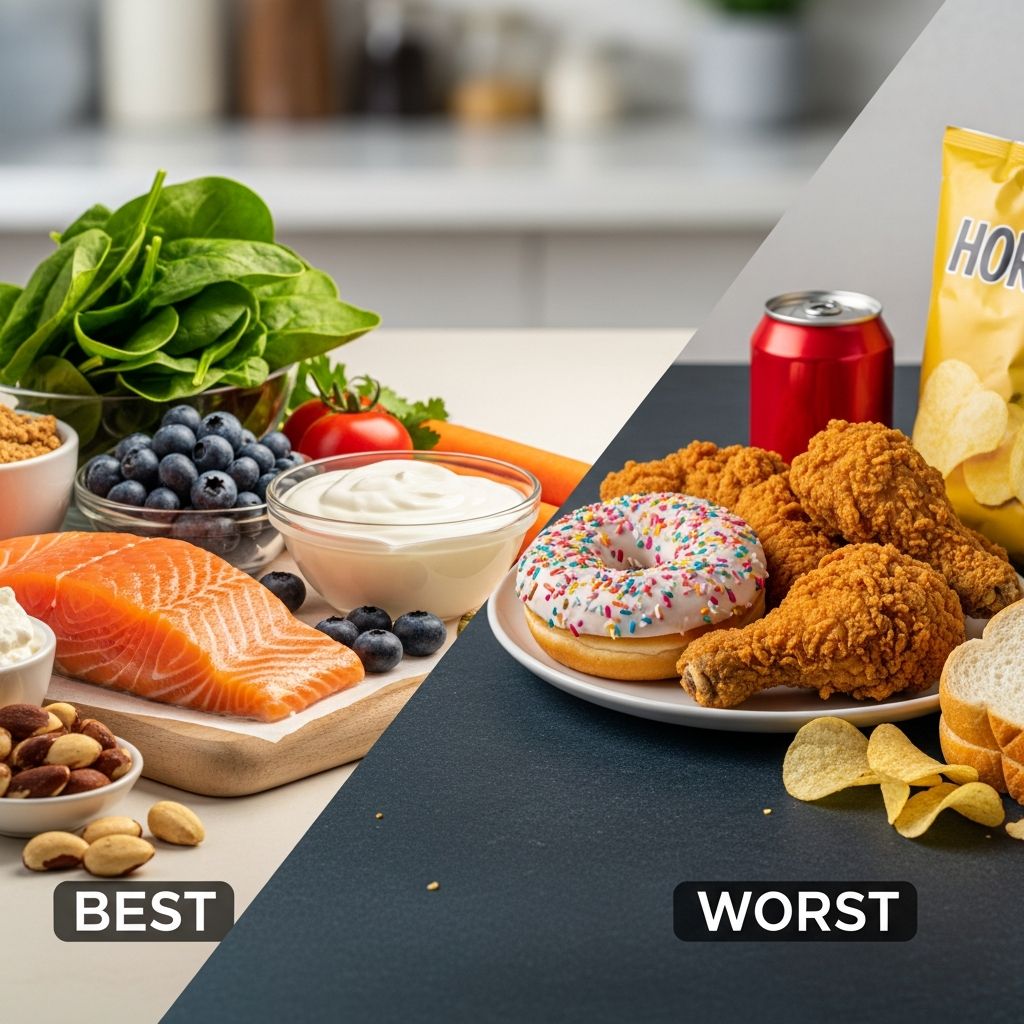
- Dried Seaweed: An exceptional iodine source, providing 11% to 1,989% of daily needs per gram, vital for preventing hypothyroidism and goiter. Kelp and nori are top choices, but limit to food forms—supplements risk overdose, especially in hyperthyroidism.
- Seafood: Oysters, shrimp, and fatty fish like salmon deliver zinc (key for hormone production) and selenium. Low zinc links to hypothyroidism; seafood replenishes it efficiently.
- Brazil Nuts: One or two nuts meet daily selenium needs, supporting T4-to-T3 conversion and reducing inflammation.
- Eggs: yolks offer iodine, selenium, and tyrosine, a thyroid hormone building block.
- Lean Meats and Poultry: Turkey and chicken provide zinc and protein without excess fat.
These foods enhance thyroid efficiency. For hyperthyroidism, moderate iodine to avoid overstimulation.
Worst Foods for Your Thyroid
Some foods interfere with iodine absorption, hormone production, or medication efficacy. Moderation is key; total avoidance isn’t always necessary unless advised.
- Processed Foods: High in sodium, they raise blood pressure risk in hypothyroidism. Opt for whole foods to minimize intake.
- Fried and Fatty Foods: Excess fats (e.g., mayonnaise, margarine, fried items) inhibit thyroid hormone production. Choose lean proteins.
- Refined Sugars: Slow metabolism worsens weight gain, fatigue, and cholesterol issues in hypothyroidism.
- Alcohol: Disrupts hormone balance and liver function, compounding thyroid stress.
Foods You May Want to Avoid or Limit
Certain items pose risks, particularly raw or in excess, but cooking mitigates many effects.
Cruciferous Vegetables
Broccoli, cabbage, cauliflower, kale, Brussels sprouts, and bok choy contain goitrogens (e.g., goitrin) that block iodine use and may enlarge the thyroid, especially raw and in large amounts for iodine-deficient individuals. Cooking reduces goitrogenic activity by up to 90%. Limit to cooked portions if hypothyroid; safe for hyperthyroid.
Soy Products
Soy (tofu, soy milk) is high in phytoestrogens, potentially disrupting estrogen-thyroid balance and medication absorption. Space 4+ hours from meds; limit if borderline hypothyroid. Fine for hyperthyroidism in moderation.
Gluten
In those with sensitivity or hypothyroidism, gluten irritates the gut, impairing medication absorption. Choose whole grains if tolerated; gluten-free may help symptoms.
Related Stories



Millet and Cassava
Millet may suppress thyroid function with frequent intake; cassava (a root veggie) produces toxins slowing underactive thyroids if undercooked. Occasional small amounts are okay.
Other Interferers with Medication
- Coffee: Blocks absorption; wait 1 hour before/3 after meds.
- Walnuts, Fiber Supplements, Dairy: Delay meds; time separately.
Best Foods vs. Worst Foods: Quick Comparison
| Category | Best Foods (Support Thyroid) | Worst Foods (Avoid/Limit) | Why? |
|---|---|---|---|
| Iodine Sources | Dried seaweed, seafood, eggs | Excess kelp supplements | Essential for hormone production; overdose risks hyper |
| Goitrogens | Cooked cruciferous in moderation | Raw broccoli, cabbage, soy | Block iodine; cooking neutralizes |
| Fats/Sugars | Lean meats | Fried foods, refined sugars | Inhibit hormones, promote weight gain |
| Medication Interferers | – | Coffee, walnuts, dairy | Reduce absorption; time meals |
Thyroid-Healthy Eating Tips
- Eat balanced: Focus on whole foods, antioxidants from berries/veggies.
- Time meds: 1 hour before/3-4 after meals, especially interferers.
- Cook goitrogens: Reduces risks significantly.
- Monitor iodine: 150mcg daily average; test levels.
- Hydrate, exercise: Supports metabolism.
No specific diet cures thyroid issues—combine with medical treatment.
Frequently Asked Questions (FAQs)
Can I eat cruciferous vegetables with hypothyroidism?
Yes, cooked in moderation. Raw/excess amounts pose risks due to goitrogens.
Is soy bad for thyroid?
Limit if hypothyroid; space from meds. Safe in moderation for others.
How much seaweed is safe?
Food amounts (e.g., 1g dried); avoid supplements to prevent iodine excess.
Does gluten affect thyroid?
May impair med absorption in sensitive individuals; try whole grains or gluten-free.
Are fatty foods okay occasionally?
Limit to support hormone production; prioritize lean options.
References
- Best and Worst Foods For Your Thyroid — Marion Gluck Clinic. 2023. https://www.mariongluckclinic.com/blog/best-worst-foods-for-your-thyroid.html
- 16 Things That Can Mess With Your Thyroid Health and Medication — Baylor Scott & White Health. 2024-01-13. https://www.bswhealth.com/blog/16-things-that-can-mess-with-your-thyroid-health-and-medication
- Hypothyroidism & Six Foods to Avoid — Baptist Health. 2023. https://www.baptisthealth.com/blog/health-and-wellness/hypothyroidism-six-foods-to-avoid
- Thyroid Issues: What You Need to Know About Diet and Supplements — Cleveland Clinic. 2024. https://health.clevelandclinic.org/thyroid-issues-what-you-need-to-know-about-diet-and-supplements
- Diets and Supplements for Thyroid Disorders — British Thyroid Foundation. 2024. https://www.btf-thyroid.org/diets-and-supplements-for-thyroid-disorders
Similar Articles








Read full bio of medha deb