Complement System: 3 Pathways, Skin Roles, And Key Disorders
Explore the complement system's vital role in innate immunity, host defense, and its links to various skin disorders and dermatological conditions.
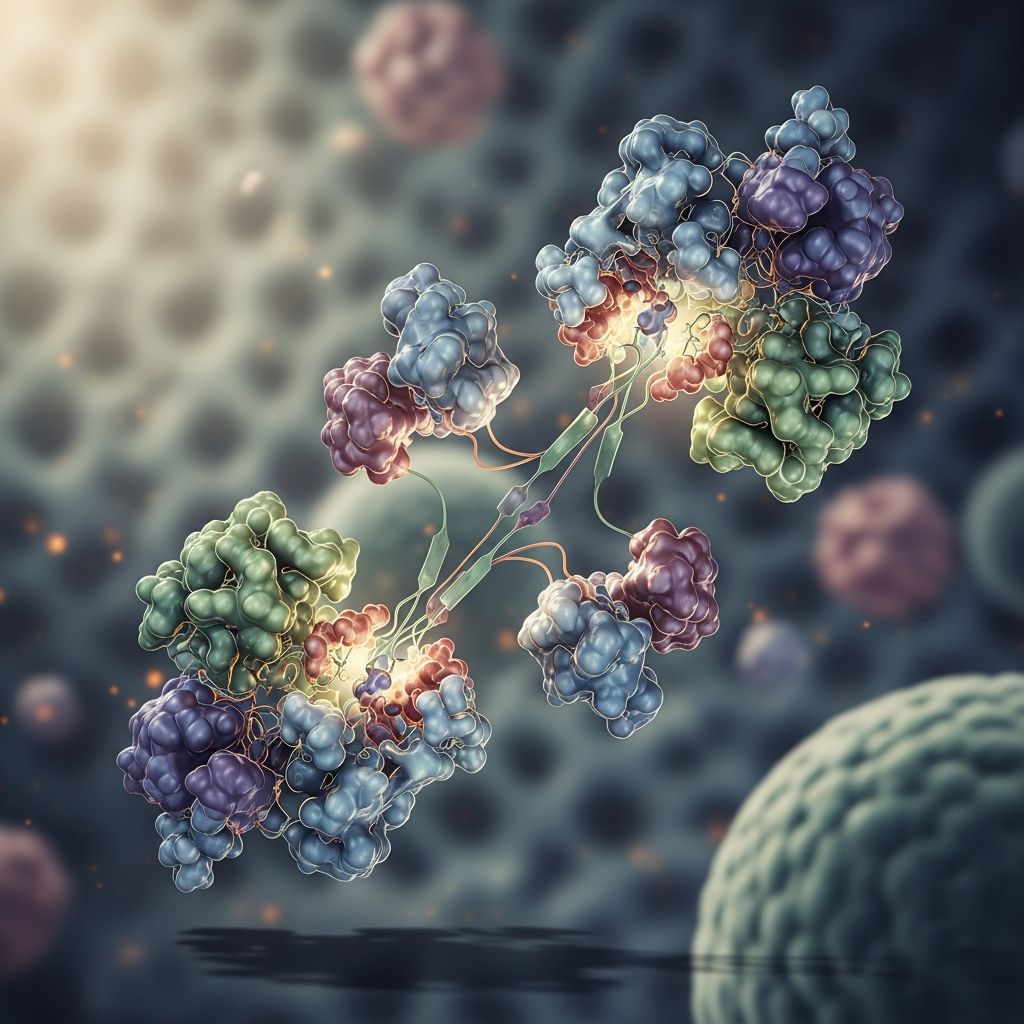
The
complement system
is a fundamental component of the innate immune system, comprising over 30 soluble and cell-bound proteins that orchestrate host defense, inflammation, and clearance of pathogens and debris. These proteins circulate in inactive forms in blood plasma and are activated in a cascade-like manner to combat infections, enhance phagocytosis, and promote adaptive immunity.What is the complement system?
The complement system consists of more than 50 proteins, including plasma proteins and membrane-bound regulators, that mediate clearance processes and defense against microorganisms. Key functions include opsonization (tagging pathogens for phagocytosis via C3b and iC3b), chemotaxis (C5a attracts neutrophils), and direct lysis through the membrane attack complex (MAC, C5b-9), which primarily targets Gram-negative bacteria.
In the skin, keratinocytes and fibroblasts synthesize complement components like C3, factor B (FB), factor H (FH), and factor I (FI), enabling local amplification of immune responses during infections or inflammation. This local production compensates for plasma dilution in tissues and strengthens defense against invaders.
How is the complement system activated?
Complement activation occurs via three main pathways:
classical
,alternative
, andlectin
, all converging at C3 activation to generate effectors like C5a and MAC.The classical pathway
Initiated by antigen-antibody complexes (IgM or IgG), C1q binds to Fc regions, activating C1r and C1s serine proteases. This cleaves C4 into C4a (anaphylatoxin) and C4b, and C2 into C2a and C2b. C4b and C2a form C3 convertase (C4b2a), cleaving C3 into C3a and C3b.
The alternative pathway
This antibody-independent pathway starts with spontaneous C3 hydrolysis to C3(H2O), which binds factor B. Factor D cleaves factor B into Bb, forming C3 convertase (C3bBb). Properdin (factor P) stabilizes it, amplifying C3 cleavage. It’s crucial for amplifying responses and activating on microbial surfaces.
The lectin pathway
Triggered by mannose-binding lectin (MBL) or ficolins recognizing microbial carbohydrates. MBL-associated serine proteases (MASPs) cleave C4 and C2, forming the same C3 convertase (C4b2a) as the classical pathway.
All pathways lead to C5 convertase formation, C5 cleavage into C5a (potent anaphylatoxin) and C5b, and terminal pathway assembly of MAC for cell lysis.
What are the biological effects of complement activation?
- Opsonisation: C3b and iC3b coat pathogens, binding CR1 on phagocytes for engulfment.
- Anaphylatoxins: C3a, C4a, C5a trigger mast cell degranulation, histamine release, vascular permeability, and chemotaxis.
- Membrane attack complex (MAC): C5b initiates C6-C9 polymerization, forming pores that lyse cells.
- Inflammation and immune bridging: Enhances adaptive responses via B-cell activation (C3d) and T-cell modulation.
How is the complement system regulated?
Regulators prevent host damage: fluid-phase inhibitors like C1-inhibitor (C1-INH) block classical/lectin initiation; factor H and I decay/amidases regulate alternative pathway; membrane cofactors include decay-accelerating factor (DAF, CD55), membrane cofactor protein (MCP, CD46), protectin (CD59), and CR1.
Related Stories



Dysregulation leads to diseases like paroxysmal nocturnal hemoglobinuria (PNH, DAF/CD59 deficiency) or atypical hemolytic uremic syndrome (aHUS, FH mutations).
Skin conditions due to complement defects
Several dermatological diseases arise from complement overactivation, deficiencies, or dysregulation, causing inflammation, autoimmunity, or infection susceptibility.
Blistering skin diseases
Autoimmune bullous disorders feature complement-fixing autoantibodies targeting skin adhesion molecules.
- Bullous pemphigoid (BP): IgG against BP180/BP230 at hemidesmosomes; classical pathway activation, C3 deposition at basement membrane zone (BMZ), neutrophil infiltration, subepidermal blisters.
- Epidermolysis bullosa acquisita (EBA): Antibodies to type VII collagen; C3b/MAC deposits in skin, inflammatory blisters.
- Dermatitis herpetiformis: Associated with IgA deposits and complement activation in dermal papillae.
- Pemphigus vulgaris: Less direct, but complement amplifies acantholysis via anti-desmoglein antibodies.
Vasculitic and vascular diseases
- Hereditary angioedema (HAE): C1-INH deficiency causes uncontrolled kallikrein activation, bradykinin-mediated swelling (subcutaneous, mucosal); types I/II (quantitative/functional defects), type III (normal C1-INH).
- Acquired angioedema: Autoantibodies to C1-INH, linked to lymphoproliferative disorders.
- Systemic lupus erythematosus (SLE): C1q deficiency increases SLE risk; immune complexes activate classical pathway, MAC damages keratinocytes/vessels.
- Urticarial vasculitis: Complement activation in vessel walls.
- Partial lipodystrophy: C3 nephritic factor stabilizes alternative C3 convertase, low C3, fat atrophy.
Complement deficiencies predisposing to infections
Rare terminal component (C5-C9) deficiencies increase Neisseria susceptibility; C3 deficiencies cause severe pyogenic infections; skin infections more common in alternative pathway defects.
Other associations
Psoriasis: C3a/C5a in scales, classical/alternative activation by microbes/keratinocytes. Atopic dermatitis and urticaria involve C5aR1 dysregulation.
Frequently Asked Questions (FAQs)
What is the main role of the complement system in skin defense?
It provides opsonization, chemotaxis, and lysis to clear microbes, with local production by keratinocytes enhancing responses.
How does complement contribute to bullous pemphigoid?
Anti-BP180 antibodies activate classical pathway, depositing C3/MAC at BMZ, causing inflammation and blisters.
What causes hereditary angioedema?
C1-INH deficiency leads to bradykinin overproduction, non-pitting angioedema without urticaria.
Can complement deficiencies cause skin infections?
Yes, especially C3 or terminal component deficiencies increase bacterial susceptibility, including skin infections.
Are there therapies targeting complement in skin diseases?
C1-INH for HAE; eculizumab (anti-C5) for related disorders like PNH/aHUS, potential in dermatology.
References
- Complement System in Dermatological Diseases — Meri S, et al. Frontiers in Immunology (PMC). 2015-02-16. https://pmc.ncbi.nlm.nih.gov/articles/PMC4310328/
- Complement system in dermatological diseases – fire under the skin — PubMed Abstract. 2015. https://pubmed.ncbi.nlm.nih.gov/25688346/
- Complement Activation in Inflammatory Skin Diseases — Frontiers in Immunology. 2018-03-28. https://www.frontiersin.org/journals/immunology/articles/10.3389/fimmu.2018.00639/full
- The Complement System and the Skin — JAMA Dermatology. 1977. https://jamanetwork.com/journals/jamadermatology/fullarticle/543384
- The complement system — DermNet NZ. https://dermnetnz.org/topics/the-complement-system
- Complement deficiencies — Immune Deficiency Foundation. https://primaryimmune.org/understanding-primary-immunodeficiency/types-of-pi/complement-deficiencies
Similar Articles








Read full bio of medha deb