Undefined Gut Microbiome And Skin Disease: 2025 Expert Guide
Exploring the vital link between gut bacteria imbalances and common skin conditions like acne, eczema, and psoriasis.
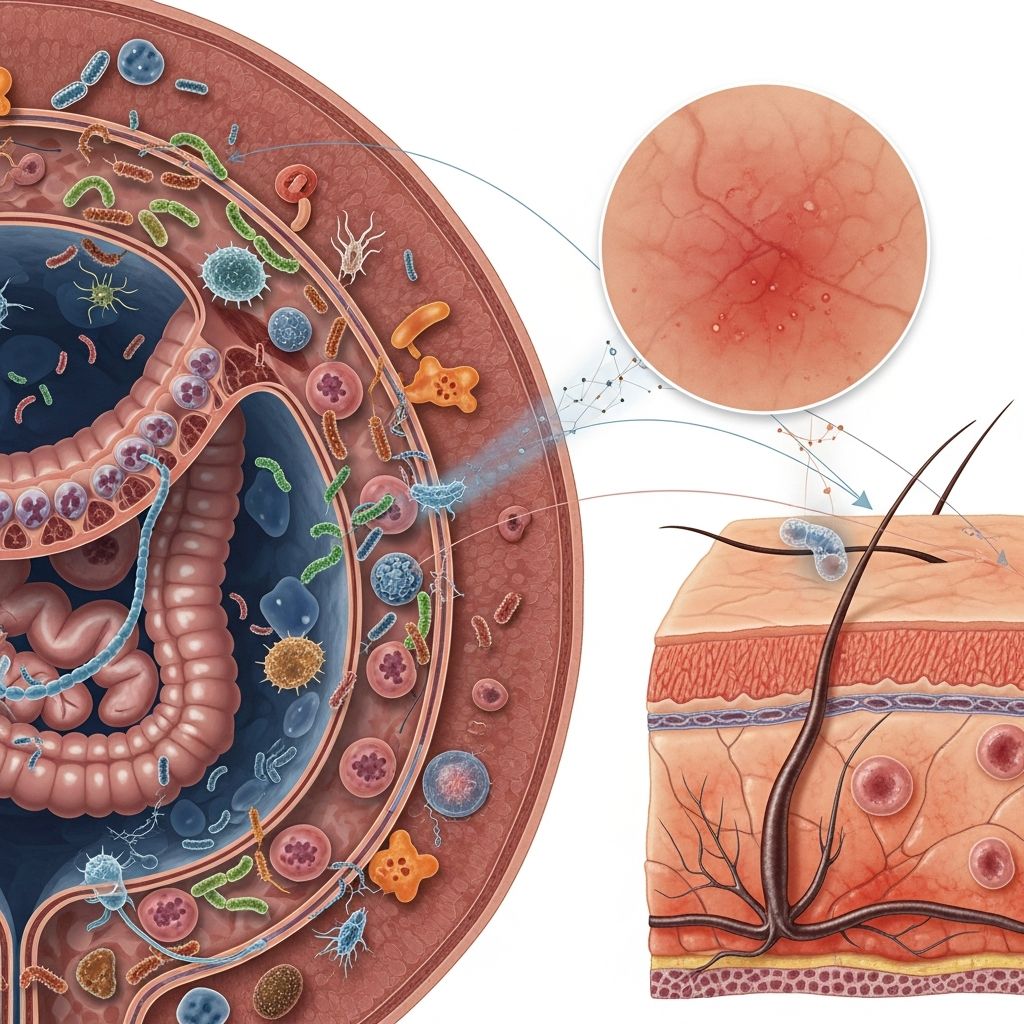
The human gut hosts trillions of microorganisms collectively known as the gut microbiome, which plays a crucial role in maintaining overall health. Emerging research highlights a significant connection between the gut microbiome and skin health, mediated through the gut-skin axis. Dysbiosis, or imbalance in gut microbial composition, has been linked to various skin conditions including atopic dermatitis, psoriasis, acne, and rosacea. This bidirectional relationship involves immune modulation, microbial metabolites, and barrier function disruptions.
What is the gut microbiome?
The gut microbiome comprises bacteria, viruses, fungi, and archaea residing primarily in the large intestine. It aids digestion, synthesizes vitamins, regulates immune responses, and protects against pathogens. Key bacterial phyla include Firmicutes, Bacteroidetes, Actinobacteria, and Proteobacteria. Diversity and composition vary by age, diet, antibiotics, and lifestyle. Short-chain fatty acids (SCFAs) like butyrate, propionate, and acetate—produced by microbial fermentation of dietary fibers—are vital metabolites with anti-inflammatory properties.
SCFAs influence immune cells, enhance gut barrier integrity, and circulate systemically to affect distant organs like the skin. Disruptions in microbiome diversity, such as reduced SCFA producers, can lead to leaky gut, allowing bacterial products to enter circulation and trigger inflammation.
The gut-skin axis
The gut-skin axis describes bidirectional communication between the gut and skin, both epithelial barriers interfacing with the environment. Neurological pathways via the vagus nerve, endocrine signals (e.g., cortisol), and immune crosstalk facilitate this interaction. Gut microbes modulate 70-80% of the body’s immune cells located in the gut-associated lymphoid tissue, influencing systemic immunity.
Microbial metabolites like SCFAs regulate T-regulatory cells, suppress pro-inflammatory cytokines (IL-17, TNF-α), and promote skin barrier function. Dysbiosis promotes Th2/Th17 immune skewing, exacerbating allergic and autoimmune skin diseases. Stress bidirectionally affects both: skin inflammation alters gut permeability, while gut issues worsen skin via heightened cortisol.
Mechanisms by which the gut microbiome influences the skin
Several mechanisms link gut dysbiosis to skin pathology:
- Immune modulation: Gut bacteria train immune tolerance; reduced diversity leads to overactive Th17 responses in psoriasis.
- Metabolite production: SCFAs inhibit histone deacetylases, reducing inflammation. Propionate targets Staphylococcus aureus on skin.
- Barrier dysfunction (leaky gut): Increased permeability allows lipopolysaccharide (LPS) translocation, activating Toll-like receptors and systemic inflammation.
- Neuroendocrine effects: Microbiota produce neurotransmitters influencing the gut-skin-brain axis, aggravating stress-induced acne.
- Hormonal regulation: Estrogens and androgens modulated by gut beta-glucuronidase affect sebum production in acne.
These pathways culminate in local or systemic immune dysfunction manifesting as skin eruptions.
Skin diseases associated with gut dysbiosis
Atopic dermatitis (eczema)
Atopic dermatitis affects 15% of children and 7% of adults, characterized by itchy, dry, cracked skin. Gut dysbiosis often precedes onset, with infants showing elevated Clostridium and Escherichia, and reduced Bifidobacterium and SCFA producers. This promotes Th2 dominance and IgE-mediated allergy. Decreased butyrate increases intestinal permeability, heightening allergen sensitization.
Studies confirm lower microbiome diversity in affected individuals, linking it to impaired immune regulation.
Psoriasis
Psoriasis features scaly plaques from hyperproliferation and inflammation. Patients exhibit reduced Bacteroides and Faecalibacterium, enriching pro-inflammatory Proteobacteria. Elevated fecal calprotectin indicates gut inflammation and barrier damage. Th17 activation, driven by gut dysbiosis, mirrors skin cytokine profiles (IL-17, IL-23).
Related Stories



High-fat diets worsen symptoms in models, while fiber-rich diets correlate with milder disease.
Acne vulgaris
Acne involves sebaceous gland hyperactivity and Cutibacterium acnes overgrowth. Gut dysbiosis, particularly high glycaemic diets, boosts mTOR signaling, increasing sebum and IGF-1. Leaky gut allows bacterial DNA into blood, promoting inflammation. Stress via gut-brain axis exacerbates flares.
Other conditions
- Rosacea: Linked to small intestinal bacterial overgrowth (SIBO); eradication improves lesions.
- Hidradenitis suppurativa: Associated with reduced SCFA producers and obesity-related dysbiosis.
- Vitiligo and urticaria: Emerging links to gut inflammation and histamine dysregulation.
Modulating the gut microbiome to treat skin disease
Interventions target dysbiosis restoration:
Probiotics
Lactobacillus and Bifidobacterium strains reduce atopic dermatitis severity by enhancing SCFAs and Th1/Th2 balance. Meta-analyses show benefits in infants. For acne, Lactobacillus rhamnosus inhibits mTOR.
Prebiotics and diet
Fiber-rich, Mediterranean diets boost SCFA producers. Fermented foods increase diversity. Avoid high-glycaemic, processed foods.
Fecal microbiota transplantation (FMT)
Preliminary trials for psoriasis show symptom improvement via donor microbiome engraftment.
Antibiotics and antimicrobials
Targeted for SIBO in rosacea, but broad-spectrum risks further dysbiosis.
| Skin Condition | Key Dysbiosis Feature | Intervention | Evidence Level |
|---|---|---|---|
| Atopic Dermatitis | Low Bifidobacterium | Probiotics (L. rhamnosus) | Strong (RCTs) |
| Psoriasis | Low Bacteroides | High-fiber diet, FMT | Moderate |
| Acne | High mTOR signaling | Low-GI diet, probiotics | Emerging |
| Rosacea | SIBO | Rifaximin | Strong (observational) |
Frequently Asked Questions (FAQs)
What is the gut-skin axis?
The gut-skin axis is bidirectional communication between gut microbiota and skin via immune, metabolic, and neural pathways, influencing inflammation and barrier function.
Can probiotics improve eczema?
Yes, specific strains like Lactobacillus reduce severity, especially in children, by restoring microbiome balance.
Does diet affect acne via the gut?
High-glycaemic diets promote dysbiosis and sebum production; low-GI, fiber-rich diets help.
Is dysbiosis reversible for skin health?
Diet, probiotics, and lifestyle changes can restore balance, potentially alleviating symptoms.
How does stress link gut and skin?
Stress alters gut permeability and microbiota, exacerbating inflammation in both via the gut-brain-skin axis.
(Word count: 1678)
References
- The gut-skin axis: feel it in your gut, wear it on your skin — Gut Microbiota for Health. 2023. https://www.gutmicrobiotaforhealth.com/the-gut-skin-axis-feel-it-in-your-gut-wear-it-on-your-skin/
- How the Gut Microbiome Influences Skin Health — Owlstone Medical. 2024-10-01. https://www.owlstonemedical.com/about/blog/2024/oct/01/how-the-gut-microbiome-influences-skin-health-exploring-the-gut-skin-axis/
- How Your Gut Microbiome Impacts Autoimmune Skin Diseases — Autoimmune Institute. 2023. https://www.autoimmuneinstitute.org/articles/gut-skin-connection-how-your-microbiome-impacts-autoimmune-skin-diseases
- The gut microbiome in skin disease — DermNet NZ. 2024. https://dermnetnz.org/topics/the-gut-microbiome-in-skin-disease
- Gut microbiome in dermatology – A narrative review — Indian Journal of Dermatology, Venereology and Leprology. 2023. https://ijdvl.com/gut-microbiome-in-dermatology-a-narrative-review/
Similar Articles








Read full bio of medha deb