Healthiest Flours: 5 Best Whole-Grain And Gluten-Free Choices
Discover the top nutrient-dense flours that boost nutrition, support gluten-free baking, and enhance your recipes with health benefits.
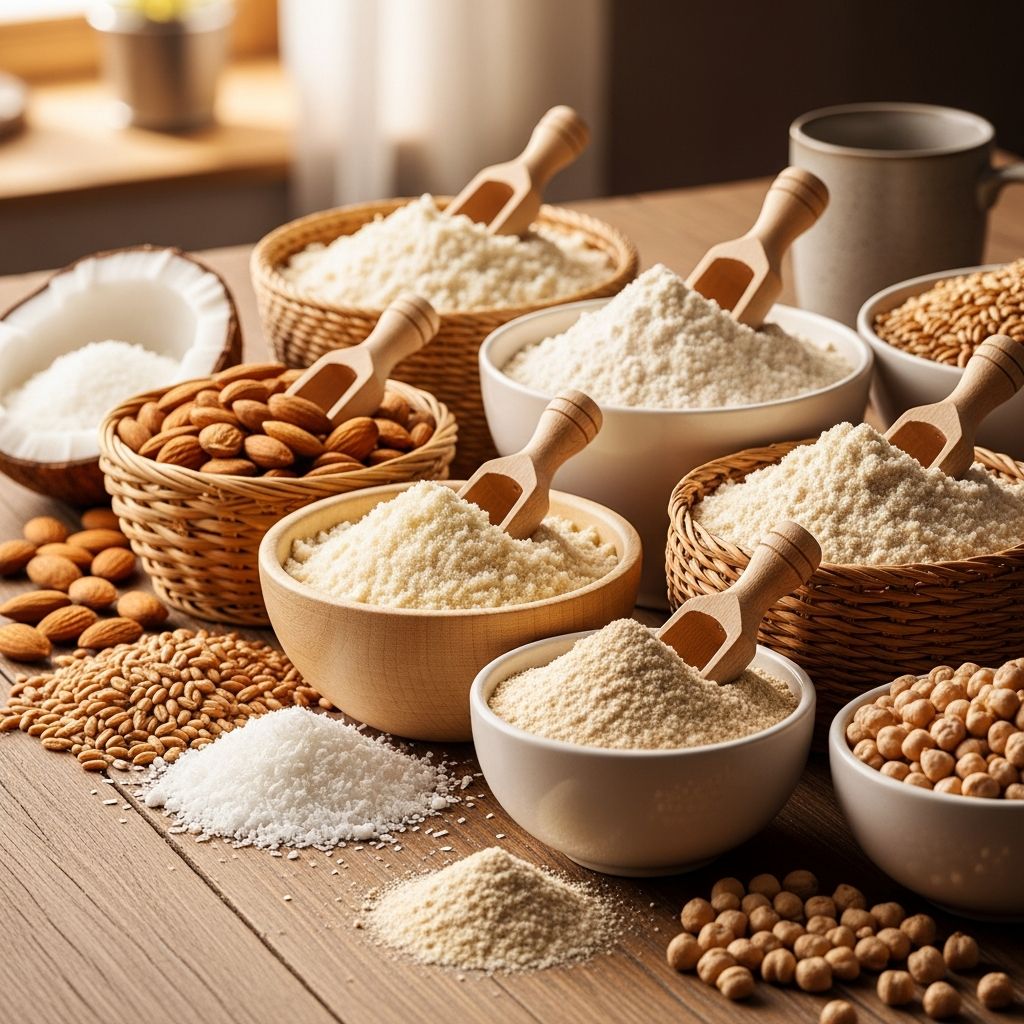
Choosing the right flour can transform your baking and cooking while boosting nutritional intake. Unlike refined white flour, which loses key nutrients during processing, healthier flours retain fiber, protein, vitamins, and minerals. These options support better digestion, stable blood sugar, heart health, and more, making them ideal for everyday use.
Health experts recommend whole grain, nut, seed, and legume flours for their superior nutrient profiles. This guide covers the top healthiest flours, their benefits, nutritional breakdowns, and practical uses in recipes.
What Makes a Flour Healthy?
A healthy flour provides more than empty carbs. Look for high fiber to aid digestion and blood sugar control, quality protein for satiety, healthy fats for heart health, and micronutrients like iron, magnesium, and antioxidants. Whole grains preserve the bran and germ, avoiding nutrient stripping in refining. Gluten-free alternatives from nuts and seeds offer similar benefits without gluten.
- Fiber-rich: Promotes gut health, prevents constipation, and reduces heart disease risk.
- Protein-packed: Supports muscle repair and fullness.
- Low glycemic index: Prevents blood sugar spikes.
- Rich in minerals: Magnesium for blood pressure, iron for energy.
Studies show whole grains like those in whole wheat flour retain far more nutrition post-milling and baking compared to refined versions.
1. Almond Flour
Almond flour, made by grinding blanched almonds into a fine powder, is naturally gluten-free and distinct from coarser almond meal, which includes skins. It’s prized for its nutty flavor, versatility, and nutrient density.
Rich in magnesium, omega-3 fats, plant protein, and vitamin E—an antioxidant that combats oxidative stress. Despite higher calories from healthy fats, it has a low glycemic index, providing steady energy and aiding blood sugar control.
A 1/2-cup (about 56g) serving offers:
| Nutrient | Amount | % DV |
|---|---|---|
| Calories | 340 | – |
| Protein | 12g | – |
| Fat | 30g | – |
| Carbs | 12g | – |
| Fiber | 4g | – |
| Magnesium | – | 65% |
| Vitamin E | – | 100% |
Use it 1:1 in place of wheat flour for pancakes, cookies, scones, biscuits, pasta, or meatballs. Its fats and fiber slow digestion, reducing insulin resistance.
2. Coconut Flour
Coconut flour is a grain- and gluten-free option from dried, ground coconut meat. It’s highly absorbent, calorie-dense, and packed with protein, fat, fiber, iron, and potassium.
The fats are mostly medium-chain triglycerides (MCTs), which may support metabolism and reduce inflammation differently from processed saturated fats. It also offers antioxidants and antimicrobial properties.
Per 1/2-cup (64g):
| Nutrient | Amount | % DV |
|---|---|---|
| Calories | 210 | – |
| Protein | 8.5g | – |
| Fat | 13g | – |
| Carbs | 34g | – |
| Fiber | 25g | – |
| Iron | – | 22% |
| Potassium | – | 18% |
Due to absorbency, use 1/4 to 1/3 cup per cup of wheat flour, adding extra liquid. Ideal for muffins, breads, and pancakes.
3. Quinoa Flour
Ground from quinoa—a pseudocereal treated as a whole grain—quinoa flour is gluten-free, retaining all nutrients. It’s high in complete protein, fiber, iron, unsaturated fats, folate, magnesium, and vitamin B2, plus resistant starch and antioxidants.
Benefits include anti-inflammatory effects, digestive support, and potential tumor inhibition. Its complete protein profile makes it excellent for plant-based diets.
Related Stories



Versatile for breads, muffins, pancakes, and pizza crusts. Mix with other flours for better texture.
4. Buckwheat Flour
Despite the name, buckwheat is gluten-free, unrelated to wheat. Ground from its seeds, it has an earthy flavor, perfect for soba noodles.
Loaded with fiber, protein, manganese, magnesium, copper, iron, phosphorus, and rutin—an antioxidant that lowers blood pressure, cholesterol, and clot risk. Low glycemic index and high magnesium support heart health.
Per 1/2-cup (60g):
| Nutrient | Amount | % DV |
|---|---|---|
| Calories | 200 | – |
| Protein | 4g | – |
| Fat | 2g | – |
| Carbs | 44g | – |
| Fiber | 6g | – |
| Iron | – | 17% |
| Manganese | – | 34% |
| Magnesium | – | 33% |
| Copper | – | 73% |
Use in pancakes, crepes, breads, and gluten-free pasta.
5. Whole Wheat Flour
Whole wheat flour includes the bran, germ, and endosperm, making it far superior to refined flour. It’s rich in protein, fiber, B vitamins (B1, B3, B5, folate), and minerals.
Fiber aids constipation prevention, blood sugar control, heart health, and weight management. A farm-to-table study confirms it retains more nutrition through milling and baking.
Per 1/2-cup (60g): High in fiber and B vitamins; exact values vary but outperform refined flour.
Best for breads, muffins, cookies, and pizza dough. Not for gluten-sensitive individuals.
Other Notable Healthy Flours
- Spelt Flour: Nutty, high-fiber ancient grain with magnesium, zinc, and B vitamins. Slows digestion, supports immunity, lowers cholesterol. Use like wheat flour.
- Banana Flour: Rich in resistant starch for insulin sensitivity and gut health. Substitute for wheat.
- Barley Flour: High beta-glucan soluble fiber lowers cholesterol, boosts immunity. Good manganese and B3 source.
Health Benefits of Switching to Healthier Flours
Incorporating these flours improves diet quality:
- Enhanced fiber intake for gut and heart health.
- Better blood sugar management via low GI and resistant starch.
- Increased antioxidants and minerals for inflammation reduction.
- Gluten-free options for broader accessibility.
Tips for Using Healthy Flours
- Start with blends to match textures.
- Add eggs or xanthan gum for binding in gluten-free recipes.
- Store nut flours in fridge to prevent rancidity.
- Experiment in familiar recipes like banana bread or flatbreads.
Frequently Asked Questions
Which flour is best for gluten-free baking?
Almond or coconut flour for nutty taste and moisture; blend with quinoa for structure.
Can I replace all-purpose flour 1:1?
No—almond is closest, but coconut needs less and more liquid.
Are these flours good for weight loss?
Yes, high fiber and protein promote satiety; low GI prevents spikes.
What’s the healthiest everyday flour?
Whole wheat for nutrients if gluten-tolerant; almond otherwise.
Do nut flours expire quickly?
Yes, refrigerate to maintain freshness due to oils.
References
- 5 of the Healthiest Flours for Every Purpose — Healthline. 2023-10-15. https://www.healthline.com/nutrition/healthiest-flour
- Flours – their differences, use, nutritional values and benefits — GymBeam Blog. 2024-05-20. https://gymbeam.com/blog/flours-their-differences-use-nutritional-values-benefits/
- Flours Ranked – Nutrition Tier Lists — YouTube (USDA data). 2023-08-10. https://www.youtube.com/watch?v=vIZQ8YCwzL0
- Is Flour Healthy? Sifting Through 24 of the Most Popular Types of Flour — Food Revolution Network. 2024-02-14. https://foodrevolution.org/blog/is-flour-healthy/
- Farm-to-table study reveals why whole grains are healthiest — American Society for Nutrition. 2023-11-08. https://nutrition.org/farm-to-table-study-reveals-why-whole-grains-are-healthiest/
Similar Articles








Read full bio of medha deb