Koebner Phenomenon: Essential Facts, Triggers & Prevention
Understanding the Koebner phenomenon: how skin trauma triggers new lesions in psoriasis, vitiligo, and other dermatoses.
The
Koebner phenomenon
, also known as theisomorphic response
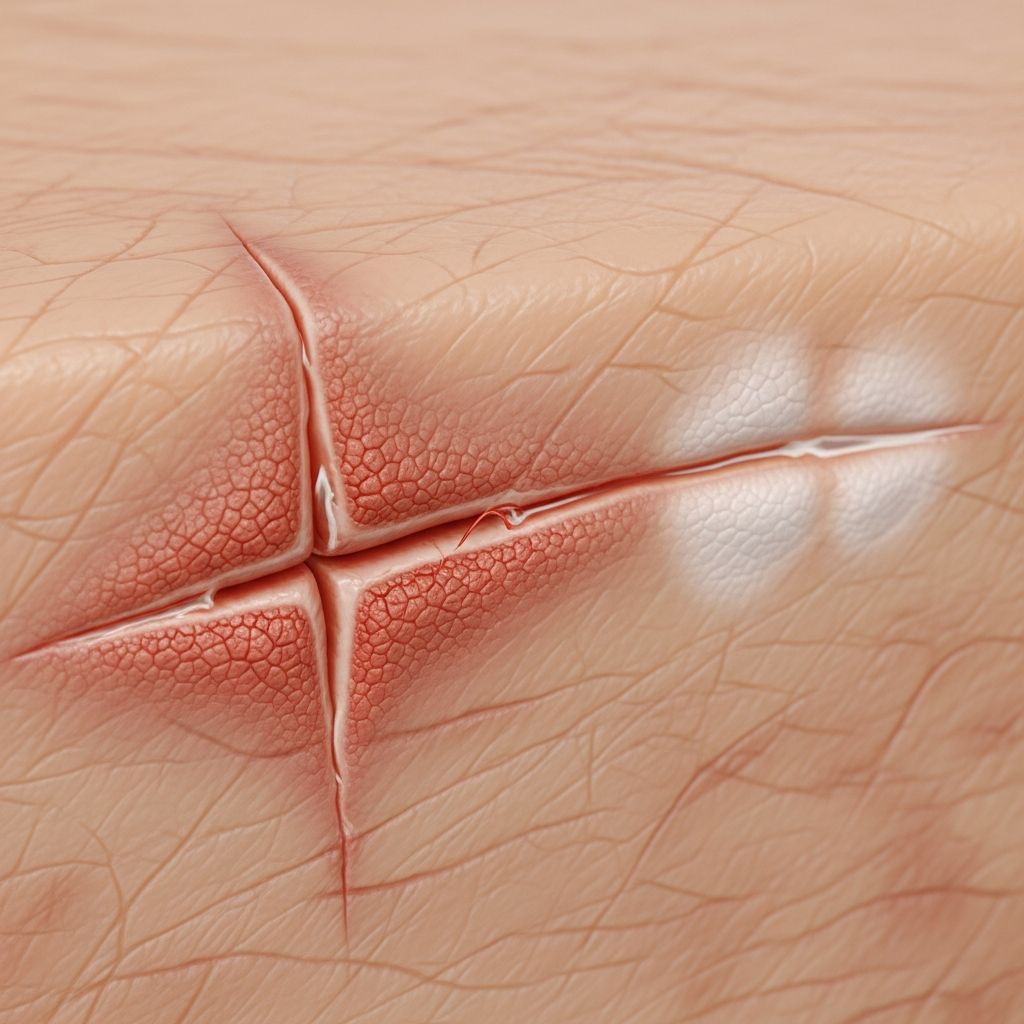
, refers to the development of new skin lesions that mirror a pre-existing dermatosis at sites of cutaneous trauma or injury on otherwise normal skin.What is the Koebner phenomenon?
The Koebner phenomenon describes the appearance of fresh lesions of an established skin disease following linear skin injury at sites that were previously unaffected. Named after Heinrich Köbner, a 19th-century German dermatologist, this response highlights how physical trauma can provoke disease-specific lesions. It occurs when both the epidermis and dermis are injured simultaneously, leading to a cascade of inflammatory mediators and neuropeptides that trigger a secondary, disease-specific process.
Current theories propose that non-specific inflammation from injury—possibly involving nerve growth factor (NGF) and other chemical messengers—initiates the response, which then propagates through pathways unique to the underlying condition. This phenomenon underscores the skin’s susceptibility to mechanical and chemical stressors in genetically predisposed individuals.
Who gets the Koebner phenomenon?
The Koebner phenomenon manifests in various inflammatory and autoimmune skin disorders, with
psoriasis
,vitiligo
, andlichen planus
exhibiting it most consistently—termed a ‘true’ Koebner response. These conditions reliably produce isomorphic lesions following trauma, distinguishing them from less predictable manifestations.Diseases exhibiting a true Koebner response include:
- Psoriasis: Plaques form along scratch lines or surgical scars.
- Vitiligo: Depigmented patches appear at friction or injury sites.
- Lichen planus: Polygonal papules emerge linearly post-trauma.
Reports suggest possible Koebnerization in additional conditions such as pityriasis rubra pilaris, lichen nitidus, lichen sclerosus, elastosis perforans serpiginosa, Kaposi sarcoma, necrobiosis lipoidica, lupus erythematosus, and eruptive xanthomas.
In rarer instances, mycosis fungoides and other cutaneous lymphomas display an ‘occasional’ Koebner response, where lesions appear post-trauma but are not reproducibly induced. Patient susceptibility varies; those responding to one trauma type often react to others, particularly in psoriasis.
Pathogenesis
The exact pathogenesis remains unclear, but injury to both epidermal and dermal layers is essential. Initial non-specific inflammation releases cytokines, neuropeptides, and growth factors like NGF, priming the site for disease-specific changes.
In
psoriasis
, keratinocytes sense mechanical stress via mechano-signaling pathways, upregulating inflammatory cascades that mimic psoriatic plaques. This explains predilection for extensor surfaces like elbows and knees.Vitiligo
involves oxidative stress, melanocyte adhesion defects, autoimmunity, and growth factor deficiencies post-trauma.Lichen planus
implicates TRPA1-driven mechanotransduction, autoimmunity, and actinic damage.Scar sites may be particularly vulnerable due to altered vascularization and neoangiogenesis. Genetic predisposition amplifies these responses, with active disease phases heightening risk.
True vs pseudo-Koebner phenomenon
| Type | Description | Examples |
|---|---|---|
| True Koebner | Reproducible new lesions of pre-existing dermatosis at trauma sites. | Psoriasis, vitiligo, lichen planus. |
| Pseudo-Koebner | Infections seeding into damaged skin, not isomorphic to primary disease. | Viral warts, molluscum contagiosum. |
| Occasional Koebner | Lesions post-trauma but not consistently reproducible. | Mycosis fungoides, granuloma annulare. |
True Koebner requires an active underlying condition and follows specific timelines, whereas pseudo-Koebner involves pathogen inoculation.
Triggers
A wide array of insults can provoke the Koebner phenomenon by breaching the epidermal barrier.
Common triggers include:
- Trauma: Abrasions, cuts, burns, bites, surgical incisions, tattoos, piercings.
- Chemical irritation: Contact dermatitis, chemical burns.
- Mechanical/pressure: Friction (e.g., from clothing), orthotics, pressure sores.
- Diseases/conditions: Diaper rash, eczema, scabies, infections.
- Other: Sunburn, radiation, allergic reactions.
Related Stories



Severity correlates with injury depth; superficial scratches may suffice in highly susceptible patients.
Clinical features
Lesions mirror the primary disease, appearing linearly along the injury trajectory—often 10-20 days post-trauma in psoriasis (range: 3 days to 2 years). In vitiligo, depigmentation follows friction sites; lichen planus shows violaceous papules.
Characteristics include:
- Linear configuration following trauma line.
- Identical morphology, histopathology to original lesions.
- Occurrence on previously normal skin.
- Variable latency based on disease (shorter in active flares).
Mosaic or segmental variants (e.g., linear lichen planus) may mimic Koebner but stem from genetic mosaicism.
Diagnosis
Diagnosis is clinical, based on history of trauma preceding linear lesions identical to known dermatosis. Experimental reproduction via controlled injury confirms true Koebner but is rarely performed due to ethical concerns.
Differentiate from:
- Pseudo-Koebner (infectious).
- Factitial dermatitis (self-inflicted).
- Phytodermatitis or contact reactions.
Biopsy may aid if atypical.
Management
No specific therapy targets Koebner phenomenon; treat the underlying condition aggressively. Preventive strategies are paramount:
- Avoid known triggers; protect vulnerable skin.
- Moisturize to bolster barrier function.
- Use topical steroids or calcineurin inhibitors on fresh injuries in at-risk patients.
- Systemic therapies (biologics for psoriasis) reduce overall susceptibility.
Lesions resolve with primary disease control but may persist if unmanaged.
Isotretinoin Koebner phenomenon
Isotretinoin, used for acne, has induced Koebner-like reactions in psoriasis, with plaques at folliculocentric sites due to drug-induced xerosis and trauma. Discontinue if suspected; monitor high-risk patients.
Reverse Koebner phenomenon
Rarely, trauma to lesional skin prompts lesion regression, termed reverse or renitent Koebner phenomenon. Reported in psoriasis and vitiligo, mechanisms involve upregulated repair factors overriding disease processes.
Frequently Asked Questions (FAQs)
What is the Koebner phenomenon?
It is the appearance of new skin lesions matching a pre-existing dermatosis at sites of skin injury.
Which diseases show true Koebner phenomenon?
Psoriasis, vitiligo, lichen planus exhibit reliable responses.
How long after injury do lesions appear?
Typically 10-20 days in psoriasis; varies by disease and patient.
Can tattoos trigger it?
Yes, tattoos, piercings, and abrasions are common provocateurs.
How to prevent Koebner phenomenon?
Protect skin from trauma, treat underlying disease, and use barrier creams.
References
- The Koebner phenomenon — DermNet NZ. 2023. https://dermnetnz.org/topics/the-koebner-phenomenon
- Koebner phenomenon — Wikipedia. 2024-01-15. https://en.wikipedia.org/wiki/Koebner_phenomenon
- Koebner’s Phenomenon (Koebnerization) and Psoriasis — WebMD. 2024. https://www.webmd.com/skin-problems-and-treatments/psoriasis/koebner-phenomenon
- Characteristics and pathogenesis of Koebner phenomenon — Zhang et al., Experimental Dermatology. 2022-11-28. https://onlinelibrary.wiley.com/doi/full/10.1111/exd.14709
- Koebner Phenomenon and Mycosis Fungoides — PMC – NIH. 2015. https://pmc.ncbi.nlm.nih.gov/articles/PMC4637793/
- Koebner Phenomenon: Psoriasis & Other Causes, Signs & Treatment — Cleveland Clinic. 2024. https://my.clevelandclinic.org/health/diseases/22860-koebner-phenomenon
Similar Articles








Read full bio of Sneha Tete