The Nose: Structure, Function, and Health Insights
Explore the essential anatomy and vital functions of the nose in breathing, smelling, and protecting the respiratory system.
Introduction to the Nose
The nose is a prominent sensory organ centrally located on the face, playing critical roles in breathing, smell, and air conditioning for the respiratory system. Its complex anatomy enables it to filter, warm, humidify, and cleanse air before it reaches the lungs, while also serving as the body’s primary organ of olfaction.
Anatomy of the Nose
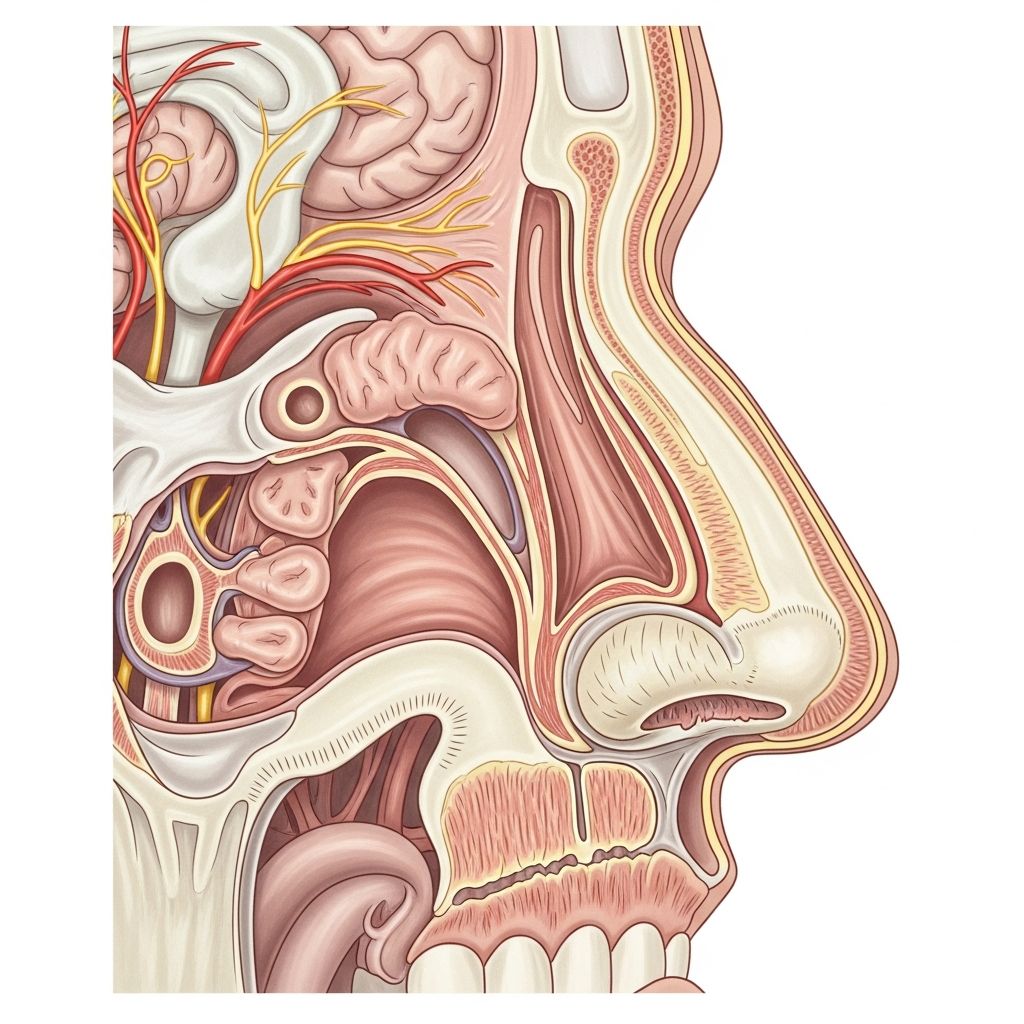
The nose consists of an external structure and an internal nasal cavity, separated by a cartilage wall called the nasal septum. The outer openings are called nares or nostrils.
External Nose
- Formed by bones and cartilage providing shape and support.
- Contains the nostrils through which air is inhaled and exhaled.
Internal Nasal Cavity
The inside of the nose is a complex air passageway with distinct regions and structures:
- Vestibule: The forward section inside each nostril, lined with hairs that trap large particles.
- Nasal Conchae (Turbinates): Three long, curled bones (upper, middle, lower conchae) along the sidewalls; these structures increase the surface area and help to warm, humidify, and filter air.
- Olfactory Region: Located high in the nasal cavity, lined with specialized nerve cells responsible for the sense of smell.
- Respiratory Region: The rest of the cavity lined with mucous membrane and cilia that trap and move debris.
The roof of the mouth (hard and soft palate) forms the floor of the nasal cavity, separating it from the oral cavity below.
Functions of the Nose
The nose supports multiple vital functions beyond just a passage for air:
- Air conditioning: As air passes through the nasal cavity, it is filtered by cilia and mucus, warmed to body temperature, and humidified to protect the lungs from dry air.
- Olfaction (Sense of Smell): Airborne odor molecules dissolve in mucus, stimulating olfactory nerve cells that send signals to the brain, enabling smell.
- Immune defense: The nasal cavity acts as a frontline filter trapping dust, allergens, bacteria, and viruses, preventing them from entering the lower respiratory tract.
- Voice resonance: The nose and its associated sinuses contribute to the quality and tone of the voice by functioning as resonating chambers.
- Breathing regulation: The nose plays a critical role in nasal breathing, which is particularly important in newborns who breathe almost exclusively through their noses.
The Paranasal Sinuses
The nose is closely connected to the paranasal sinuses, which are four paired air-filled cavities located in the bones around the nose: the frontal, maxillary, ethmoid, and sphenoid sinuses. These cavities are lined with mucous membrane and serve several functions:
- Produce mucus that drains into the nasal cavity, helping to trap and remove pathogens and debris.
- Lighten the weight of the skull.
- Serve as air cushion shock absorbers, protecting vital facial structures.
- Help regulate the production and flow of nitric oxide, enhancing lung function and immune responses.
- Contribute to the resonance and timbre of the voice.
The sinuses drain through passages including the important ostiomeatal complex, which can become blocked causing sinusitis and other infections.
Related Stories



Nasopharynx and Its Connection to the Nose
The nasopharynx is the uppermost part of the throat located behind the nose and above the soft palate. It connects the nasal passages to the respiratory tract, allowing air to flow into the windpipe and lungs. Important features include:
- The presence of adenoids, lymphoid tissue that helps fight infections.
- Connection to the eustachian tubes that drain fluid from the ears, important in ear health and pressure regulation.
- Its role as the common site of infections such as nasopharyngitis (common cold).
Breathing: Nose vs. Mouth
Nasal breathing is the optimal way to breathe as the nose prepares and conditions the air more effectively than the mouth. The benefits of nasal breathing include:
- Filtration of dust, germs, and particles through mucous and cilia.
- Humidification and warming of incoming air, protecting sensitive lung tissues.
- Olfactory sensing, which is not possible through mouth breathing.
- Better regulation of airflow and reflexes for swallowing and vocalization.
- Newborns rely almost entirely on nasal breathing for safety during suckling and feeding.
While mouth breathing can be necessary during intense exercise or when nasal passages are blocked, chronic mouth breathing may lead to dryness and increased susceptibility to infections.
Common Conditions Affecting the Nose
- Sinusitis: Inflammation or infection of the paranasal sinuses often caused by blockage of sinus drainage passages, leading to pressure, pain, and congestion.
- Deviated Nasal Septum: A misalignment of the cartilage dividing the nasal cavity, which can cause breathing difficulties and increased risk of sinusitis.
- Allergic Rhinitis: Allergic inflammation of the nasal mucosa leading to congestion, sneezing, and runny nose.
- Nasal Polyps: Noncancerous growths that can obstruct nasal passages, impairing airflow and drainage.
- Nasopharyngitis: Common cold virus infections that cause inflammation in the nasopharynx, resulting in stuffy nose and sore throat.
Interesting Facts About the Nose
- The nose is crucial not just for breathing but also plays a subconscious role in mate selection through scent detection.
- The mucous membrane inside the nose produces mucus that captures debris and traps pathogens, which are then pushed toward the throat to be swallowed and neutralized by stomach acid.
- Cold weather can cause mucus condensation inside the nose, leading to a runny nose as a natural warming effect.
- The nose contains specialized nerve endings that detect odors dissolved in a layer of moisture, which is essential for the function of olfaction.
- The vomeronasal organ (VNO), an olfactory structure in many animals related to pheromone detection, is largely vestigial in humans but may still have some chemical communication roles.
- Sinuses help to lighten the skull’s weight and protect the brain, contributing to overall facial structure and voice quality.
FAQs About the Nose
Q: Why is nasal breathing better than mouth breathing?
A: Nasal breathing filters, warms, and humidifies the air, which protects lung tissues and enhances oxygen absorption. It also supports the sense of smell and helps regulate airflow during speech and swallowing.
Q: What causes a deviated septum, and how does it affect breathing?
A: A deviated septum can be congenital or result from injury. It causes asymmetry inside the nose that may block airflow on one side, leading to breathing difficulties and sinus issues.
Q: What roles do the sinuses play?
A: Sinuses lighten the skull, protect facial structures, produce mucus for nasal cleansing, aid in voice resonance, and regulate nitric oxide production important for lung function.
Q: Can you live with a blocked nose?
A: While temporary nasal congestion is common and manageable, chronic or severe blockage can impact breathing, sleep quality, and susceptibility to infections, necessitating medical evaluation.
Q: How does the nose contribute to immune defense?
A: The nose traps and removes harmful particles and pathogens from inhaled air using mucus and cilia, reducing the chance of respiratory infections by preventing harmful agents from reaching the lungs.
References
- Paranasal Sinuses: Anatomy, Function & Types — Cleveland Clinic. 2023-06-15. https://my.clevelandclinic.org/health/body/paranasal-sinuses
- Nasopharynx: What Is It, Function & Anatomy — Cleveland Clinic. 2023-03-10. https://my.clevelandclinic.org/health/body/22376-nasopharynx
- Nose | Description, Functions, & Facts — Encyclopaedia Britannica. 2024-01-07. https://www.britannica.com/science/nose
- 7 Surprising Facts About Your Nose — Health Cleveland Clinic. 2023-12-05. https://health.clevelandclinic.org/7-surprising-facts-nose
- Respiratory System: Organs, Facts, Anatomy & Function — Cleveland Clinic. 2024-02-20. https://my.clevelandclinic.org/health/body/21205-respiratory-system
Similar Articles








Read full bio of medha deb