Dermatologic Surgery: Guide To Essential Skin Procedures
Explore how surgical techniques in dermatology treat skin cancers, benign growths, and cosmetic concerns with precision and minimal invasiveness.
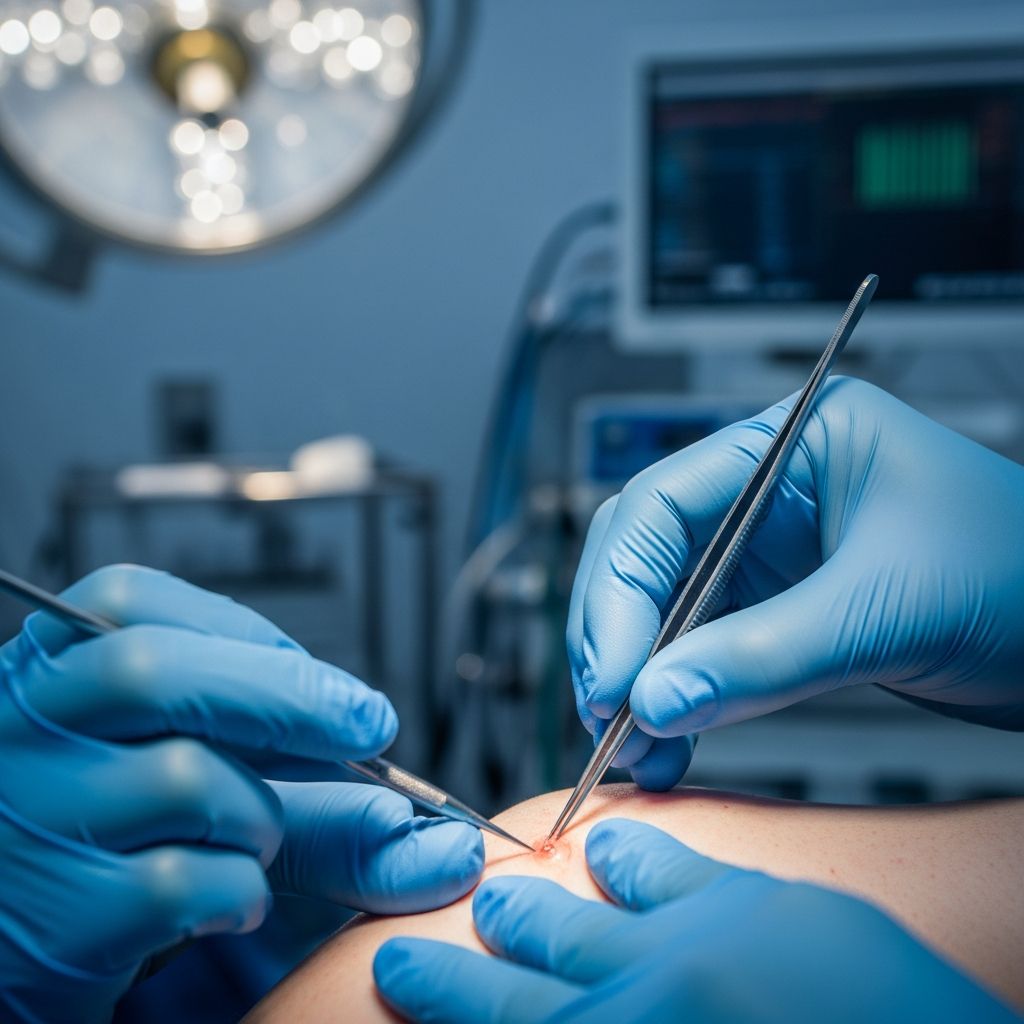
Dermatologic surgery encompasses a broad spectrum of procedures designed to treat both medically necessary and cosmetic conditions affecting the skin, nails, and hair. These interventions range from simple excisions to complex reconstructions, often performed under local anesthesia in outpatient settings by trained dermatologists. The primary goals include complete removal of pathological tissues, preservation of healthy skin, and achieving aesthetically pleasing outcomes.
Introduction
Surgery plays a pivotal role in modern dermatology, addressing conditions that cannot be managed with topical treatments or medications alone. From eradicating skin cancers to enhancing appearance, dermatologic surgeons utilize minimally invasive techniques to minimize scarring, reduce recovery time, and optimize results. Procedures are tailored to the lesion’s type, size, location, and the patient’s overall health.
Historically, dermatologic surgery dates back to ancient practices, evolving into sophisticated methods like Mohs micrographic surgery. Today, it treats nonmelanoma skin cancers (basal cell carcinoma and squamous cell carcinoma), melanoma, benign growths, cysts, and cosmetic concerns such as scars and wrinkles.
Medically Necessary Dermatologic Surgery
Medically necessary procedures focus on treating skin cancers and other pathological conditions to prevent progression, metastasis, or complications. These include curettage and electrosurgery, Mohs surgery, excisional surgery, cryosurgery, and reconstructive techniques like skin grafting.
Curettage and Electrosurgery (ED&C)
Curettage and electrodesiccation (ED&C), also known as curettage and electrosurgery, is ideal for small, superficial, low-risk nonmelanoma skin cancers like basal cell carcinoma (BCC) and squamous cell carcinoma (SCC) on the trunk or extremities. The procedure begins with local anesthesia. A curette—a sharp, ring-shaped instrument—scrapes away the tumor layer by layer until normal tissue is reached. Each pass is followed by electrodesiccation, where a high-voltage electric current destroys residual cancer cells, promotes hemostasis, and stimulates an inflammatory response for healing.
No sutures are required; the wound heals by second intention over 1-3 weeks. Cure rates exceed 90-95% for appropriately selected lesions. Risks include scarring, hypopigmentation, or recurrence if margins are inadequate.
Mohs Micrographic Surgery
Mohs micrographic surgery is the gold standard for high-risk skin cancers, particularly in cosmetically sensitive areas like the face, ears, nose, eyelids, and lips. It offers the highest cure rates (up to 99% for primary BCC) by excising tumors layer-by-layer and examining 100% of margins microscopically in real-time.
Under local anesthesia, the visible tumor is debulked, followed by sequential thin layers removed at a 45-degree angle. Each layer is mapped, frozen, sectioned, stained, and checked for cancer cells. Additional layers are taken only where needed, preserving healthy tissue. The procedure may take several hours but maximizes precision.
Indications include recurrent cancers, morpheaform BCC, infiltrative SCC, perineural invasion, and large tumors (>2 cm). Not routinely used for melanoma due to processing limitations, though adaptations exist.
Related Stories



Excisional Surgery and Wide Local Excision
Excisional surgery involves full-thickness removal of the lesion with a margin of normal skin, followed by layered closure or reconstruction. Used for melanoma, lower-risk nonmelanoma cancers, and diagnostic biopsies. For melanoma, margins depend on Breslow depth: 0.5-1 cm for in situ, up to 2 cm for thicker tumors.
A scalpel outlines an elliptical incision to facilitate closure. The specimen is oriented for pathology. Cure rates are high (95%) but lower than Mohs for high-risk sites due to sampled margins.
Cryosurgery
Cryosurgery uses liquid nitrogen (-196°C) to freeze and destroy abnormal cells via ice crystal formation, vascular stasis, and apoptosis. Effective for premalignant actinic keratoses, benign lesions (seborrheic keratoses, warts), and select superficial BCC/SCC. Two freeze-thaw cycles are applied, causing stinging, blistering, and crusting that resolves in 1-2 weeks.
Advantages: no cutting, quick, painless post-procedure. Limitations: hypopigmentation in darker skins, unpredictable margins for cancer.
Reconstructive Techniques: Skin Grafts and Flaps
Defects from cancer excision often require reconstruction. Full-thickness skin grafts (FTSG) harvest epidermis and dermis from donor sites like post-auricular or supraclavicular areas, trimmed, and sutured to the defect. A bolster dressing secures it for vascular take (5-7 days).
Local flaps (advancement, rotation, transposition) use adjacent tissue for better color/texture match and blood supply. Used for facial defects to minimize distortion.
Cosmetic Dermatologic Surgery
Cosmetic procedures enhance appearance, addressing aging, scars, and unwanted growths. These are elective but improve quality of life.
Mole and Lesion Removal
Shave excision removes raised moles or seborrheic keratoses. After anesthesia, a scalpel or razor shaves the lesion flush or slightly below skin level, followed by electrosurgical feathering for smooth edges. Heals with minimal scarring.
Punch excision for intradermal nevi retrieves full specimen for histology.
Laser Resurfacing and Chemical Peels
Laser resurfacing (CO2 or erbium:YAG) ablates superficial skin layers to treat rhytides, scars, actinic damage. Epidermal vaporization stimulates collagen remodeling. Downtime: 7-10 days of redness/peeling.
Chemical peels (alpha/beta hydroxy acids, TCA) exfoliate to healthier skin, targeting precancers and photoaging on face/scalp/lips.
Other Cosmetic Procedures
- Botulinum toxin: Relaxes muscles for dynamic wrinkles.
- Fillers: Restore volume in scars, lips.
- Dermabrasion: Mechanically planes skin for scars/acne pits.
- Scar revision: Excisional or laser for improved cosmesis.
Training and Patient Selection
Dermatologic surgeons undergo fellowship training beyond residency, mastering procedural skills, pathology, and anesthesia. Patient selection considers lesion characteristics, comorbidities, and anticoagulation status.
Pre-op: Biopsy confirmation, imaging if needed. Intra-op: Local anesthesia (lidocaine/epinephrine). Post-op: Wound care, infection prophylaxis, follow-up.
Complications and Outcomes
Common risks: bleeding, infection, poor healing, scarring, pigment changes. Rare: nerve damage, dehiscence. Outcomes excel in expert hands, with low recurrence and high satisfaction.
| Procedure | Indications | Cure Rate | Scarring |
|---|---|---|---|
| ED&C | Superficial BCC/SCC | >90% | Hypopigmented |
| Mohs | High-risk facial cancers | 99% | Minimal |
| Excision | Melanoma | 95% | Linear |
| Cryosurgery | AKs, benign | Variable | Hypo/hyper |
Frequently Asked Questions (FAQs)
What is the most effective surgery for facial skin cancer?
Mohs micrographic surgery offers the highest cure rate while sparing healthy tissue, ideal for the mid-face.
Does curettage leave a scar?
Yes, typically a flat, hypopigmented scar, but less noticeable than excision on sun-exposed areas.
How long does recovery take after Mohs surgery?
Most patients resume normal activities in 1-2 days; full healing 4-6 weeks depending on reconstruction.
Can cosmetic procedures treat skin cancer?
Limited; laser peels address superficial precancers, but invasive cancers require excision/Mohs.
Is dermatologic surgery painful?
Local anesthesia ensures comfort; post-op discomfort managed with analgesics.
Who performs these surgeries?
Board-certified dermatologists with surgical fellowship training.
This article synthesizes evidence-based practices, emphasizing tissue-sparing techniques central to dermatologic surgery’s success. Patients should consult specialists for personalized plans.
References
- Dermatologic surgical procedure — Wikipedia. 2023. https://en.wikipedia.org/wiki/Dermatologic_surgical_procedure
- Common Procedures Performed in Dermatology — SkinIO. 2024. https://www.skinio.com/education/common-procedures-performed-in-dermatology/
- Dermatological Surgery Treatments — UC Davis Health. 2024. https://health.ucdavis.edu/dermatology/specialties/surgery/treatments.html
- What is Surgical Dermatology? An Overview — FC Dermatology LLC. 2023. https://www.fcdllc.com/blog/1301596-what-is-surgical-dermatology-an-overview-of-procedures-and-treatments/
- A Comprehensive Review of Minimally Invasive Dermatosurgical Procedures — PMC (NCBI). 2024-03-15. https://pmc.ncbi.nlm.nih.gov/articles/PMC11015872/
- The role of surgery in dermatology — DermNet NZ. 2024. https://dermnetnz.org/topics/the-role-of-surgery-in-dermatology
Similar Articles








Read full bio of medha deb