UV Index: 5 Risk Levels And Sun Safety Tips
Understand UV Index levels and take essential steps to protect your skin from harmful ultraviolet radiation and reduce skin cancer risk.
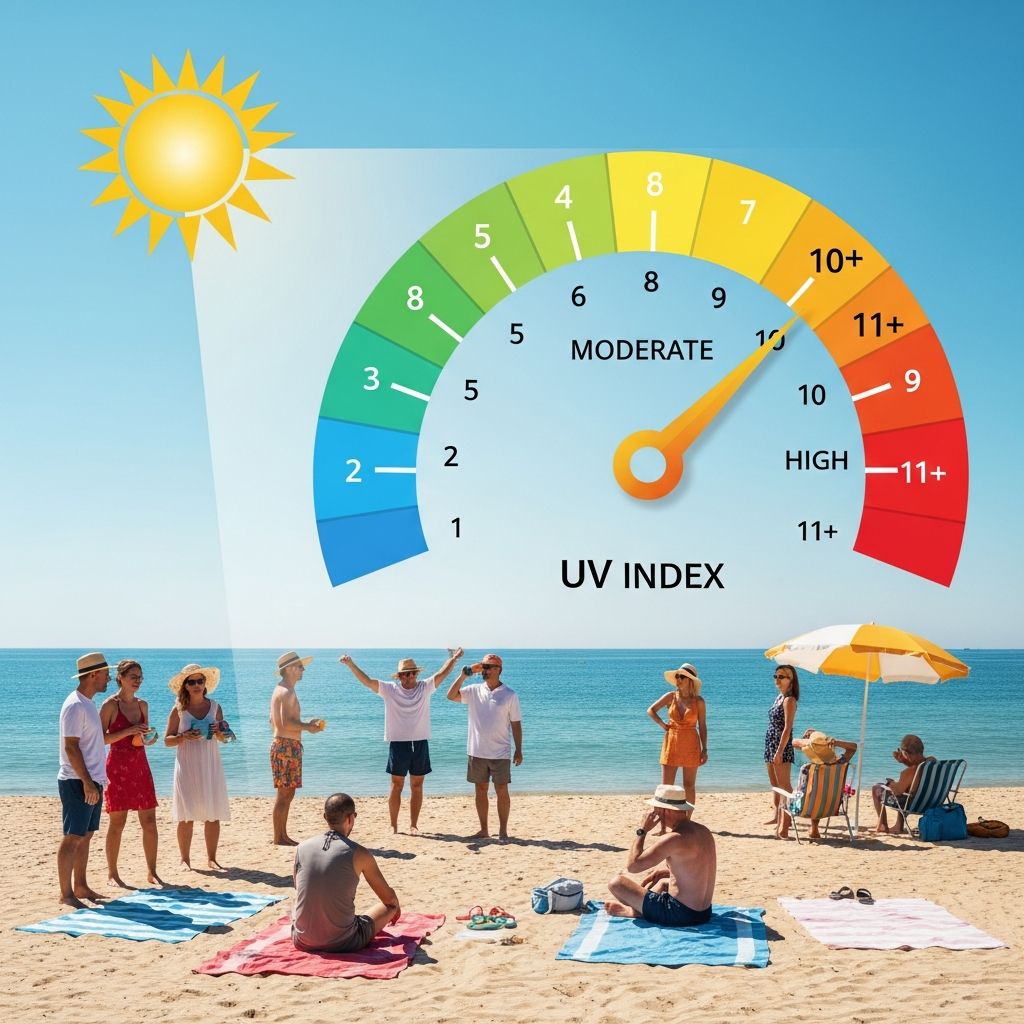
The UV Index is a vital tool for assessing the strength of ultraviolet (UV) radiation from the sun at a specific location and time, helping individuals gauge their risk of skin damage and take appropriate protective actions.
What is the UV Index?
The UV Index measures the intensity of ultraviolet (UV) radiation reaching the Earth’s surface, calculated based on factors like latitude, altitude, time of day, cloud cover, and ozone levels. It provides a daily forecast to predict overexposure risk on a scale from 0 to 11+, where higher numbers indicate greater UV strength and faster potential for skin burning.
Two main types of UV rays affect us: UVA, which penetrates deeply causing tanning, premature aging, and contributes to skin cancer, and UVB, responsible for sunburn and direct DNA damage in skin cells that can lead to cancer. While UVB varies seasonally, UVA remains relatively constant, making the UV Index essential year-round, even on cloudy days when up to 80% of UV can penetrate clouds.
UV Index Scale and Risk Levels
The UV Index is color-coded into exposure categories to simplify risk assessment and guide protection strategies.
- Low (0-2): Minimal UV radiation, typical early morning or evening. No special protection needed for most, but fair-skinned individuals should apply sunscreen if outdoors long.
- Moderate (3-5): Low risk for average skin, but damage possible with prolonged exposure. Protect with sunscreen, hats, and clothing if outside for hours.
- High (6-7): High risk; unprotected skin burns in 20-30 minutes. Seek shade midday, wear protective clothing, and use SPF 30+ sunscreen.
- Very High (8-10): Skin burns quickly (10-20 minutes); extra precautions essential, especially near reflective surfaces like water or snow that amplify UV by up to 25-50%.
- Extreme (11+): Severe risk; burns in under 10 minutes, common in tropics or high altitudes. Avoid sun, use all protections.
Highest levels (11+) occur near the equator or at elevation where thinner atmosphere allows more UV through.
How Quickly Can You Burn?
| UV Index | Time to Burn (Fair Skin) | Risk Level |
|---|---|---|
| 0-2 | >1 hour | Low |
| 3-5 | 30-60 min | Moderate |
| 6-7 | 20-30 min | High |
| 8-10 | 10-20 min | Very High |
| 11+ | <10 min | Extreme |
This table illustrates burn times for untanned fair skin; darker tones burn slower but still accrue damage leading to cancer risk. Always check local forecasts via weather apps or sites like EPA.gov.
Why the UV Index Matters for Skin Cancer Prevention
UV radiation is the primary environmental cause of skin cancer, including melanoma, basal cell, and squamous cell carcinomas. One in five Americans develops skin cancer; globally, it’s 1 in 3 cancers diagnosed. Overexposure causes DNA mutations, immune suppression, cataracts, and premature aging.
Even without burning, cumulative UVA/UVB damages skin cells. High-risk groups—fair skin, light eyes/hair, freckles, family history, or prior cancers—benefit most from UV Index monitoring to avoid peak hours (10 AM-4 PM). Tanning beds emit UV as harmful as midday sun, increasing melanoma risk by 75%; avoid them.
Sun Protection Recommendations by UV Index
Protection starts at UV 3+; intensity rises with higher indices.
- UV 0-2: Minimal action; sunscreen if sensitive skin.
- UV 3-5: SPF 30+ broad-spectrum sunscreen (reapply every 2 hours), hat, sunglasses.
- UV 6-7: Add UPF clothing, seek shade 10 AM-4 PM.
- UV 8-10: Full coverage: long sleeves/pants, wide-brim hat, SPF 50+, avoid peak sun.
- UV 11+: Stay indoors if possible; if out, maximum protection.
Related Stories



Sunscreen should be broad-spectrum (UVA/UVB), water-resistant; apply 1 oz (shot glass) 15-30 min before exposure. Never rely solely on high SPF—combine with shade/clothing.
Limitations of the UV Index
While invaluable, the UV Index has limits: it predicts clear-sky conditions but doesn’t account for microclimates, reflections (sand/snow/water boost UV 10-50%), or personal factors like medications increasing sensitivity. It focuses on erythema (redness) from UVB, underestimating steady UVA damage.
Clouds reduce but don’t eliminate UV; altitude/thin ozone amplify it. Use alongside shadow rule: if shadow shorter than height, UV is moderate+.
Who is at Higher Risk?
Certain traits elevate susceptibility:
- Fair skin that burns easily
- Light hair/eyes
- Freckles or many moles
- History of sunburns/cancer
- Immunosuppressed individuals
Children burn fastest, with lifetime risk compounding; protect them rigorously.
Frequently Asked Questions
What is the highest UV Index possible?
11+ (extreme), seen in equatorial/high-altitude areas; skin burns in minutes.
What is an unsafe UV level?
6+ (high to extreme); take full precautions.
At what UV Index should you wear sunscreen?
3+; essential for all higher levels.
Does cloud cover eliminate UV risk?
No, 50-80% UV penetrates; check Index regardless.
Is the UV Index only for summer?
No, UVA is year-round; winter/snow reflects UV.
Take Control of Your Sun Safety
Make UV Index checking routine via apps (e.g., Weather.com, EPA SunWise). Combine with Slip! Slop! Slap! (slip on shirt, slop on sunscreen, slap on hat) and Seek Shade. Early detection via self-exams saves lives; see dermatologist for changes.
By understanding and acting on UV Index, you slash skin cancer odds while enjoying outdoors safely.
References
- Precautions as the UV Index Rises — Saint John’s Cancer Institute. 2023. https://www.saintjohnscancer.org/blog/melanoma/precautions-to-take-as-the-uv-index-rises/
- The UV Index: Know Your Risk — The Skin Cancer Foundation. 2023. https://www.skincancer.org/blog/the-uv-index-know-your-risk/
- Understanding the UV Index — The Melanoma & Skin Cancer Institute. 2024. https://www.theskincancerinstitute.com/resources/understanding-the-uv-index
- Tracking the UV? Ditching the SPF? Here’s What a Dermatologist Says — UC San Diego. 2024-06-20. https://today.ucsd.edu/story/tracking-the-uv-ditching-the-spf-heres-what-a-dermatologist-says
- The UV index and sunburn risk — Cancer Research UK. 2024. https://www.cancerresearchuk.org/about-cancer/causes-of-cancer/sun-uv-and-cancer/the-uv-index-and-sunburn-risk
- What is the UV Index? — Melanoma Research Alliance. 2023. https://www.curemelanoma.org/about-melanoma/prevention/uv-index
- Reducing Risk for Skin Cancer — Centers for Disease Control and Prevention (CDC). 2025-01-15. https://www.cdc.gov/skin-cancer/prevention/index.html
Similar Articles








Read full bio of medha deb