Thigh Muscles: Anatomy, Function & Health
Explore thigh muscle anatomy, function, and how to keep them healthy and injury-free.
Understanding Your Thigh Muscles
Your thighs contain some of the largest and most powerful muscles in your body, working together to support movement, maintain balance, and bear much of your body’s weight. These muscles extend from your hip down to your knee and are essential for everyday activities like walking, climbing stairs, running, and jumping. The thigh muscles are composed of skeletal muscles that attach to bones through tendons, creating a complex system of movement and support. Understanding the anatomy and function of these muscles is crucial for maintaining leg health, preventing injuries, and optimizing physical performance.
Anatomy of Thigh Muscles
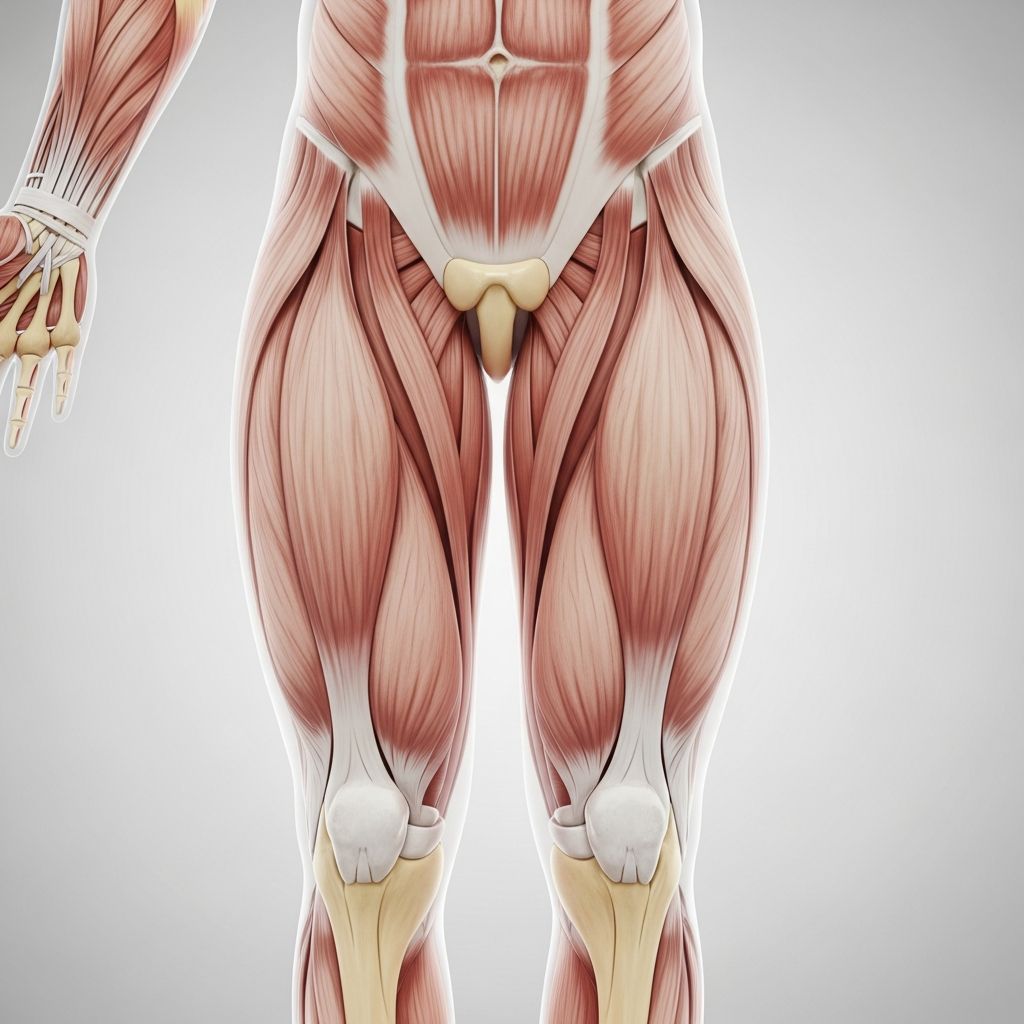
Your thigh muscles are organized into three main groups based on their location: anterior (front), posterior (back), and medial (inner) muscles. Each group serves distinct functions and works in coordination with the others to enable full range of motion in the hip and knee joints. These muscles are made of bundles of muscle fibers containing blood vessels and nerve fibers, all held together with connective tissue that provides structure and support.
Muscle Composition and Structure
Thigh muscles are skeletal muscles composed of thousands of tiny, elastic muscle fibers. These fibers contain both red and white muscle tissue, which gives them a characteristic striped or striated appearance. The fibers are woven together with connective tissue and connected to bones via tendons that attach at your pelvis, hip, and knee. This intricate structure allows for the precise contractions necessary for various movements and activities.
The Three Main Muscle Groups
Anterior Thigh Muscles (Front)
The anterior thigh muscles are located at the front of your thigh, starting at your pelvis and femur and extending down to your kneecap (patella) and shin bone (tibia). These muscles work together to stabilize your body and assist with balance, allowing you to perform movements such as straightening your knee, kicking, running, and jumping.
The primary anterior thigh muscles include the quadriceps femoris, which is composed of four muscles: the rectus femoris, vastus lateralis, vastus medialis, and vastus intermedius. These muscles have heads that merge into a single tendon called the quadriceps femoris tendon, which attaches to your kneecap. Additionally, the iliopsoas muscle, which starts in your lower spine and attaches to your femur, assists with hip flexion and plays a vital role in lifting your leg forward.
Posterior Thigh Muscles (Back)
The posterior thigh muscles run down the back of your thigh, from your hip to just below your knee. These muscles, commonly known as the hamstrings, are among the most frequently injured thigh muscles. The hamstring group consists of three distinct muscles: the semitendinosus, semimembranosus, and biceps femoris.
Your hamstrings serve multiple functions, including helping you move your leg from front to back, rotating your leg at the hip socket, walking, climbing stairs, and performing squats. These powerful muscles are essential for athletic activities and daily movements, but their importance also makes them susceptible to injury, particularly in athletes who engage in high-intensity activities.
Related Stories



Medial Thigh Muscles (Inner Thigh)
The medial thigh muscles are located on the inside of your thigh, starting at your pelvis and extending to your thigh bone (femur). Also referred to as the hip adductors, these five muscles work together to help move your leg toward the center of your body, a movement called adduction. The medial thigh muscle group includes the adductor longus, adductor magnus, adductor brevis, gracilis, and obturator externus.
These muscles are responsible for adduction, which is moving your leg toward the center of your body, as well as helping with flexion, extension, and rotation of your thigh. They play a crucial role in maintaining proper alignment of your hips and legs during movement and standing.
Functions of Thigh Muscles
Your thigh muscles perform several essential functions that enable a wide range of movements and activities. Understanding these functions helps illustrate why maintaining thigh muscle health is so important for overall mobility and quality of life.
Primary Functions
The main functions of thigh muscles include:
- Bending and extending your hips and knees during walking, running, and jumping
- Rotating your legs inward and outward at the hip joints
- Moving your legs toward and away from your body (adduction and abduction)
- Supporting your body weight while standing and during movement
- Maintaining proper alignment of your hips and legs
- Assisting with balance and stability during daily activities and exercise
- Enabling athletic movements such as kicking, sprinting, and squatting
Common Thigh Muscle Conditions and Injuries
The thigh muscles are prone to various injuries and conditions due to their constant use and the high demands placed on them during physical activity. Understanding these common issues can help you recognize symptoms early and seek appropriate treatment.
Frequently Occurring Conditions
Conditions that can affect your thigh muscles include:
- Muscle Strains: Overstretching or tearing of muscle fibers, ranging from mild to severe
- Muscle Tears: Partial or complete rupture of muscle tissue
- Contusions: Bruising caused by direct trauma to the muscle
- Tendonitis: Inflammation of the tendons connecting muscle to bone
- Muscle Spasms: Involuntary contractions of muscle fibers
- Compartment Syndrome: Increased pressure within muscle compartments
Recognizing Symptoms
Symptoms of thigh muscle conditions may include pain, numbness, weakness, difficulty moving your leg, trouble putting weight on your leg, or visible swelling and bruising. If you experience any of these symptoms, it is important to contact a healthcare provider for proper diagnosis and treatment recommendations.
Injury Prevention and Muscle Health
Maintaining healthy thigh muscles requires a combination of proper stretching, warming up before physical activity, and listening to your body’s signals. Here are key strategies to keep your thigh muscles healthy and injury-free:
Prevention Strategies
- Warm Up Properly: Always perform 5-10 minutes of light cardiovascular activity before engaging in more intense exercise
- Stretch Regularly: Incorporate both static and dynamic stretching into your routine to maintain flexibility
- Avoid Overtraining: Gradually increase the intensity and duration of your workouts
- Use Proper Technique: Learn correct form for exercises and sports movements
- Listen to Your Body: Do not push through pain, as this can lead to serious injuries
- Cross-Train: Vary your activities to avoid repetitive stress on specific muscle groups
- Stay Hydrated: Proper hydration supports muscle function and reduces injury risk
- Strengthen Supporting Muscles: Build strength in complementary muscle groups for balanced support
When to Seek Medical Attention
While many minor thigh muscle issues resolve with rest and self-care, certain symptoms warrant professional medical evaluation. You should contact a healthcare provider if you experience severe pain that does not improve with rest, numbness or tingling in your thigh or leg, significant weakness that affects your ability to move or bear weight, visible deformity or severe swelling, or symptoms that persist for more than a few days. A healthcare provider can properly diagnose your condition and recommend appropriate treatment options to help you recover and return to normal activities.
FAQ: Thigh Muscles
Q: What are the main muscles in the thigh?
A: The main thigh muscles are organized into three groups: the quadriceps and iliopsoas in the front, the hamstrings in the back, and the adductors on the inside of the thigh.
Q: Why are thigh muscles so large?
A: Thigh muscles are among the largest in your body because they must support your body weight, enable powerful movements like running and jumping, and work constantly throughout the day during walking and other activities.
Q: What is the most common thigh muscle injury?
A: Hamstring injuries are the most common sports-related thigh muscle injuries, though quadriceps strains and adductor muscle pulls are also frequently encountered.
Q: How long does it take to recover from a thigh muscle strain?
A: Recovery time depends on the severity of the injury. Mild strains may heal in 1-3 weeks with rest and conservative treatment, while more severe injuries may require several weeks to months of rehabilitation.
Q: Can I prevent thigh muscle injuries?
A: Yes, you can significantly reduce injury risk by warming up before exercise, stretching regularly, using proper technique, avoiding overtraining, and listening to your body’s pain signals.
Q: What role do thigh muscles play in balance?
A: Thigh muscles help maintain proper alignment of your hips and legs and stabilize your body during standing and movement, which are essential components of balance and coordination.
Summary
Your thigh muscles represent a complex and powerful system of skeletal muscles that play a vital role in your ability to move, maintain balance, and support your body weight. Organized into three main groups—anterior, posterior, and medial—these muscles work in coordination to enable countless daily activities and athletic movements. Understanding their anatomy, functions, and vulnerability to injury empowers you to take proactive steps to maintain thigh muscle health. By incorporating proper warm-up routines, regular stretching, appropriate strengthening exercises, and attentive listening to your body’s signals, you can significantly reduce your risk of injury and enjoy optimal leg health and mobility throughout your life. If you do experience thigh pain or weakness, consulting with a healthcare provider ensures proper diagnosis and treatment to get you back to normal function quickly and safely.
References
- Thigh Muscles: What Are They, Anatomy & Function — Cleveland Clinic. 2024. https://my.clevelandclinic.org/health/body/21936-thigh-muscles
- Leg Muscles: Anatomy and Function — Cleveland Clinic. 2024. https://my.clevelandclinic.org/health/body/22220-leg-muscles
- What Are Your Quad Muscles? — Cleveland Clinic. 2024. https://my.clevelandclinic.org/health/body/22816-quad-muscles
- Hamstring Muscle: What It Is, Anatomy & Function — Cleveland Clinic. 2024. https://my.clevelandclinic.org/health/body/21904-hamstring-muscles
Similar Articles








Read full bio of Sneha Tete