This Bacteria Causes More Cancer Cases Than All Other Pathogens
Helicobacter pylori infection leads more cancer cases worldwide than any other pathogen, driving stomach cancers and more.
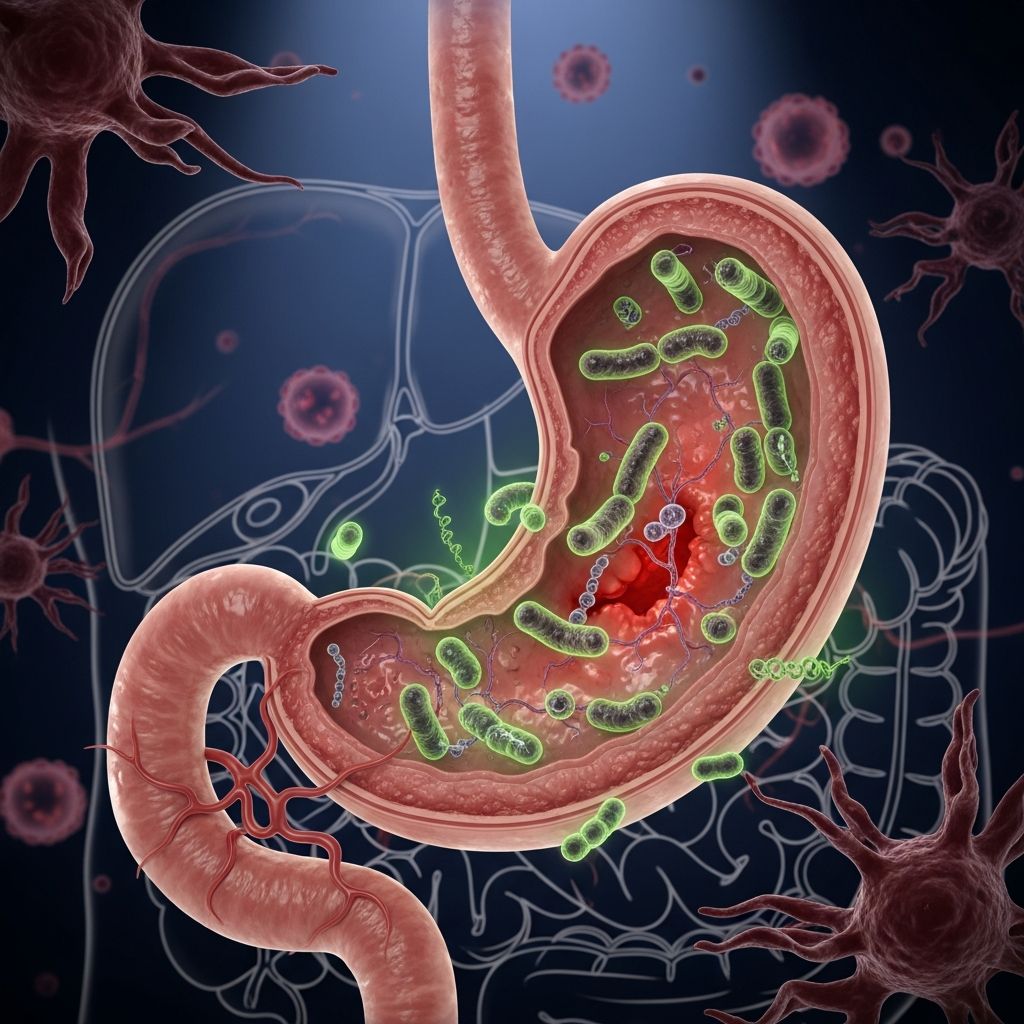
A common bacterium lurking in the stomach lining, Helicobacter pylori (H. pylori), is responsible for more cancer cases worldwide than all other infectious pathogens combined. This spiral-shaped microbe infects over half the global population, often asymptomatically, but chronic infections trigger inflammation that can evolve into deadly gastric cancers.
According to the National Cancer Institute (NCI), H. pylori is classified as a Group 1 carcinogen, definitively causing gastric adenocarcinoma and mucosa-associated lymphoid tissue (MALT) lymphoma. Eradication therapies have proven to slash cancer risk by up to 50% in high-incidence areas, highlighting a preventable crisis.
What Is H. pylori and How Does It Infect the Stomach?
H. pylori is a resilient, gram-negative bacterium adapted to survive the harsh acidic environment of the human stomach. It burrows into the protective mucus layer lining the stomach, evading immune detection and producing urease enzymes that neutralize stomach acid locally.
Infection typically occurs in childhood through contaminated food, water, or close person-to-person contact, especially in crowded or low-sanitation settings. Globally, prevalence exceeds 50% in developing regions but has declined to under 20% in high-income countries due to improved hygiene and antibiotics.
- Transmission routes: Fecal-oral or oral-oral via saliva, vomit, or unclean water.
- Risk factors: Family overcrowding, poor sanitation, and low socioeconomic status.
- Symptomless majority: 80-90% of infections cause no issues, but 10-20% develop ulcers or gastritis.
Once established, H. pylori provokes chronic inflammation (gastritis), damaging epithelial cells and promoting precancerous changes over decades.
How Does H. pylori Cause Cancer?
The cancer pathway begins with persistent infection-induced inflammation. H. pylori toxins disrupt cell signaling, accelerate division, and impair DNA repair, fostering mutations. Key strains produce CagA and VacA toxins: CagA injects into cells, promoting uncontrolled growth; VacA forms pores causing cell death.
Progression stages:
- Superficial gastritis.
- Atrophic gastritis (gland loss).
- Intestinal metaplasia (cell type change).
- Dysplasia (precancerous).
- Gastric adenocarcinoma.
Epidemiologic data confirm chronic H. pylori triples non-cardia gastric cancer risk. Nearly all gastric MALT lymphomas harbor the bacteria, with antibiotic eradication regressing 70-80% of early tumors.
| Cancer Type | Attributable Fraction from H. pylori | Evidence Strength |
|---|---|---|
| Gastric Adenocarcinoma (non-cardia) | ~70-90% globally | Consistent epidemiology + eradication trials |
| Gastric MALT Lymphoma | Nearly 100% | Tumor regression post-eradication |
| Colorectal Cancer | Emerging link | Growing evidence in meta-analyses |
Cancers Linked to H. pylori Infection
Gastric Adenocarcinoma
This aggressive cancer dominates H. pylori’s toll, comprising 80% of stomach cancers. Studies across Asia, Europe, and the Americas show infected individuals face 3-6x higher risk, with eradication preventing progression in asymptomatic carriers.
Gastric MALT Lymphoma
A rare non-Hodgkin lymphoma subtype originating in stomach lymphoid tissue. Virtually all cases test H. pylori-positive; remission follows antibiotics in low-grade tumors, avoiding chemotherapy.
Emerging Links: Colorectal and Others
Recent meta-analyses suggest H. pylori elevates colorectal cancer odds by 20-50%, particularly in African-Americans. Pancreatic links lack confirmation per 2023 reviews.
Surprising Protective Effects Against Certain Cancers
Paradoxically, H. pylori may shield against esophageal adenocarcinoma. Large Swedish and Australian studies report 40-60% reduced risk in infected individuals, attributed to hypoacidity reducing Barrett’s esophagus—a reflux-linked precursor.
Related Stories



As Western hygiene eradicates H. pylori, esophageal adenocarcinoma rates have surged 6-fold in the U.S. and Europe, supporting causality.
Risk Factors That Make H. pylori More Dangerous
- Bacterial strains: CagA+ strains heighten risk 2-3x via inflammation and oncogene mimicry.
- Host genetics: Variants boosting IL-1β cytokines amplify gastritis.
- Lifestyle: Smoking, salty/spicy diets, low fruits/veggies exacerbate damage.
- Co-factors: Pernicious anemia, prior ulcers increase odds.
Testing and Treatment: Eradicating H. pylori
Non-invasive tests include urea breath tests (95% accuracy), stool antigen, or blood serology. Endoscopy with biopsy (rapid urease test, histology) confirms for symptomatic cases.
Standard therapy: Triple therapy (PPI + clarithromycin + amoxicillin) for 14 days achieves 80-90% clearance. Rising resistance prompts quadruple therapy (PPI + bismuth + metronidazole + tetracycline).
High-risk screening: Recommended in high-prevalence areas (e.g., Japan, China) or family history. Post-eradication, cancer incidence drops 30-50% long-term.
Prevention Strategies for H. pylori and Cancer
- Hygiene: Handwashing, safe water, food safety curb transmission.
- Vaccines: Experimental; no approved vaccine yet.
- Diet: Antioxidants (vit C, E) mitigate inflammation.
- Screening: Mass eradication in endemic regions halves gastric cancer.
Frequently Asked Questions (FAQs)
What are early symptoms of H. pylori infection?
Most are asymptomatic; some experience bloating, nausea, burping, or epigastric pain. Seek testing for persistent dyspepsia.
Does everyone with H. pylori get cancer?
No—only 1-3% progress to gastric cancer; cofactors determine outcome.
Can H. pylori be cured completely?
Yes, antibiotics eradicate it in 85-95% with adherence. Retest post-treatment.
Should I get tested if no symptoms?
Consider if family history of gastric cancer or living in high-risk areas.
Is H. pylori linked to ulcers?
Yes—90% of duodenal, 70% of gastric ulcers stem from it.
Global Burden and Public Health Implications
H. pylori drives 770,000 annual gastric cancer deaths (WHO estimate), dwarfing HPV (630,000) or hepatitis (420,000). In the UK, it causes ~5% of stomach cancers amid declining rates.
Public health shifts toward “test-and-treat” in asymptomatic high-risk groups could prevent 100,000+ cases yearly. Vaccine trials progress, targeting CagA/VacA.
References
- Helicobacter pylori (H. pylori) and Cancer – NCI — National Cancer Institute. 2023. https://www.cancer.gov/about-cancer/causes-prevention/risk/infectious-agents/h-pylori-fact-sheet
- Does H.pylori cause cancer? — Cancer Research UK. 2024-05-23. https://www.cancerresearchuk.org/about-cancer/causes-of-cancer/infections-eg-hpv-and-cancer/does-hpylori-cause-cancer
- H. pylori and your stomach cancer risk — MD Anderson Cancer Center. 2019. https://www.mdanderson.org/cancerwise/h–pylori-and-your-stomach-cancer-risk.h00-159460056.html
Similar Articles








Read full bio of medha deb