Thoracic Spine: Anatomy, Function & Disorders
Comprehensive guide to thoracic spine anatomy, function, and common disorders affecting the mid-back.
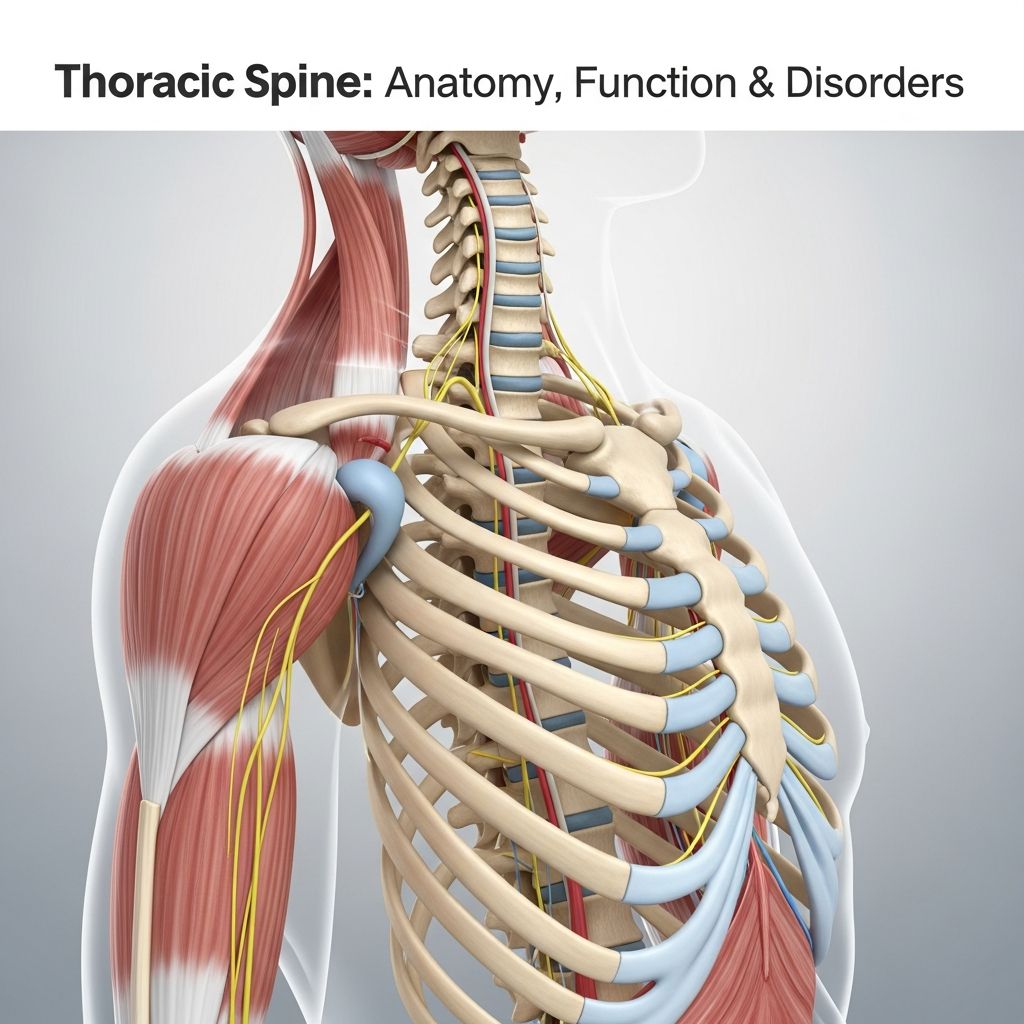
Understanding the Thoracic Spine: Anatomy and Function
The thoracic spine is a critical component of your skeletal system that forms the middle and upper back region. Located between your cervical spine (neck) and lumbar spine (lower back), the thoracic spine consists of twelve vertebrae labeled T1 through T12. This region extends from the base of your neck down to the lower chest and plays a vital role in protecting your vital organs while providing structural support and enabling movement.
The thoracic spine is unique among the spine’s regions due to its distinctive features and functional characteristics. Unlike the cervical spine, which is highly mobile, or the lumbar spine, which bears tremendous weight, the thoracic spine serves as a balanced intermediary—providing stability while maintaining reasonable flexibility. Understanding the anatomy and function of the thoracic spine is essential for maintaining spinal health and preventing injuries.
Anatomy of the Thoracic Spine
The Twelve Thoracic Vertebrae
The thoracic spine comprises twelve vertebrae, each progressively larger as they descend from T1 (closest to the neck) to T12 (closest to the lower back). Each thoracic vertebra is a complex bone structure with several distinct anatomical features. The vertebral body is the main weight-bearing portion, cylindrical in shape and positioned toward the front of the spine. Behind the vertebral body lies the vertebral arch, which creates the spinal canal—the tunnel through which the spinal cord passes.
The thoracic vertebrae possess facet joints, which are specialized joints that connect one vertebra to another. These facet joints, along with intervertebral discs, allow for controlled movement and flexibility while maintaining stability. The thoracic vertebrae also feature unique articulation surfaces on their lateral sides where the ribs attach, distinguishing them from other vertebral segments.
Attachment to the Rib Cage
One of the most distinctive features of the thoracic spine is its direct attachment to the rib cage. Each of the twelve pairs of ribs articulates with the thoracic vertebrae, creating a stable framework that protects vital organs such as the heart and lungs. This connection between the thoracic spine and rib cage is crucial for both structural integrity and protective function. The ribs attach to facets on the sides of the thoracic vertebrae through costovertebral joints, which are strengthened by robust ligaments.
Intervertebral Discs
Between each pair of thoracic vertebrae sit intervertebral discs, which are specialized cushioning structures composed of a tough outer layer called the annulus fibrosus and a gel-like center known as the nucleus pulposus. These discs act as shock absorbers, distributing forces and stresses throughout the spine during movement and daily activities. The discs also contribute to the spine’s natural curves and flexibility.
Spinal Cord and Nerve Roots
The spinal cord runs through the spinal canal in the thoracic region, with twelve pairs of nerve roots branching out from the thoracic spinal cord. These nerve roots exit through openings called neural foramen, located between adjacent vertebrae on both sides of the spine. The thoracic nerves control the chest, abdomen, and upper back muscles, making them essential for breathing, trunk stability, and core function.
Related Stories



Functions of the Thoracic Spine
Support and Stability
The thoracic spine provides structural support for the upper body and assists in maintaining upright posture. The attachment to the rib cage provides exceptional stability compared to other spinal regions, allowing the thoracic spine to withstand significant loads without excessive movement. This stability is particularly important for maintaining proper alignment of the shoulders and upper back.
Protection of Vital Organs
Perhaps the most critical function of the thoracic spine is protecting vital organs. The rib cage, which is attached to the thoracic vertebrae, creates a protective cage around the heart, lungs, and other thoracic organs. This protective framework shields these essential organs from trauma and injury, underscoring the importance of thoracic spine health.
Movement and Flexibility
While less mobile than the cervical spine, the thoracic spine still allows for considerable movement. The facet joints and intervertebral discs enable twisting, bending, and rotation of the trunk. The thoracic spine facilitates movements such as reaching overhead, rotating the torso, and bending sideways, all essential for daily activities and athletic performance.
Nerve Function
The thoracic spinal nerves branch out to innervate the muscles of the chest and abdomen, supporting essential functions such as breathing and core stability. These nerves also carry sensory information from the chest and upper abdominal regions back to the brain, allowing for proprioception and awareness of body position.
Common Thoracic Spine Disorders and Conditions
Thoracic Strain and Muscle Pain
Muscle strain in the thoracic region is a common condition resulting from overuse, poor posture, or sudden movements. Repetitive activities, prolonged sitting, and lifting heavy objects incorrectly can strain the muscles supporting the thoracic spine. Symptoms typically include localized pain, muscle tension, and stiffness that may improve with rest and conservative treatment.
Disc Hernia and Bulging Discs
Intervertebral discs in the thoracic spine can herniate or bulge, pushing the gel-like nucleus pulposus through tears in the outer annulus fibrosus. This condition can irritate nearby nerve roots, causing pain, numbness, or weakness. Thoracic disc herniations are less common than cervical or lumbar herniations but can be serious if they compress the spinal cord.
Thoracic Stenosis
Thoracic spinal stenosis occurs when the spinal canal narrows, potentially compressing the spinal cord and nerve roots. This can develop due to degenerative disc disease, bone spurs, or ligament thickening. Symptoms may include back pain, leg pain, or walking difficulties.
Kyphosis
Excessive thoracic kyphosis is an exaggeration of the natural forward curve of the thoracic spine, commonly known as a “rounded back” or “hunchback” posture. This condition can result from poor posture, osteoporosis, muscle weakness, or degenerative disc disease. Thoracic kyphosis can lead to pain, reduced mobility, and breathing difficulties.
Thoracic Outlet Syndrome
Thoracic outlet syndrome occurs when blood vessels or nerves passing through the thoracic outlet (the space between the collarbone and first rib) become compressed. This can result in arm pain, numbness, weakness, or vascular symptoms.
Osteoarthritis
Degenerative joint disease in the thoracic spine can develop as cartilage wears down over time. This condition may cause stiffness, localized pain, and reduced mobility in the upper back region.
Symptoms of Thoracic Spine Problems
Thoracic spine disorders can present with a variety of symptoms that may vary depending on the specific condition and severity:
– Mid-back pain or pain between the shoulder blades- Muscle tension or stiffness in the upper back- Pain that worsens with certain movements or positions- Numbness or tingling in the arms or legs- Weakness in the legs or difficulty walking- Breathing difficulties or chest pain (rare)- Pain radiating around the sides of the chest
Diagnosis of Thoracic Spine Conditions
Diagnosing thoracic spine problems typically involves a comprehensive evaluation by a healthcare provider. The diagnostic process may include:
–
Physical examination
to assess range of motion, strength, and pain levels-Imaging studies
such as X-rays, MRI scans, or CT scans to visualize the spine’s structures-Nerve conduction studies
or electromyography to assess nerve function-Blood tests
to rule out inflammatory or systemic conditions-Patient history
regarding symptoms, activities, and previous injuriesTreatment Options for Thoracic Spine Disorders
Conservative Treatment Approaches
Most thoracic spine conditions respond well to conservative treatment methods, which may include:
–
Rest and activity modification
to allow healing and prevent further injury-Physical therapy and exercises
to strengthen core muscles and improve flexibility-Anti-inflammatory medications
to reduce pain and swelling-Heat or ice therapy
to manage pain and muscle tension-Posture correction
and ergonomic improvements-Stretching and flexibility exercises
to maintain range of motionAdvanced Treatment Options
For conditions that do not respond to conservative treatment, more advanced interventions may be considered:
–
Epidural steroid injections
to reduce inflammation and provide pain relief-Minimally invasive spine surgery
for herniated discs or stenosis-Spinal fusion surgery
for instability or severe degenerative conditions-Decompression procedures
to relieve nerve compressionPrevention and Spinal Health
Maintaining thoracic spine health is crucial for overall well-being and quality of life. Several strategies can help prevent thoracic spine problems:
–
Maintain good posture
throughout the day, especially when sitting or working at a desk-Strengthen core muscles
through regular exercise and physical activity-Practice proper lifting techniques
to avoid strain and injury-Stay physically active
with regular aerobic exercise and strength training-Take frequent breaks
during prolonged sitting to stretch and move-Use ergonomic furniture
and workspace setup to support proper spinal alignment-Avoid smoking
and maintain a healthy weight-Practice stress management
techniques to reduce muscle tensionWhen to Seek Medical Attention
Consult a healthcare provider if you experience:
– Persistent mid-back pain lasting more than a few weeks- Severe pain that interferes with daily activities or sleep- Numbness, tingling, or weakness in the arms or legs- Loss of bladder or bowel control- Fever accompanying back pain (suggesting infection)- Difficulty breathing or chest pain- Symptoms following a trauma or injury
Frequently Asked Questions
Q: How many thoracic vertebrae are there?
A: There are twelve thoracic vertebrae, labeled T1 through T12, forming the middle and upper back region of the spine.
Q: What is the primary function of the thoracic spine?
A: The primary functions of the thoracic spine include providing structural support for the upper body, protecting vital organs like the heart and lungs through its attachment to the rib cage, and enabling movement of the trunk and shoulders.
Q: Why is the thoracic spine less mobile than the cervical spine?
A: The thoracic spine is less mobile because it is attached to the rib cage, which provides stability and protection for vital organs but limits the range of motion compared to the cervical spine.
Q: What causes thoracic back pain?
A: Thoracic back pain can result from muscle strain, poor posture, disc hernia, spinal stenosis, arthritis, or injury. Poor ergonomics and prolonged sitting are common contributors.
Q: Can thoracic spine problems be treated without surgery?
A: Yes, most thoracic spine conditions respond well to conservative treatment including physical therapy, anti-inflammatory medications, posture correction, and exercise. Surgery is typically reserved for conditions that don’t respond to conservative care.
Q: How can I prevent thoracic spine problems?
A: Maintain good posture, strengthen your core muscles through regular exercise, practice proper lifting techniques, take frequent breaks from sitting, use ergonomic furniture, and avoid smoking.
Q: What role do thoracic nerves play?
A: Thoracic nerves control the muscles of the chest and abdomen, support essential functions like breathing, and carry sensory information from the chest and upper abdominal regions to the brain.
References
- Anatomy of the Spine: Understanding Its Structure and Function — OSSM Newark. Accessed December 1, 2025. https://www.ossmnewark.com/specialties/back-neck-spine/anatomy
- The Structure and Function of a Healthy Spine — Cleveland Clinic Abu Dhabi. 2017. https://www.clevelandclinicabudhabi.ae/en/health-hub/health-resource/diseases-and-conditions/the-structure-and-function-of-a-healthy-spine
- Spine: Anatomy, Function, Parts, Segments & Disorders — Cleveland Clinic. https://my.clevelandclinic.org/health/body/10040-spine-structure-and-function
- Spinal Cord: Anatomy, Function & Structure — Cleveland Clinic. https://my.clevelandclinic.org/health/body/21946-spinal-cord
- Back Muscles: Anatomy and Function of Upper, Middle & Lower Back — Cleveland Clinic. https://my.clevelandclinic.org/health/body/21632-back-muscles
Similar Articles








Read full bio of medha deb