Three Moves For Better Spine Health: 3 Harvard-Backed Exercises
Master the Big Three exercises for stronger core, stable spine, and pain-free movement.
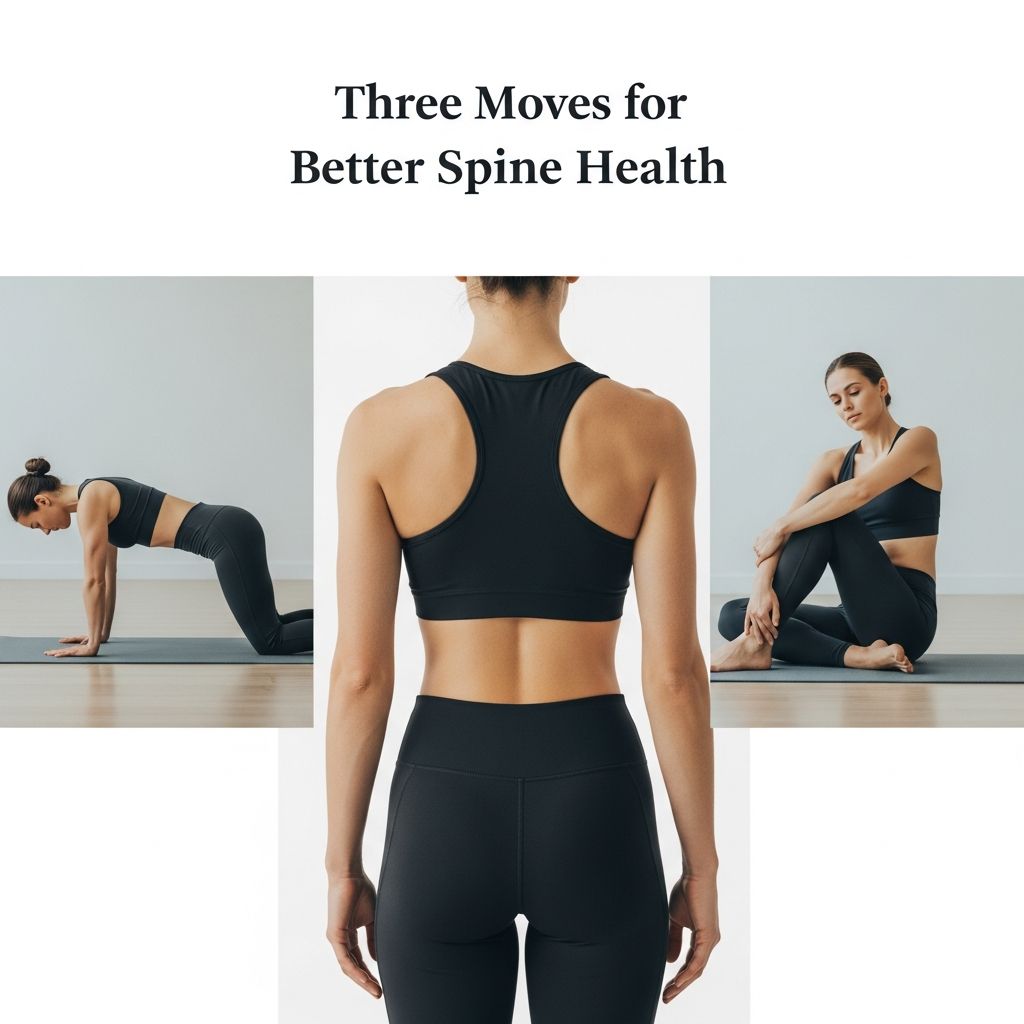
Three Moves for Better Spine Health: A Harvard Medical School Guide
Back pain affects millions of people worldwide, often stemming from weak core muscles and poor spine stability. A strong and stable spine is essential for maintaining mobility, reducing pain, and preventing injury during daily activities like twisting, bending, lifting, and stretching. According to experts at Harvard-affiliated institutions, achieving spine stability doesn’t require complicated routines or expensive equipment. Instead, three carefully designed exercises can make a significant difference in your spinal health and overall quality of life.
The key to a healthy spine lies in understanding the relationship between core strength and spinal stability. When the muscles and ligaments surrounding your spine weaken—whether from age, injury, or sedentary lifestyle—your lower back must compensate, placing greater stress and burden on its muscles. This compensation can lead to pain, stiffness, and reduced mobility. However, research shows that people who maintain a stable spine experience greater flexibility and can support a full range of natural movements, ultimately reducing pressure on the lower back and lowering the risk of pain and injury.
Understanding Spine Stability and Core Strength
Spine stability is not achieved by focusing on a single muscle group. Instead, it requires a balanced approach to your entire core musculature. Your core extends far beyond the visible abdominal muscles; it includes the abdominal muscles, back muscles, and the muscles around the pelvis. When all these muscles work together in harmony, they provide comprehensive support and stability to your spine.
The relationship between spine stability and movement quality cannot be overstated. Many people with back pain develop a fear of movement, believing that staying still will protect their backs. However, this counterintuitive approach often backfires. When you avoid movement due to fear, your back becomes increasingly stiff, and your pain worsens over time. A stable spine, by contrast, is paradoxically more flexible. When your core is strong and your spine is stable, you can move freely without excessive strain on your lower back muscles.
The importance of proper core engagement has been recognized by biomechanics experts worldwide. Dr. Stuart McGill, a renowned expert in spine biomechanics at the University of Waterloo in Canada, developed what has become known as the “Big Three” exercises. These three movements are specifically designed to engage all core muscles simultaneously, creating balanced stability throughout your spine and surrounding structures.
The Big Three Exercises: A Complete Overview
The Big Three exercises form a scientifically-backed approach to spine health. Each exercise targets different aspects of core stability while working synergistically with the others. The following sections detail each exercise, including proper form, progression, and integration into your fitness routine.
How to Perform the Big Three: The Pyramid Sequence
Before diving into the individual exercises, it’s important to understand the recommended progression pattern. Physical therapists recommend following what’s called a pyramid sequence:
- Begin with five repetitions of each of the three exercises
- Perform three repetitions of each exercise in the next set
- Finish by performing each exercise just once
- As you become more comfortable with the routine, increase the starting number of repetitions while maintaining the descending pattern
- Perform these exercises two to three days per week before your regular workout
- After several weeks, you can transition to performing them daily for maximum benefit
Related Stories



This pyramid approach allows your body to gradually adapt while maintaining proper form and preventing overexertion. The descending repetition pattern also helps you maintain focus and control throughout the workout session.
Exercise 1: The Curl-Up
The curl-up is the first of the Big Three exercises and focuses on strengthening your abdominal muscles while maintaining proper spinal alignment. This exercise is particularly effective for activating the rectus abdominis and other abdominal muscles without placing excessive strain on your lower back.
Step-by-Step Instructions for the Curl-Up
Starting Position:
- Lie on your back on a flat surface
- Extend one leg straight out on the floor
- Bend the knee of your other leg so your foot is flat on the floor
- Place your hands under your lower back to maintain the natural arch of your spine
Performing the Movement:
- On an exhalation, lift your head, shoulders, and chest off the floor as though they were all connected as one unit
- Come off the floor just enough to feel tension building in your abdominal muscles
- Avoid bending your lower back, tucking your chin, or letting your head tilt back
- Hold this position for 10 seconds while maintaining steady breathing
- Slowly lower yourself back to the starting position with control
- Complete five repetitions with this leg position
- Switch leg positions and repeat the entire sequence
The curl-up’s effectiveness lies in its simplicity and focus on proper form. By keeping your hands under your lower back, you maintain the natural curve of your spine and prevent compensatory movements that could reduce the exercise’s effectiveness or cause discomfort.
Exercise 2: The Side Plank
The side plank is the second exercise in the Big Three series and targets the lateral core muscles, including your obliques and lateral stabilizers. This exercise is crucial for developing the side-to-side stability that your spine needs for rotational movements and overall balance.
Step-by-Step Instructions for the Side Plank
Starting Position:
- Lie on your side on a flat surface
- Prop up your upper body on your arm, with your forearm on the floor and your elbow positioned directly underneath your shoulder
- Place your free hand on top of your hip
- Pull your feet back so your knees are bent at a 90-degree angle
Performing the Movement:
- Lift your hips off the floor so they are in line with the rest of your body, creating a straight line from your head to your knees
- Hold this position for up to 10 seconds while maintaining steady breathing
- Try to maintain a perfectly straight line without letting your hips sag toward the floor or rotate
- Slowly lower your hips back down to the floor with control
- Repeat five times on this side
- Flip to your other side and repeat the entire sequence
Progression Variation: As you build strength and stability, you can increase the difficulty by straightening your legs instead of keeping them bent at the knees. This variation increases the lever arm and requires greater core engagement to maintain proper alignment.
Exercise 3: The Bird-Dog
The bird-dog is the third and final exercise in the Big Three series. This exercise combines stability with dynamic movement, requiring your core muscles to stabilize your spine while you move your opposite arm and leg. This functional movement pattern mimics many everyday activities.
Step-by-Step Instructions for the Bird-Dog
Starting Position:
- Get down on the floor on your hands and knees
- Position your hands directly under your shoulders and your knees under your hips
- Keep your spine in a neutral position with your head aligned with your body
Performing the Movement:
- Raise your left arm and extend it forward as far as possible
- Simultaneously lift your right leg and extend it straight behind your body
- Keep both the raised arm and leg parallel to the floor
- Ensure your hips are aligned with your torso and not tilted to one side
- Hold this extended position for 10 seconds while maintaining steady breathing
- Return to the starting position with control
- Repeat five times with this arm and leg combination
- Switch to the other arm and leg and repeat the sequence
The bird-dog exercise is particularly valuable because it combines stability with movement, teaching your core muscles to maintain alignment while your limbs are in motion—a skill that translates directly to real-world activities.
Building Your Spine Health Routine
Understanding the exercises is only the first step; implementing them effectively requires strategic planning and consistency. The Big Three exercises are designed to be incorporated into your overall fitness routine, not to replace it. By performing these exercises before your regular workout, you activate and stabilize your core, preparing your body for more intense exercise.
When beginning your spine health journey, start with two to three sessions per week, allowing at least one rest day between sessions. This schedule permits your muscles adequate recovery time while building a consistent habit. As your strength improves and the exercises become easier, you can increase frequency to daily performance if desired.
Consistency matters more than intensity when it comes to spine health. Performing these exercises regularly will yield better results than sporadic intense sessions. Additionally, maintaining proper form throughout all repetitions is essential. It’s better to perform fewer repetitions with perfect form than many repetitions with compromised technique.
Additional Strategies for Spine Health
While the Big Three exercises form the foundation of a spine health program, complementary strategies can enhance your results. Flexibility and range of motion exercises are important components of spine health. Stretching exercises and dynamic movements help elongate muscles, release tension, and improve overall flexibility.
Weight-bearing exercises also contribute to overall spine and skeletal health. Activities like walking, running, dancing, and climbing stairs stimulate bone density while improving cardiovascular health. Balance-focused exercises help prevent falls, which can lead to spinal injuries, particularly in older adults.
Beyond exercise, maintaining good posture throughout daily activities supports your spine health efforts. Being mindful of your body positioning during work, sitting, and lifting helps prevent unnecessary strain on your back muscles and spine.
Expected Results and Timeline
| Timeline | Expected Changes |
|---|---|
| Weeks 1-2 | Increased body awareness, muscle soreness may occur, exercises feel challenging |
| Weeks 3-4 | Noticeable improvement in ease of movement, reduced initial soreness, better form execution |
| Weeks 5-8 | Increased strength and endurance, noticeable improvement in posture, reduced back pain for many |
| 2-3 Months | Significant improvements in stability, flexibility, and pain reduction, exercises feel more natural |
| 3-6 Months | Substantial improvements in spinal stability, significant pain reduction, improved functional movement |
Frequently Asked Questions About Spine Health
Q: How long does it take to see results from the Big Three exercises?
A: Most people notice improvements in strength and reduced pain within 3-4 weeks of consistent practice. However, significant changes typically occur over 2-3 months. The key is maintaining consistency rather than intensity.
Q: Can these exercises help if I already have back pain?
A: Yes, these exercises are specifically designed to help people with back pain. However, if you have severe pain or a diagnosed condition, consult with a healthcare provider or physical therapist before starting. They can modify exercises as needed for your specific situation.
Q: Is it necessary to perform all three exercises, or can I do just one or two?
A: While all three exercises work together synergistically for optimal results, doing some exercise is better than none. However, for comprehensive spine stability, all three exercises target different muscle groups and movement patterns.
Q: How often should I perform the Big Three exercises?
A: Start with two to three sessions per week. As you build strength and the exercises become easier, you can progress to performing them daily. Even just two sessions per week can provide significant benefits.
Q: Can I perform these exercises if I’m not in good physical condition?
A: Yes, these exercises can be modified for different fitness levels. Start with fewer repetitions and shorter hold times, gradually increasing as your strength improves. Always prioritize proper form over quantity.
Q: Should I feel pain while performing these exercises?
A: You should feel muscle tension and engagement, but not pain. If you experience sharp pain, stop immediately. Mild muscle soreness the day after your first few sessions is normal, but sharp or persistent pain indicates a need to modify your form or consult a professional.
Q: Can the Big Three exercises prevent future back injuries?
A: A strong, stable core significantly reduces your risk of back injuries by providing proper support and alignment during movement. While no exercise completely prevents all injuries, these exercises substantially lower your risk.
References
- Three Moves for Better Spine Health — Harvard Medical School, Harvard Men’s Health Watch. August 2020. https://www.health.harvard.edu/staying-healthy/three-moves-for-better-spine-health
- The Incredible Benefits of Exercise for Back Pain Relief — Spine Ortho Center. 2024. https://www.spineorthocenter.com/the-incredible-benefits-of-exercise-for-back-pain-relief/
- Best Exercises for Lower Back Pain — WebMD Medical Reference. 2024. https://www.webmd.com/back-pain/exercises-lower-back-pain
- Best Exercises for Your Bones — Harvard Medical School, Harvard Healthbeat. May 26, 2020. https://www.health.harvard.edu/bones-joints-and-muscles/the-best-exercises-for-your-bones
Similar Articles








Read full bio of Sneha Tete