Thromboangiitis Obliterans (Buerger’s): Signs, Diagnosis, Care
Understanding Buerger's disease: a tobacco-linked vasculitis causing limb ischemia and severe vascular occlusion.
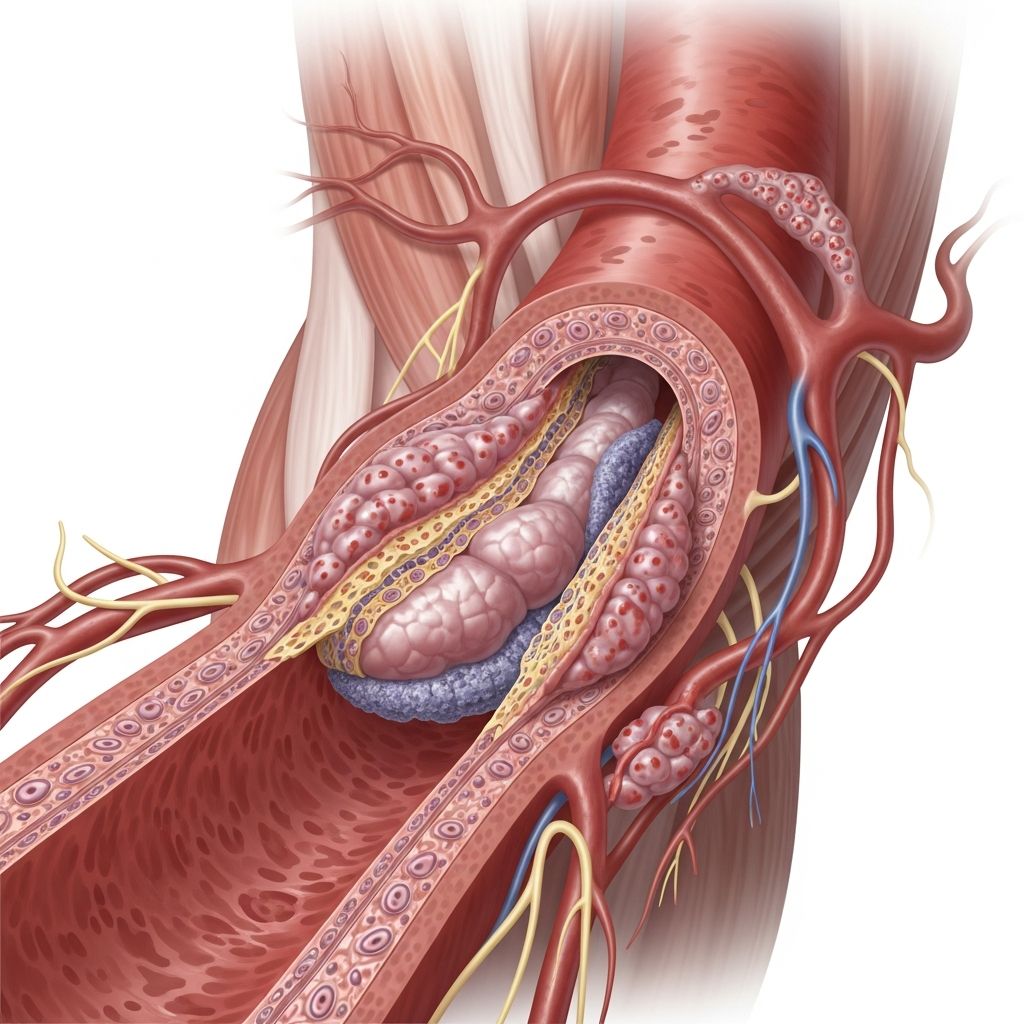
Thromboangiitis obliterans, also known as
Buerger’s disease
, is a rare, non-atherosclerotic segmental inflammatory disease that affects small- and medium-sized arteries and veins, primarily in the distal extremities of the upper and lower limbs. It leads to progressive occlusion through thrombosis and inflammation, resulting in ischemia, pain, ulceration, and potential gangrene. Strongly associated with tobacco use, this condition predominantly impacts young male smokers under 45 years, though it can affect women and non-smokers rarely.What is thromboangiitis obliterans?
**Thromboangiitis obliterans (TAO)**, or Buerger’s disease, involves recurrent acute and chronic inflammation of the arteries and veins in the arms and legs, causing thrombus formation without significant involvement of the vessel walls. Unlike atherosclerosis, TAO spares proximal large vessels and features a distinctive histopathology with neutrophil infiltration in acute phases, organizing thrombus in subacute stages, and perivascular fibrosis chronically. The disease typically starts distally in digital, palmar, and plantar arteries, progressing proximally with “corkscrew” collaterals visible on angiography. It affects 0.25-24 per 100,000 population, with higher incidence in regions with high tobacco use like Asia and the Middle East.
Pathogenesis implicates tobacco exposure as the primary trigger, possibly through hypersensitivity to tobacco antigens or direct endothelial toxicity. Genetic factors like HLA haplotypes may predispose certain populations, but no single cause is confirmed. Inflammation leads to vessel occlusion, ischemia, and neurologic symptoms like paresthesia due to nerve involvement.
Who gets thromboangiitis obliterans?
TAO primarily affects individuals aged 20-45 years, with a strong male predominance (3:1 to 9:1 ratio), though female cases are rising with increased smoking. Over 90-95% of patients are current or recent tobacco users, including cigarettes, beedis, or cannabis. It is more prevalent in Ashkenazi Jews, Indians, Koreans, and Japanese, but occurs worldwide.
Risk factors include:
- Prolonged tobacco exposure (pack-years >20).
- Male gender and young age (<45).
- Genetic predisposition in certain ethnic groups.
- Possible hypercoagulability or immune dysregulation.
Rare cases occur in non-smokers, suggesting multifactorial etiology.
Clinical features of thromboangiitis obliterans
Symptoms arise from distal ischemia and typically develop gradually. Initial manifestations include:
- Claudication: Foot arch or calf pain on walking, hand/forearm pain on use.
- Raynaud phenomenon: Cold-induced pallor, cyanosis, rubor in digits.
- Paresthesia, numbness, tingling starting distally.
Progression leads to rest pain, non-healing ulcers on toes/fingers, and gangrene. Superficial migratory thrombophlebitis affects ~40-50% of cases. Skin changes include cyanosis, hyperemia, and livedo reticularis.
| Stage | Symptoms | Findings |
|---|---|---|
| Early | Intermittent claudication, Raynaud’s | Normal pulses, distal coolness |
| Intermediate | Rest pain, ulcers | Absent distal pulses, trophic changes |
| Advanced | Gangrene, necrosis | Cyanosis, infection risk |
Diagnosis of thromboangiitis obliterans
Diagnosis relies on clinical criteria (Shionoya’s): age <50, distal ischemia, tobacco use, exclusion of other causes, and typical angiography.
Physical exam: Absent distal pulses, color changes (pale on elevation, red on dependency), cool extremities.
Investigations:
- Ankle-brachial index (ABI): <0.7 distally.
- Angiography: Segmental occlusions, “corkscrew collaterals”, sparing of proximal vessels.
- Ultrasound/Doppler: Reduced flow, no proximal atherosclerosis.
- Labs: Normal ESR/CRP, negative ANA/RF, rule out diabetes, hypercoagulability.
- Echocardiography: Exclude emboli source.
- Biopsy: Rarely needed; shows inflammatory thrombus, intact elastic lamina.
Differential diagnosis
TAO mimics:
- Atherosclerosis (older age, proximal disease).
- Embolic disease (atrial fibrillation).
- Autoimmune vasculitis (e.g., SLE, positive serology).
- Hypercoagulable states (e.g., antiphospholipid).
- Ergotism, cocaine use.
Related Stories



Key differentiator: young smoker with distal disease and normal acute phase reactants.
Management and treatment of thromboangiitis obliterans
Smoking cessation is paramount; it halts progression in 94% of compliant patients. Pharmacotherapy (varenicline, bupropion) and counseling aid quitting.
Conservative: Wound care, pain control (opioids, gabapentin), vasodilators (iloprost), antiplatelets (aspirin).
Medical: Prostaglandins (iloprost IV) improve healing; bosentan reduces amputations. Pneumatic compression, hyperbaric oxygen adjunctive.
Surgical: Bypass rare due to distal disease; sympathectomy, spinal cord stimulation for pain. Amputation for gangrene.
Vascular endothelial growth factor (VEGF) gene therapy shows promise in trials.
Complications
- Ulceration and gangrene requiring amputation (25-40%).
- Chronic pain and disability.
- Superficial thrombophlebitis.
- Secondary infection.
Prevention
Avoid all tobacco products; early recognition in at-risk groups. Screen young smokers with limb symptoms.
Prognosis
Excellent with cessation (5-year limb salvage >90%); poor without (40% major amputation). Relapse common with resumed smoking.
Frequently asked questions
What causes Buerger’s disease?
Tobacco use is the main trigger, causing vascular inflammation and thrombosis.
Can Buerger’s disease be cured?
Not curable, but cessation stops progression; supportive treatments manage symptoms.
Does quitting smoking reverse Buerger’s?
It halts worsening and allows collateral growth, but existing damage persists.
Who is at risk for thromboangiitis obliterans?
Young adult smokers, especially males under 45.
Is amputation inevitable?
No, only ~25% with cessation; higher without.
References
- Thromboangiitis Obliterans — Merck Manual Professional Edition. 2024. https://www.merckmanuals.com/home/heart-and-blood-vessel-disorders/peripheral-artery-disorders/thromboangiitis-obliterans
- Update on Thromboangiitis Obliterans (Buerger’s Disease) — American Academy of Family Physicians (AAFP). 2001-03-15. https://www.aafp.org/pubs/afp/issues/2001/0315/p1195.html
- Buerger Disease — StatPearls, NCBI Bookshelf, National Center for Biotechnology Information (NCBI/NIH). 2023. https://www.ncbi.nlm.nih.gov/books/NBK430858/
- Buerger disease – Symptoms and causes — Mayo Clinic. 2024. https://www.mayoclinic.org/diseases-conditions/buergers-disease/symptoms-causes/syc-20350658
- Buerger’s Disease: Symptoms, Causes & Treatment — Cleveland Clinic. 2024. https://my.clevelandclinic.org/health/diseases/21680-buergers-disease
Similar Articles








Read full bio of medha deb