Thrombolytics: Emergency Blood Clot Treatment
Learn how thrombolytic medications dissolve blood clots to prevent heart attacks, strokes, and pulmonary embolism.
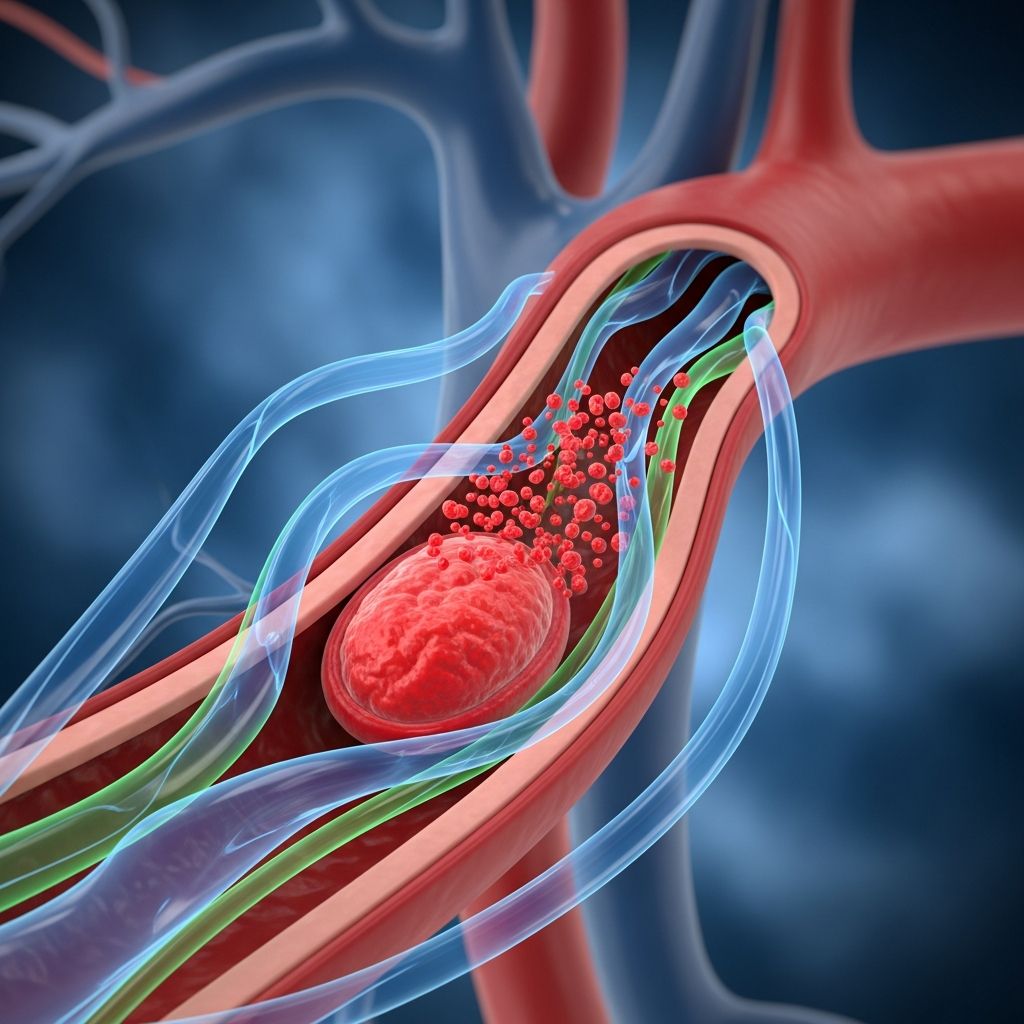
What Are Thrombolytics?
Thrombolytics are powerful medications designed to dissolve blood clots that suddenly block blood flow in your arteries or veins. Also known as fibrinolytic therapy or thrombolytic therapy, this emergency treatment uses specialized drugs administered through an intravenous (IV) line or catheter to break down dangerous clots before they cause life-threatening complications. When a blood clot forms in a critical location, it can restrict oxygen-rich blood from reaching vital organs like your heart, brain, or lungs. Thrombolytic therapy works by activating your body’s natural clot-dissolving systems, helping restore normal blood circulation and preventing permanent tissue damage or death.
How Thrombolytics Work
Thrombolytic medications function by converting plasminogen, a naturally occurring protein in your blood, into plasmin. Plasmin is a powerful enzyme that breaks apart the fibrin strands holding blood clots together. This process, called fibrinolysis, essentially dissolves the clot from the inside out, allowing blood to flow freely again. The medications work systemically throughout your body or can be delivered directly to the clot site through a catheter for more targeted action. The effectiveness of this treatment depends heavily on how quickly it’s administered—ideally within the first few hours after a clot forms, when the clot is still fresh and more susceptible to dissolution.
Types of Thrombolytic Medications
Several thrombolytic agents are currently available for clinical use, each with specific characteristics and applications:
- Alteplase (t-PA): A tissue plasminogen activator that’s fibrin-specific and widely used for heart attacks and strokes
- Tenecteplase (TNK-tPA): A modified version of alteplase with a longer half-life, allowing for single-bolus administration and showing similar efficacy to t-PA with fewer bleeding complications
- Reteplase (r-PA): Another tissue plasminogen activator variant used in acute coronary syndrome
- Urokinase: A different class of thrombolytic that activates plasminogen directly
- Streptokinase: An older thrombolytic agent that forms a complex with plasminogen to activate fibrinolysis
Common Uses of Thrombolytics
Healthcare providers use thrombolytic therapy primarily as an emergency treatment for acute, life-threatening conditions where blood clots obstruct critical blood flow:
- Acute Myocardial Infarction (Heart Attack): When a blood clot blocks coronary arteries supplying oxygen to heart muscle
- Ischemic Stroke: When a clot blocks cerebral arteries, depriving brain tissue of oxygen
- Pulmonary Embolism (PE): When a clot travels to the lungs and blocks pulmonary arteries
- Deep Vein Thrombosis (DVT): When clots form in deep veins, typically in the legs
- Peripheral Arterial Disease (PAD): When clots obstruct blood flow to extremities
- Acute Limb Ischemia: When sudden clot formation threatens limb viability
Thrombolytic Administration Methods
Thrombolytic therapy is delivered through two primary approaches, depending on the clinical situation and the location of the blood clot:
Systemic Thrombolysis
In systemic thrombolysis, your healthcare provider administers thrombolytic medication directly into your bloodstream through an IV line, usually in your arm. This is the most common emergency approach, typically performed in an intensive care unit (ICU) setting. The medication circulates throughout your entire body, allowing it to reach the clot regardless of location. While this method is quick and doesn’t require specialized catheterization skills, it affects your entire circulatory system and carries a higher risk of bleeding complications.
Related Stories



Catheter-Directed Thrombolysis
For scheduled procedures or when more precision is needed, healthcare providers may use catheter-directed thrombolysis. During this intervention, a long, thin tube (catheter) is threaded through your blood vessels directly to the site of the blood clot. The thrombolytic medication is then delivered precisely where it’s needed most, minimizing systemic effects and reducing overall bleeding risk. Providers use real-time X-ray imaging to monitor the catheter’s progression and the clot’s dissolution, allowing for precise treatment adjustment.
The Thrombolytic Procedure
Before Treatment
Before receiving thrombolytic therapy, your medical team will perform several assessments. They’ll review your medical history, current medications, and any previous allergic reactions. Blood tests will check your clotting function, and imaging studies may confirm the clot’s location and size. Your provider will discuss the procedure, its risks and benefits, and answer any questions you have.
During Treatment
For systemic IV thrombolysis, your healthcare team will:
- Insert an IV line, typically in your arm
- Administer the thrombolytic medication as a bolus or infusion
- Continuously monitor your vital signs, heart rhythm, and blood pressure
- Perform regular blood tests to assess clotting function
- Watch for signs of bleeding or other complications
For catheter-directed thrombolysis, the procedure typically takes longer. Your provider will:
- Place a catheter through a puncture site, usually in your groin or arm
- Guide it to the clot location using real-time imaging
- Deliver thrombolytic medication directly to the clot
- Monitor the clot’s dissolution on imaging
- Adjust treatment as needed based on clot dissolution progress
The entire IV procedure typically takes about one hour, while catheter-directed thrombolysis may take several hours. In some cases, the clot may take up to 48 hours to completely dissolve.
Timing is Critical
The success of thrombolytic therapy heavily depends on how quickly treatment begins after a clot forms. Healthcare providers aim to administer thrombolytics within specific timeframes:
- Heart Attack: Within 12 hours of symptom onset, ideally within 3 hours
- Stroke: Within 4.5 hours of symptom onset
- Pulmonary Embolism: As soon as diagnosis is confirmed
Each minute of delay increases the risk of irreversible organ damage and death. This is why emergency medical services and hospitals prioritize rapid transport and immediate diagnosis when thrombolytic therapy is suspected.
Who Should Not Receive Thrombolytics
Thrombolytic therapy carries significant bleeding risks, so healthcare providers avoid it in patients with conditions that increase bleeding susceptibility:
- Recent surgery or trauma
- Active internal bleeding
- History of stroke or brain bleeding
- Brain tumors or lesions
- Uncontrolled high blood pressure
- Bleeding disorders or use of anticoagulants
- Recent puncture of non-compressible blood vessels
- Pregnancy
- Advanced age (though not an absolute contraindication)
Your healthcare provider will weigh the risks and benefits carefully, considering whether the potential benefit of dissolving a life-threatening clot outweighs the bleeding risks in your specific situation.
Monitoring During Thrombolytic Therapy
Close monitoring is essential during thrombolytic treatment. Your medical team will:
- Check your vital signs regularly (blood pressure, heart rate, temperature, breathing rate)
- Perform electrocardiograms (EKGs) to monitor heart function
- Use imaging tests like CT scans or MRI to visualize clot dissolution
- Monitor for signs of bleeding at IV sites and other locations
- Watch for symptoms of stroke, chest pain, or other complications
- Draw blood samples to assess coagulation status
Post-Treatment Assessment
After thrombolytic therapy completes, your healthcare provider will use imaging tests to confirm whether the clot has been successfully dissolved:
- Angiography: X-ray imaging with contrast dye to visualize blood vessels and confirm clot dissolution
- CT or MRI scans: Cross-sectional images showing clot status and tissue damage
- Ultrasound: Non-invasive imaging to assess blood flow restoration
- Echocardiography: Heart ultrasound to evaluate cardiac function after a heart attack
Success Rates and Outcomes
Thrombolytic therapy successfully dissolves blood clots in approximately 75% of cases. However, success rates vary depending on factors such as clot age, location, size, and patient characteristics. In some cases, up to 25% of patients still have residual clot material after thrombolytic therapy, requiring additional intervention.
Even when thrombolytic therapy successfully dissolves an initial clot, recurrent clot formation occurs in about 12% of cases. To prevent clot recurrence, your healthcare provider will likely prescribe anticoagulant medications such as warfarin or heparin to thin your blood and reduce clotting risk.
Potential Complications and Risks
While thrombolytic therapy can be life-saving, it carries significant risks, primarily related to bleeding:
Major Complications
- Internal Bleeding: Approximately 5% of patients experience major bleeding episodes
- Brain Bleeding (Intracranial Hemorrhage): About 1% of patients develop brain bleeds that can cause stroke
- Bleeding at Puncture Sites: Blood loss from IV or catheter insertion areas
- Gastrointestinal Bleeding: Spontaneous bleeding in the digestive tract
- Spontaneous Bleeding: Uncontrolled bleeding from various body locations
Other Potential Risks
- Embolization: Small clot fragments breaking off and traveling deeper into the affected organ
- Hypotension: Dangerously low blood pressure
- Allergic Reactions: Hypersensitivity to thrombolytic medications
- Arrhythmias: Abnormal heart rhythms, particularly during heart attack treatment
- Stroke: From either the original clot or thrombolytic-induced bleeding
Despite these risks, for most patients with acute, life-threatening clots, the benefits of thrombolytic therapy far outweigh the potential complications.
Recovery After Thrombolytic Therapy
Recovery time varies significantly depending on your condition’s severity and the extent of organ damage before treatment:
- Most patients spend at least one day in the hospital for monitoring
- Those with more severe conditions may require extended hospitalization
- ICU monitoring continues during the acute phase
- Anticoagulant therapy typically begins during hospitalization and continues long-term
- Rehabilitation may be necessary after heart attacks or strokes
Your healthcare team will provide specific recovery instructions based on your individual situation. Regular follow-up appointments will monitor your recovery progress and assess for any late complications.
Alternative Treatments
In some cases, thrombolytic therapy may not be appropriate or successful, requiring alternative approaches:
- Mechanical Thrombectomy: Physical removal of clots using specialized catheters with rotating devices and suction cups
- Percutaneous Coronary Intervention (PCI): Balloon angioplasty to open blocked vessels
- Stenting: Placement of metal mesh tubes to maintain vessel patency
- Open Surgery: Surgical removal of large clots or vascular repair
- Anticoagulation Alone: Blood thinners without clot dissolution for certain conditions
When to Seek Emergency Care
Contact emergency services immediately if you experience symptoms suggesting a blood clot:
- Chest pain or pressure
- Sudden shortness of breath
- Signs of stroke (facial drooping, arm weakness, speech difficulty)
- Sudden leg swelling or pain
- Sudden limb coldness or numbness
- Severe bleeding that won’t stop
Frequently Asked Questions
Q: How quickly does thrombolytic therapy work?
A: Thrombolytic medications begin breaking down clots immediately upon administration. However, complete clot dissolution can take from one hour for small clots to up to 48 hours for larger thrombi. The timeline depends on clot size, age, and composition.
Q: Can thrombolytics cause permanent side effects?
A: Most side effects from thrombolytic therapy are temporary. However, serious bleeding complications like brain hemorrhage can cause permanent neurological damage. Your healthcare provider carefully evaluates whether benefits outweigh these risks in your specific situation.
Q: Will I need blood thinners after thrombolytic therapy?
A: In most cases, yes. After successful thrombolytic therapy, healthcare providers typically prescribe anticoagulant medications like warfarin or heparin to prevent clot recurrence, which occurs in about 12% of patients.
Q: How long does a thrombolytic procedure take?
A: Systemic IV thrombolysis typically takes about one hour. Catheter-directed thrombolysis may take several hours because the medication is delivered directly to the clot site and requires real-time imaging monitoring.
Q: What happens if thrombolytic therapy doesn’t work?
A: If thrombolytic therapy fails to dissolve the clot (occurring in about 25% of cases), your healthcare provider may recommend mechanical thrombectomy, angioplasty, stenting, or surgical intervention to restore blood flow.
Q: Are there age restrictions for thrombolytic therapy?
A: While advanced age increases complication risks, it’s not an absolute contraindication. Healthcare providers assess each elderly patient individually, weighing the life-saving benefits of thrombolytic therapy against increased bleeding risks.
References
- Thrombolytic Therapy: Uses and Side Effects — Cleveland Clinic. 2024. https://my.clevelandclinic.org/health/treatments/23345-thrombolytic-therapy
- Fibrinolytic (Thrombolytic) Therapy: Uses, Drugs & Side Effects — Cleveland Clinic. 2024. https://my.clevelandclinic.org/health/treatments/22772-thrombolytic-fibrinolytic-therapy
- Tenecteplase (TNKase): A Clinical Review — Cleveland Clinic Medicine Education. January 2001. https://www.clevelandclinicmeded.com/medicalpubs/pharmacy/JanFeb2001/tenecteplase.htm
- Current Status of Thrombolysis for Peripheral Arterial Occlusive Disease — National Center for Biotechnology Information (PubMed). 2002. https://pubmed.ncbi.nlm.nih.gov/12391507/
- Acute Reperfusion Therapies Are Improving Ischemic Stroke Survival — Cleveland Clinic ConsultQD. 2024. https://consultqd.clevelandclinic.org/acute-reperfusion-therapies-are-improving-ischemic-stroke-survival-database-study-shows
Similar Articles








Read full bio of medha deb