Thrombosis: Understanding Blood Clots and Treatment Options
Learn about thrombosis, blood clot formation, risk factors, symptoms, diagnosis, and evidence-based treatment options.
What Is Thrombosis?
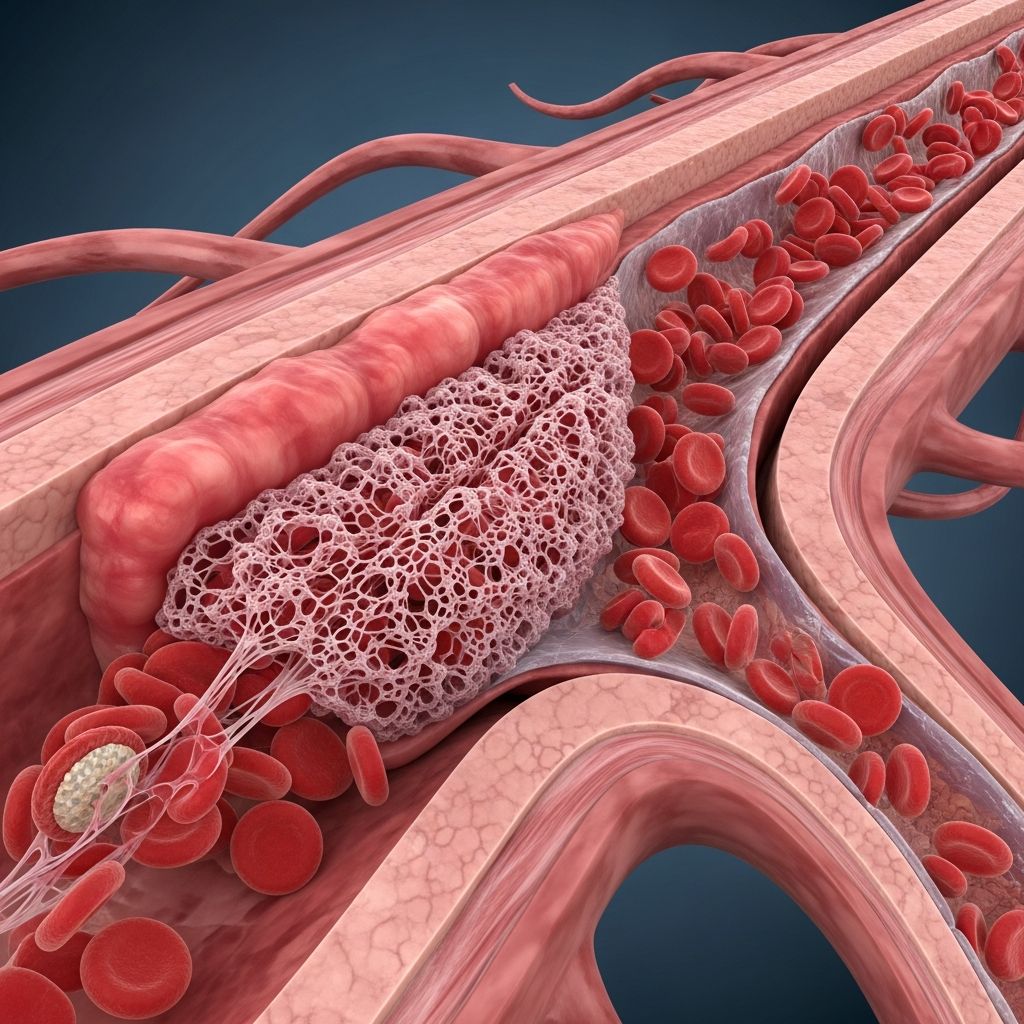
Thrombosis is a serious medical condition characterized by the formation of one or more blood clots within your blood vessels or heart. When a blood clot develops, it can partially or completely block blood flow through the affected vessel, restricting oxygen and nutrient delivery to tissues and organs. This obstruction can trigger serious complications and requires prompt medical attention. Blood clots can form in veins (which carry blood back to the heart) or arteries (which carry blood away from the heart), though venous clots are more common.
The body naturally forms blood clots as a protective mechanism to stop bleeding after an injury. However, in thrombosis, clots form abnormally without an obvious trigger or continue to develop despite the absence of active bleeding. Understanding this condition is essential because untreated thrombosis can lead to life-threatening complications affecting your heart, lungs, brain, and limbs.
Types of Thrombosis
Thrombosis can be classified into two main categories based on location:
Venous Thrombosis
Venous thrombosis occurs in the veins and includes deep vein thrombosis (DVT), which typically affects the legs, and superficial venous thrombosis (SVT), which involves veins closer to the skin’s surface. Deep vein thrombosis is the more serious form and can lead to pulmonary embolism if a blood clot breaks free and travels to the lungs.
Arterial Thrombosis
Arterial thrombosis, though less common than venous thrombosis, occurs in arteries and can result in heart attacks or strokes. These clots develop more frequently in people with atherosclerosis or those who have experienced recent arterial injury.
Symptoms of Thrombosis
Recognizing the symptoms of thrombosis is crucial for early intervention. Symptoms vary depending on the location of the blood clot:
Deep Vein Thrombosis Symptoms
If you have a blood clot in your legs, you may experience:
- Swelling in one leg, usually the calf or thigh
- Pain, tenderness, or cramping in the affected leg
- Warmth or redness over the clot area
- A cord-like vein that feels harder than normal
- Skin discoloration or changes in appearance
Pulmonary Embolism Symptoms
If a blood clot reaches your lungs, symptoms may include:
- Sudden shortness of breath
- Chest pain or discomfort, especially when breathing deeply
- Rapid heartbeat
- Dizziness or fainting
- Coughing, possibly with blood
Other Location-Specific Symptoms
Blood clots in other locations may cause weakness, numbness, vision changes, or difficulty speaking, depending on which organs are affected. Any sudden onset of these symptoms warrants immediate emergency medical evaluation.
Risk Factors for Thrombosis
Several factors increase your likelihood of developing thrombosis. Understanding these risk factors can help you take preventive measures:
Inherited Risk Factors
Some people are born with genetic conditions that make their blood more likely to clot. These inherited thrombophilias include:
- Factor V Leiden mutation
- Prothrombin gene mutation
- Elevated levels of factor VIII and other clotting factors
- Elevated homocysteine levels
- Elevated fibrinogen levels
- Elevated lipoprotein (a), a type of cholesterol
Related Stories



Acquired Risk Factors
Conditions or situations you develop during your lifetime can also increase thrombosis risk:
- Prolonged immobility from long flights, bed rest, or extended sitting
- Recent surgery or trauma
- Cancer and cancer treatments
- Heart disease
- Pregnancy and the postpartum period
- Oral contraceptives or hormone replacement therapy
- Obesity
- Smoking
- Previous history of DVT or pulmonary embolism
- Inflammatory bowel disease
- Certain autoimmune conditions
Diagnosis of Thrombosis
Accurate diagnosis is the foundation for effective treatment. Your healthcare provider will use several methods to diagnose thrombosis:
Medical History and Physical Examination
Your doctor will ask about your symptoms, risk factors, and medical history. They will perform a thorough physical examination, checking for signs of swelling, warmth, redness, or tenderness in affected areas.
Imaging Tests
Imaging studies are essential for confirming thrombosis. Common imaging tests include:
- Ultrasound: The most common test for detecting DVT, using sound waves to visualize blood flow
- CT angiography: A specialized CT scan that visualizes blood vessels to detect pulmonary embolism
- Venography: An X-ray with contrast dye injected into veins
- MRI: Provides detailed images of blood vessels and surrounding tissue
Laboratory Tests
Blood tests help identify underlying clotting disorders and measure clotting factors. Your provider may order tests to assess your risk of thrombosis and determine if you have inherited or acquired clotting abnormalities.
Treatment Options for Thrombosis
Treatment aims to prevent the clot from growing, stop it from traveling to other parts of your body, and reduce your risk of future clots. Your treatment plan depends on the clot’s location, size, and severity, as well as your overall health.
Anticoagulation Therapy
Anticoagulant medications are the primary treatment for thrombosis. These “blood thinners” work by reducing your blood’s ability to clot. Options include:
- Warfarin: An oral medication that requires regular blood test monitoring
- Direct oral anticoagulants (DOACs): Newer medications like apixaban, rivaroxaban, and dabigatran that don’t require monitoring
- Heparin: Injectable medication often used initially, available as unfractionated heparin or low-molecular-weight heparin
- Fondaparinux: A subcutaneous injection used for certain types of thrombosis
Thrombolytic Therapy
For life-threatening blood clots, particularly pulmonary embolism or extensive DVT, thrombolytic therapy may be recommended. This treatment uses medications that actively dissolve blood clots, restoring blood flow more quickly than anticoagulants alone.
Minimally Invasive Procedures
When medication alone is insufficient, minimally invasive interventional techniques may be employed:
- Catheter-directed thrombolysis: A catheter delivers thrombolytic medication directly to the clot
- Mechanical thrombectomy: A specialized catheter physically removes the blood clot
- Angioplasty and stenting: Techniques to restore vessel patency and maintain blood flow
Surgical Interventions
In certain cases, surgery may be necessary. Surgical thrombectomy involves physically removing the blood clot through an incision. Vena cava filters may be placed in the large vein returning blood to the heart to prevent clots from reaching the lungs.
Supportive Care
Alongside medication and procedures, supportive measures include:
- Leg elevation and compression stockings for DVT
- Pain management medications
- Gradual mobilization and physical activity as tolerated
- Adequate hydration
Recovery and Long-Term Management
Most people who receive appropriate treatment for thrombosis experience significant improvement as blood flow is restored to previously affected areas. Recovery timelines vary depending on the clot’s location and size, and may occur within minutes to hours of treatment initiation.
After Treatment
Following acute thrombosis treatment, you will require ongoing monitoring and management. Your healthcare provider will:
- Monitor your response to anticoagulation therapy
- Adjust medications as needed based on blood tests
- Screen for complications
- Provide lifestyle recommendations to reduce recurrence risk
Duration of Treatment
The duration of anticoagulation depends on the underlying cause. Some patients require temporary treatment lasting three months, while others with inherited clotting disorders or cancer-related thrombosis may need lifelong anticoagulation.
Prognosis and Outcomes
The prognosis for thrombosis depends on several factors, including the underlying cause, how quickly treatment begins, and your overall health status. Early diagnosis and treatment can restore blood flow and significantly lower your risk of serious complications.
If thrombosis leads to complications like heart attack or stroke, your healthcare team will treat the specific condition and work to restore function to affected organs and tissues. Conditions causing thrombosis may be chronic or lifelong, requiring ongoing management to prevent recurrence.
Prevention Strategies
While some risk factors for thrombosis cannot be controlled, several preventive measures can reduce your risk:
- Stay physically active and avoid prolonged immobility
- Maintain a healthy weight
- Avoid smoking and secondhand smoke
- Stay well hydrated
- Wear compression stockings during long flights or periods of immobility if recommended
- Take prescribed anticoagulants as directed if you have a history of thrombosis
- Manage underlying medical conditions like heart disease and diabetes
Frequently Asked Questions About Thrombosis
Q: How quickly can thrombosis symptoms develop?
A: Thrombosis symptoms can develop suddenly, particularly with pulmonary embolism, which can occur within hours or even minutes. DVT symptoms may develop more gradually over hours or days. Any sudden onset of suspicious symptoms warrants immediate medical evaluation.
Q: Can thrombosis be prevented?
A: While some inherited risk factors cannot be prevented, many acquired risk factors can be modified through lifestyle changes such as maintaining physical activity, avoiding smoking, controlling weight, and managing underlying health conditions. If you have significant risk factors, your doctor may recommend preventive anticoagulation.
Q: Is thrombosis always life-threatening?
A: While thrombosis can be serious, not all clots are immediately life-threatening. However, untreated thrombosis can develop into dangerous conditions like pulmonary embolism or lead to permanent tissue damage. Prompt diagnosis and treatment significantly improve outcomes.
Q: How long does treatment for thrombosis last?
A: Treatment duration varies. Some patients require anticoagulation for three months following a first thrombotic event, while those with ongoing risk factors or inherited disorders may require lifelong treatment. Your doctor will determine the appropriate duration based on your individual circumstances.
Q: Can I travel after thrombosis treatment?
A: After appropriate treatment and your doctor’s clearance, you can usually return to normal activities including travel. However, follow preventive measures such as moving regularly during long flights, staying hydrated, and continuing prescribed medications as directed.
Q: What should I do if I suspect thrombosis?
A: Seek immediate medical attention if you experience sudden leg swelling and pain, chest pain with shortness of breath, or other suspicious symptoms. Early evaluation and diagnosis significantly improve treatment outcomes and reduce complications.
References
- Thrombosis: Symptoms & Treatment — Cleveland Clinic. 2024. https://my.clevelandclinic.org/health/diseases/22242-thrombosis
- Management of lower-extremity venous thromboembolism — Cleveland Clinic Journal of Medicine, American College of Chest Physicians. 2021. https://www.ccjm.org/content/91/4/229
- Thrombosis Center Services and Treatment — Cleveland Clinic. 2024. https://my.clevelandclinic.org/departments/heart/depts/thrombosis-center
- Blood Clotting Disorders Treatment and Diagnosis — Cleveland Clinic. 2024. https://my.clevelandclinic.org/services/blood-clotting-disorders-treatment
- Thrombophilia: Symptoms & Treatment — Cleveland Clinic. 2024. https://my.clevelandclinic.org/health/diseases/21797-thrombophilia
Similar Articles








Read full bio of medha deb