Thymus: Function of the Gland & Why It’s Important
Discover how your thymus gland produces T-cells and supports immune system health throughout life.
What Is the Thymus Gland?
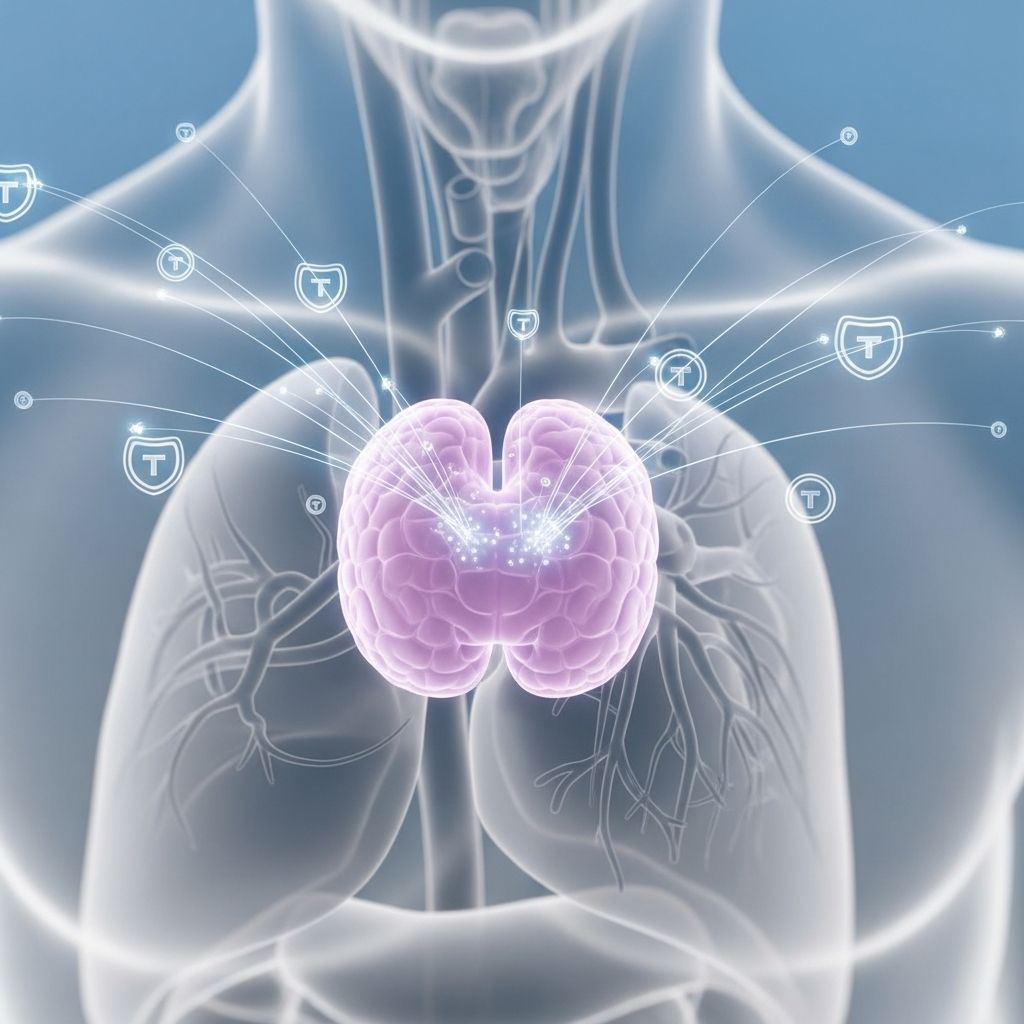
Your thymus is a small gland that sits in your chest behind your breastbone, playing a crucial role in your body’s immune system. This gland is part of your lymphatic system, which works to protect your body from infections and disease. Despite its small size, the thymus performs one of the most important functions in the human body: training and developing specialized white blood cells that defend against harmful pathogens and invaders.
The thymus gland exists in every human body, though many people are unaware of its presence or function. Understanding how your thymus works can help you appreciate the complexity of your immune system and recognize when something might be wrong with this vital organ.
The Primary Function of the Thymus Gland
The primary function of the thymus gland is to train and develop special white blood cells called T-lymphocytes, or T-cells. These cells are fundamental to your immune system’s ability to recognize and eliminate threats to your health.
How T-Cell Development Works
The process of T-cell development begins in your bone marrow, where white blood cells called lymphocytes are produced. These immature lymphocytes then travel from your bone marrow to your thymus gland, where they undergo a transformation process. Inside the thymus, these lymphocytes mature and become specialized T-cells that are equipped to defend your body against specific pathogens.
During this maturation process, T-cells learn to distinguish between cells that belong to your body and foreign invaders. This educational process is essential for preventing autoimmune diseases, where the immune system mistakenly attacks the body’s own tissues. The thymus essentially serves as a training ground where the immune system learns what to attack and what to leave alone, a concept known as central tolerance.
Types of T-Cells
The thymus produces several different types of T-cells, each with distinct responsibilities:
- Helper T-cells coordinate immune responses and activate other immune cells
- Killer T-cells destroy infected or cancerous cells
- Regulatory T-cells keep the immune system balanced and prevent overactive immune responses
The Thymus Throughout Your Life
The thymus gland undergoes significant changes as you age, with profound implications for your immune function and overall health.
Thymus Size and Activity During Childhood
Your thymus is largest and most active during childhood and early adolescence. During these years, your body is developing immunity to countless new pathogens it encounters. The active thymus works overtime to produce the T-cells needed to protect you as you grow and interact with new environments and people.
Thymic Involution in Adulthood
As you progress through your teenage years and into adulthood, your thymus gradually becomes smaller and less active in a process called thymic involution. In healthy adults, the thymus becomes increasingly difficult to detect and eventually becomes almost undetectable. This natural shrinking process is normal and expected.
Related Stories



However, this age-related decline in thymic function has important implications. The reduction in T-cell production contributes to a weakening immune system as people age, which is why older adults are more susceptible to infections and why vaccines may be less effective in this population.
The Thymus and the Lymphatic System
The thymus is an integral part of your lymphatic system, which also includes lymph nodes, the spleen, and other lymphoid tissues throughout your body. Together, these organs and tissues work to produce, filter, and circulate immune cells throughout your body.
Your lymphatic system moves lymph, a clear fluid containing white blood cells, through your body. The thymus contributes to this system by producing T-cells that circulate through the lymphatic vessels and lymph nodes, ready to respond to any threats detected in your body.
The Thymus and Immune Function
The relationship between the thymus and overall immune function cannot be overstated. Without a properly functioning thymus, your immune system lacks the specialized T-cells needed to mount an effective defense against pathogens.
Central Tolerance and Autoimmunity Prevention
One of the most critical functions of the thymus is establishing central tolerance. This process involves eliminating T-cells that would attack the body’s own tissues, thereby preventing autoimmune diseases. When the thymus is not functioning properly, this tolerance mechanism can break down, leading to autoimmune conditions.
The Thymus in Myasthenia Gravis
A notable example of thymus dysfunction is its role in myasthenia gravis, a rare autoimmune condition. In people with myasthenia gravis, the thymus produces immune system proteins called antibodies that mistakenly block signals from the nervous system to the muscles. This results in muscle weakness and fatigue.
Interestingly, while the thymus normally becomes smaller with age, in people with myasthenia gravis, the thymus remains enlarged throughout adulthood. Thymic lymphoid hyperplasia, an abnormal enlargement of lymphoid tissue in the thymus, is seen in up to 65 percent of patients with myasthenia gravis. Additionally, in approximately 10 percent of myasthenia gravis patients, the condition is caused by a thymic tumor called a thymoma or thymic carcinoma.
Thymic Disorders and Health Complications
Various conditions can affect the thymus gland, leading to health complications that require medical attention and treatment.
Thymoma and Thymic Carcinoma
Thymomas and thymic carcinomas are rare cancers that form in the thymus gland. These tumors can develop in the epithelial cells of the thymus and may or may not cause symptoms. When symptoms do occur, they often include chest pain, persistent cough, and shortness of breath. Approximately 400 people in the United States are diagnosed with thymoma and thymic carcinoma each year, making these relatively uncommon malignancies.
The connection between thymic tumors and myasthenia gravis is significant. Thirty to fifty percent of people with thymoma have myasthenia gravis, and thymomas are found in 10 to 20 percent of all people with myasthenia gravis, though researchers continue to work toward a fuller understanding of this relationship.
Thymic Hyperplasia
Thymic hyperplasia, or enlargement of the thymus beyond normal size, can occur in adults and cause various health problems. In myasthenia gravis patients, this condition is particularly common and contributes to the autoimmune symptoms experienced.
Thymectomy: Surgical Removal of the Thymus
When the thymus causes health problems or contains tumors, surgical removal may be necessary. A thymectomy is an operation to remove the thymus gland from the chest.
Indications for Thymectomy
Thymectomy is indicated in specific situations:
- Thymic neoplasms: All patients with thymic tumors should undergo thymectomy
- Myasthenia gravis: Specific patients with myasthenia gravis may benefit from thymus removal
- Severe symptoms: Patients with moderate to severe symptoms unresponsive to medication
Benefits of Thymectomy in Myasthenia Gravis
Surgical removal of the thymus in myasthenia gravis patients can lead to significant relief from symptoms in both those previously diagnosed with the condition and those who develop it as a paraneoplastic disease related to thymic tumors. In some cases, thymectomy leads to complete remission of symptoms, meaning the disappearance of myasthenia gravis entirely.
Furthermore, thymectomy can help patients avoid long-term use of high-dose steroids, which can cause significant health complications with prolonged use.
Surgical Approaches
Modern surgical techniques allow surgeons to perform thymectomy using minimally invasive methods whenever possible. These approaches include thoracoscopic surgery with small keyhole incisions that are gentler on the body, result in minimal scarring, and allow for shorter recovery periods. Robotic-assisted surgical systems can also be employed for precise tumor removal while protecting surrounding tissues.
When to See a Doctor
Several symptoms and conditions warrant consultation with a healthcare provider regarding your thymus:
- Persistent chest pain or pressure
- Chronic cough that doesn’t resolve
- Unexplained shortness of breath
- Muscle weakness or fatigue, especially in the eyes, face, or throat
- Difficulty with speech or swallowing
- Family history of myasthenia gravis or thymic disorders
If you experience these symptoms, your healthcare provider can perform appropriate testing and imaging to assess your thymus gland and recommend treatment if necessary.
Frequently Asked Questions
Q: At what age is the thymus most active?
A: The thymus is largest and most active during childhood and early adolescence when your body is developing immunity to new pathogens. It gradually shrinks during the teenage years and becomes almost undetectable in healthy adults.
Q: Can an adult live without a thymus?
A: Yes, adults can live without a thymus because most T-cell production occurs during childhood and early adulthood. However, surgical removal in adulthood may have some effect on immune function, which is why thymectomy decisions are carefully considered.
Q: What is the relationship between the thymus and myasthenia gravis?
A: The thymus plays a key role in myasthenia gravis development. In patients with this condition, the thymus remains enlarged and produces antibodies that interfere with nerve-to-muscle communication. Thymectomy can significantly improve or resolve symptoms.
Q: Are thymic tumors common?
A: No, thymic tumors are rare. Only about 400 people in the United States are diagnosed with thymoma and thymic carcinoma annually. However, about 30-50% of people with thymoma have myasthenia gravis.
Q: What are the first signs of thymic carcinoma?
A: Early signs of thymic carcinoma often include chest pain, a persistent cough, and shortness of breath. Patients should seek medical evaluation if these symptoms persist.
Q: How is thymic disease diagnosed?
A: Thymic disease is diagnosed through physical examination, imaging scans such as CT or MRI, and sometimes blood tests to check for antibodies associated with myasthenia gravis. A physical exam combined with imaging helps confirm diagnosis and determine tumor size and staging.
References
- Myasthenia Gravis: Frequently Asked Questions — Cleveland Clinic Journal of Medicine. 2022. https://www.ccjm.org/content/90/2/103
- Thymic Carcinoma Treatment — Cleveland Clinic. 2024. https://my.clevelandclinic.org/services/thymic-carcinoma-treatment
- Thymus Tumors in Myasthenia Gravis: 7 Facts To Be Aware Of — Myasthenia Gravis Team. 2023. https://www.mgteam.com/resources/thymus-tumors-in-myasthenia-gravis-7-facts-to-be-aware-of
- Thymus: The Function of the Gland & Why It Is Important — Cleveland Clinic. 2024. https://my.clevelandclinic.org/health/body/23016-thymus
- Thymectomy for Myasthenia Gravis — Cleveland Clinic London. 2024. https://clevelandcliniclondon.uk/clinical-institutes/heart-vascular-thoracic/thymectomy-myasthenia-gravis
- Thymoma and Thymic Carcinoma: Symptoms, Causes & Treatment — Cleveland Clinic. 2024. https://my.clevelandclinic.org/health/diseases/6196-thymoma-and-thymic-carcinoma
- Thymectomy: What To Expect — Cleveland Clinic. 2024. https://my.clevelandclinic.org/health/treatments/25041-thymectomy
Similar Articles








Read full bio of Sneha Tete