Thyroid Gland: Function, Hormones, and Health
Discover the vital role of the thyroid gland in metabolism, hormone regulation, and overall health.
What Is the Thyroid Gland?
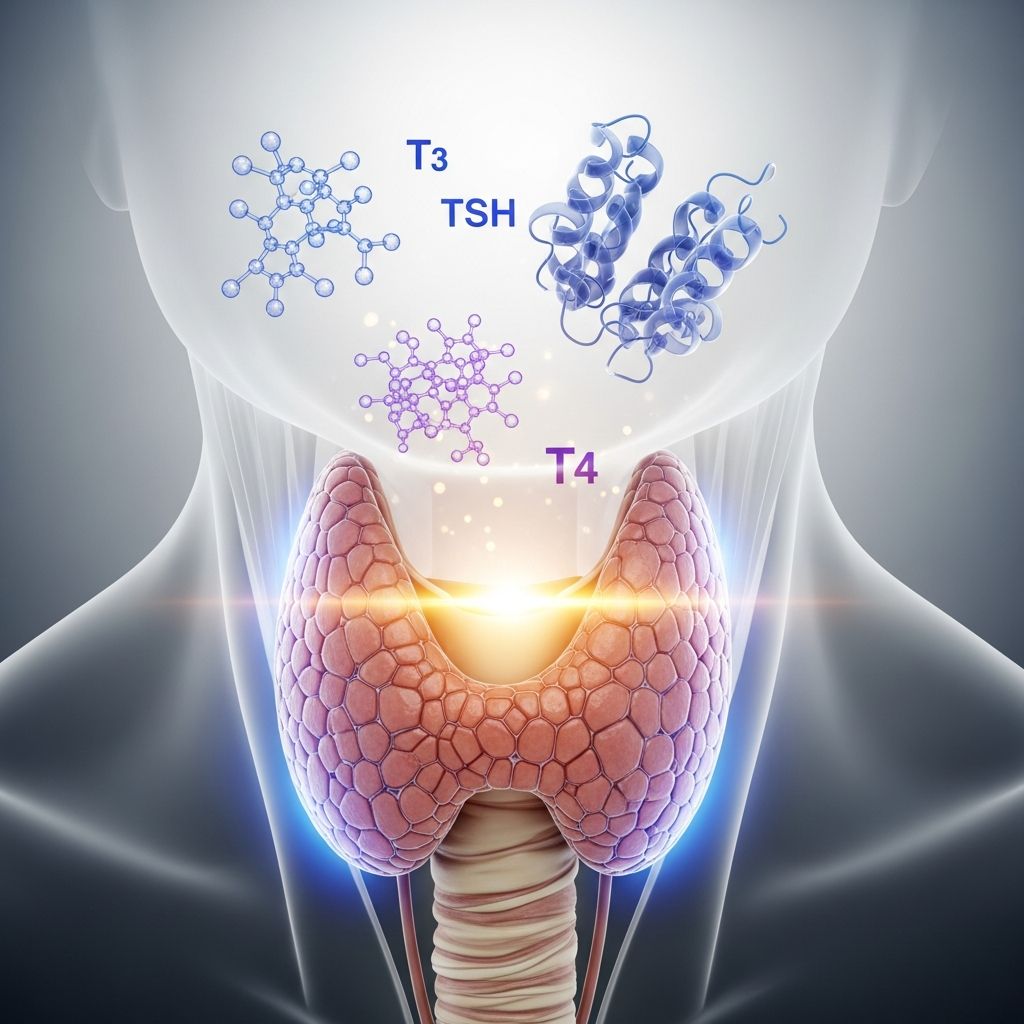
The thyroid gland is a small, butterfly-shaped gland located at the front of the neck, just below the Adam’s apple. It plays a crucial role in regulating the body’s metabolism, growth, and development. The thyroid is part of the endocrine system, which is responsible for producing and releasing hormones that control various bodily functions.
Anatomy of the Thyroid Gland
The thyroid gland consists of two lobes connected by a thin strip of tissue called the isthmus. It sits in the lower neck, above the collarbone and below the voice box. The gland is surrounded by important structures, including the parathyroid glands, which are located on the back of the thyroid and regulate calcium levels in the blood.
Thyroid Hormones: T3 and T4
The thyroid gland produces two main hormones: thyroxine (T4) and triiodothyronine (T3). These hormones are collectively referred to as thyroid hormones. T4 is the primary hormone produced by the thyroid, but it is largely inactive. Once released into the bloodstream, T4 is converted into T3, the active form, in various tissues throughout the body. T3 is responsible for regulating metabolism, energy production, and the function of nearly every cell in the body.
How Thyroid Hormones Regulate Metabolism
Metabolism is the process by which the body converts food into energy. Thyroid hormones control the rate at which this process occurs. When thyroid hormone levels are optimal, the body’s metabolism functions efficiently. If hormone levels are too high, metabolism speeds up, leading to symptoms like weight loss, anxiety, and rapid heartbeat. If hormone levels are too low, metabolism slows down, causing fatigue, weight gain, and depression.
The Feedback Loop: Hypothalamus, Pituitary, and Thyroid
The production and release of thyroid hormones are regulated by a feedback loop involving the hypothalamus, pituitary gland, and thyroid gland. The hypothalamus releases thyrotropin-releasing hormone (TRH), which stimulates the pituitary gland to produce thyroid-stimulating hormone (TSH). TSH then signals the thyroid to produce and release T4 and T3. When thyroid hormone levels in the blood are high, the feedback loop reduces the release of TRH and TSH, preventing overproduction. When levels are low, the loop increases hormone production to maintain balance.
Thyroid Hormone Production and Iodine
The thyroid gland requires iodine to produce T4 and T3. Iodine is obtained from the diet, primarily through foods like iodized salt, seafood, and dairy products. Without adequate iodine, the thyroid cannot produce sufficient hormones, leading to disorders such as goiter and hypothyroidism.
Other Thyroid Hormones: Calcitonin
In addition to T3 and T4, the thyroid gland produces calcitonin, a hormone that helps regulate calcium levels in the blood. Calcitonin is not involved in metabolism but plays a role in bone health by reducing calcium levels when they are too high.
Thyroid Function Tests
Thyroid function tests are blood tests used to measure the levels of thyroid hormones and TSH in the blood. These tests help diagnose thyroid disorders and monitor treatment. Common tests include:
Related Stories



- Thyroid-stimulating hormone (TSH)
- Free thyroxine (free T4)
- Free triiodothyronine (free T3)
- Total T4 and T3
Common Thyroid Disorders
Thyroid disorders are among the most common endocrine conditions. They can result from overproduction or underproduction of thyroid hormones, inflammation, or structural abnormalities. Common thyroid disorders include:
- Hypothyroidism: Underactive thyroid, leading to low hormone levels.
- Hyperthyroidism: Overactive thyroid, leading to high hormone levels.
- Thyroiditis: Inflammation of the thyroid gland.
- Goiter: Enlargement of the thyroid gland.
- Thyroid nodules: Abnormal growths on the thyroid.
Symptoms of Thyroid Disorders
Symptoms of thyroid disorders vary depending on whether hormone levels are too high or too low. Common symptoms include:
- Weight changes (gain or loss)
- Fatigue or increased energy
- Mood changes (depression or anxiety)
- Temperature intolerance (feeling too hot or too cold)
- Changes in heart rate
- Menstrual irregularities
- Swelling in the neck
Diagnosis and Treatment of Thyroid Disorders
Thyroid disorders are diagnosed through a combination of blood tests, physical examination, and imaging studies. Treatment depends on the specific disorder and may include:
- Medications to replace or suppress thyroid hormones
- Radioactive iodine therapy
- Surgery to remove part or all of the thyroid gland
- Lifestyle changes, such as dietary modifications
Thyroid and Pregnancy
Thyroid function is especially important during pregnancy. Both hypothyroidism and hyperthyroidism can affect fetal development and increase the risk of complications. Pregnant women are often screened for thyroid disorders, and treatment is adjusted as needed to ensure optimal hormone levels.
Thyroid Cancer
Thyroid cancer is a relatively rare but treatable form of cancer. It often presents as a painless lump in the neck. Diagnosis is confirmed through imaging and biopsy, and treatment typically involves surgery, radioactive iodine therapy, and sometimes radiation or chemotherapy.
Living with Thyroid Disease
With proper treatment and management, most people with thyroid disorders can lead normal, healthy lives. Regular monitoring of thyroid function and adherence to treatment plans are essential for maintaining optimal health.
Frequently Asked Questions (FAQs)
What is the main function of the thyroid gland?
The thyroid gland regulates metabolism, growth, and development through the production of thyroid hormones.
What are the symptoms of thyroid problems?
Symptoms include weight changes, fatigue, mood changes, temperature intolerance, and swelling in the neck.
How is thyroid disease diagnosed?
Thyroid disease is diagnosed through blood tests, physical examination, and imaging studies.
Can thyroid disorders be cured?
Many thyroid disorders can be managed effectively with medication, lifestyle changes, or surgery, but some may require lifelong treatment.
Is thyroid disease hereditary?
Some thyroid disorders have a genetic component, but environmental factors also play a role.
References
- Thyroid Hormone: What It Is & Function — Cleveland Clinic. 2023. https://my.clevelandclinic.org/health/articles/22391-thyroid-hormone
- Thyroid Disease — Cleveland Clinic Abu Dhabi. 2023. https://www.clevelandclinicabudhabi.ae/en/health-hub/health-resource/diseases-and-conditions/thyroid-disease
- The Small but Mighty Thyroid: Myths and Diagnoses with Dr. Mary Vouyiouklis Kellis — Cleveland Clinic Podcast. 2023. https://my.clevelandclinic.org/podcasts/health-essentials/the-small-but-mighty-thyroid-myths-and-diagnoses-with-dr-mary-vouyiouklis-kellis
Similar Articles








Read full bio of Sneha Tete