Thyroid Storm: Causes, Symptoms, Diagnosis & Treatment
Understanding thyroid storm: A rare but life-threatening endocrine emergency requiring immediate medical intervention.
What Is Thyroid Storm?
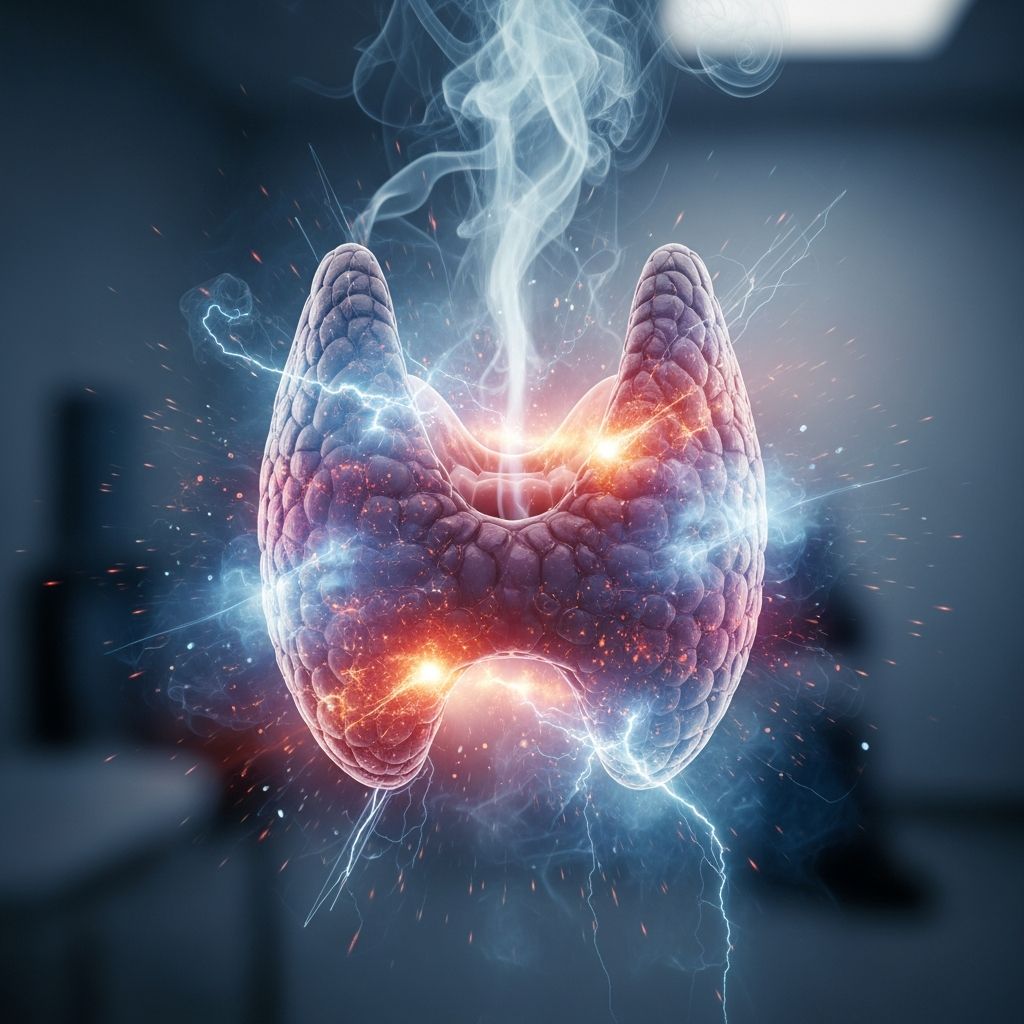
Thyroid storm, also known as thyroid crisis or thyrotoxic crisis, is a rare and life-threatening medical emergency that occurs when your thyroid gland releases an excessive amount of thyroid hormone in a short period of time. This condition represents the most severe form of hyperthyroidism and constitutes a serious complication that demands immediate hospitalization and aggressive medical intervention. When thyroid storm develops, the large quantities of thyroid hormones in your bloodstream dramatically accelerate your body’s metabolism into a dangerous state, creating a cascade of severe physical symptoms and potentially fatal complications.
The condition is characterized by extreme hypermetabolism, where your body’s metabolic rate increases dramatically as thyroid hormones speed up how quickly your body processes things and generates energy and heat. This rapid metabolic acceleration forces your body into overdrive, creating a life-threatening situation that requires urgent emergency care. While thyroid storm is uncommon, affecting less than 10% of people with hyperthyroidism, its severity and potential for mortality make it a critical medical concern.
How Thyroid Storm Affects Your Body
When thyroid storm occurs, the elevated thyroid hormone levels trigger an intense metabolic response throughout your entire body. The extreme hypermetabolism associated with thyroid storm increases your body’s oxygen demands significantly. To meet these increased oxygen requirements, your heart must work much harder, beating at an accelerated rate—a condition known as tachycardia. This excessive cardiac workload can strain the heart muscle severely and potentially lead to heart failure if left untreated.
The surge in metabolism affects multiple organ systems simultaneously. Your body temperature rises dramatically, core organs become stressed from the intensive metabolic demands, and your cardiovascular system faces unprecedented strain. This systemic stress can compromise kidney function, liver function, and other vital organ systems, potentially leading to multiple organ failure if emergency treatment is not promptly administered.
Causes and Triggers of Thyroid Storm
Thyroid storm typically develops in individuals who have long-term untreated or inadequately treated hyperthyroidism. However, the condition is often triggered by sudden, intense acute events or situations that precipitate the crisis. Researchers continue to investigate why certain factors result in thyroid storms, but several well-documented triggers have been identified:
- Surgery and anesthesia administration
- Infections or illness
- Physical trauma or injury
- Emotional stress or psychological trauma
- Abrupt discontinuation of antithyroid medication
- Thyroid hormone overdose
- Radioactive iodine treatment complications
- Pregnancy and childbirth
These triggering events act as catalysts that can transform stable hyperthyroidism into a life-threatening emergency. This is why healthcare providers may prescribe antithyroid medications before surgery to help prevent thyroid storm development in susceptible patients.
Recognizing Symptoms of Thyroid Storm
Thyroid storm presents with a variety of symptoms that reflect the extreme hypermetabolic state. Common signs and symptoms include:
- Extremely high fever (often above 103°F or 39.4°C)
- Rapid heart rate (tachycardia), often exceeding 140 beats per minute
- Severe sweating and heat intolerance
- Tremors and muscle weakness
- Anxiety, agitation, or restlessness
- Shortness of breath
- Nausea and vomiting
- Abdominal pain and diarrhea
- Difficulty concentrating or confusion
Related Stories



Less common but equally serious symptoms may include altered mental status, delirium, psychosis, jaundice (yellowing of skin and eyes), and signs of heart failure. Some patients may experience atrial fibrillation, an irregular and often rapid heart rhythm that can be particularly dangerous. The severity and specific combination of symptoms can vary significantly between individuals, but the presence of extreme fever combined with a dangerously rapid heart rate should always raise suspicion for thyroid storm.
Diagnosis of Thyroid Storm
Healthcare providers diagnose thyroid storm based on the presence of severe, life-threatening symptoms combined with laboratory findings of elevated thyroid hormones. A diagnosis typically includes:
Clinical Assessment: Doctors look for characteristic physical signs including extreme fever, rapid heart rate, tremors, and altered mental status. They also perform a physical examination to check for signs of thyroid gland enlargement (goiter) and assess overall cardiovascular and neurological status.
Laboratory Testing: Blood tests reveal high levels of thyroid hormones (T3 and T4) and low levels of thyroid-stimulating hormone (TSH). However, because thyroid storm is a medical emergency, healthcare providers often begin treatment based on clinical presentation before laboratory results are available, as waiting for test results could delay life-saving interventions.
Scoring Systems: The Burch and Wartofsky point scale is used to help confirm the diagnosis and assess severity. A score of 45 or higher is considered diagnostic of thyroid storm.
Given the life-threatening nature of this condition, rapid diagnosis and immediate hospitalization are essential. Many cases are diagnosed and treatment initiated in the emergency department based on clinical suspicion, with laboratory confirmation following shortly thereafter.
Emergency Treatment and Management
Thyroid storm requires immediate hospitalization and intensive care management. Treatment typically occurs in the intensive care unit (ICU) where healthcare team members can monitor symptoms and vital signs continuously. The treatment strategy generally divides into four main categories:
1. Beta-Blocker Therapy: Beta-blockers like propranolol are administered intravenously to slow the heart rate, reduce cardiac workload, and manage severe symptoms. These medications provide rapid symptomatic relief while other treatments take effect.
2. Antithyroid Medications: Drugs such as methimazole or propylthiouracil (PTU) are given to inhibit the production of new thyroid hormones. Methimazole is typically preferred, though PTU may be used in certain situations.
3. Iodine Therapy: Lugol’s iodine solution or saturated solution of potassium iodide (SSKI) is administered to rapidly block the release of preformed thyroid hormones from the thyroid gland.
4. Supportive Care and Additional Treatments: Intravenous corticosteroids are given to reduce inflammation and inhibit peripheral conversion of T4 to the more active T3. Cholestyramine may be used to enhance thyroid hormone elimination. Patients also receive aggressive supportive care including cooling measures for fever reduction, fluid and electrolyte management, and treatment of any identified precipitating infections or complications.
In refractory cases where patients do not respond adequately to traditional therapies, therapeutic plasma exchange (TPE) may be considered. This advanced treatment removes plasma containing excess thyroid hormones, autoantibodies, and inflammatory mediators. Studies show that TPE can decrease thyroid hormone levels by 20% after the first treatment and by 50% after multiple sessions.
Recovery Timeline and Prognosis
With appropriate medical treatment, most patients experience significant improvement within 24 hours of beginning therapy. Complete treatment and recovery from the underlying condition may take up to one week. The intensive ICU monitoring during this period allows healthcare providers to adjust medications, manage any complications, and respond quickly to any deterioration in the patient’s condition.
However, thyroid storm remains a serious condition with mortality rates of 8% to 30% if left untreated. Even with treatment, certain risk factors can indicate a poorer prognosis, including advanced age, delayed treatment, severe cardiac complications, and the presence of underlying medical conditions.
Potential Complications
Untreated or inadequately treated thyroid storm can lead to severe complications including:
- Heart failure and cardiogenic shock
- Atrial fibrillation and other dangerous arrhythmias
- Multiple organ failure
- Stroke or cerebrovascular events
- Pulmonary edema (fluid in the lungs)
- Death from cardiac causes or organ failure
The primary causes of death from untreated thyroid storm include heart failure, life-threatening cardiac arrhythmias, and progressive multiple organ failure. This underscores the critical importance of immediate emergency treatment when thyroid storm is suspected.
Prevention Strategies
While not all cases of thyroid storm are preventable, individuals with hyperthyroidism can take steps to reduce their risk:
- Take antithyroid medications exactly as prescribed and never discontinue them without medical guidance
- Maintain regular follow-up appointments with healthcare providers
- Inform all healthcare providers about your hyperthyroidism diagnosis before any surgery
- Take prescribed antithyroid medication before surgical procedures to prevent perioperative thyroid storm
- Seek prompt treatment for infections and other acute illnesses
- Manage stress through healthy coping mechanisms
- Inform your provider immediately if you develop signs or symptoms of thyroid storm
Healthcare providers may prescribe specific preventive antithyroid medications before thyroid surgery (thyroidectomy) to significantly reduce the risk of thyroid storm development during the perioperative period.
When to Seek Emergency Care
If you experience symptoms suggestive of thyroid storm—including extreme fever, rapid heart rate, severe sweating, confusion, or difficulty breathing—you should seek emergency medical care immediately. Go to the nearest hospital emergency room without delay. Do not attempt home remedies or wait to see if symptoms improve on their own. Thyroid storm is a medical emergency that requires hospital-based intensive care.
If you have been diagnosed with hyperthyroidism or Graves’ disease, discuss thyroid storm awareness with your healthcare provider and understand what warning signs to watch for. Ask about prevention strategies specific to your situation and what steps you should take if symptoms develop.
Frequently Asked Questions
Q: How rare is thyroid storm?
A: Thyroid storm occurs in less than 10% of people with untreated or undertreated hyperthyroidism, making it a relatively rare complication despite its severity.
Q: Can thyroid storm be fatal?
A: Yes, thyroid storm is potentially fatal if untreated, with mortality rates ranging from 8% to 30%. However, with prompt medical treatment, most patients improve significantly within 24 hours and survive the crisis.
Q: How long does treatment for thyroid storm take?
A: Most patients show improvement within 24 hours of beginning appropriate treatment. Complete recovery and treatment of the underlying condition may take up to one week of hospitalization and careful monitoring.
Q: Can thyroid storm be prevented?
A: While not all cases are preventable, taking antithyroid medications as prescribed, maintaining regular medical follow-up, managing stress, and informing healthcare providers about hyperthyroidism before surgery can significantly reduce the risk.
Q: What should I do if I suspect thyroid storm?
A: Seek emergency medical care immediately. Go to the nearest hospital emergency room without delay. Do not wait or attempt to manage symptoms at home, as thyroid storm requires hospital-based intensive care.
References
- Thyroid Storm: Causes, Symptoms, Diagnosis & Treatment — Cleveland Clinic. 2022-06-08. https://my.clevelandclinic.org/health/diseases/23203-thyroid-storm
- Refractory Thyroid Storm Due to Graves Disease in a Patient with Thymic Lymphoepithelial Carcinoma — National Institutes of Health, National Center for Biotechnology Information. 2023. https://pmc.ncbi.nlm.nih.gov/articles/PMC10580406/
- Thyroid Disorders: A Cleveland Clinic Guide — Mario Skugor, Cleveland Clinic. https://books.google.com/books/about/Thyroid_Disorders.html
- Thyroid Obstacle Course: Many Challenges from a Single Gland — Cleveland Clinic Journal of Medicine. https://www.ccjm.org/content/ccjom/92/2/87.full.pdf
- Thyroid Storm Management Guide — Clinical Emergency Medicine Education Resources. https://ru.scribd.com/presentation/108678989/Thyroid-Storm
Similar Articles








Read full bio of medha deb