Thyroidectomy: Complete Guide to Thyroid Surgery
Comprehensive overview of thyroidectomy procedures, techniques, recovery, and what to expect.
Understanding Thyroidectomy
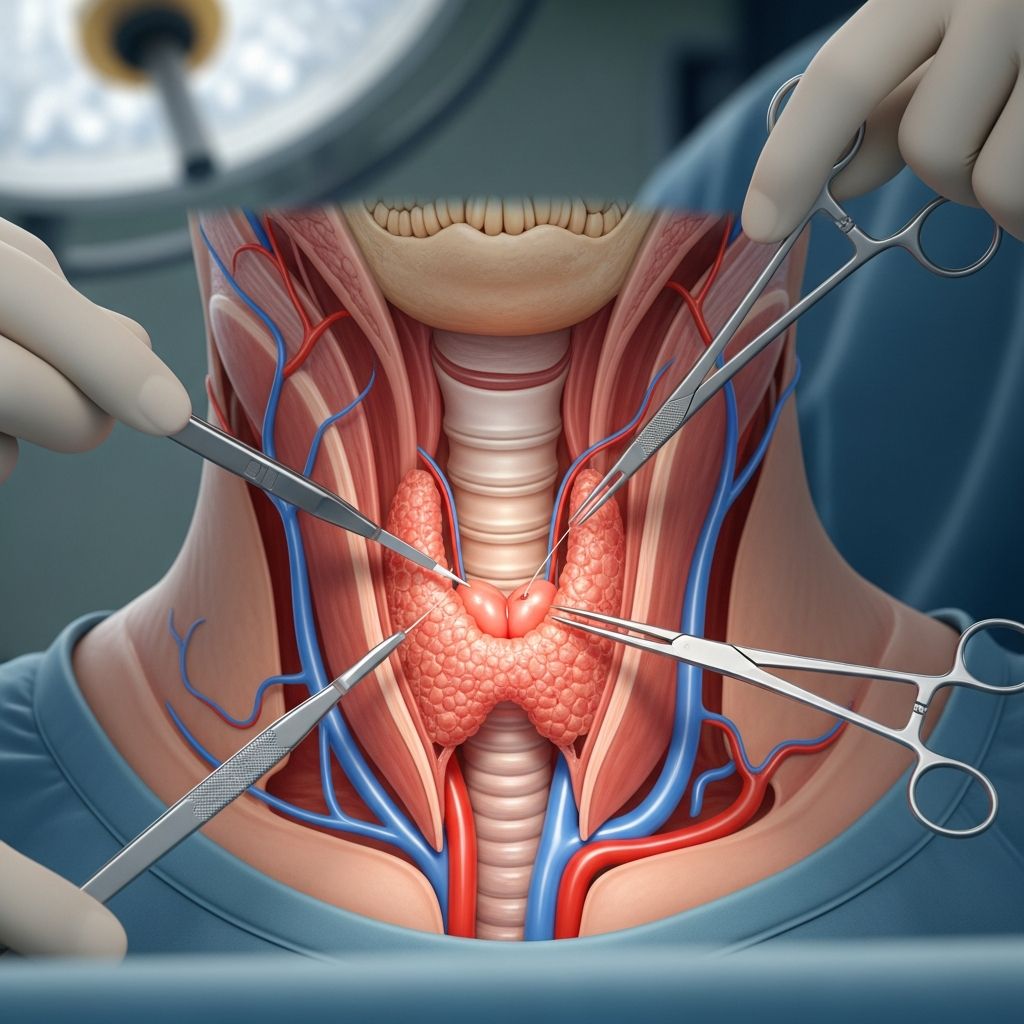
Thyroidectomy is one of the most common head and neck surgical procedures performed today. The thyroid is an important, butterfly-shaped gland located in the lower aspect of the central neck that plays a critical role in regulating metabolism and other vital bodily functions. When disease affects the thyroid gland, surgical removal may become necessary. This comprehensive guide explains what thyroidectomy is, why it may be recommended, how it is performed, and what patients can expect during recovery.
What is Thyroidectomy?
Thyroidectomy is a surgical procedure in which a surgeon removes part or all of the thyroid gland. The extent of removal depends on the underlying condition and may involve removing just one lobe of the thyroid (lobectomy), removing both lobes (total thyroidectomy), or removing most but not all of the thyroid tissue (subtotal thyroidectomy). The decision regarding how much thyroid tissue to remove is made collaboratively between your surgical team and your endocrinologist based on your specific diagnosis and medical needs.
Why Thyroidectomy May Be Recommended
Thyroidectomy may be recommended for various thyroid conditions, including:
- Thyroid cancer or suspected thyroid cancer
- Graves’ disease (overactive thyroid)
- Thyroid nodules that may be cancerous
- Multinodular goiter (enlarged thyroid with multiple nodules)
- Hyperthyroidism that cannot be managed with medications
- Thyroid conditions causing difficulty swallowing or breathing
Your surgeon will discuss the specific reasons for recommending thyroidectomy in your case and will address any questions or concerns you may have.
Surgical Approaches to Thyroidectomy
Several surgical approaches are available for thyroid removal, ranging from traditional open surgery to minimally invasive techniques. Your surgeon will recommend the approach best suited to your particular situation.
Traditional Transcervical Approach
The traditional approach involves making a horizontal incision in the neck, typically in a natural skin crease. This well-established technique remains the most widely performed method for thyroidectomy and allows direct visualization and access to the thyroid gland. While it results in a visible scar, this scar typically fades significantly over time.
Minimally Invasive Techniques
Modern surgical innovations have introduced several minimally invasive alternatives that provide excellent outcomes with fewer visible scars or no scars at all.
Transoral Endoscopic Thyroidectomy Vestibular Approach (TOETVA)
The transoral endoscopic thyroidectomy vestibular approach (TOETVA) is a remote access technique that is increasingly favored for its ease, safety, and direct plane to the thyroid gland. This procedure is performed entirely through the mouth, leaving no visible scars on the neck. The surgeon makes small incisions in the oral vestibule (the space between the teeth and lips) to place instruments and an endoscope. A working space is created through carbon dioxide insufflation, and the thyroid gland is accessed through a subplatysmal dissection. This technique is particularly appealing to patients concerned about visible scarring.
Related Stories



Transoral Robotic Thyroidectomy Vestibular Approach (TORTVA)
The transoral robotic thyroidectomy vestibular approach (TORTVA) combines robotic surgery technology with the transoral approach. Like TOETVA, this procedure is performed through the mouth without neck incisions. The robotic system provides enhanced visualization and precise instrument control, which can be advantageous for certain complex cases. Early outcomes from Johns Hopkins Hospital demonstrate that both TOETVA and TORTVA can be safely performed, with TOETVA typically requiring shorter operative times as surgeons develop greater experience with the technique.
Preparation for Thyroidectomy
Proper preparation is essential for a successful surgical outcome. Your surgical team will provide detailed preoperative instructions, which typically include:
- Laboratory tests and blood work to assess your overall health
- Imaging studies such as ultrasound or CT scan to visualize the thyroid gland
- Vocal cord assessment (laryngoscopy) to establish baseline function before surgery
- Medication adjustments or cessation as directed by your surgeon
- Fasting requirements before surgery
- Arrangements for transportation home after surgery
It is important to inform your surgical team about all medications you take, including over-the-counter medications, supplements, and herbal remedies, as some may need to be stopped before surgery. If you have any allergies, particularly to medications, anesthesia, or iodine, be sure to communicate this information clearly.
The Thyroidectomy Procedure
The specific details of your thyroidectomy will depend on which surgical approach is used and the extent of thyroid removal necessary.
General Anesthesia
Thyroidectomy is performed under general anesthesia, so you will be asleep throughout the procedure. Your anesthesiologist will monitor your vital signs and ensure your comfort and safety.
Nerve Monitoring
A critical aspect of thyroidectomy is preservation of the recurrent laryngeal nerve, which controls vocal cord movement, and the superior laryngeal nerve. Surgeons must remove the thyroid gland while preserving these important nerves. Nerve integrity monitoring may be used to help identify and protect these structures during surgery. This technology provides real-time feedback to the surgical team, helping to minimize the risk of nerve injury.
Parathyroid Preservation
The parathyroid glands are four small glands located behind or adjacent to the thyroid that regulate the body’s calcium levels. During thyroidectomy, the surgeon takes great care to identify and preserve these glands, as their inadvertent removal or injury can result in calcium imbalances.
Specimen Removal
Once the thyroid gland (or portion thereof) is freed from surrounding tissues, it is carefully removed. In minimally invasive procedures, the specimen is placed in an extraction bag to prevent spillage of any cellular material.
Closure
After the thyroid removal is complete and hemostasis (bleeding control) is achieved, the surgical wounds are closed. The number and method of closure depend on the surgical approach used. Traditional transcervical approaches typically require closure of multiple tissue layers, while minimally invasive approaches may involve fewer layers.
Recovery After Thyroidectomy
Recovery from thyroidectomy varies depending on the surgical approach used and individual factors. However, most patients experience a relatively rapid recovery.
Immediate Postoperative Period
After surgery, you will be monitored in the recovery room as the effects of anesthesia wear off. You may experience a sore throat or mild neck discomfort, which is normal. Pain management will be provided as needed. Most patients are discharged the same day or the morning after surgery.
First Two Weeks
During the first two weeks following surgery, you should:
- Keep your incision clean and dry
- Take prescribed medications as directed
- Avoid strenuous activity and heavy lifting
- Eat soft foods and stay well-hydrated
- Attend all follow-up appointments
- Report any signs of infection, excessive bleeding, or difficulty breathing immediately
Return to Normal Activities
Most patients can return to light activities within one to two weeks and resume normal activities within three to four weeks. Your surgeon will provide specific guidance based on your recovery progress. If you had a minimally invasive procedure, recovery is typically faster than with traditional surgery.
Potential Complications
While thyroidectomy is an incredibly common and safe procedure in experienced hands, as with any surgery, certain complications can occur. Your surgeon will discuss these risks with you before surgery.
Recurrent Laryngeal Nerve Injury
This is the most significant potential complication of thyroidectomy. Temporary nerve injury occurs in approximately 1-2% of cases and typically resolves within weeks to months. Permanent nerve injury is rare, occurring in less than 1% of cases. Nerve injury can result in hoarseness, changes in voice quality, difficulty with projection, or rarely, difficulty with airway protection.
Hypoparathyroidism
If the parathyroid glands are accidentally removed or their blood supply is compromised, temporary or permanent hypoparathyroidism may result. This condition causes low calcium levels and requires careful monitoring and management. Most cases are temporary and resolve within weeks to months.
Thyroid Storm (Thyrotoxic Crisis)
In patients undergoing surgery for Graves’ disease or severe hyperthyroidism, careful preoperative preparation is essential to prevent thyroid storm, a life-threatening condition. Proper preoperative antithyroid medication management significantly reduces this risk.
Infection
Surgical site infection is rare but possible. Signs include increased redness, warmth, drainage, or fever. Report any concerning symptoms to your surgeon immediately.
Bleeding
While intraoperative bleeding is carefully controlled, postoperative bleeding or hematoma formation can occur. Excessive drainage, neck swelling, or difficulty breathing should be reported immediately.
Thyroid Hormone Replacement
If your entire thyroid gland is removed, or if significant thyroid tissue is removed, you will require lifelong thyroid hormone replacement therapy. Your surgeon and endocrinologist will work closely to ensure your thyroid hormone levels are at optimal levels. This typically involves taking a daily synthetic thyroid hormone medication (levothyroxine) and periodic blood tests to monitor hormone levels. Finding the correct dose may take several weeks or months, as adjustments are made based on laboratory results and your clinical symptoms.
Follow-Up Care
Regular follow-up with your surgical team and endocrinologist is essential after thyroidectomy. Follow-up typically includes:
- Postoperative office visit within one to two weeks to assess healing
- Periodic thyroid hormone level monitoring if thyroid hormone replacement is prescribed
- Voice assessment if vocal cord function is a concern
- Calcium monitoring if there is concern about parathyroid function
- Surveillance imaging or laboratory studies if surgery was performed for thyroid cancer
Your surgeon will establish an appropriate follow-up schedule based on your specific situation.
Comparison of Surgical Approaches
| Approach | Scarring | Operative Time | Recovery | Advantages |
|---|---|---|---|---|
| Traditional Transcervical | Visible neck scar | Shorter (established technique) | Standard | Well-established, widely available, direct access |
| TOETVA | No visible scars | Moderate (188 min median) | Faster | Scarless, minimally invasive, direct plane to thyroid, excellent safety profile |
| TORTVA | No visible scars | Longer (322 min median early experience) | Faster | Scarless, robotic precision, excellent visualization for complex cases |
Frequently Asked Questions
Q: How long does thyroidectomy surgery take?
A: Operative time varies depending on the surgical approach and complexity of the case. Traditional transcervical thyroidectomy typically takes 1-2 hours. Minimally invasive approaches like TOETVA may take 2-3 hours initially but times decrease with surgeon experience. Your surgeon can provide a more specific estimate based on your individual case.
Q: Will I have visible scars after thyroidectomy?
A: This depends on the surgical approach used. Traditional transcervical surgery results in a horizontal neck scar that typically fades significantly over time. Minimally invasive techniques like TOETVA and TORTVA leave no visible scars on the neck, as all incisions are made inside the mouth.
Q: How long is the recovery period after thyroidectomy?
A: Most patients can return to light activities within 1-2 weeks and resume normal activities within 3-4 weeks. Minimally invasive procedures often have faster recovery times than traditional surgery. Your surgeon will provide specific guidance based on your recovery progress.
Q: Will I need thyroid hormone replacement after thyroidectomy?
A: If your entire thyroid gland is removed, you will require lifelong thyroid hormone replacement therapy. If only a portion of your thyroid is removed, you may or may not need replacement depending on the remaining thyroid function. Your endocrinologist will monitor your hormone levels and determine if medication is necessary.
Q: What is the risk of nerve injury with thyroidectomy?
A: Temporary recurrent laryngeal nerve injury occurs in approximately 1-2% of cases and typically resolves within weeks to months. Permanent nerve injury is rare, occurring in less than 1% of cases when surgery is performed by experienced surgeons. Modern nerve monitoring techniques help further reduce these risks.
Q: Can I eat normally after thyroidectomy?
A: You should stick to soft foods for the first few days after surgery. You can gradually return to your normal diet as tolerated. If you experience difficulty swallowing or persistent discomfort, contact your surgeon.
Q: When can I return to work after thyroidectomy?
A: This depends on your job and how you recover. Many patients with desk jobs can return to work within 1-2 weeks. If your job involves heavy lifting or strenuous activity, you may need longer. Discuss your specific situation with your surgeon.
Q: Is thyroidectomy safe?
A: Yes, thyroidectomy is incredibly common and safe in experienced hands. Complications are rare, especially when performed by high-volume surgeons who are familiar with the procedure and understand how to protect critical structures like nerves and parathyroid glands.
References
- Early outcomes in transoral vestibular thyroidectomy: Robotic versus endoscopic approaches — National Center for Biotechnology Information (NCBI). 2018. https://pmc.ncbi.nlm.nih.gov/articles/PMC6197932/
- Transoral robotic thyroid surgery — AME Medical Journal. https://gs.amegroups.org/article/view/6174/html
- Surgical treatment of thyroid cancer: Established and novel approaches — Johns Hopkins University Research Database. https://pure.johnshopkins.edu/en/publications/surgical-treatment-of-thyroid-cancer-established-and-novel-approa
- Thyroidectomy — Johns Hopkins Medicine. https://www.hopkinsmedicine.org/health/treatment-tests-and-therapies/thyroidectomy
Similar Articles








Read full bio of Sneha Tete