Thyroidectomy: What It Is, Procedure & Recovery
Complete guide to thyroidectomy surgery: indications, procedure, risks, and recovery timeline.
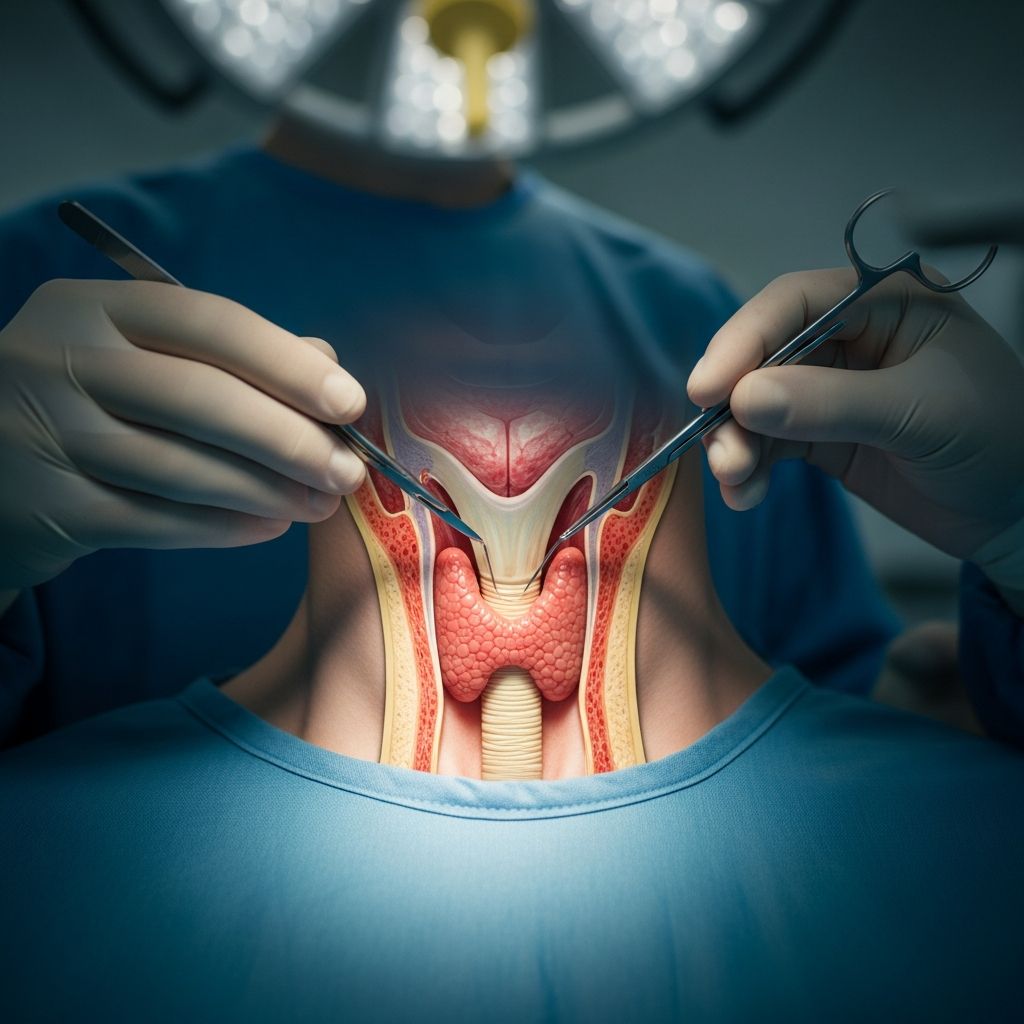
What Is a Thyroidectomy?
A thyroidectomy is a surgical procedure in which your surgeon removes all or part of your thyroid gland, a small butterfly-shaped organ located in your neck. The thyroid plays a crucial role in regulating your metabolism, body temperature, and energy levels by producing thyroid hormones. Depending on your specific condition and medical needs, your surgeon may perform a total thyroidectomy (removal of the entire gland) or a partial thyroidectomy (removal of only a portion of the gland).
This surgical intervention is one of the most commonly performed endocrine procedures worldwide and has been refined over many decades to maximize safety and effectiveness. Modern surgical techniques and monitoring equipment have made thyroidectomy a very safe procedure when performed by experienced surgeons.
Reasons Your Doctor Might Recommend Thyroidectomy
Your physician may recommend thyroidectomy for several medical conditions affecting the thyroid gland. Understanding these indications can help you make an informed decision about your treatment options with your healthcare team.
Thyroid Cancer
The most common reason for thyroidectomy is the presence of thyroid cancer. When cancer is detected in the thyroid gland, complete or near-complete removal of the gland is often the primary treatment approach. This helps eliminate cancerous cells and reduces the risk of recurrence.
Goiters
A goiter is an enlargement of the thyroid gland that can cause difficulty swallowing, breathing problems, or cosmetic concerns. When a goiter becomes significantly enlarged or causes symptoms affecting your quality of life, thyroidectomy may be recommended to relieve these symptoms.
Thyroid Nodules
Thyroid nodules are growths that form within the thyroid tissue. When nodules are large, multiple, or suspicious for malignancy, your doctor may recommend surgical removal. Some nodules may produce excess thyroid hormone or cause compression symptoms.
Hyperthyroidism and Graves’ Disease
Hyperthyroidism, a condition where the thyroid produces excessive amounts of thyroid hormone, can sometimes be treated with thyroidectomy. Graves’ disease, an autoimmune condition causing hyperthyroidism, may also be managed through thyroid removal when other treatments have been unsuccessful.
Before Your Thyroidectomy Surgery
Proper preparation before your thyroidectomy is essential for ensuring the best possible surgical outcome. Your medical team will provide specific instructions tailored to your individual situation.
Preoperative Evaluation and Imaging
Your surgeon will conduct a thorough physical examination and review your medical history. Preoperative imaging, typically including ultrasound and sometimes cross-sectional imaging like CT or MRI scans, helps your surgeon understand the exact anatomy of your thyroid gland and identify the location of critical structures. These images allow your surgeon to plan the surgical approach and anticipate any anatomical variations.
Diagnostic Testing
If your surgeon suspects cancer or other concerning lesions, ultrasound-guided fine needle biopsies may be performed to confirm the diagnosis. Molecular testing can provide additional information about the nature of any nodules or masses, helping guide surgical decision-making.
Related Stories



Medications and Supplements
Inform your surgeon about all medications and supplements you’re taking. You may need to discontinue certain medications before surgery, particularly blood thinners. If you have hyperthyroidism, you may be given specific medications to control thyroid hormone levels before surgery.
Fasting and Preparation Instructions
You’ll receive detailed instructions about fasting before your surgery, typically requiring you to avoid food and liquids for several hours before the procedure. Follow these instructions carefully to ensure your safety during anesthesia.
The Thyroidectomy Procedure
Understanding what happens during thyroidectomy can help reduce anxiety and prepare you mentally for the experience. The procedure typically follows a standardized approach designed to maximize safety and efficacy.
General Anesthesia
When you arrive at the surgical facility, you’ll receive general anesthesia to ensure you’re unconscious and unable to feel pain during the procedure. An anesthesiologist will monitor your vital signs throughout the surgery, including your heart rate, blood pressure, oxygen levels, and carbon dioxide levels.
Surgical Incision
Your surgeon makes an incision along a natural crease in the base of your neck. This placement is strategic, as it helps minimize visible scarring by placing the incision in an area where natural skin creases already exist. The length of the incision varies depending on how much of the thyroid needs to be removed and whether lymph nodes require removal.
Nerve Monitoring
To protect your voice and prevent complications affecting your vocal cords, your surgeon may place electrodes on your voice box (larynx). These electrodes allow continuous monitoring of the recurrent laryngeal nerve, which controls your voice box muscles. A small probe delivers an electrical current to test nerve function as your surgeon operates, providing real-time feedback about nerve integrity.
Vascular Mapping
Your surgeon carefully identifies and maps the blood vessels that supply your parathyroid glands. The parathyroid glands are four tiny glands located near or embedded within the thyroid tissue. Protecting these glands and their blood supply is crucial to maintaining normal calcium regulation in your body.
Tissue Dissection and Removal
Your surgeon meticulously dissects the thyroid tissue, staying directly on the thyroid capsule to minimize injury to surrounding structures. Hemostasis, or control of bleeding, is maintained throughout the procedure using precise techniques such as bipolar cautery, surgical clips, or suture tying. Advanced energy devices may also be used. This careful approach ensures your surgeon has an optimal view of critical landmarks and can accurately identify nerves and other important structures.
Depending on your diagnosis, your surgeon may remove:
- Part of the thyroid (lobectomy): Only one lobe of the butterfly-shaped gland is removed
- Most of the thyroid (subtotal thyroidectomy): The vast majority of thyroid tissue is removed, leaving a small remnant
- The entire thyroid (total thyroidectomy): All thyroid tissue is removed
Closure
Once your surgeon has completed the removal and achieved hemostasis, the surgical team carefully closes the incision. Dissolvable stitches are used to close the deeper layers, and skin glue or staples close the outer layer. This multi-layer closure provides strength and promotes optimal healing.
How Long Does Thyroidectomy Take?
The duration of thyroidectomy varies depending on the extent of surgery required. A total thyroidectomy typically takes between one to three hours. Partial thyroidectomy procedures may be completed in less time. The exact duration also depends on factors such as the size and complexity of your thyroid gland, whether lymph nodes require removal, and whether any complications arise during surgery.
Risks and Complications of Thyroidectomy
Thyroidectomy is generally a very safe procedure, especially when performed by experienced endocrine surgeons. Serious complications are uncommon. However, as with any surgery, potential risks exist that you should understand before consenting to the procedure.
Common Minor Complications
Temporary hoarseness: Some patients experience mild hoarseness after thyroidectomy, typically due to irritation from the breathing tube used during anesthesia. This usually resolves within a few days to weeks. Permanent voice changes are rare when surgery is performed by experienced surgeons.
Sore throat: Mild throat soreness is common after surgery and generally resolves within one to two weeks.
Neck pain and discomfort: Some discomfort at the incision site is expected and manageable with prescribed pain medications.
Nerve-Related Complications
Recurrent laryngeal nerve injury: The recurrent laryngeal nerve controls your voice box. While surgeons take meticulous precautions to protect this nerve, injury can occasionally occur, potentially causing hoarseness or voice changes. Most cases are temporary.
Superior laryngeal nerve injury: This nerve helps control voice pitch and volume. Injury is rare and usually temporary when it occurs.
Parathyroid-Related Complications
Temporary hypoparathyroidism: The parathyroid glands regulate calcium levels in your body. Temporary dysfunction may occur due to inflammation or reduced blood supply during surgery, potentially causing low calcium levels. This usually resolves within several days to weeks.
Permanent hypoparathyroidism: Rarely, permanent damage to the parathyroid glands may occur, requiring long-term calcium and vitamin D supplementation.
Bleeding
Bleeding within the surgical wound (hematoma) is rare but can occasionally occur. Meticulous hemostasis techniques used by experienced surgeons minimize this risk significantly.
Infection
Surgical site infection is uncommon and can usually be treated effectively with antibiotics if it occurs.
Anesthesia Complications
Risks associated with general anesthesia are minimal in otherwise healthy individuals and are carefully managed by your anesthesiology team.
Recovery After Thyroidectomy
Understanding the recovery process helps you prepare for what to expect and promotes optimal healing following your thyroidectomy.
Immediate Postoperative Period
You’ll spend time in the recovery room after surgery, where medical staff will monitor your vital signs and pain level. You may feel groggy from anesthesia and may experience mild discomfort at the incision site. Most patients are able to go home the same day as surgery or after an overnight stay, depending on the extent of surgery and your individual recovery.
First Week After Surgery
During the first week, focus on keeping your incision clean and dry. You can gently wash the area with soap and water but avoid submerging the incision in water until it’s fully closed. Avoid strenuous activity, heavy lifting, and vigorous exercise. Pain is usually manageable with prescribed medications or over-the-counter pain relievers.
Returning to Normal Activities
Most patients can return to light activities within one to two weeks and gradually resume normal activities over the following weeks. Your surgeon will provide specific guidelines about when you can safely return to work, exercise, and other activities based on your individual recovery.
Thyroid Hormone Replacement
If your entire thyroid gland was removed, you’ll need to take thyroid hormone replacement therapy for the rest of your life. Your doctor will determine the appropriate dosage based on blood tests measuring your thyroid hormone levels. Regular follow-up appointments help ensure your dosage remains optimal.
Follow-Up Appointments
You’ll have follow-up appointments with your surgeon to assess your healing and check for any complications. Your doctor will examine your incision and discuss any concerns you may have. If thyroid cancer was present, you may need additional follow-up care including blood tests, imaging studies, and visits with your endocrinologist.
Advanced Surgical Techniques
Modern surgical centers like Cleveland Clinic offer advanced approaches to thyroidectomy that may provide additional benefits to selected patients.
Robotic Thyroidectomy
Robotic-assisted thyroidectomy is a minimally invasive surgical approach where the incision is made under the arm rather than in the neck. This technique eliminates the visible neck scar for many patients. Robotic thyroidectomy currently works best for patients who are not overweight and who have a smaller thyroid gland (4 cm or less at the largest) and smaller nodules (2 to 3 cm or smaller). Patients with thyroiditis and Graves’ disease are typically excluded from robotic surgery due to inflammation involving the thyroid gland.
What to Expect After Thyroid Removal
After your thyroidectomy, your body no longer produces thyroid hormones naturally. This requires lifelong hormone replacement therapy if your entire gland was removed. Your doctor will prescribe levothyroxine, a synthetic thyroid hormone, to replace the hormones your thyroid previously produced. Taking this medication as directed ensures your metabolism, energy levels, and body temperature regulation remain normal.
If only part of your thyroid was removed, your remaining thyroid tissue may produce sufficient hormones, and you may not require hormone replacement. Your doctor will monitor your thyroid function through blood tests and adjust your treatment as needed.
Important Safety Measures During Surgery
Experienced thyroid surgeons employ multiple safety measures to prevent complications. Meticulous hemostasis throughout the procedure provides the surgeon with an optimal view of the surgical field. When bleeding control is necessary, precise bipolar cautery, surgical clips, or suture tying is used rather than monopolar cautery, which can cause heat injury to nearby nerves. Surgeons maintain dissection directly on the thyroid capsule to minimize injury risk to nerves, parathyroid glands, and surrounding tissue. Minimal traction on the delicate recurrent laryngeal nerve is maintained throughout the procedure.
Multidisciplinary Approach to Thyroidectomy Care
Leading medical centers take a comprehensive, multidisciplinary approach to thyroidectomy care. This team-based approach is particularly important for advanced thyroid cancers where coordination among surgical, medical oncology, and radiation oncology specialists ensures optimal outcomes. Working as a team across disciplines helps identify the best possible treatment plan for each individual patient.
Frequently Asked Questions About Thyroidectomy
Q: Is thyroidectomy painful?
A: You won’t experience pain during surgery because you’ll be under general anesthesia. After surgery, mild discomfort at the incision site is normal and manageable with prescribed pain medications. Most patients report that post-operative pain is less severe than they anticipated.
Q: How long does it take to fully recover from thyroidectomy?
A: Most patients can return to light activities within one to two weeks and resume normal activities within four to six weeks. However, individual recovery times vary based on the extent of surgery and your overall health. Your surgeon will provide specific guidelines for your situation.
Q: Will I have a visible scar after thyroidectomy?
A: The incision is placed along a natural crease in the base of your neck, which helps minimize visible scarring. Over time, most scars fade significantly. Some newer techniques, such as robotic thyroidectomy, may eliminate the visible neck scar for selected patients.
Q: What happens if I develop complications after surgery?
A: Complications are uncommon, but if they occur, your surgical team is trained to manage them. Contact your surgeon immediately if you experience difficulty breathing, excessive bleeding, severe pain, or other concerning symptoms.
Q: Will I need medication after thyroidectomy?
A: If your entire thyroid gland was removed, you’ll need thyroid hormone replacement therapy for life. Your doctor will prescribe the appropriate dosage based on blood tests. If only part of your thyroid was removed, you may not require hormone replacement, but your thyroid function will be monitored with regular blood tests.
Q: Can thyroidectomy affect my voice permanently?
A: Permanent voice changes are rare when surgery is performed by experienced surgeons using modern nerve monitoring techniques. Some patients experience temporary hoarseness that resolves within days to weeks. Your surgeon uses multiple safety measures to protect the nerves controlling your voice.
Q: What is the success rate of thyroidectomy?
A: Thyroidectomy is a highly successful procedure with excellent safety outcomes when performed by experienced endocrine surgeons. Success rates depend on the specific condition being treated, but complications are uncommon, and most patients achieve their intended surgical goals.
References
- Thyroidectomy (Thyroid Surgery): What It Is & Recovery — Cleveland Clinic. 2024. https://my.clevelandclinic.org/health/treatments/7016-thyroidectomy
- Insights on How to Avoid Thyroidectomy Complications — Cleveland Clinic Consult QD. 2024. https://consultqd.clevelandclinic.org/cleveland-clinic-experts-share-insights-on-how-to-avoid-thyroidectomy-complications
- Endocrine & Thyroid Surgery — Cleveland Clinic Department of Endocrine Surgery. 2024. https://my.clevelandclinic.org/departments/endocrinology-metabolism/depts/endocrine-surgery
- Thyroidectomy Surgery — Cleveland Clinic Abu Dhabi. 2024. https://www.clevelandclinicabudhabi.ae/en/health-hub/health-resource/treatments-and-procedures/thyroidectomy
- Private Thyroid and Endocrine Surgery — Cleveland Clinic London. 2024. https://clevelandcliniclondon.uk/clinical-institutes/digestive-disease-surgery/thyroid-endocrine-surgery
Similar Articles








Read full bio of Sneha Tete