Ticagrelor: Patient Guide To Dosing, Risks, Interactions
Discover essential information on ticagrelor, the antiplatelet medication that helps prevent heart attacks and strokes in high-risk patients.
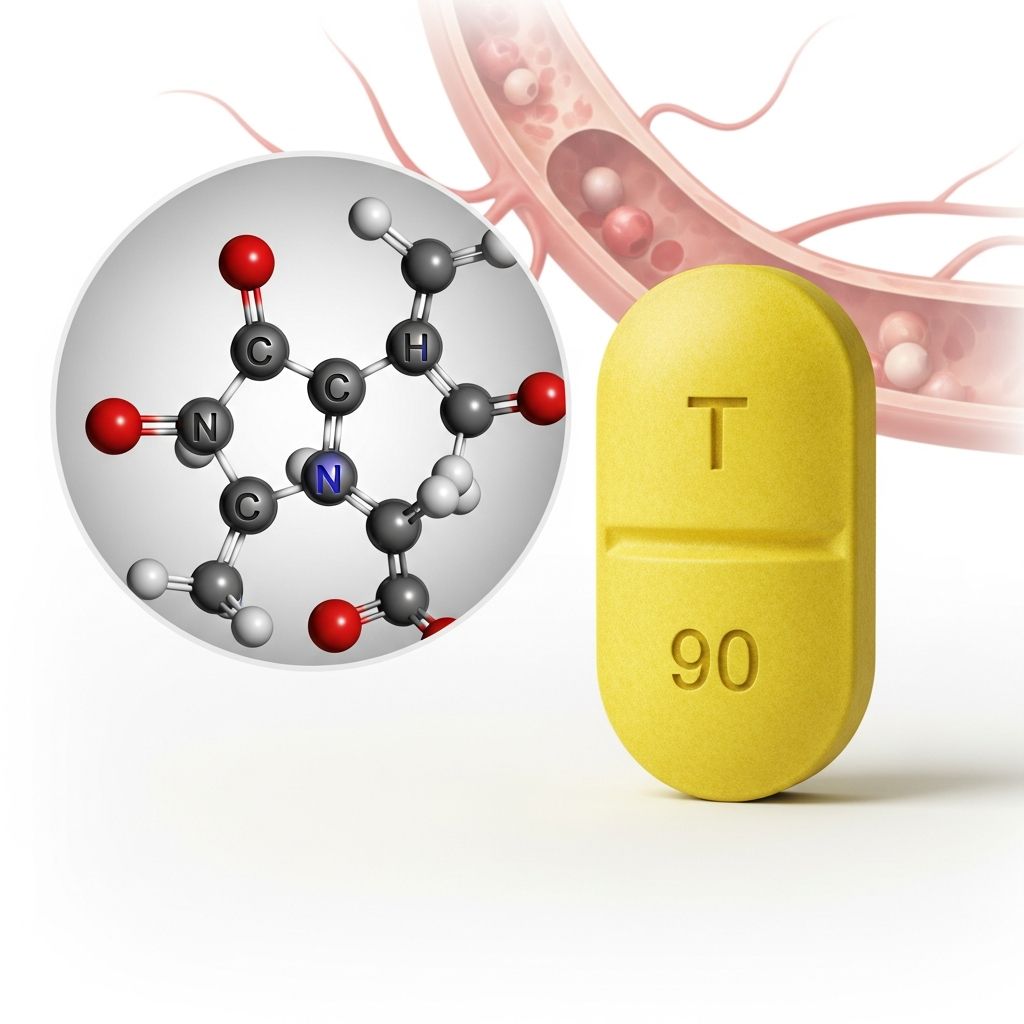
Ticagrelor is a vital antiplatelet medication designed to minimize the chances of serious cardiovascular incidents like heart attacks and strokes, particularly in individuals facing acute coronary syndrome or those with a history of myocardial infarction.
Understanding Ticagrelor’s Role in Heart Health
This medication belongs to the class of P2Y12 receptor antagonists, which play a crucial part in managing blood clotting processes. By targeting specific receptors on platelets, ticagrelor interrupts the chain reaction that leads to clot formation, thereby maintaining smoother blood flow through arteries. Patients with conditions involving narrowed or blocked coronary arteries benefit significantly from this action, as it lowers the overall burden of thrombotic events.
Clinical studies, including the landmark PLATO trial, have demonstrated ticagrelor’s superiority over alternatives like clopidogrel in reducing mortality from vascular causes, heart attacks, and strokes, especially when paired with low-dose aspirin. Its reversible binding to the P2Y12 receptor allows for quicker onset and offset of effects compared to irreversible inhibitors, offering flexibility in treatment scenarios such as upcoming surgeries.
Primary Medical Applications
Ticagrelor finds its main use in high-risk cardiovascular scenarios. It is prescribed to decrease the likelihood of death from heart-related issues, recurrent myocardial infarctions, and cerebrovascular accidents in adults experiencing acute coronary syndrome—encompassing unstable angina, non-ST-elevation myocardial infarction, or ST-elevation myocardial infarction.
- Post-heart attack care: For those with a history of myocardial infarction, it helps prevent subsequent events.
- High-risk coronary artery disease: Reduces first-time heart attacks or strokes in susceptible individuals.
- Acute ischemic stroke or transient ischemic attack: Lowers stroke risk in specific cases.
In combination with aspirin, it forms the backbone of dual antiplatelet therapy (DAPT), a standard protocol following percutaneous coronary interventions or stent placements.
How Ticagrelor Works at the Cellular Level
The P2Y12 receptor on platelet surfaces responds to adenosine diphosphate (ADP), triggering a cascade that amplifies platelet activation and aggregation. Ticagrelor binds allosterically—meaning at a site distinct from ADP—to this receptor, preventing ADP-induced signaling. This inhibition blocks G-protein coupled pathways that would otherwise boost platelet reactivity via adenylyl cyclase suppression and activation of PI3K and Akt.
Unlike prodrugs such as clopidogrel, ticagrelor does not require liver enzyme activation, ensuring consistent efficacy across patients with genetic variations in CYP2C19 metabolism. Its active metabolite, AR-C124910XX, further contributes to the antiplatelet effect through similar receptor antagonism. Oral bioavailability stands at about 36%, with peak plasma levels achieved within hours, supporting twice-daily dosing.
Standard Dosing Guidelines
| Condition | Initial Dose | Maintenance Dose | Duration |
|---|---|---|---|
| Acute Coronary Syndrome | 180 mg loading dose | 90 mg twice daily | Up to 12 months (with aspirin) |
| History of MI (1+ year prior) | 90 mg twice daily | 60 mg twice daily | Long-term as needed |
| Acute Ischemic Stroke/TIA | 180 mg loading (if eligible) | 90 mg twice daily for 30 days | Short-term |
Always take with low-dose aspirin (75-100 mg daily); higher aspirin doses increase bleeding risks without added benefits. Swallow tablets whole without crushing or chewing. For those unable to swallow, dispersion in water is an option, but consult a healthcare provider.
Recognizing and Managing Side Effects
While effective, ticagrelor carries risks inherent to antiplatelet therapy. Bleeding is the most prominent concern, ranging from minor bruising to severe gastrointestinal or intracranial hemorrhages. Dyspnea, or shortness of breath, affects up to 14% of users, typically mild and resolving without discontinuation, though mechanisms may involve adenosine-mediated effects.
Related Stories



Other common issues include:
- Hyperuricemia (elevated blood uric acid levels)
- Gout flares
- Bradycardia (slow heart rate)
- Nausea or dizziness
Rare but serious effects encompass ventricular pauses, typically asymptomatic and transient, and hypersensitivity reactions like rash or angioedema. Monitor for signs of unusual bleeding, such as black stools, blood in urine, or prolonged bleeding from cuts. Seek immediate medical help for chest pain, severe dyspnea, or fainting.
Critical Drug Interactions
Ticagrelor interacts with substances affecting CYP3A4/5 enzymes or P-glycoprotein transport. Strong CYP3A inhibitors (e.g., ketoconazole, clarithromycin) can double exposure, risking toxicity; avoid concurrent use. Conversely, strong inducers (e.g., rifampin) reduce efficacy.
Key interactions include:
- Anticoagulants (e.g., warfarin, heparin): Heightened bleeding risk.
- Other antiplatelets/NSAIDs: Amplified hemorrhage potential.
- Digoxin or cyclosporine: Increased levels due to P-gp inhibition.
- Morphine: Delayed absorption and onset.
Inform your doctor of all medications, including over-the-counter drugs and supplements.
Special Considerations for Patient Groups
Elderly Patients
Those over 75 may experience higher bleeding rates, but benefits often outweigh risks in acute settings. Dose adjustments are not routinely needed, but caution is advised.
Patients with Kidney or Liver Impairment
No dose change for mild renal issues; avoid in severe liver disease due to limited data and bleeding concerns. Dialysis does not remove ticagrelor.
Pregnancy and Breastfeeding
Limited human data; animal studies show no direct harm, but use only if benefits justify potential risks. Not recommended during breastfeeding as it passes into milk.
Children
Not approved for pediatric use; safety and efficacy unestablished.
Lifestyle Tips While on Ticagrelor
- Carry a medical alert card or bracelet noting antiplatelet therapy.
- Avoid contact sports or activities with high injury risk.
- Maintain dental hygiene but inform dentists before procedures.
- Follow a heart-healthy diet, exercise moderately, and manage weight.
- Limit alcohol to reduce bleeding tendencies.
Regular blood tests may monitor platelet function or other parameters as directed.
Frequently Asked Questions (FAQs)
What if I miss a dose of ticagrelor?
Take it as soon as remembered unless close to the next dose. Do not double up. Consistent intake is key for protection.
Can I stop ticagrelor suddenly?
No—abrupt cessation heightens clot risk. Discuss any changes with your doctor; a transition plan may be needed.
Does ticagrelor cause weight gain?
Not commonly reported; focus on overall cardiovascular lifestyle.
Is ticagrelor safe with statins?
Yes, commonly co-prescribed (e.g., with rosuvastatin); monitor for interactions.
How long do ticagrelor effects last after stopping?
Its reversible action means platelet function recovers within days, unlike irreversible agents.
Monitoring and Follow-Up
Healthcare providers typically schedule follow-ups to assess efficacy, side effects, and adherence. Tests might include complete blood counts for bleeding risks or ECGs for rhythm issues. Patient education on symptoms empowers proactive management.
References
- Ticagrelor: Uses, Interactions, Mechanism of Action — DrugBank Online. 2023-10-15. https://go.drugbank.com/drugs/DB08816
- Ticagrelor: MedlinePlus Drug Information — MedlinePlus (U.S. National Library of Medicine). 2024-01-01. https://medlineplus.gov/druginfo/meds/a611050.html
- Ticagrelor — Wikipedia (citing PLATO trial and approvals). 2024-02-10. https://en.wikipedia.org/wiki/Ticagrelor
- Ticagrelor (Brilinta): Uses & Side Effects — Cleveland Clinic. 2023-11-20. https://my.clevelandclinic.org/health/drugs/18201-ticagrelor-oral-tablet
- Ticagrelor — LiverTox (NCBI Bookshelf, NIH). 2023-05-12. https://www.ncbi.nlm.nih.gov/books/NBK548529/
Similar Articles








Read full bio of Sneha Tete