Ticagrelor Tablets (Brilique): Dosage, Uses & Side Effects
Comprehensive guide to Ticagrelor (Brilique): uses, dosage, side effects, and precautions for preventing heart events.
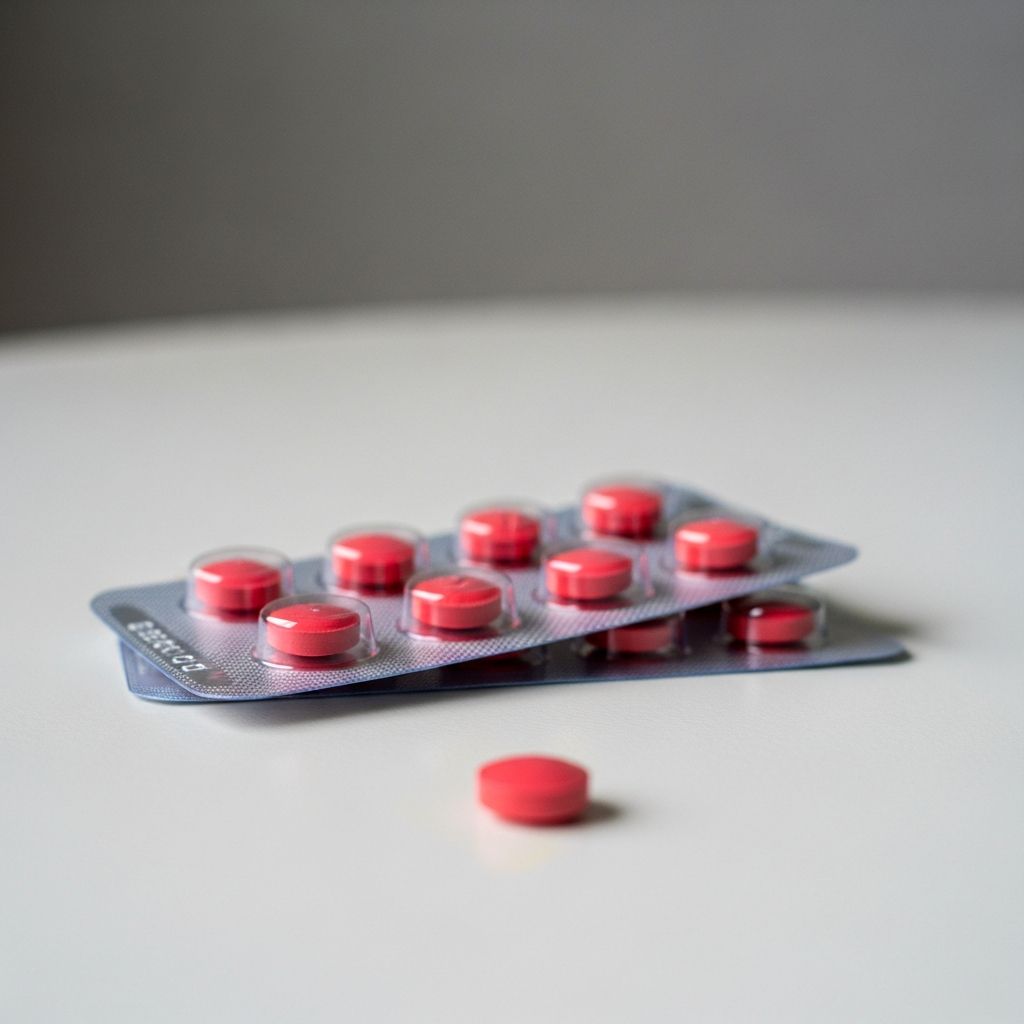
Ticagrelor, sold under the brand name
Brilique
, is an oral antiplatelet medication designed to prevent atherothrombotic events such as heart attacks and strokes. It works by inhibiting platelet aggregation, reducing the risk of blood clots forming in patients with acute coronary syndrome (ACS) or a history of myocardial infarction when used alongside aspirin.About Ticagrelor Tablets
**Ticagrelor** belongs to a class of drugs known as P2Y12 inhibitors. Unlike clopidogrel, ticagrelor reversibly binds to the P2Y12 receptor on platelets, blocking adenosine diphosphate (ADP) from activating them. This prevents platelets from sticking together and forming clots that can lead to serious cardiovascular events.
Brilique is available as 90 mg film-coated tablets for standard use and 60 mg for long-term therapy in certain patients. It is indicated for adult patients with ACS or those who have experienced a myocardial infarction (MI) more than one year prior, always in combination with aspirin.
The medication’s efficacy was demonstrated in key clinical trials like PLATO and PEGASUS. In the PLATO study, ticagrelor reduced the incidence of cardiovascular death, MI, or stroke compared to clopidogrel in ACS patients.
Key Uses of Ticagrelor (Brilique)
- Acute Coronary Syndrome (ACS): Prevention of atherothrombotic events in adults, including unstable angina, non-ST-elevation MI, or ST-elevation MI.
- Post-Myocardial Infarction: In patients with prior MI (>1 year ago) at high risk for further events, using the 60 mg dose twice daily with aspirin.
- Always combined with low-dose aspirin (75-100 mg daily) to maximize benefits.
Before Taking Ticagrelor
Allergies and Contraindications
Do not take Brilique if you are allergic to ticagrelor or any ingredients, have active pathological bleeding (e.g., peptic ulcer), or a history of intracranial hemorrhage. It is contraindicated in patients on strong CYP3A4 inhibitors like ketoconazole or in those with severe hepatic impairment.
Medical History Considerations
- Inform your doctor if you have a history of bleeding disorders, stroke, recent trauma, or surgery.
- Use caution in patients with lung conditions like asthma or COPD, as dyspnoea may occur more frequently.
- Patients with prior ischaemic stroke may be treated up to 12 months post-ACS, but assess risks carefully.
Pregnancy and Breastfeeding
Ticagrelor is not recommended during pregnancy unless benefits outweigh risks. Limited data exist; animal studies show no direct harm but potential fetal bleeding risks. Avoid breastfeeding while taking it, as it passes into milk.
Other Medications
Ticagrelor interacts with several drugs:
| Drug Class | Interaction | Recommendation |
|---|---|---|
| Strong CYP3A4 inhibitors (e.g., ketoconazole) | Increases ticagrelor exposure | Contraindicated |
| Moderate CYP3A4 inhibitors (e.g., diltiazem) | 69% increase in Cmax | Use with caution; monitor |
| Opioids (e.g., morphine) | Reduced absorption (35% lower exposure) | Avoid if possible; consider alternatives |
| Anticoagulants | Increased bleeding risk | Assess benefit-risk |
| Digoxin | 75% increase in Cmax | Monitor levels |
How to Take Ticagrelor (Dosage)
Treatment begins with a
loading dose
of 180 mg (two 90 mg tablets), followed by 90 mg twice daily for the first year in ACS patients. For long-term use post-MI, switch to 60 mg twice daily.Related Stories



- Take with or without food, preferably at the same times daily.
- Swallow whole; do not crush or chew.
- Continue aspirin 75-100 mg daily indefinitely.
- Miss a dose? Take as soon as remembered unless near next dose; do not double up.
Special Populations
- Renal Impairment: No dose adjustment needed.
- Hepatic Impairment: Avoid in severe cases; caution in moderate.
- Elderly: No adjustment, but monitor bleeding risk.
Surgery and Procedures
Inform doctors/dentists before surgery. Stop ticagrelor 5 days prior if possible (7 days ideal for high-bleeding risk procedures). Restart post-procedure when safe.
Side Effects of Ticagrelor
The most common side effect is
bleeding
, ranging from minor (bruising, nosebleeds) to major (gastrointestinal, fatal).Common Side Effects (>1/10)
- Dyspnoea (shortness of breath), usually mild and transient.
- Bleeding (e.g., epistaxis, ecchymoses).
Serious Side Effects
| Side Effect | Frequency | Details |
|---|---|---|
| Major Bleeding (TIMI/PLATO) | Common | Higher than clopidogrel in some definitions; similar fatal rates |
| Thrombotic Thrombocytopenic Purpura (TTP) | Very rare | Thrombocytopenia, hemolytic anemia; requires urgent plasma exchange |
| Ventricular Pauses | Uncommon | More in heart failure patients; usually asymptomatic |
| Intracranial Haemorrhage | Rare | Slight increase vs. placebo in PEGASUS |
In PLATO, non-CABG major bleeds were higher with ticagrelor (3.8%) vs. clopidogrel (3.0%). Discontinuation due to bleeding was 6.2% in PEGASUS 60 mg arm vs. 1.5% placebo.
Dyspnoea occurs in up to 14% of patients, resolving without stopping treatment in most cases. Higher risk in asthma/COPD patients.
Understanding Bleeding Risks
Bleeding risk is elevated across subgroups (age, weight, etc.), but no specific high-risk group identified beyond general factors. In PEGASUS, TIMI major bleeds were more frequent with ticagrelor 60 mg BID than aspirin alone, but fatal bleeds unchanged.
- Monitor for signs: unusual bruising, blood in urine/stool, prolonged bleeding.
- Seek immediate help for severe symptoms.
Interactions and Precautions
Besides listed interactions, avoid NSAIDs, SSRIs, or fibrinolytics without advice, as they amplify bleeding. Ticagrelor affects platelet function tests; inform labs.
Long-Term Use and Monitoring
Regular check-ups monitor for bleeding, dyspnoea, or uric acid elevation (ticagrelor mildly increases levels). ECG monitoring in heart failure patients for pauses.
Frequently Asked Questions (FAQs)
What is Brilique used for?
Brilique (ticagrelor) prevents blood clots, heart attacks, and strokes in ACS patients or post-MI, used with aspirin.
How do you take ticagrelor?
Start with 180 mg loading dose, then 90 mg twice daily; 60 mg for extended therapy. Take consistently.
Does ticagrelor cause bleeding?
Yes, bleeding is the main side effect; report unusual bleeding immediately.
Can I stop ticagrelor suddenly?
No, consult your doctor; abrupt stop increases clot risk.
Is ticagrelor safe for elderly patients?
Yes, but monitor closely for bleeding due to higher risk.
When to Seek Medical Advice
- Severe bleeding, chest pain, worsening breathlessness.
- Signs of TTP: fever, neurological changes, kidney issues.
- Before any surgery or new medication.
References
- Brilique | European Medicines Agency (EMA) — EMA. 2023. https://www.ema.europa.eu/en/medicines/human/EPAR/brilique
- BRILIQUE 90 mg cp – Claude Bernard — Maiia. 2024. https://www.maiia.com/medicaments-claude-bernard/brilique-11104/brilique-90-mg-comprime-pellicule-boite-de-6-plaquettes-de-10-200733
- Brilique, INN-ticagrelor (EPAR Product Information) — EMA. 2024-01-15. https://www.ema.europa.eu/fr/documents/product-information/brilique-epar-product-information_fr.pdf
- Brilique 90 mg, film-coated tablets (HAS Evaluation) — HAS. 2012-12. https://www.has-sante.fr/upload/docs/application/pdf/2012-12/brilique_ct_10968.pdf
- Ticagrelor tablets – Brilique — Patient.info. 2024. https://fr.patient.info/medicine/ticagrelor-tablets-brilique
- BRILIQUE (ticagrelor) – Haute Autorité de Santé — HAS. 2023. https://www.has-sante.fr/jcms/p_3098274/en/brilique-ticagrelor
Similar Articles








Read full bio of medha deb