Tick Bite: Complete Guide To Symptoms, Risks, And Prevention
Comprehensive guide on tick bites: symptoms, diseases, safe removal, prevention and treatment strategies.
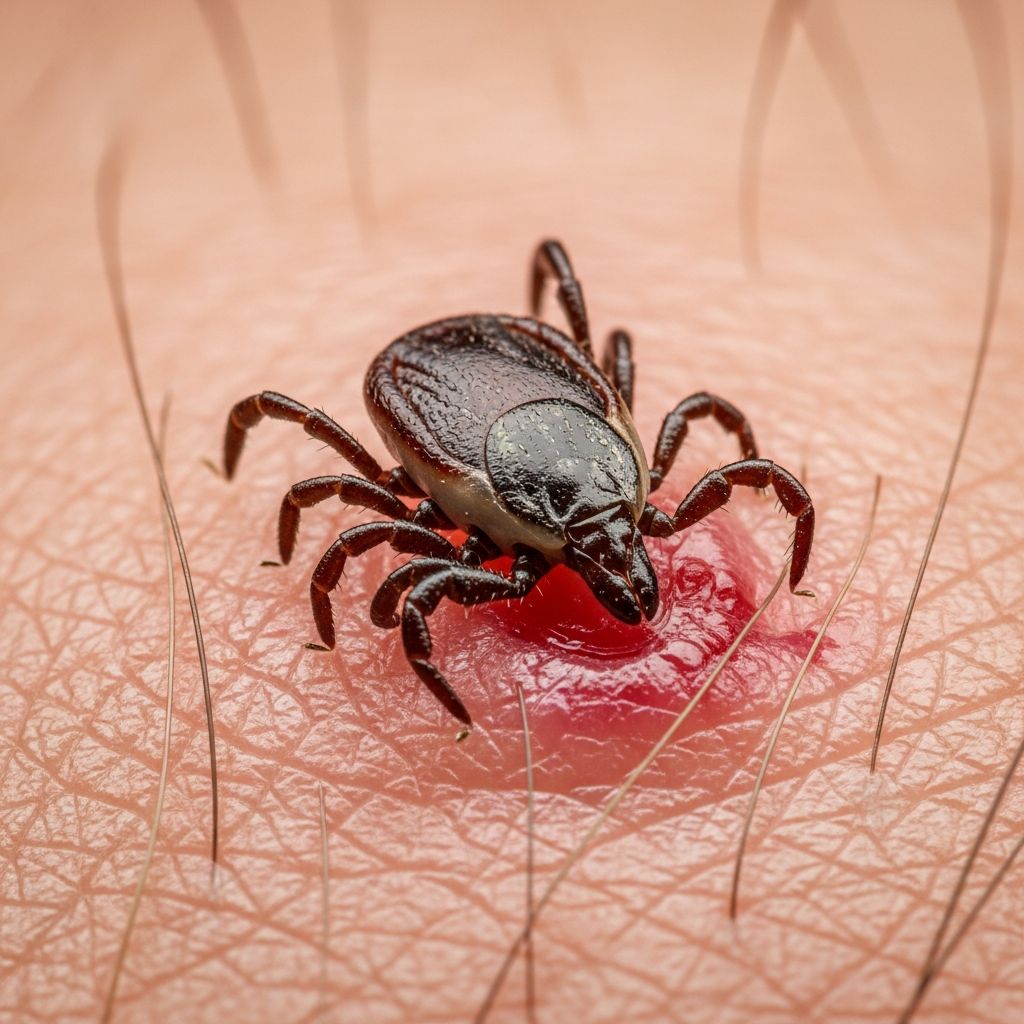
What are ticks and how do they bite? Ticks are small arachnids related to spiders and mites that feed on the blood of mammals, birds, and sometimes reptiles. They are external parasites found worldwide, thriving in wooded, grassy, or brushy areas. Unlike insects, ticks have eight legs and a unique feeding method involving a specialized mouthpart called a hypostome, which they use to anchor into the skin.
Tick bites are typically painless because ticks inject an anesthetic-like substance along with their saliva. The bite often goes unnoticed until the tick engorges with blood, which can take from 24 hours to several days depending on the species and life stage. Common attachment sites include the scalp, armpits, groin, behind the knees, and waistband. Once attached, the tick secretes cement-like saliva to secure itself firmly, potentially transmitting pathogens if infected.
Who gets tick bites?
Anyone venturing into tick habitats is at risk, but certain groups face higher exposure:
- Hikers, campers, and outdoor workers in endemic areas like forests, grasslands, or rural regions.
- Children who play in tall grass or leaf litter.
- Pet owners, as ticks often hitchhike on dogs and cats.
- Individuals in high-risk regions, such as the northeastern U.S. (Lyme disease hotspot), or areas with Rocky Mountain spotted fever in the U.S. Southeast and South Central states.
Tick activity peaks in warmer months (spring to fall), but some species bite year-round in mild climates. Globally, ticks transmit diseases like Lyme borreliosis in Europe, tick-borne encephalitis in Asia, and African tick bite fever.
Signs and symptoms of a tick bite
Isolated tick bites usually present as a small, red, itchy bump resembling a mosquito bite, appearing 1-3 days after attachment. The site may develop mild swelling or a central punctum where the tick was embedded. Most bites resolve without issue, but symptoms vary:
- Local reactions: Erythematous papule, pruritus (itching), or urticarial wheals.
- Delayed rash: Expanding erythema in Lyme disease (erythema migrans).
- Severe signs: Fever, headache, fatigue if tick-borne illness develops.
Tick bites can mimic other arthropod bites but are distinguished by potential systemic involvement. Painless attachment allows ticks to feed undetected, increasing disease transmission risk after 36-48 hours.
Tick-borne diseases
Over 20 diseases are transmitted by ticks worldwide. Key ones include:
| Disease | Causative Agent | Key Symptoms | Incubation Period |
|---|---|---|---|
| Lyme disease | Borrelia burgdorferi | Erythema migrans rash (bull’s-eye), fever, fatigue, joint pain | 3-33 days |
| Rocky Mountain spotted fever (RMSF) | Rickettsia rickettsii | Fever, headache, petechial rash starting on wrists/ankles | 2-14 days |
| Tick-borne relapsing fever (TBRF) | Borrelia spp. | Recurring fevers, chills, myalgias, headache | 2-10 days |
| Babesiosis | Babesia microti | Flu-like: fever, chills, fatigue; hemolytic anemia | 1-4 weeks |
| Alpha-gal syndrome | Lone star tick saliva | Delayed anaphylaxis to red meat (3-8 hours post-ingestion) | After multiple bites |
Related Stories



These diseases often start with nonspecific flu-like symptoms, progressing if untreated. Early rash recognition is crucial for diagnosis.
Clinical features and images
Tick bites evolve over time:
- Day 1: Tiny red macule or punctum; tick may still be attached.
- Day 3-7: Itchy papule or vesicle; eschar (black scab) in some species like tularemia.
- Weeks later: Characteristic rashes, e.g., erythema migrans (70-80% of Lyme cases): central clearing, >5cm diameter, expanding.
RMSF rash: Maculopapular, then petechial, involving palms/soles. TBRF features episodic crises with profuse sweating. Alpha-gal presents as hives or GI upset hours after red meat.
Images typically show engorged ticks (black-legged, dog tick), bull’s-eye rashes, and purpuric lesions. Dermoscopy reveals mouthparts remnants.
Diagnosis
Diagnosis relies on history (recent outdoor exposure, tick attachment) and exam:
- Clinical: Erythema migrans or RMSF rash often diagnostic without tests.
- Labs: Serology for Lyme (ELISA + Western blot), PCR for Babesia, blood smears for relapsing fever.
- Tick testing: Submit ticks for pathogen analysis in some regions.
Differential includes cellulitis, drug eruptions, or viral exanthems. Biopsy rarely needed but shows epidermal necrosis or spirochetes.
Treatment of tick bites
For uncomplicated bites:
- Clean with soap/water, apply ice, topical corticosteroid for itch.
- Antihistamines (loratadine) for urticaria.
- Monitor 30 days for rashes/illness.
Specific diseases:
- Lyme: Doxycycline 100mg BID x10-21 days (adults); amoxicillin for kids.
- RMSF: Doxycycline urgently.
- TBRF: Doxycycline or ceftriaxone.
- Babesiosis: Atovaquone + azithromycin.
- Alpha-gal: Avoid red meat; antihistamines/epinephrine for reactions.
Prophylactic antibiotics (doxycycline single dose) if high-risk tick (Ixodes, >36hr attachment) in endemic areas.
Tick removal
Safe removal prevents regurgitation of pathogens:
- Use fine-tipped tweezers; grasp tick close to skin.
- Pull upward steadily; avoid twisting/squeezing.
- Disinfect site/bite tweezers with alcohol.
- Save tick in alcohol for ID.
Avoid: Petroleum jelly, nail polish, matches—these increase infection risk.
Prevention of tick bites
Key strategies:
- Clothing: Long sleeves/pants, light colors; tuck pants into socks.
- Repellents: DEET (20-30%) on skin; permethrin on clothes.
- Habitat avoidance: Stay on trails, avoid leaf litter.
- Checks: Daily full-body inspections post-outdoors; shower within 2 hours.
- Pets: Tick preventives (collars, topicals).
Vaccines exist for some diseases (e.g., tick-borne encephalitis in Europe).
Complications
Untreated bites can lead to secondary bacterial infection, abscess, or chronic diseases: Lyme arthritis, neuropathy; RMSF mortality (5-10%); relapsing fevers; babesiosis in immunocompromised. Alpha-gal allergy may persist years without further bites.
Frequently Asked Questions
Do tick bites itch?
Yes, most cause mild itching like a mosquito bite, treatable with hydrocortisone.
How long does a tick need to be attached to transmit disease?
Typically 36-48 hours for Lyme; some like RMSF faster.
What does a tick bite look like?
Red papule or bull’s-eye rash; often painless.
Should I pop a tick off?
No, use tweezers to avoid disease transmission.
Can tick bites cause meat allergy?
Yes, alpha-gal syndrome from lone star ticks delays reaction to red meat.
References
- Insect Bites – StatPearls — NCBI Bookshelf – NIH. 2023-08-08. https://www.ncbi.nlm.nih.gov/books/NBK537235/
- Tick bite-induced red meat allergy — DermNet NZ. 2023. https://dermnetnz.org/topics/tick-bite-induced-red-meat-allergy
- Rocky Mountain spotted fever — DermNet NZ. 2023. https://dermnetnz.org/topics/rocky-mountain-spotted-fever
- Lyme disease — DermNet NZ. 2023. https://dermnetnz.org/topics/lyme-disease
- Tick-borne relapsing fever — DermNet NZ. 2023. https://dermnetnz.org/topics/tick-borne-relapsing-fever
- Babesiosis — DermNet NZ. 2023. https://dermnetnz.org/topics/babesiosis
Similar Articles








Read full bio of Sneha Tete