Tinea Corporis Images: 10 Ringworm Photos And Clinical Details
Comprehensive visual guide to tinea corporis (ringworm) with clinical images, symptoms, causes, and treatment options for accurate diagnosis.
Author: Dr. Amanda Oakley, Dermatologist, Hamilton, New Zealand.
DermNet NZ provides an image library and descriptions of tinea corporis (ringworm of the body), a superficial fungal skin infection caused by dermatophytes. These organisms are keratinophilic — they live on keratin, which is found in skin, hair, and nails. Tinea corporis typically presents as annular lesions with scaling, erythema, and central clearing on glabrous (non-hairy) skin.
What is tinea corporis?
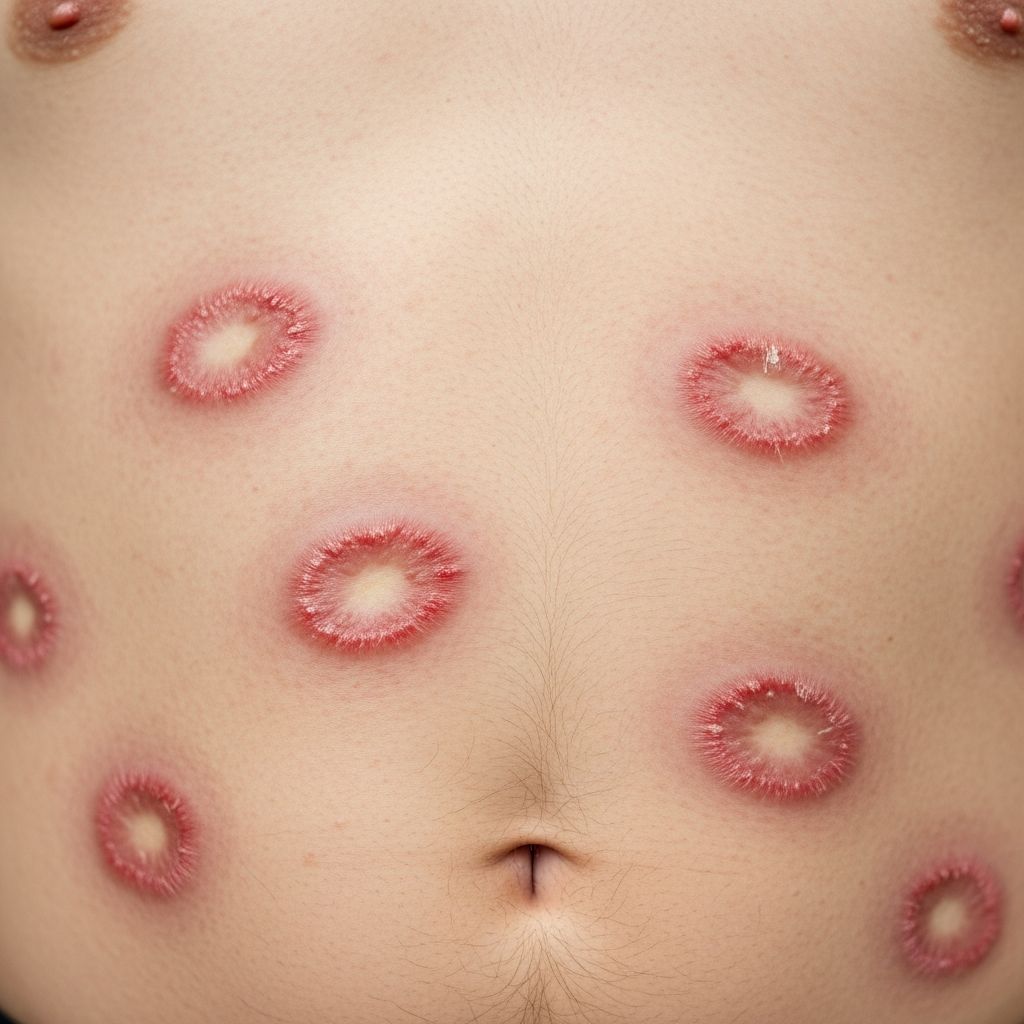
Tinea corporis is a common dermatophytosis affecting the body. It is characterised by scaly papular or annular lesions that may coalesce to form plaques. The lesions often have a raised serpiginous border that expands centrifugally with central healing, giving the classic “ringworm” appearance. The rash is typically itchy but not usually painful.
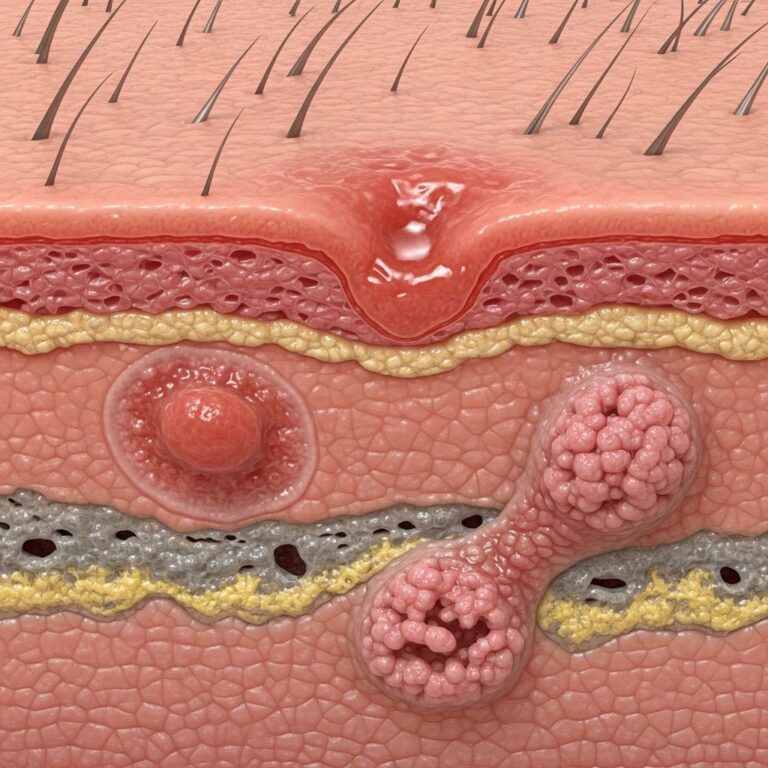
While most cases are superficial, deeper infections can occur, such as Majocchi granuloma, where fungi invade hair follicles. Tinea corporis can affect people of all ages, but it is more common in warm, humid climates and among those with risk factors like immunosuppression or close animal contact.
Who gets tinea corporis?
Tinea corporis affects approximately 20–25% of the global population at some point. Risk factors include:
- Close contact with infected humans or animals (zoophilic species like Microsporum canis from cats/dogs).
- Warm, moist environments promoting fungal growth.
- Immunosuppression (e.g., diabetes, HIV, corticosteroid use).
- Overcrowded living conditions or shared items like towels.
- Existing tinea pedis or onychomycosis acting as reservoirs.
Children and athletes are particularly susceptible due to frequent skin trauma and sweating.
What causes tinea corporis?
Tinea corporis is caused by dermatophyte fungi from three genera: Trichophyton, Microsporum, and Epidermophyton. The most common pathogen worldwide is Trichophyton rubrum (anthropophilic), followed by T. mentagrophytes and zoophilic species.
| Fungus | Type | Source | Clinical Notes |
|---|---|---|---|
| T. rubrum | Anthropophilic | Human-to-human | Most common; chronic, less inflammatory. |
| T. mentagrophytes | Zoophilic/Anthropophilic | Animals/humans | Acute, inflammatory lesions. |
| M. canis | Zoophilic | Cats/dogs | Highly contagious; ring-like lesions. |
| E. floccosum | Anthropophilic | Human | Often in groin/body folds. |
What are the clinical features of tinea corporis?
Classic presentation: Annular, erythematous plaques with raised, scaly borders and central clearing. Lesions are pruritic and may be single or multiple. Size varies from 1–5 cm, expanding over days to weeks.
Atypical forms include:
- Diffuse scaling without rings, mimicking eczema.
- Inflammatory vesiculo-pustular lesions from zoophilic fungi.
- Majocchi granuloma: Follicular nodules with scarring.
- Tinea imbricata: Concentric rings (rare, tropical).
Images of Classic Tinea Corporis
- Image 1: Single annular lesion on the arm with sharp border, mild scaling, and central hypopigmentation. Typical of T. rubrum.
- Image 2: Multiple rings on the trunk, coalescing; note the advancing red border.
- Image 3: Large plaque on the thigh with vesiculation, suggesting inflammatory type.
Atypical Presentations
- Image 4: Discoid eczematous patch on the back without central clearing; confirmed by KOH prep showing hyphae.
- Image 5: Majocchi granuloma on the leg: Boggy nodules with pustules around hairs.
- Image 6: Extensive eruption in an immunocompromised patient, covering torso and limbs.
Related Stories



Paediatric Cases
- Image 7: Ringworm on a child’s face from pet contact; annular with fine scale.
- Image 8: Multiple small rings on the neck.
Deep Fungal Forms
- Image 9: Tinea imbricata showing overlapping scales like roof tiles.
- Image 10: Kerion-like lesion on the body (rare).
Diagnosis of tinea corporis
Diagnosis is primarily clinical based on characteristic morphology. Confirm with:
- KOH microscopy: Skin scrapings from active border show septate hyphae (10% KOH prep).
- Fungal culture: Sabouraud agar identifies species (2–3 weeks).
- PCR: For resistant cases or atypical presentations.
- Wood lamp: Fluorescent with Microsporum species.
- Biopsy: Rarely needed; shows periodic acid-Schiff (PAS) positive hyphae.
Differential diagnosis: Nummular eczema, psoriasis, granuloma annulare, pityriasis rosea, contact dermatitis, Lyme disease.
Treatment of tinea corporis
Localized disease responds to topical antifungals for 2–4 weeks. Extend treatment 1–2 weeks post-clearance.
Topical Antifungals (First-line for limited lesions)
| Agent | Concentration | Regimen | Duration |
|---|---|---|---|
| Terbinafine | 1% cream/gel | Once/twice daily | 1–2 weeks |
| Clotrimazole | 1% cream | Twice daily | 2–4 weeks |
| Miconazole | 2% cream | Twice daily | 2–4 weeks |
| Ketoconazole | 2% cream | Once daily | 2–4 weeks |
Oral Antifungals (Extensive, hair-bearing, or refractory cases)
| Agent | Dose | Duration | Notes |
|---|---|---|---|
| Terbinafine | 250 mg daily | 2 weeks | |
| Itraconazole | 200 mg daily | 1–2 weeks | |
| Fluconazole | 150–200 mg weekly | 2–4 weeks | |
| Griseofulvin | 500–1000 mg daily | 4 weeks |
For terbinafine-resistant T. rubrum, consider fosravuconazole or susceptibility testing. Address predisposing factors: Keep skin dry, treat animal sources, improve hygiene.
What is the outcome for tinea corporis?
With compliance, cure rates exceed 90%. Recurrence occurs in 20–50% if sources persist (e.g., untreated tinea pedis). Chronic cases in immunosuppressed patients may require prophylaxis. Rarely, scarring from deep forms.
How do you prevent tinea corporis?
- Avoid sharing personal items (towels, clothing).
- Treat infected pets promptly (vet confirmation).
- Wear loose, breathable clothing in humid areas.
- Dry skin thoroughly after bathing/sweating.
- Use antifungal powders in shoes/socks for tinea pedis prevention.
Related topics
- Tinea capitis
- Tinea cruris
- Tinea pedis
- Onychomycosis
- Dermatophyte infections
Frequently Asked Questions (FAQs)
Q: Is tinea corporis contagious?
Yes, highly contagious via direct contact, fomites, or autoinoculation. Incubation 4–14 days.
Q: Can ringworm resolve without treatment?
Sometimes in healthy individuals, but treatment speeds resolution and prevents spread.
Q: When to see a doctor for ringworm?
If no improvement after 2 weeks of OTC topical, extensive lesions, facial involvement, or immunosuppression.
Q: Are there home remedies for tinea corporis?
Not recommended as primary; tea tree oil has weak evidence. Use antifungals.
Q: Does ringworm affect nails or scalp?
Separate entities (onychomycosis, tinea capitis) but can coexist.
References
- Tinea Corporis – StatPearls — NCBI Bookshelf / StatPearls Publishing. 2023-08-08. https://www.ncbi.nlm.nih.gov/books/NBK544360/
- Tinea corporis (Body Ringworm) — DermNet NZ. 2023. https://dermnetnz.org/topics/tinea-corporis
- Diagnosis and Management of Tinea Infections — American Academy of Family Physicians (AAFP). 2014-11-15. https://www.aafp.org/pubs/afp/issues/2014/1115/p702.html
- Tinea Corporis (Body Ringworm) — Merck Manual Professional Edition. 2023. https://www.merckmanuals.com/professional/dermatologic-disorders/fungal-skin-infections/tinea-corporis-body-ringworm
- Ringworm (body) – Symptoms & causes — Mayo Clinic. 2023. https://www.mayoclinic.org/diseases-conditions/ringworm-body/symptoms-causes/syc-20353780
- Ringworm (Tinea Corporis) — Cleveland Clinic. 2023. https://my.clevelandclinic.org/health/diseases/4560-ringworm
Similar Articles








Read full bio of Sneha Tete