Tinea Corporis: Expert Guide To Causes, Diagnosis, And Treatment
Comprehensive guide to body ringworm: causes, symptoms, diagnosis, treatment, and prevention strategies for effective management.
What is tinea corporis?
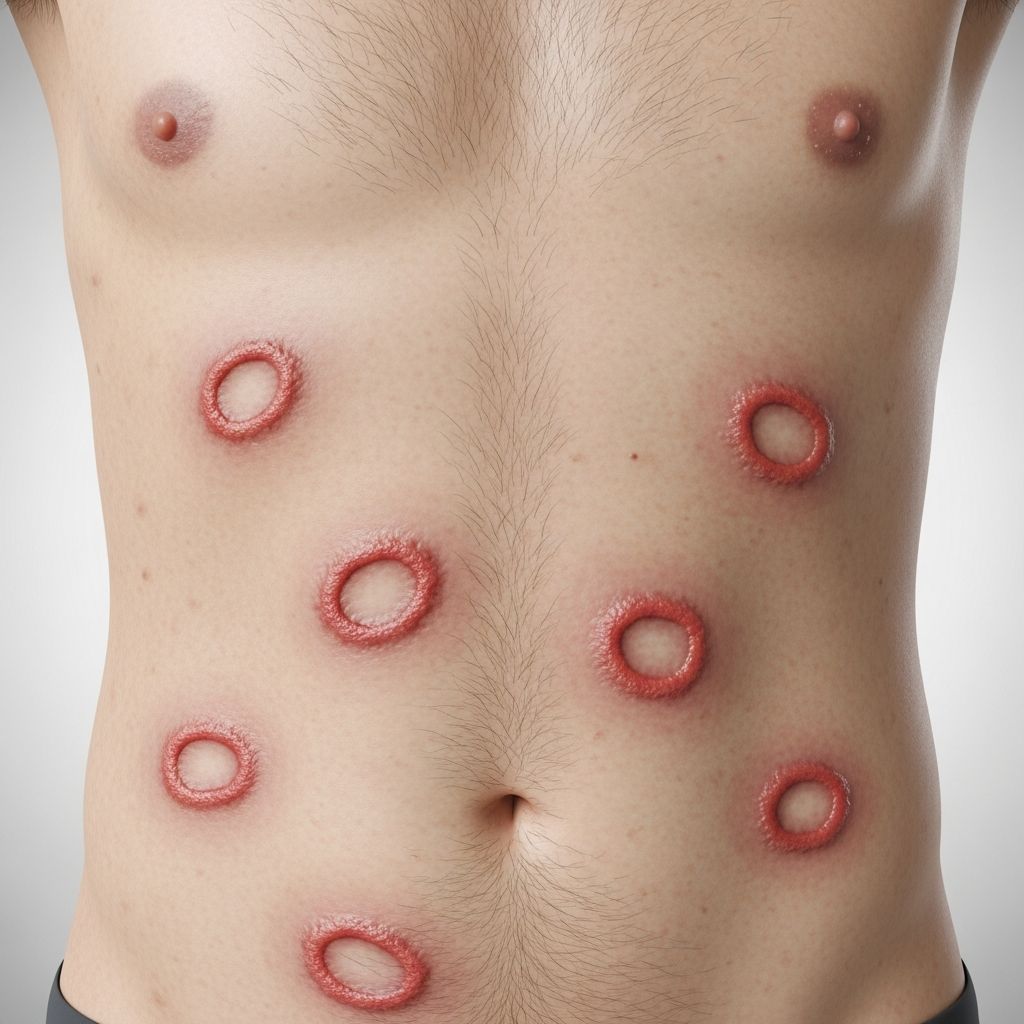
Tinea corporis, commonly known as body ringworm, is a superficial fungal infection of the skin caused by dermatophyte fungi. It primarily affects the glabrous (non-hairy) skin of the body, presenting as annular (ring-shaped) plaques with central clearing and an active, erythematous border. The term ‘ringworm’ is a misnomer as it is not caused by a worm but by fungi from genera such as Trichophyton, Microsporum, and Epidermophyton. This infection is highly contagious and thrives in warm, moist environments, often spreading through direct skin-to-skin contact or shared contaminated items.
The condition is prevalent worldwide, including in New Zealand, where Trichophyton rubrum is the most common causative agent. It can affect individuals of all ages but is more frequent in children and those in tropical climates or with compromised immunity. Early recognition and treatment are crucial to prevent spread and complications like secondary bacterial infections.
Who gets tinea corporis?
Tinea corporis affects people across all demographics, but certain groups are at higher risk:
- Individuals in close contact with infected people or animals, such as household members or pet owners.
- Those in warm, humid climates or engaging in sports involving skin contact (e.g., wrestling).
- Immunocompromised patients, including those with HIV, diabetes, or on corticosteroid therapy.
- People with excessive perspiration or poor hygiene.
- Children, due to frequent play and exposure.
Outbreaks can occur in communal settings like gyms, schools, or daycare centers. Risk increases with untreated tinea pedis (athlete’s foot) or onychomycosis (nail fungus), serving as reservoirs for spread.
Causes
Tinea corporis is caused by dermatophytes, keratinophilic fungi that invade the stratum corneum. Key causative organisms include:
- Anthropophilic species: Trichophyton rubrum (most common globally), T. mentagrophytes, T. verrucosum.
- Zoophilic species: Microsporum canis (from cats/dogs), T. verrucosum (cattle).
- Geophilic species: Microsporum gypseum (soil).
Transmission occurs via direct contact with infected skin, animals, fomites (towels, clothing), or autoinoculation from other body sites. The fungus grows in moist areas, with incubation periods of 4–14 days.
Clinical features
The classic presentation is one or more expanding, annular plaques with:
- Central clearing, leaving hypopigmented or hyperpigmented centers.
- Active, raised, scaly borders that may be erythematous, vesicular, or pustular.
- Pruritus (itching), especially at the periphery.
Lesions range from 1–5 cm, often on the trunk, arms, or legs. Variants include:
- Inflammatory type: Vesicles, pustules, boggy plaques (zoophilic infections).
- Tinea imbricata: Concentric rings, common in tropics.
- Majocchi granuloma: Follicular involvement with nodules (hair-bearing areas).
- Extensive forms: Moccasin-like or confluent in immunocompromised patients.
Differential diagnoses: psoriasis, eczema, granuloma annulare, pityriasis rosea, erythema migrans.
| Variant | Features | Common Causes |
|---|---|---|
| Classic ringworm | Annular scaly plaques with central clearing | T. rubrum |
| Inflammatory | Vesicles, pustules, erythema | M. canis, zoophilic spp. |
| Tinea imbricata | Overlapping concentric scales | T. concentricum |
| Majocchi granuloma | Nodular, folliculitis-like | Any, with trauma/hair involvement |
Diagnosis
Diagnosis is primarily clinical based on characteristic morphology. Confirmation involves:
Related Stories



- KOH microscopy: Skin scrapings from active border show hyaline, septate hyphae (gold standard, quick).
- Fungal culture: Sabouraud agar identifies species (2–3 weeks).
- PCR: For resistant or atypical cases.
- Wood lamp: fluoresces green for Microsporum spp.
- Biopsy: Rarely, shows periodic acid-Schiff (PAS) positive hyphae.
In atypical cases, rule out mimics with histopathology.
Treatment
Treatment depends on extent and location. Localized cases respond to topicals; extensive or hair-bearing sites require systemic therapy.
Topical antifungals
Apply once/twice daily for 2–4 weeks, extending 2 cm beyond lesion:
- Azoles: Clotrimazole 1%, miconazole 2%, ketoconazole 2%.
- Allylamines: Terbinafine 1%, naftifine 1–2%.
- Others: Ciclopirox.
Avoid nystatin (ineffective against dermatophytes).
Oral antifungals
For widespread, resistant, or follicular involvement:
- Terbinafine: 250 mg daily for 2 weeks (first-line).
- Itraconazole: 200 mg daily for 1 week.
- Fluconazole: 150–200 mg weekly for 2–4 weeks.
- Griseofulvin: 500–1000 mg daily for 2–4 weeks (alternative).
For terbinafine-resistant T. rubrum, consider fosravuconazole. Monitor LFTs with systemic use.
Recurrence and complications
Recurrence occurs if treatment is premature, sources (pets, feet) untreated, or risk factors persist. Complications: secondary impetigo, kerion-like reactions, chronic dissemination in immunocompromised. Prophylaxis: hygiene, drying skin, treating reservoirs.
Prevention
- Avoid sharing towels/clothing.
- Wash skin after contact with animals.
- Keep skin dry, wear breathable fabrics.
- Treat tinea pedis/onychomycosis promptly.
- Sporicidal shampoos for household contacts if needed.
Frequently Asked Questions
Q: Is tinea corporis contagious?
A: Yes, highly contagious via direct contact, fomites, or autoinoculation until treated.
Q: How long does treatment take?
A: Topicals 2–4 weeks; orals 1–4 weeks. Continue 1–2 weeks post-clearance.
Q: Can ringworm resolve without treatment?
A: Rarely; usually persists/spreads without intervention.
Q: Is it safe for children?
A: Yes, with age-appropriate topicals/orals; consult pediatrician.
Q: What if topicals fail?
A: Switch to oral therapy; culture for resistance.
This article provides an exhaustive overview of tinea corporis, ensuring comprehensive coverage for patients, caregivers, and clinicians. Early intervention yields high cure rates exceeding 90% with compliance.
References
- Tinea Corporis – StatPearls — NCBI Bookshelf/StatPearls Publishing. 2023-08-08. https://www.ncbi.nlm.nih.gov/books/NBK544360/
- Tinea Corporis (Body Ringworm) — DermNet NZ. 2023. https://dermnetnz.org/topics/tinea-corporis
- Diagnosis and Management of Tinea Infections — American Academy of Family Physicians (AAFP). 2014-11-15. https://www.aafp.org/pubs/afp/issues/2014/1115/p702.html
- Tinea — Healthdirect (Australian Government). 2023. https://www.healthdirect.gov.au/tinea
- Ringworm (body) – Symptoms & causes — Mayo Clinic. 2023-10-20. https://www.mayoclinic.org/diseases-conditions/ringworm-body/symptoms-causes/syc-20353780
Similar Articles








Read full bio of Sneha Tete