Tinea Faciei Comprehensive Guide: Causes, Symptoms, Treatment
Comprehensive guide to facial ringworm: causes, symptoms, diagnosis, treatment, and prevention strategies for effective management.
What is tinea faciei?
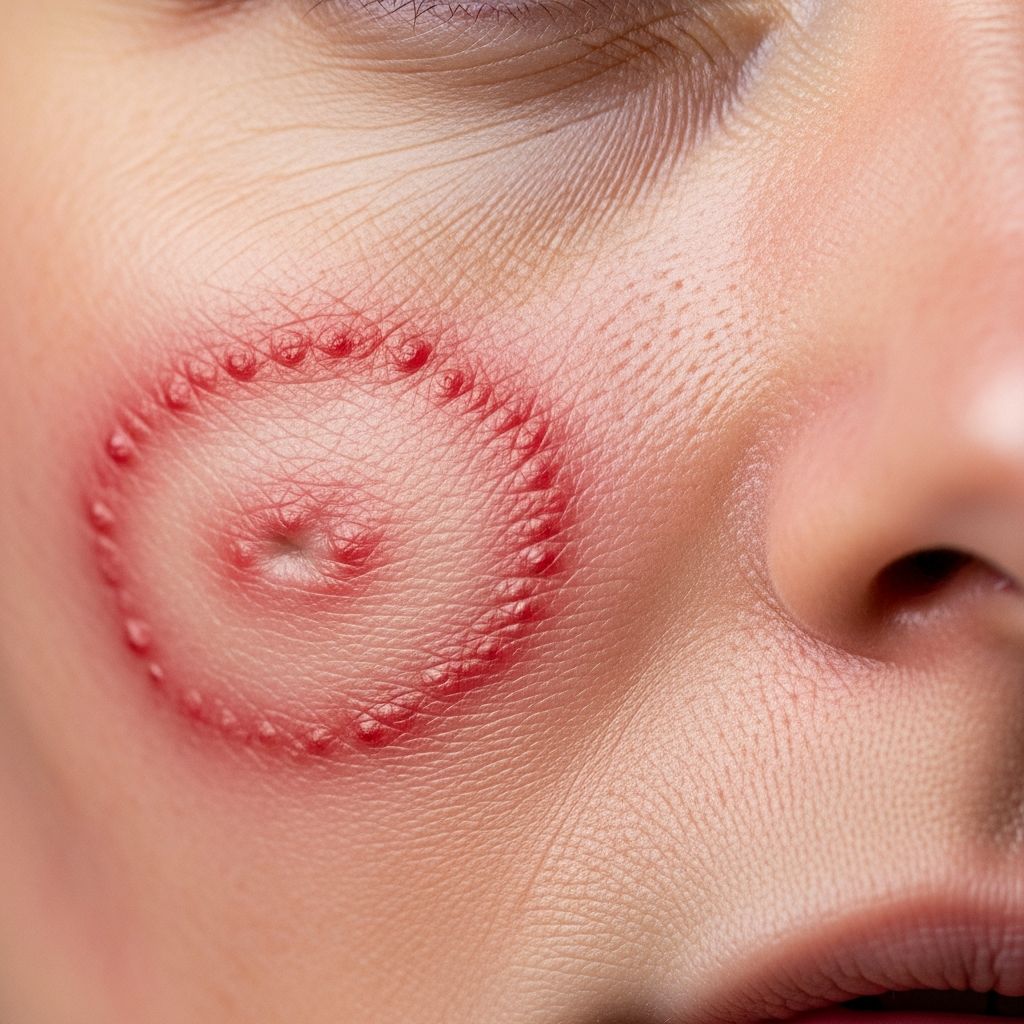
Tinea faciei is a superficial dermatophyte infection of the glabrous (non-hair-bearing) skin of the face. It is often called ringworm of the face or facial ringworm. The term ‘tinea’ refers to superficial fungal infections caused by dermatophytes, a group of keratinophilic fungi that infect skin, hair, and nails. Tinea faciei specifically affects the facial skin outside the bearded area in men, distinguishing it from tinea barbae, which involves the beard region.
This infection is less common than tinea corporis (body ringworm) but shares similar pathophysiology. Dermatophytes invade the stratum corneum, inducing an inflammatory response that leads to characteristic lesions. Without prompt treatment, it can spread and mimic other dermatoses, complicating diagnosis.
Who gets tinea faciei?
Tinea faciei affects individuals of all ages, but children and adults in close contact with infected animals or humans are at higher risk. Common risk factors include:
- Direct contact with infected pets, particularly cats and dogs carrying Microsporum canis.
- Immunosuppression from conditions like diabetes, HIV, or corticosteroid use.
- Warm, humid climates promoting fungal growth.
- Autoinoculation from untreated tinea pedis (athlete’s foot) or onychomycosis (nail fungus), often caused by Trichophyton rubrum.
- Occupations involving animals, such as veterinarians or farmers.
Zoophilic fungi from animals tend to cause more inflammatory reactions compared to anthropophilic (human-derived) strains.
What causes tinea faciei?
Tinea faciei results from dermatophyte fungi, primarily:
- Anthropophilic: Trichophyton rubrum (most common), Trichophyton mentagrophytes – often spreads from patient’s own feet or nails.
- Zoophilic: Microsporum canis (from cats/dogs), Trichophyton verrucosum (cattle).
- Geophilic: Rare, from soil.
Transmission occurs via direct skin-to-skin contact, fomites (contaminated items like towels), or autoinoculation. The fungi thrive in moist environments and require keratin for growth.
What are the clinical features of tinea faciei?
Classic presentation includes annular, erythematous plaques with raised, scaly borders and central clearing, resembling ‘ringworm.’ Lesions are often single or few, asymmetrical, and photosensitive, worsening with sun exposure. Variants include:
- Inflammatory: Boggy, pustular plaques, especially with zoophilic fungi.
- Discoid: Large, disc-shaped lesions without annular pattern.
- Impetiginized: Secondary bacterial infection causing crusting.
- Pruritus (itching) is mild to moderate; pain is rare unless inflamed.
In the beard area (tinea barbae), hairs become loose with kerion-like swelling. Misuse of topical steroids can cause ‘tinea incognito’ – atypical, disseminated lesions.
Diagnosis of tinea faciei
Diagnosis is primarily clinical based on morphology, but confirmation is essential, especially for atypical cases:
- Microscopy: KOH preparation of skin scrapings reveals branching hyphae (10% KOH, 30 min).
- Culture: Sabouraud agar identifies species (2-3 weeks).
- PCR: Rapid molecular detection for resistant cases.
- Wood’s lamp: Green fluorescence with some Microsporum species.
- Biopsy: Rarely needed, shows periodic acid-Schiff (PAS) positive hyphae.
Differential diagnoses: psoriasis, eczema, seborrhoeic dermatitis, lupus erythematosus, granuloma annulare.
Treatment of tinea faciei
First-line treatment is topical antifungals for localized disease; systemic therapy for extensive, resistant, or perioral/periocular cases due to facial skin sensitivity.
Related Stories



Topical antifungals
Apply once/twice daily for 2-4 weeks, extending 2 cm beyond lesions:
| Agent | Concentration | Regimen |
|---|---|---|
| Terbinafine | 1% cream/gel | Once/twice daily |
| Clotrimazole | 1% cream | Twice daily |
| Miconazole | 2% cream | Twice daily |
| Ketoconazole | 2% cream | Once daily |
| Naftifine | 1-2% gel/cream | Once/twice daily |
Response expected in 4-6 weeks.
Oral antifungals
For treatment failure, widespread involvement, or immunosuppression:
- Terbinafine: 250 mg daily for 2 weeks (adults).
- Itraconazole: 200 mg daily for 1-2 weeks.
- Fluconazole: 150-200 mg weekly for 4 weeks.
- Griseofulvin: 500-1000 mg daily for 2-4 weeks.
Resistance, especially terbinafine-resistant T. rubrum, may require fosravuconazole or susceptibility testing.
Avoid topical steroids; discontinue if used. Treat underlying tinea pedis/unguium to prevent recurrence.
Prevention of tinea faciei
- Avoid contact with infected animals/humans.
- Maintain hygiene: dry skin, loose clothing.
- Treat coexisting fungal infections promptly.
- Use antifungal shampoos for pets if needed.
- Immunocompromised patients: prophylactic topicals.
Recurrence and complications
Recurrence arises from untreated reservoirs (feet/nails), immunosuppression, or poor adherence. Complications include secondary bacterial infection, scarring (rare), or tinea incognito from steroids. Chronic cases need prolonged therapy.
Frequently Asked Questions
Q: Is tinea faciei contagious?
A: Yes, highly contagious via direct contact or fomites. Avoid sharing towels; treat for 48 hours before contact sports.
Q: How long does treatment take?
A: Topical: 4-6 weeks; oral: 2-4 weeks. Continue until resolution.
Q: Can I use over-the-counter creams?
A: Yes, terbinafine or clotrimazole for mild cases; see doctor if no improvement in 2 weeks.
Q: Does it affect the beard area?
A: Tinea barbae affects bearded skin with hair involvement; similar treatment.
Q: What if I’m pregnant?
A: Consult physician; topical azoles preferred over oral agents.
References
- Tinea Corporis – StatPearls — NCBI Bookshelf. 2023-08-08. https://www.ncbi.nlm.nih.gov/books/NBK544360/
- Tinea Faciei (Ringworm on Face) — Skinsight. Accessed 2026. https://skinsight.com/skin-conditions/tinea-faciei-ringworm-of-face/
- Tinea faciei – DermNet — DermNet NZ. Accessed 2026. https://dermnetnz.org/topics/tinea-faciei
- Diagnosis and Management of Tinea Infections — AAFP. 2014-11-15. https://www.aafp.org/pubs/afp/issues/2014/1115/p702.html
- Tinea faciei clinical characteristics, causative agents, treatments — Wiley Online Library. 2024. https://onlinelibrary.wiley.com/doi/10.1111/myc.13754
Similar Articles








Read full bio of medha deb