Tinea Manuum: Causes, Symptoms, Diagnosis & Treatment
Comprehensive guide to fungal hand infection: symptoms, causes, diagnosis, treatment, and prevention strategies.
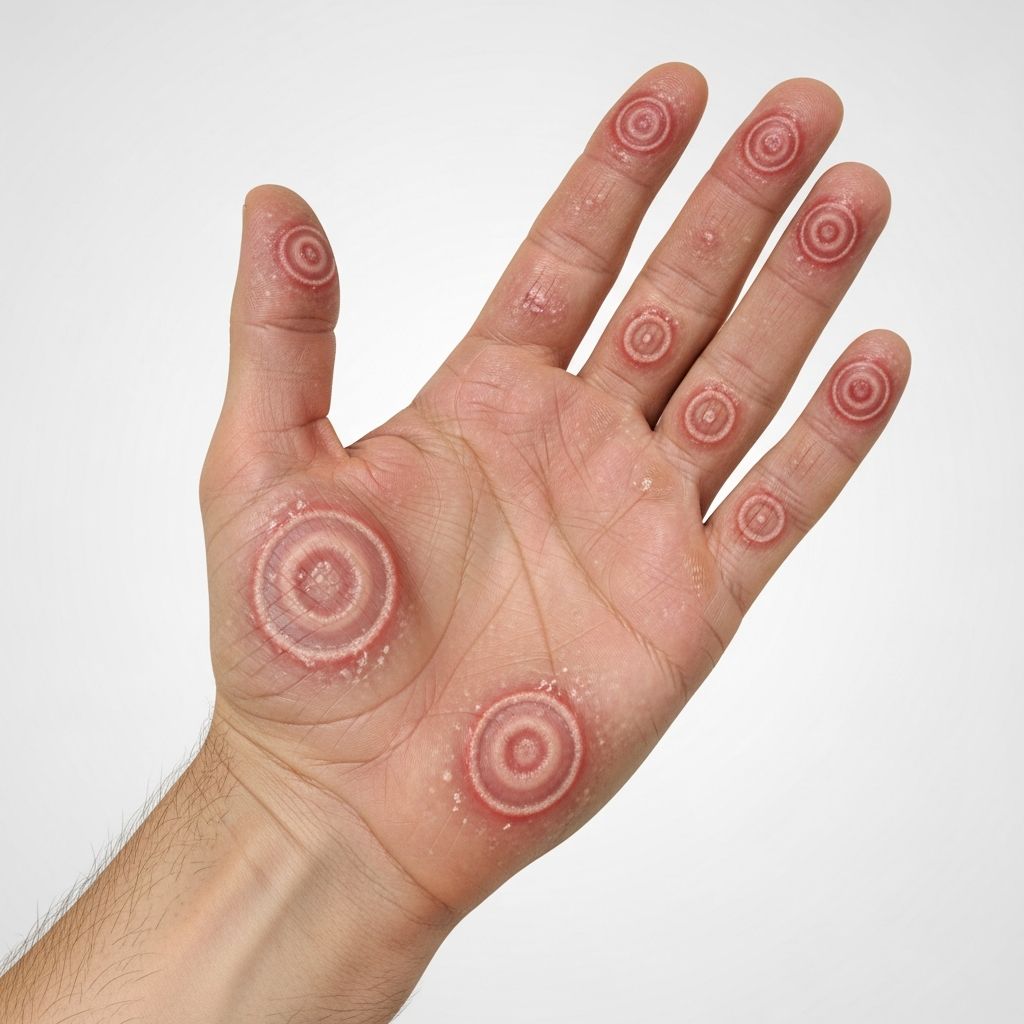
Tinea manuum is a superficial fungal infection of the hand(s) caused by dermatophytes, a group of keratinophilic fungi that infect skin, hair, and nails. It typically affects the palms, fingers, or dorsal surfaces, often unilaterally, and is frequently associated with tinea pedis (athlete’s foot) in a pattern known as ‘two feet, one hand syndrome’.
What is Tinea Manuum?
Tinea manuum, also known as ringworm of the hand, represents a dermatophytosis limited to the hands. Dermatophytes invade the stratum corneum, the outermost layer of the skin, where they thrive on keratin. This infection is less common than tinea pedis or tinea corporis but shares similar pathophysiology. The term ‘tinea’ derives from the Latin for ‘worm’, historically misattributed due to the ring-like lesions, though no actual worm is involved.
Globally, dermatophyte infections affect 20-25% of the population, with tinea manuum comprising a smaller subset, predominantly in adults engaged in manual labor or those with hyperhidrosis. It is more prevalent in tropical climates where moisture and warmth favor fungal growth.
Who Gets Tinea Manuum?
Tinea manuum primarily affects individuals with predisposing factors that create a moist, occluded environment on the hands. Key risk groups include:
- Manual workers: Farmers, gardeners, construction workers, and mechanics who handle soil, animals, or sweaty gloves.
- Those with hyperhidrosis: Excessive hand sweating promotes fungal proliferation.
- Patients with concurrent tinea infections: Especially tinea pedis, leading to auto-inoculation onto hands during scratching or contact.
- Immunocompromised individuals: Diabetics, HIV patients, or those on corticosteroids have higher susceptibility due to impaired immunity.
- Children and adults in contact with animals: Pet owners or veterinarians exposed to zoophilic fungi.
Anyone can acquire it through direct contact, but occupational exposure increases incidence. It is uncommon in young children unless via animal transmission.
Causes of Tinea Manuum
Tinea manuum results from dermatophyte infection, classified by source:
- Trichophyton rubrum: Most common anthropophilic (human-to-human) fungus, causing chronic, scaly palmar lesions often with bilateral tinea pedis.
- Trichophyton mentagrophytes: Zoophilic (animal-derived), from cats, dogs, cattle, or horses; presents acutely inflammatory with vesicles.
- Microsporum canis: Zoophilic, from cats/dogs, causing ring-like dorsal hand lesions.
- Geophilic species: Soil fungi like Microsporum gypseum, rare but inflammatory.
Transmission occurs via:
- Direct skin-to-skin contact with infected humans/animals.
- Fomites: Shared towels, gloves, tools, or gym mats.
- Auto-inoculation from one’s own tinea pedis or unguium.
- Environmental exposure in moist areas like showers/locker rooms.
Once inoculated, fungi grow in warm, moist keratin-rich skin, evading immunity via enzymes like keratinases.
Clinical Features of Tinea Manuum
Presentations vary by dermatophyte type and host response:
- Hyperkeratotic type (most common): Slow-spreading dry, scaly patch on one palm with accentuated skin markings, mild itch. Often T. rubrum; mimics eczema. Both feet similarly affected.
- Inflammatory/ringworm type: Acute red annular plaque with raised vesicular border and central clearing on dorsum/fingers. Zoophilic/geophilic fungi; itchy/burning.
- Vesiculobullous type: Crops of clear-fluid blisters on palm/finger sides, peeling edges, intense itch/burn. T. mentagrophytes.
Other signs: Skin discoloration (brown/hyperpigmented post-inflammatory), nail involvement (onychomycosis), rarely pustules. Typically unilateral hand; bilateral rare without dissemination.
Related Stories



Diagnosis of Tinea Manuum
Tinea manuum is primarily clinical but confirmed by lab tests to differentiate from mimics:
- Microscopy: KOH prep of scrapings shows branching hyphae (septate, uniform).
- Culture: Sabouraud agar identifies species (2-4 weeks).
- Wood’s lamp: Fluorescent for Microsporum (not Trichophyton).
- Biopsy: Rarely, for atypical cases; PAS stain reveals fungi.
Clinical diagnosis suffices in classic cases, but microscopy rules out non-fungal disorders.
Differential Diagnosis
Tinea manuum resembles several conditions; key differentiators:
| Condition | Key Features | Differentiation |
|---|---|---|
| Hand dermatitis (eczema) | Bilateral, symmetric, history of atopy/dryness | No hyphae on KOH; responds to steroids |
| Contact dermatitis | Geometric distribution, irritant exposure | Patch testing; resolves with avoidance |
| Pityriasis rosea | Trunk involvement, herald patch | Self-limited; no palm scaling |
| Psoriasis (palmar) | Thick plaques, nail pits, family history | Auspitz sign; no fungi |
| Bacterial intertrigo | Painful, malodorous, satellite pustules | Gram stain/culture positive for bacteria |
Always confirm with microscopy if doubt.
Management of Tinea Manuum
Treatment escalates by severity/extent:
- Topical antifungals (mild/limited): First-line; apply BD 2-4 weeks post-clearance. Allylamines (terbinafine 1% cream: superior efficacy, 80-90% cure); azoles (clotrimazole, miconazole); others (ciclopirox).
- Oral antifungals (extensive, nail involvement, failed topical): Terbinafine 250mg OD 2-4 weeks (first-line, high cure); itraconazole 200mg OD; fluconazole 150-300mg weekly. Monitor LFTs.
- Adjuncts: Emollients for dryness; avoid occlusives/steroids alone (worsens).
Cure rates: Topicals 70-85%, orals >90%. Recurrence common without addressing tinea pedis.
Prevention of Tinea Manuum
Prevent via hygiene and risk reduction:
- Keep hands clean/dry; dry thoroughly after washing.
- Wear breathable gloves for wet work; change frequently.
- Avoid sharing towels/gloves/tools.
- Treat concurrent tinea pedis promptly.
- Pet hygiene: Groom animals, wash hands post-contact.
- Disinfect surfaces/gym equipment.
Frequently Asked Questions
Q: Is tinea manuum contagious?
A: Yes, via direct contact or fomites; less so than tinea capitis but avoid handshakes/sharing items until treated.
Q: How long does tinea manuum last without treatment?
A: Chronic hyperkeratotic form persists months-years; inflammatory resolves faster but recurs.
Q: Can tinea manuum affect nails?
A: Yes, leading to onychomycosis; requires systemic therapy.
Q: Is over-the-counter cream enough?
A: Often yes for mild palm lesions; see doctor if no improvement in 2 weeks or dorsal/nail spread.
Q: Does it only affect one hand?
A: Typically yes (with two feet); bilateral rare.
References
- Tinea manuum: Pictures, symptoms, and treatments — Medical News Today. 2023-05-15. https://www.medicalnewstoday.com/articles/tinea-manuum
- Tinea Manuum: Causes, Symptoms, and More — Healthline. 2023-08-22. https://www.healthline.com/health/tinea-manuum
- Tinea Manuum: Symptoms, Causes, Treatment, and More — Healthgrades. 2024-02-10. https://resources.healthgrades.com/right-care/infections-and-contagious-diseases/tinea-manuum
- Tinea manuum — DermNet NZ. 2024-06-01. https://dermnetnz.org/topics/tinea-manuum
- What Is Tinea Manuum? — WebMD. 2023-11-12. https://www.webmd.com/skin-problems-and-treatments/what-is-tinea-manuum
- Tinea Manuum — NCBI StatPearls. 2023-07-17. https://www.ncbi.nlm.nih.gov/books/NBK559048/
Similar Articles








Read full bio of medha deb