Tinea Unguium: 4 Treatment Options And Prevention Guide
Comprehensive guide to onychomycosis: causes, symptoms, diagnosis, treatment, and prevention strategies for nail fungal infections.
Author: Dr. Amanda Oakley, Dermatologist, Hamilton, New Zealand. Revised: 2025.
What is tinea unguium?
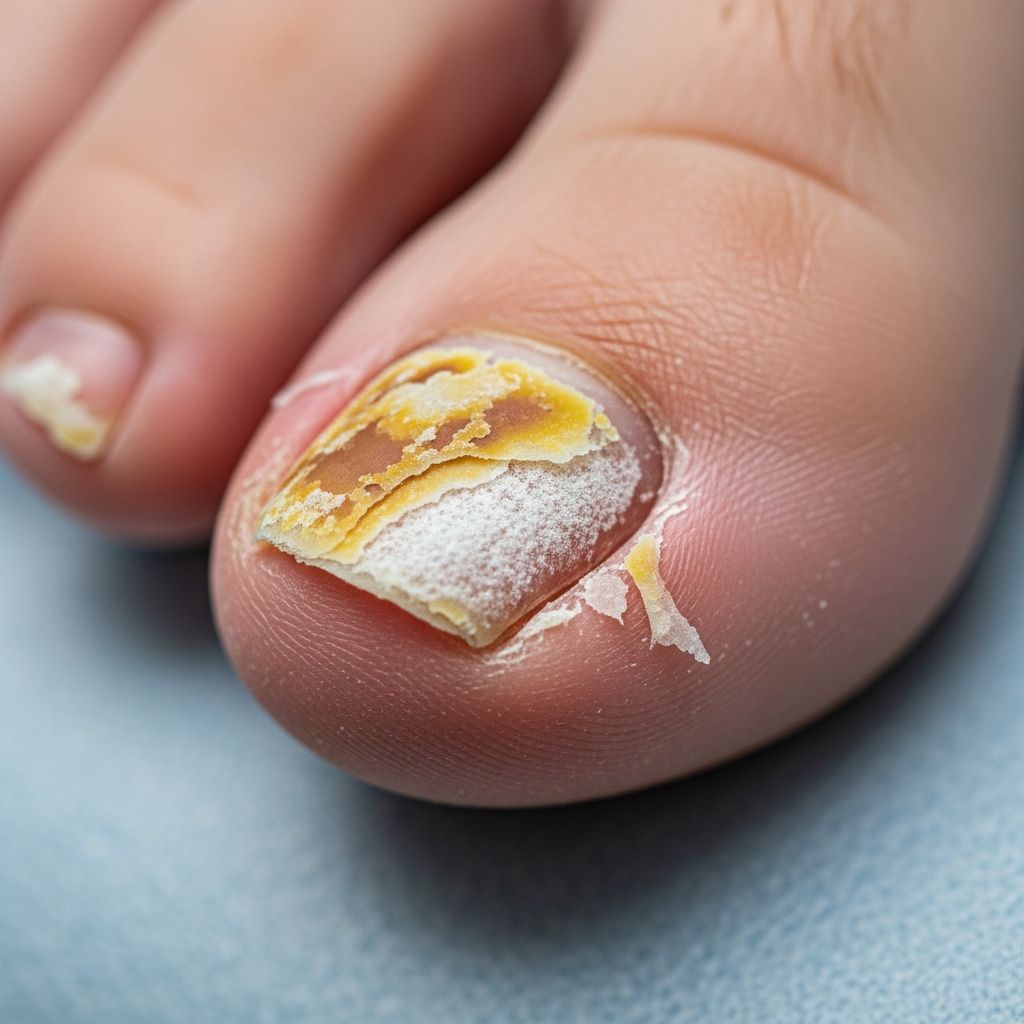
Tinea unguium, also known as onychomycosis, is a fungal infection specifically caused by dermatophytes affecting the nail unit, including the nail plate, bed, and surrounding tissues. This distinguishes it from broader onychomycosis, which may involve yeasts or moulds. Dermatophytes, such as Trichophyton rubrum and Trichophyton mentagrophytes, are the primary culprits, thriving in warm, moist environments and accounting for about 90% of toenail cases. The condition is more prevalent in toenails than fingernails due to the darker, damper conditions inside shoes.
Onychomycosis affects approximately 10-20% of adults worldwide, with higher rates in older populations, diabetics, and those with peripheral vascular disease. When untreated, it can lead to nail deformity, pain, and secondary bacterial infections, particularly in immunocompromised individuals. Early recognition is crucial as the infection spreads slowly but persistently along the nail.
Who gets tinea unguium?
Tinea unguium predominantly affects adults over 60, men more than women, and individuals with predisposing factors. High-risk groups include:
- People with diabetes or peripheral vascular disease, due to poor circulation and neuropathy.
- Immunosuppressed patients, such as those with HIV or on corticosteroids.
- Individuals with a history of tinea pedis (athlete’s foot), which serves as a reservoir for fungal spread.
- Those engaging in activities promoting moisture, like frequent swimming or using communal showers.
- People sharing nail tools or wearing occlusive footwear.
In children, it is rare, comprising less than 3% of cases, unless there’s family history or immunosuppression. Genetic factors may play a role in susceptibility.
What causes tinea unguium?
Dermatophyte fungi invade the nail keratin, starting often from the distal edge or lateral margins. Common pathogens include T. rubrum (most frequent), T. mentagrophytes, and Epidermophyton floccosum. Transmission occurs via direct contact with infected skin scales, animals, or fomites like contaminated clippers.
Biofilms—protective fungal matrices—contribute to treatment resistance and recurrence. Risk amplifiers include trauma to the nail, hyperhidrosis, and poor hygiene. The fungus spreads from adjacent tinea pedis in 30-50% of cases.
What are the clinical features of tinea unguium?
The presentation varies by invasion pattern:
- Distal lateral subungual onychomycosis (DLSO): Most common (80-90%), with yellow-white discoloration, onycholysis (nail separation), hyperkeratosis, and thickening starting distally.
- Superficial white onychomycosis (SWO): White patches on nail surface, easily scraped.
- Proximal subungual onychomycosis (PSO): Rare, indicates immunosuppression, starts at cuticle.
- Total dystrophic onychomycosis (TDO): Advanced stage with complete nail destruction.
Symptoms include brittleness, pain on pressure, and subungual debris. Surrounding skin may show erythema or scaling.
Diagnosis of tinea unguium
Clinical suspicion requires laboratory confirmation to rule out psoriasis, trauma, or bacterial causes. Methods include:
- Microscopy with KOH: Dissolves keratin, reveals hyphae (sensitivity 70-90%).
- Culture: Identifies species on Sabouraud agar (gold standard, 2-4 weeks).
- PCR: Rapid detection, useful for non-dermatophytes.
- Histopathology: PAS stain for dubious cases.
Related Stories



The Onychomycosis Severity Index (OSI) scores involvement to guide therapy.
Treatment of tinea unguium
Treatment is indicated for pain, spread, or cosmetic concerns, especially in diabetics. Cure rates vary: mycological 70-80%, clinical 50-70%. Options:
| Type | Examples | Duration | Mycological Cure Rate |
|---|---|---|---|
| Oral terbinafine | 250 mg daily | 6 weeks (fingernails), 12-16 weeks (toenails) | 76% |
| Oral itraconazole | Pulse: 200 mg BID 1 wk/mo | 2 pulses (fingernails), 3 (toenails) | 63% |
| Topical (mild) | Amorolfine 5%, ciclopirox 8% | 6-12 months weekly | 30-50% |
| Laser/Photodynamic | Nd:YAG laser | Multiple sessions | 60-70% |
Oral therapies are first-line for moderate-severe cases but monitor LFTs. Combinations improve outcomes. Nail debridement enhances efficacy.
Complications during treatment
Side effects: Hepatotoxicity (rare, <1%), GI upset, rash. Contraindicated in liver disease. Recurrence in 20-50% within 2.5 years.
Prevention of tinea unguium
- Keep feet dry, change socks daily, use breathable shoes.
- Treat tinea pedis promptly.
- Disinfect clippers, avoid sharing.
- Prophylactic topical antifungals post-treatment (e.g., terbinafine twice weekly, reduces recurrence 33% vs 76%).
- Short nails, good hygiene.
Recurrence of tinea unguium
Relapse rates 20-25% due to biofilms, incomplete treatment, or persistence in skin. Predictors: diabetes, OSI >10, mixed infections. Strategies: long-term prophylaxis, multi-route therapy.
Evidence-based summary for tinea unguium
- Dermatophytes cause >90% toenail onychomycosis.
- Oral terbinafine superior (76% cure).
- Diagnosis via KOH/culture essential.
- Prophylaxis halves recurrence.
Related information
- Onychomycosis (broader term).
- Tinea pedis.
- Antifungal medications.
Frequently asked questions about tinea unguium
Q: Is tinea unguium contagious?
A: Yes, via direct contact or fomites, but requires nail trauma/susceptibility.
Q: How long does treatment take?
A: 3-12 months, matching nail growth.
Q: Can it be cured completely?
A: Mycological cure ~80%, but recurrence common without prevention.
Q: Is laser treatment effective?
A: Promising for mild cases, 60% improvement, but adjunctive.
Q: Safe for diabetics?
A: Yes, but monitor closely; treat to prevent complications like cellulitis.
References
- Symptoms and Causes of Tinea Unguium — Fourth River Podiatry. 2023. https://www.fourthriverpodiatry.com/blog/symptoms-and-causes-of-tinea-unguium
- Understanding Tinea Unguium — UMass Memorial Health. 2024. https://www.ummhealth.org/health-library/understanding-tinea-unguium
- Clinical Overview of Ringworm and Fungal Nail Infections — CDC. 2025-01-15. https://www.cdc.gov/ringworm/hcp/clinical-overview/index.html
- Onychomycosis — NCBI StatPearls. 2024-07-20. https://www.ncbi.nlm.nih.gov/books/NBK441853/
- Fungal Nail Infections — DermNet NZ. 2024. https://dermnetnz.org/topics/fungal-nail-infections
- Onychomycosis Testing — South Carolina Blues. 2023-10-01. https://www.southcarolinablues.com/web/public/brands/medicalpolicy/external-policies/onychomycosis-testing/
- Onychomycosis: Rapid Evidence Review — AAFP. 2021-10-00. https://www.aafp.org/pubs/afp/issues/2021/1000/p359.html
Similar Articles








Read full bio of Sneha Tete