Tinea: Expert Guide To Diagnosis, Treatment, And Prevention
Comprehensive guide to tinea fungal skin infections: causes, symptoms, diagnosis, and effective treatments for all body sites.
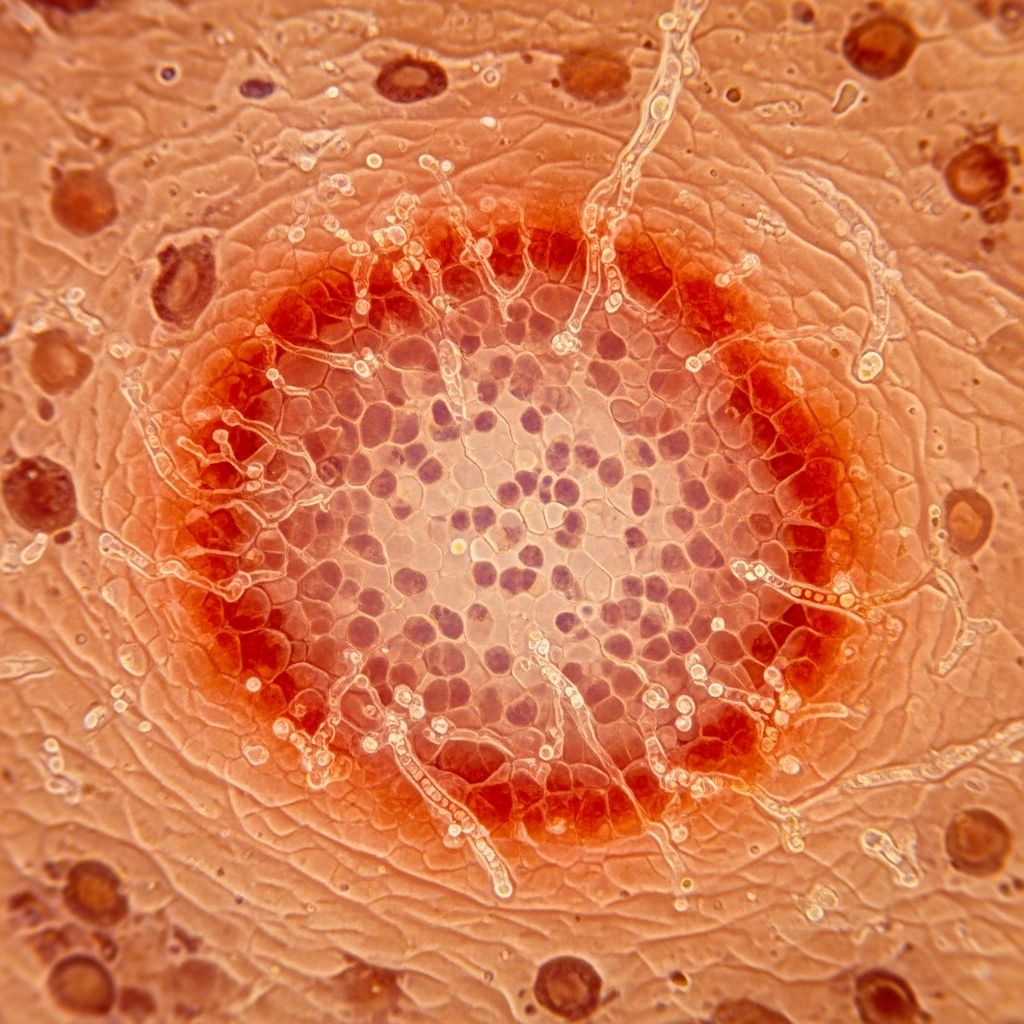
Tinea, commonly known as ringworm, refers to superficial fungal infections of the skin, hair, and nails caused by dermatophyte fungi. These infections are highly contagious and named based on the affected body site, such as tinea corporis for the body or tinea pedis for the feet. Dermatophytes thrive in warm, moist environments, making them prevalent worldwide, particularly in tropical climates or among individuals with predisposing factors like immunosuppression or excessive sweating.
What is tinea?
Tinea is a dermatophytosis, an infection by fungi from genera Trichophyton, Microsporum, or Epidermophyton. These keratinophilic organisms invade the stratum corneum, hair shaft, or nails, leading to characteristic annular lesions with scaling, erythema, and pruritus. Unlike yeasts like Malassezia (causing tinea versicolor) or deep fungal infections, tinea is confined to superficial layers. Globally, tinea affects millions annually, with tinea pedis being the most common in adults due to occlusive footwear.
Who gets tinea?
Tinea affects all ages, races, and genders, but risk factors increase susceptibility. Children commonly develop tinea capitis from animal contact or shared combs, while adults experience tinea pedis from communal showers. Immunocompromised patients, diabetics, and those on corticosteroids face higher risks of extensive or atypical presentations. Warm climates, obesity, and hyperhidrosis promote fungal growth. Athletes and close-contact sport participants are prone due to shared equipment.
What causes tinea?
Dermatophytes are classified by habitat: anthropophilic (human-adapted, e.g., Trichophyton rubrum), zoophilic (animal-derived, e.g., Microsporum canis), and geophilic (soil-based). Transmission occurs via direct contact with infected skin/scales, fomites (towels, clothing), or animals. Autoinoculation spreads infection between sites. Predisposing factors include trauma, occlusion, and humidity, which facilitate spore germination.
What are the clinical features of tinea?
Tinea presents with itchy, scaly, annular plaques with raised borders and central clearing, earning the ‘ringworm’ misnomer. Severity varies by site, organism, and host immunity. Inflammatory responses cause pustules or kerion in aggressive cases.
On the skin
Tinea corporis features expanding annular erythematous patches (1–5 cm) with trailing scale at the active edge. Multiple lesions may coalesce. Zoophilic types cause boggy, pustular reactions.
On the groin and buttocks
Tinea cruris (‘jock itch’) affects the inner thighs and groin with symmetrical, sharply demarcated, erythematous plaques sparing the scrotum. Itching intensifies with sweating.
On the hands
Tinea manuum presents as diffuse hyperkeratosis on palms or annular lesions on dorsum, often unilateral and associated with tinea pedis.
On the feet
Tinea pedis includes interdigital maceration (‘athlete’s foot’), moccasin-type dry scaling on soles, or vesicular eruptions. Chronic cases lead to fissures and odor.
On the nails
Onychomycosis (tinea unguium) causes distal subungual hyperkeratosis, yellowing, and onycholysis. Total dystrophic nails occur in advanced disease.
On the face
Tinea faciei mimics discoid lupus with subtle annular scaling, often lacking central clearing due to photoexposure.
In the beard area
Tinea barbae involves the beard and mustache with inflammatory folliculitis or kerion-like swellings from zoophilic fungi.
Related Stories



On the scalp
Tinea capitis varies: grey patch (non-inflammatory alopecia), black dots (hair stubs), or kerion (boggy pus-filled plaques). Endothrix infections cause ‘black dot’ alopecia.
Diagnosis of tinea
Diagnosis is primarily clinical but confirmed by microscopy or culture. Skin scrapings from active borders treated with 10–20% KOH reveal septate hyphae. Dermoscopy shows corkscrew hairs in tinea capitis or comma hairs. Culture on Sabouraud agar identifies species, aiding refractory cases. PCR offers rapid detection. Biopsy is rare but shows fungal elements with PAS stain.
How is tinea treated?
Treatment stratifies by site, extent, and comorbidities. Topical antifungals suffice for localized glabrous skin infections; systemic therapy is needed for hair/nail involvement or extensive disease.
Topical treatment
Apply azoles (clotrimazole 1% twice daily), allylamines (terbinafine 1% once daily), or others for 2–4 weeks. Continue 1–2 weeks post-clearance to prevent relapse. Terbinafine excels for speed.
| Medication | Preparation | Frequency | Duration | Notes |
|---|---|---|---|---|
| Clotrimazole | Cream/lotion | Twice daily | 4 weeks | Safe for most sites |
| Terbinafine | Cream/gel | Once/twice daily | 1–2 weeks | Highly effective |
| Miconazole | Cream | Twice daily | 4 weeks | Good for cruris |
| Ketoconazole | Cream/shampoo | Once daily | 4 weeks | Avoid prolonged use |
Oral treatment
For extensive, scalp, nail, or resistant tinea: terbinafine (250 mg daily, 2–6 weeks), itraconazole (200 mg daily, 2–4 weeks), or fluconazole (150–300 mg weekly). Monitor LFTs in prolonged courses. Griseofulvin suits pediatric tinea capitis.
Treatment for specific sites
- Nails: Oral terbinafine 12 weeks (fingernails) or 16 weeks (toenails); topical amorolfine adjunctive.
- Scalp: Oral griseofulvin or terbinafine 6–8 weeks + sporicidal shampoo (selenium sulfide).
- Feet: Topical allylamines + keep dry; oral for moccasin type.
Complications of tinea
Untreated tinea causes secondary bacterial infection (cellulitis), permanent scarring (kerion), or nail dystrophy. Majocchi granuloma (deep folliculitis) occurs with topical steroids. Chronicity leads to moccasin foot or erythroderma in immunocompromised.
Prevention of tinea
- Wear breathable footwear; dry feet thoroughly.
- Avoid sharing personal items; launder clothes hot.
- Treat pets with ringworm; use antifungal shampoo for contacts in tinea capitis.
- Control hyperhidrosis and diabetes.
Related topics
- Onychomycosis
- Tinea capitis
- Tinea pedis
- Dermatophyte infections
Frequently asked questions
Is tinea contagious?
Yes, via direct contact, fomites, or autoinoculation. Spores persist on surfaces.
Can tinea be cured?
Most cases resolve with antifungals; nails/scalp take longer. Relapse common without prevention.
Does tinea go away on its own?
Rarely; treatment accelerates clearance and prevents spread.
Can I use steroid cream for tinea?
No; it worsens infection (tinea incognito). Confirm diagnosis first.
How long is tinea contagious?
Until 1–2 weeks of treatment; use separate towels.
References
- Tinea Corporis – StatPearls — NCBI Bookshelf. 2023-07-17. https://www.ncbi.nlm.nih.gov/books/NBK544360/
- Diagnosing Tinea Corporis — VisualDx. 2023. https://www.visualdx.com/blog/diagnosing-tinea-corporis/
- Diagnosis and Management of Tinea Infections — American Academy of Family Physicians (AAFP). 2014-11-15. https://www.aafp.org/pubs/afp/issues/2014/1115/p702.html
- Tinea Corporis (Body Ringworm) — Merck Manuals Professional Edition. 2024. https://www.merckmanuals.com/professional/dermatologic-disorders/fungal-skin-infections/tinea-corporis-body-ringworm
- Tinea – an overview — Primary Care Dermatology Society (PCDS). 2023. http://www.pcds.org.uk/clinical-guidance/tinea
Similar Articles








Read full bio of medha deb