Tinel’s Sign: Nerve Compression Test Explained
Understanding Tinel's sign: A simple diagnostic test for detecting nerve compression and damage.
What Is Tinel’s Sign?
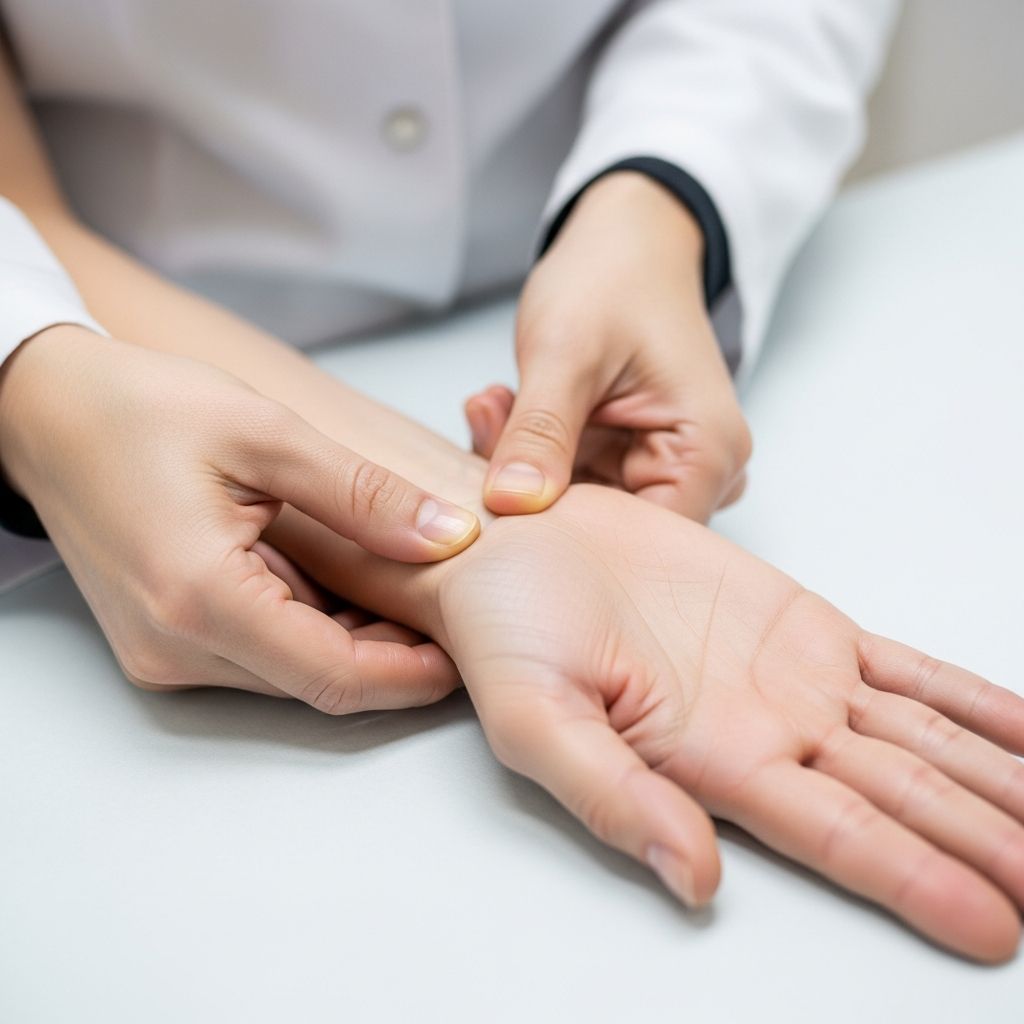
Tinel’s sign, also known as the Hoffmann-Tinel sign, is a diagnostic physical examination maneuver used to detect irritated, compressed, or regenerating peripheral nerves. Named after Jules Tinel, a French neurologist who first described the phenomenon, this simple yet effective test has become a cornerstone in the evaluation of various nerve compression syndromes. The test involves lightly tapping or percussing over a nerve to elicit a characteristic tingling sensation or “pins and needles” feeling, medically known as paresthesia, in the distribution of that nerve.
This non-invasive diagnostic technique serves as an initial screening tool for healthcare providers to assess potential nerve damage or compression at specific anatomical locations. When positive, Tinel’s sign indicates that nerve fibers are either compressed by surrounding tissues or are actively regenerating after an injury. The test is particularly valuable because it requires minimal equipment and can be performed quickly in any clinical setting, making it an accessible first-line diagnostic approach for patients presenting with symptoms suggestive of nerve compression.
How Is Tinel’s Sign Performed?
The procedure for performing Tinel’s sign is straightforward and requires minimal equipment. A healthcare provider, typically a physician, neurologist, orthopedic surgeon, or physical therapist, performs the test by gently tapping or percussing over the suspected area of nerve compression using their finger or a small reflex hammer. The tapping motion is performed lightly to avoid causing unnecessary discomfort, and the percussion typically moves in a distal to proximal direction along the nerve pathway.
The anatomical location where the test is performed depends on which nerve is suspected to be compressed or damaged. For example:
- In carpal tunnel syndrome, the provider taps over the median nerve in the wrist and forearm
- In cubital tunnel syndrome, the test is performed over the ulnar nerve at the elbow
- In tarsal tunnel syndrome, the provider taps over the posterior tibial nerve above the medial malleolus in the ankle
- In radial nerve entrapment, the test focuses on the radial nerve in the forearm
During the procedure, patients are instructed to report any sensations they experience when the nerve is tapped. The healthcare provider carefully documents whether any tingling, prickling, or pins and needles sensations are felt in the distribution of the nerve being tested. This feedback is crucial for interpreting the test result and determining whether further diagnostic evaluation is warranted.
Understanding Tinel’s Sign Test Results
Positive Tinel’s Sign
A positive Tinel’s sign occurs when a patient experiences a tingling or prickling sensation (paresthesia) that radiates through the distribution of the nerve being tested immediately after percussion. This sensation is often described as a “pins and needles” feeling and typically occurs in the fingers, hand, foot, or other anatomical areas depending on which nerve is being evaluated. For instance, in carpal tunnel syndrome, a positive Tinel’s sign would involve tingling in the thumb, index finger, middle finger, and the lateral half of the ring finger—the distribution area of the median nerve.
Related Stories



A positive result indicates that the nerve is likely being compressed or irritated by surrounding tissues such as ligaments, tendons, bones, or swollen tissue. This compression can result from various causes including repetitive use injuries, arthritis, trauma, pregnancy, diabetes, thyroid disorders, or the presence of tumors or cysts. Additionally, a positive Tinel’s sign can indicate that nerve fibers are actively regenerating after a previous injury, making it valuable for monitoring recovery progress.
Negative Tinel’s Sign
A negative Tinel’s sign means that no tingling or prickling sensation is experienced when the nerve is percussed. In this case, tapping over the nerve does not produce the characteristic paresthesia. However, it is important to understand that a negative Tinel’s sign does not definitively rule out nerve compression or damage. Some patients with genuine nerve compression may not exhibit a positive Tinel’s sign, particularly if the nerve compression is chronic, severe, or located at certain anatomical positions.
When patients present with symptoms consistent with nerve compression but demonstrate a negative Tinel’s sign, healthcare providers typically recommend additional diagnostic testing. These may include imaging studies such as ultrasound, magnetic resonance imaging (MRI), electromyography (EMG), or nerve conduction studies (NCS) to obtain a more complete clinical picture and confirm or exclude the suspected diagnosis.
Clinical Applications and Conditions Diagnosed
Tinel’s sign is employed in the diagnosis and monitoring of various nerve compression syndromes and peripheral nerve disorders. The test’s versatility makes it a valuable tool across multiple clinical specialties including orthopedic surgery, neurology, hand surgery, and physical medicine and rehabilitation.
Primary Conditions Associated with Positive Tinel’s Sign
- Carpal Tunnel Syndrome: The most common condition evaluated using Tinel’s sign, characterized by compression of the median nerve in the wrist, causing pain, numbness, and tingling in the hand and fingers
- Cubital Tunnel Syndrome: Compression of the ulnar nerve at the elbow, producing symptoms similar to hitting the “funny bone,” with pain and numbness extending into the hand
- Tarsal Tunnel Syndrome: Compression of the posterior tibial nerve in the ankle, causing pain, tingling, and numbness in the sole and toes
- Radial Nerve Entrapment: Compression of the radial nerve in the forearm, potentially causing pain and weakness in the wrist and fingers
- Guyon’s Canal Syndrome: Compression of the ulnar nerve as it passes through Guyon’s canal in the wrist
- Superficial Peroneal Neuropathy: Compression of the superficial peroneal nerve, typically causing symptoms in the lateral lower leg and foot
- Thoracic Outlet Syndrome: Compression of nerves and blood vessels in the thoracic outlet, causing pain and symptoms in the arm and hand
Diagnostic Accuracy and Clinical Significance
Research has established the diagnostic performance characteristics of Tinel’s sign for various conditions. For carpal tunnel syndrome specifically, meta-analyses demonstrate that Tinel’s sign has a median sensitivity of approximately 51 percent and specificity of around 90 percent. This means that while the test is highly specific—when positive, it strongly suggests nerve compression—it has moderate sensitivity, indicating that a negative result does not conclusively exclude the condition.
In tarsal tunnel syndrome, Tinel’s test demonstrates a sensitivity of approximately 58 percent, supporting its use as a screening tool but emphasizing the importance of confirmatory testing. These diagnostic performance characteristics highlight that Tinel’s sign should be interpreted in the context of the patient’s clinical presentation, symptoms, medical history, and results from other diagnostic modalities rather than as a standalone diagnostic criterion.
Symptoms Associated with Positive Findings
Patients who exhibit a positive Tinel’s sign may experience various symptoms depending on the specific nerve affected and the underlying cause of compression. Common symptoms include:
- Numbness and decreased sensation in the distribution of the affected nerve
- Tingling, prickling, or “pins and needles” sensations (paresthesia)
- Burning pain or aching discomfort
- Sharp, radiating pain extending into adjacent anatomical areas
- Muscle weakness or decreased strength in muscles innervated by the compressed nerve
- Difficulty with fine motor tasks or coordination
- Symptoms that worsen at night or with prolonged activity
- Dropping objects or difficulty gripping items
Causes of Positive Tinel’s Sign
Multiple factors can lead to nerve compression and result in a positive Tinel’s sign. Understanding these underlying causes is important for developing effective treatment strategies:
- Repetitive Use Injuries: Occupational or recreational activities requiring repetitive motions can cause nerve compression over time
- Trauma or Injury: Direct trauma, fractures, or sprains can compress nerves or damage nerve tissue
- Metabolic Disorders: Conditions such as diabetes and thyroid disorders increase the risk of nerve compression
- Pregnancy: Hormonal changes and fluid retention during pregnancy can contribute to various nerve compression syndromes
- Inflammatory Conditions: Arthritis and other inflammatory conditions can cause swelling that compresses nerves
- Obesity: Excess body weight can increase pressure on nerves in various locations
- Structural Abnormalities: Anatomical variations or the presence of tumors, cysts, or bony growths can compress nerves
- Prolonged Positioning: Maintaining certain body positions or using improper ergonomics can contribute to nerve compression
Clinical Importance and Monitoring
Beyond its diagnostic value, Tinel’s sign serves an important function in monitoring nerve regeneration and recovery following injury. When a positive Tinel’s sign is present and moving along the nerve pathway in a distal direction over time, it can indicate that nerve fibers are actively regenerating and healing. This phenomenon, sometimes referred to as the Valleix phenomenon when particularly prominent, can provide clinicians and patients with reassurance that the nerve recovery process is progressing appropriately.
Healthcare providers often perform serial Tinel’s sign testing at follow-up visits to track changes in the location and intensity of the evoked paresthesia. Progression of the Tinel’s sign distally (toward the hand or foot) generally suggests favorable nerve regeneration, while persistence or worsening of the sign may indicate ongoing or worsening compression requiring intervention.
Limitations and Complementary Testing
While Tinel’s sign is a valuable screening tool, it has important limitations that healthcare providers must recognize. The test’s moderate sensitivity means that a negative result does not reliably exclude nerve compression or damage. Additionally, the interpretation of Tinel’s sign is subjective and depends on patient perception and communication, which can vary between individuals.
To overcome these limitations, healthcare providers typically complement Tinel’s sign with additional diagnostic tests such as electromyography (EMG), nerve conduction studies (NCS), ultrasound imaging, or MRI when initial findings are inconclusive or when more detailed anatomical information is needed. These advanced diagnostic modalities can provide objective data about nerve function and structure, supporting clinical decision-making regarding treatment options.
Frequently Asked Questions
Q: Is Tinel’s sign test painful?
A: Tinel’s sign testing is generally not painful. The tapping is performed lightly to elicit tingling sensations rather than pain. However, patients may experience some discomfort or mild soreness if the nerve is significantly compressed or inflamed.
Q: Can Tinel’s sign be positive in healthy individuals?
A: While Tinel’s sign is primarily associated with nerve compression or damage, some variation exists. A very mild tingling sensation when tapping certain nerves can occasionally occur in asymptomatic individuals, though this is relatively uncommon.
Q: How long does it take to perform Tinel’s sign testing?
A: Tinel’s sign testing can typically be completed in just a few minutes as part of a comprehensive physical examination. The actual tapping and response assessment takes only seconds.
Q: Can Tinel’s sign predict the severity of nerve compression?
A: Tinel’s sign can provide some indication of nerve involvement but does not reliably predict severity. Additional testing such as nerve conduction studies is needed to assess the degree of nerve dysfunction and compression severity.
Q: Should I be concerned if I have a positive Tinel’s sign?
A: A positive Tinel’s sign indicates potential nerve compression or damage that warrants further evaluation, but it is not necessarily a cause for immediate alarm. Your healthcare provider will consider the finding within the context of your symptoms and clinical presentation to determine appropriate management.
References
- Hoffmann-Tinel Sign for Nerve Compression Detection — National Center for Biotechnology Information (NCBI), U.S. National Library of Medicine. 2024. https://www.ncbi.nlm.nih.gov/books/NBK555934/
- Tinel Sign: Carpal Tunnel Test Procedure & Results — WebMD Health Services. 2024. https://www.webmd.com/pain-management/carpal-tunnel/what-is-tinel-sign
- Tinel’s Test for Compression Neuropathy — Physiopedia Clinical Educators. 2024. https://www.physio-pedia.com/Tinel%E2%80%99s_Test
- Diagnostic Validity of Physical Examination Maneuvers for Carpal Tunnel Syndrome — Stanford Medicine 25, Stanford University School of Medicine. 2024. https://med.stanford.edu/stanfordmedicine25/the25/tarsaltunnel.html
- Tinel’s Sign and Peripheral Nerve Fiber Compression — Longhorn Brain and Spine, Neurosurgical Specialists. 2024. https://longhornbrainandspine.com/tinels-test/
Similar Articles








Read full bio of Sneha Tete