Tioconazole for Fungal Nail Infections: Trosyl
Comprehensive guide to tioconazole medicated nail lacquer for treating fungal nail infections.
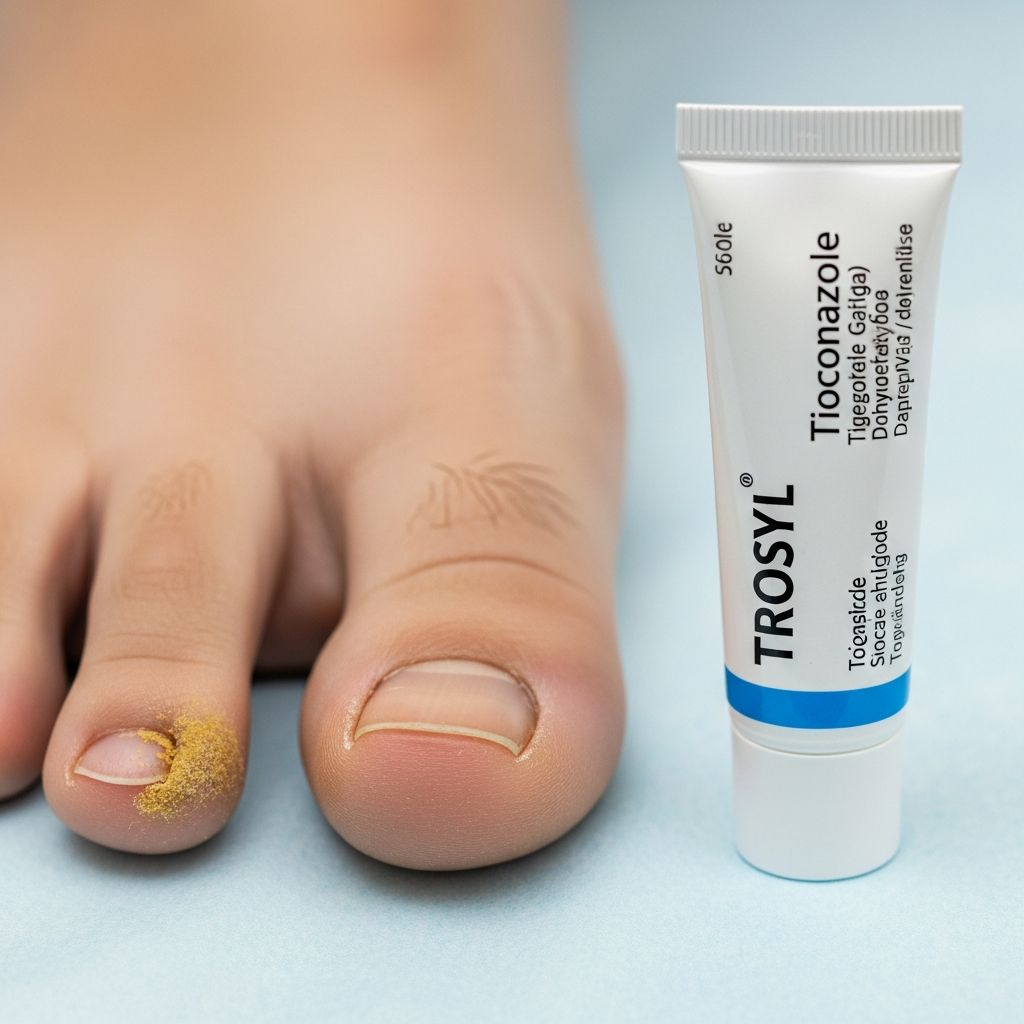
Tioconazole for Fungal Nail Infections: A Comprehensive Guide
Fungal nail infections, medically known as onychomycosis, can be persistent and difficult to treat. Tioconazole, marketed as Trosyl, is a topical antifungal medication specifically formulated as a medicated nail lacquer to address these stubborn infections. This guide provides detailed information about this treatment option, including how it works, how to use it, and what results you can expect.
What Is Tioconazole?
Tioconazole is a substituted imidazole antifungal agent belonging to a class of medications used to treat infections caused by fungi and yeast. The medication comes in a specialized formulation for nail infections, containing 283 mg of tioconazole per milliliter, designed for topical application directly to affected nails.
The medication works by interfering with the fungal cell membrane. Specifically, tioconazole inhibits the enzyme 14-alpha demethylase, which prevents the production of ergosterol—an essential component of the fungal cell membrane. This disruption increases cellular permeability, ultimately killing the fungus or preventing its growth. Beyond its antifungal properties, tioconazole also has antibacterial effects against certain Gram-positive bacteria, making it effective against a broad spectrum of organisms that commonly cause nail infections.
What Types of Infections Does Tioconazole Treat?
Tioconazole nail lacquer is indicated for treating nail infections caused by susceptible fungi and bacteria. The medication is effective against:
- Dermatophytes (fungi that infect skin, hair, and nails), including Trichophyton rubrum and Trichophyton mentagrophytes
- Yeasts, particularly Candida species
- Other fungal organisms such as Hendersonula toruloidea and Acremonium
- Gram-positive bacteria including Staphylococcus and Streptococcus species
Clinical studies have demonstrated that tioconazole is at least as effective as other imidazole antifungal drugs like clotrimazole and miconazole, and in some comparative trials, it has shown significantly greater efficacy.
How to Use Tioconazole Nail Lacquer
Dosage and Application
For adults: Apply the solution to the affected nails and the immediately surrounding skin every twelve hours using the applicator brush supplied with the product. Consistent application is essential for effectiveness.
For children and elderly patients: No special precautions are required; use the standard adult dose.
Treatment Duration
The length of treatment depends on the severity of the infection, the specific microorganism involved, and the location of the affected nails. Typically, treatment lasts up to six months, though it may be extended to twelve months in cases of more severe or persistent infections. It is crucial to continue treatment for the full recommended period, even if symptoms improve earlier, as fungal infections are notoriously slow to clear and may return if treatment is discontinued prematurely.
Effectiveness of Tioconazole
Clinical evidence supports the effectiveness of tioconazole for fungal nail infections. In a peer-reviewed clinical study involving 27 patients treated with tioconazole (28% solution) for up to 12 months, the following results were documented:
- Six patients (22%) achieved complete clinical remission and were free of infection three months after therapy ended
- Successful treatments included infections caused by Trichophyton rubrum, Hendersonula toruloidea, and Acremonium
- Finger nail infections responded better to treatment than toe nail infections
- An additional 11 patients (41%) showed significant improvements, though they did not achieve complete mycological recovery
These results indicate that complete cures of nail fungal infections are possible through topical therapy with tioconazole. The data also suggest that combination therapy—such as combining surgical nail removal with topical tioconazole application—may offer promise for future treatment approaches.
Related Stories



Advantages of Topical Treatment
Tioconazole nail lacquer offers several advantages over systemic (oral) antifungal medications. Oral antifungal drugs can carry risks of systemic side effects and drug interactions. Topical application of tioconazole provides local treatment with minimal systemic absorption, reducing the risk of adverse effects throughout the body. This makes it a particularly attractive option for patients who cannot tolerate or are unable to take oral medications due to other medical conditions or concurrent drug therapy.
Side Effects and Safety
Tioconazole is generally well tolerated, with a favorable safety profile. The most commonly reported side effects are mild and transient, occurring primarily during initial treatment.
Common Side Effects
- Local irritation at the application site
- Mild redness or erythema
- Local allergic reactions
- Temporary skin discomfort
These effects typically resolve without intervention as treatment continues. If you experience any allergic reaction or persistent irritation, discontinue treatment and consult your healthcare provider immediately.
Serious Adverse Effects
While rare, anaphylactoid reactions have been reported in patients treated with other formulations of tioconazole (such as systemic preparations), though these are not typical of the dermatological nail lacquer preparation. If you experience symptoms of anaphylaxis—including difficulty breathing, throat tightness, or severe rash—seek immediate medical attention.
Who Should Not Use Tioconazole?
Contraindications
- Hypersensitivity or allergy to tioconazole or any excipients in the formulation
- Pregnancy: Due to insufficient safety evidence in pregnancy and the extended duration of treatment required for nail infections, tioconazole is contraindicated throughout pregnancy. If pregnancy is diagnosed during treatment, discontinue use immediately and inform your healthcare provider.
Precautions
Before starting tioconazole treatment, inform your healthcare provider if you:
- Are pregnant or planning to become pregnant
- Are breastfeeding
- Have a known sensitivity to imidazole antifungals
- Have any open wounds or broken skin at the application site
Storage and Handling
Store tioconazole nail lacquer at room temperature away from heat, moisture, and direct sunlight. Keep the bottle tightly closed when not in use. The product should be kept out of the reach of children and pets. Do not use the medication beyond the expiration date printed on the package.
When to See Your Doctor
You should schedule a follow-up appointment with your healthcare provider if:
- Your nail infection does not improve within 4 to 6 weeks of starting treatment
- Your symptoms worsen despite consistent application
- You develop signs of an allergic reaction, such as itching, redness, or difficulty breathing
- You experience persistent local irritation that does not resolve with continued use
- You become pregnant during treatment
- You develop signs of a secondary bacterial infection
Tips for Best Results
To maximize the effectiveness of tioconazole treatment, follow these recommendations:
- Apply the medication consistently every 12 hours as directed, without missing doses
- Use the applicator brush provided to ensure thorough coverage of the affected nail and surrounding skin
- Allow the lacquer to dry completely before covering with clothing or shoes
- Maintain good nail hygiene by keeping nails short and clean
- Avoid sharing nail care tools with others to prevent spreading the infection
- Wear breathable footwear and moisture-wicking socks if foot nails are affected
- Dry feet thoroughly after bathing, especially between the toes
- Avoid walking barefoot in public areas such as swimming pools, communal showers, and locker rooms
Frequently Asked Questions
Q: How long does it take to see results from tioconazole treatment?
A: Fungal nail infections are slow to clear. You may not see visible improvement for several weeks or months. It is essential to continue treatment for the full prescribed duration—typically 6 to 12 months—even if improvement occurs, as premature discontinuation may allow the infection to return.
Q: Can tioconazole be used on all types of nails?
A: Tioconazole can be applied to both fingernails and toenails. However, clinical studies show that fingernail infections respond better to topical therapy than toenail infections, which may require longer treatment or combination approaches with surgical intervention.
Q: Is tioconazole safe to use while pregnant?
A: No. Tioconazole is contraindicated throughout pregnancy due to insufficient safety evidence. Although systemic absorption is minimal with topical application, the extended treatment duration and potential risks make it inadvisable during pregnancy. Consult your healthcare provider for alternative treatment options if you are pregnant or planning to conceive.
Q: What should I do if I miss a dose?
A: Apply the missed dose as soon as you remember. However, if it is almost time for your next scheduled application, skip the missed dose and resume your regular dosing schedule. Do not double-dose to make up for a missed application.
Q: Can tioconazole be used alongside other medications?
A: Since tioconazole is a topical preparation with minimal systemic absorption, it generally does not interact significantly with oral medications. However, always inform your healthcare provider and pharmacist about all medications and supplements you are taking before starting tioconazole treatment.
Q: What is the difference between tioconazole cream and tioconazole nail lacquer?
A: Tioconazole is available in different formulations. The cream form is used for treating fungal infections of the skin (such as athlete’s foot, ringworm, and jock itch) and requires shorter treatment periods (2 to 6 weeks). The nail lacquer formulation (Trosyl) is specifically designed for penetrating nail tissue and requires longer treatment (6 to 12 months) for nail infections.
References
- Tioconazole nail solution—an open study of its efficacy in onychomycosis — Clinical and Experimental Dermatology. 1985. https://academic.oup.com/ced/article-abstract/10/2/111/6630288
- Tioconazole: A review of its antimicrobial activity and therapeutic efficacy — PubMed (NCBI). https://pubmed.ncbi.nlm.nih.gov/3510114/
- Tioconazole 283 mg/ml medicated nail lacquer—Summary of Product Characteristics — UK Medicines and Healthcare products Regulatory Agency (MHRA). https://www.medicines.org.uk/emc/product/12790/smpc
- Tioconazole (topical route)—Description and Dosage — Mayo Clinic. https://www.mayoclinic.org/drugs-supplements/tioconazole-topical-route/description/drg-20066387
- Tioconazole 283 mg/ml medicated nail lacquer—Patient Information Leaflet — UK MHRA. https://www.medicines.org.uk/emc/product/12790/pil
- Tioconazole: Uses, Interactions, Mechanism of Action — DrugBank. https://go.drugbank.com/drugs/DB01007
Similar Articles








Read full bio of Sneha Tete