Traveling With Incontinence: Expert Tips For Confident Travel
Expert strategies for managing urinary incontinence confidently during travel and vacations.
Tips for Traveling with Incontinence
Traveling with urinary incontinence may feel challenging, but with proper planning and preparation, you can enjoy vacations and trips with confidence. Whether you’re taking a short weekend getaway or a long international flight, understanding your condition and implementing practical strategies will help you manage symptoms effectively while exploring new destinations.
Many people living with incontinence postpone or avoid travel due to concerns about bathroom access and managing symptoms away from home. However, incontinence should not limit your ability to experience new places and create memorable experiences. By following evidence-based strategies and taking time to prepare thoroughly, you can minimize anxiety and focus on enjoying your journey.
Understanding Why Travel Triggers Incontinence Symptoms
Travel can intensify incontinence symptoms for several reasons that are worth understanding before you depart. Recognizing these triggers allows you to implement targeted strategies to minimize their impact on your trip.
Disruption to routine is one of the primary factors. Changes to your normal sleep schedule, meal times, and daily habits can affect how your body responds to incontinence. When your body’s natural rhythm is disrupted, bladder control may become more unpredictable.
Extended sitting periods during flights, long car rides, or train journeys can slow digestion and increase bladder pressure. Prolonged immobility also restricts your ability to move freely to access bathroom facilities, creating additional stress and urgency.
Limited bathroom access while traveling—whether on the road, in airports, or in unfamiliar accommodations—can trigger anxiety, which paradoxically worsens urge incontinence symptoms. The worry about finding a bathroom can actually make symptoms more pronounced.
Dietary and hydration changes are common during travel. New foods, different water quality, and altered eating schedules can irritate the bladder or affect digestion, exacerbating incontinence symptoms.
Pre-Travel Planning: Setting Yourself Up for Success
Consult with Your Healthcare Provider
Before embarking on any trip, schedule an appointment with your doctor or continence nurse specialist. This consultation is crucial for developing a personalized travel management plan tailored to your specific needs.
During your visit, discuss:
– Your typical incontinence patterns and triggers- Current medications and whether adjustments might help during travel- Specific concerns about your destination or mode of transportation- Pelvic floor exercises that might strengthen bladder control- Whether temporary medication adjustments could provide additional support
Your healthcare provider may recommend specific products, exercises, or medications to optimize your comfort during travel. Testing any new treatments before your trip ensures they work well for you and prevents unwanted surprises while away.
Related Stories



Map Bathroom Locations and Plan Routes
Strategic route planning around bathroom access dramatically reduces travel anxiety. Before departure, research and mark toilet locations along your planned route.
For driving trips: Identify rest stops, gas stations, and public facilities along your route. Plan your departure times to avoid high-traffic periods when bathroom access might be limited.
For flights: Book an aisle seat whenever possible, preferably located near the lavatory. Contact your airline in advance to inform them of your needs—many carriers offer special assistance and may provide priority boarding or access to facilities.
For train or cruise travel: Research bathroom facilities beforehand and contact the operator about available accommodations. Many trains and cruise ships have accessible facilities and staff willing to help passengers with special needs.
Smartphone applications like Flush Toilet Finder and SitOrSquat use GPS technology to locate public restrooms near your current location. These tools provide addresses, user reviews, and directions, offering peace of mind during your travels.
Accommodations Selection
Choose accommodations strategically when booking your lodging. Hotels and vacation rentals with private bathrooms offer significant advantages over shared facilities, providing privacy and immediate access whenever needed.
When selecting accommodations, consider:
– Ground floor rooms with nearby bathroom access- Properties with multiple bathrooms- Locations close to public facilities and amenities- Accessibility features if you have mobility concerns
Upon arrival at your destination, immediately familiarize yourself with bathroom locations. Whether staying at a hotel, campsite, or vacation home, knowing where facilities are located provides reassurance and reduces anxiety about managing your condition.
Packing Essentials: What to Bring
Incontinence Products and Protection
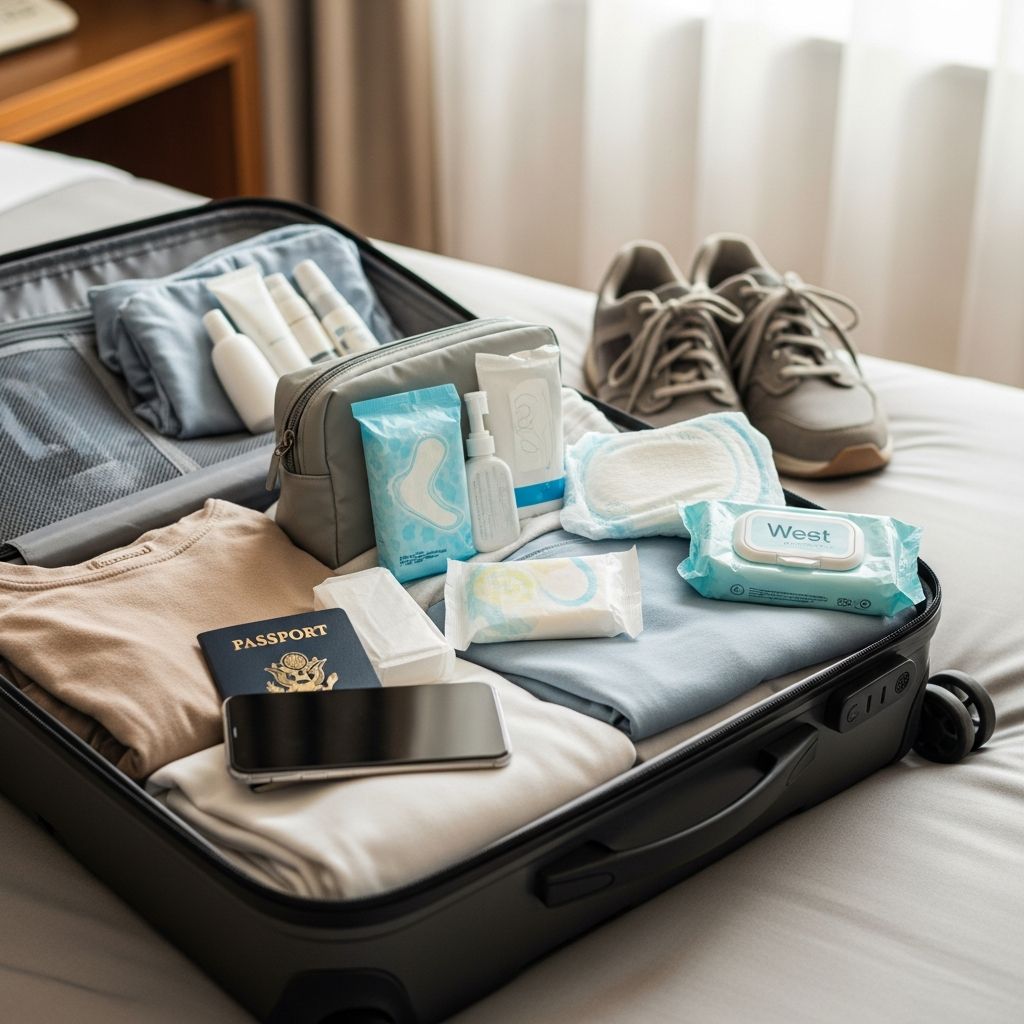
Pack significantly more incontinence products than you anticipate needing. Travel delays, unexpected situations, and variations in your symptoms mean having extra supplies prevents stressful situations.
Consider bringing:
– Adult diapers or pull-ups in various absorbency levels- Leak-proof underwear as backup protection- Extra absorbency products if concerned about reaching toilet facilities- Disposable or reusable underpads for beds- Portable urinals for men and women (compact, discreet options available)
Distribute these items across your luggage rather than keeping everything in one place. Pack essential supplies in your carry-on bag for immediate access during travel, while additional items can go in checked luggage.
Hygiene and Sanitation Supplies
Maintaining personal hygiene while traveling is essential for comfort and health. Pack travel-sized versions of necessary items:
– Wet wipes and dry cleansing wipes for freshness on the go- Hand sanitizer in TSA-approved sizes- Disposable seat covers for public toilets- Waterproof bags for used products and soiled clothing- Small washcloth or portable bidet for thorough cleaning- Extra underwear and change of clothes in your carry-on
Medications and Medical Documentation
Keep all medications in their original labeled containers within your carry-on bag. Pack medications in sufficient quantities for your entire trip, plus a few extra days in case of delays. Store medications according to their specific requirements—some need temperature control or protection from light.
Bring copies of relevant medical documentation, including:
– Prescription information and dosages- List of current medications and supplements- Healthcare provider contact information- Incontinence diagnosis and any relevant medical history- Insurance information and claim numbers
These documents facilitate medical care if needed and explain your condition to airline staff or accommodations personnel who may provide assistance.
Managing Your Journey: During Travel
Clothing Choices for Easy Access
Select clothing specifically to facilitate quick bathroom access. Loose-fitting garments with elastic waistbands, wrap skirts, or trousers with drop fronts allow rapid dressing adjustments in urgent situations.
Clothing recommendations:
– Loose pants or skirts rather than tight-fitting jeans- Elastic or drawstring waistbands- Layers you can adjust for temperature changes- Dark colors that hide potential accidents- Machine-washable fabrics that tolerate frequent cleaning
Always carry spare underwear and a complete change of clothes in your hand luggage. This backup provides security and confidence throughout your journey.
Fluid and Dietary Management
Strategic fluid and food choices significantly impact incontinence symptoms during travel. While staying adequately hydrated is important, being intentional about what and when you drink prevents unnecessary urgency.
Beverages to avoid or limit:
– Caffeine (coffee, tea, energy drinks) acts as a diuretic- Alcohol increases fluid loss and bladder irritation- Carbonated beverages increase bladder pressure- Spicy drinks and hot liquids irritate the bladder
Recommended beverages:
– Water consumed in small, frequent sips throughout the day- Herbal teas (decaffeinated)- Mocktails and non-caffeinated alternatives- Coconut water or sports drinks for hydration during long travels
Dietary strategies: Choose fiber-rich foods that support healthy digestion, as constipation worsens bladder symptoms. Mild, non-spicy foods are less likely to irritate your bladder than heavily seasoned cuisine. Eating regular meals on a consistent schedule helps regulate digestion and bladder function.
Physical Activity and Exercise During Travel
Extended sitting during travel worsens incontinence symptoms. Incorporating movement throughout your journey improves circulation, aids digestion, and enhances bladder control.
During flights: Stand, stretch, and walk the cabin every hour if possible. Practice pelvic floor exercises (Kegel exercises) while seated to strengthen bladder support.
During car travel: Stop every 1-2 hours for bathroom breaks and brief walks. Use these stops to stretch your legs, which aids digestion and reduces bladder pressure.
At your destination: Gentle walking, swimming, or other low-impact exercise supports overall bladder function. Regular movement helps maintain the muscle strength necessary for continence.
Managing Anxiety and Stress
Anxiety is a well-documented trigger for urge incontinence. The worry about finding bathrooms or experiencing accidents can paradoxically increase symptoms. Implementing stress-management techniques helps break this cycle.
Effective anxiety management strategies include:
– Deep breathing exercises (4-count inhales, 4-count exhales)- Mindfulness meditation, even for just 5-10 minutes daily- Progressive muscle relaxation techniques- Positive self-talk and confidence affirmations- Maintaining familiar routines where possible
Remember that thorough preparation itself reduces anxiety. Knowing you have adequate supplies, understand bathroom locations, and have planned your journey instills confidence in managing your condition.
Accessibility Resources and Support
In the United Kingdom, a RADAR key provides access to over 9,000 disabled public toilets throughout the country. This valuable resource offers more privacy and cleanliness than standard public facilities.
Many destinations worldwide have similar accessibility programs. Research your destination to identify available resources and assistance programs for people with incontinence or disabilities.
Frequently Asked Questions About Traveling with Incontinence
Q: Should I reduce my fluid intake while traveling to prevent accidents?
A: No. While strategic fluid management is important, severely limiting fluids leads to dehydration, which actually irritates your bladder and increases incontinence symptoms. Drink water consistently in small sips, and simply avoid bladder irritants like caffeine and alcohol.
Q: What should I do if I have an accident while traveling?
A: Having prepared supplies and backup clothing makes managing accidents straightforward. Use your waterproof bag to contain soiled items, change into clean clothes, and clean yourself with wipes. This is far more manageable than many people fear, especially with proper preparation.
Q: Can I fly with incontinence products in my luggage?
A: Yes. Adult diapers and incontinence products are permitted in both carry-on and checked baggage. However, pack essential supplies in your carry-on for immediate access during your flight, as checked luggage may be delayed.
Q: How do I discreetly manage incontinence while traveling with others?
A: Many people traveling with you understand that managing a medical condition requires bathroom access and supplies. Being matter-of-fact about your needs reduces awkwardness. Use waterproof, quiet disposal bags to minimize odors or sounds, and keep supplies organized in discreet pouches.
Q: Should I inform airlines or hotels about my incontinence?
A: Informing airlines can help them provide aisle seats and accessible facilities. However, you don’t need to share this information with hotels unless requesting specific accommodations like ground floor rooms or proximity to bathrooms, which you can request without disclosing your medical condition.
Q: What if my destination has limited bathroom facilities?
A: Research your destination thoroughly before traveling. Pack high-absorbency products, portable urinals, and disposable seat covers. Portable urinals designed for both men and women provide discreet relief options when facilities are limited.
Moving Forward: Enjoying Your Journey
Traveling with incontinence requires thoughtful planning, but should not prevent you from exploring, relaxing, and creating memories. The strategies outlined in this guide—pre-travel consultations, careful packing, route planning, and stress management—address the primary concerns people with incontinence face while traveling.
Remember that countless people travel successfully while managing incontinence every day. Your condition is manageable, and with proper preparation, travel can be as enjoyable and rewarding as for anyone else. Focus on what you want to experience at your destination, trust in your preparation, and maintain confidence in your ability to manage your health while away from home.
References
- Tips for How to Control Urine While Travelling — JOGO Health. 2025. https://www.jogohealth.in/tips-for-how-to-control-urine-while-travelling/
- How to Travel with Incontinence this Summer — Attends. 2025. https://www.attends.co.uk/blog/post/travelling-incontinence-tips
- Traveling Tips for Men with Incontinence: How to Stay Comfortable and Confident — TENA Australia. 2025. https://tena.com.au/blogs/living-with-incontinence/traveling-tips-for-men-with-incontinence
- Urinary Incontinence: Understanding Your Condition — National Institute of Diabetes and Digestive and Kidney Diseases (NIDDK). U.S. Department of Health and Human Services. https://www.niddk.nih.gov/health-information/urologic-diseases/urinary-incontinence
- Stress Management and Bladder Control — American Urological Association Foundation. https://www.urologyhealth.org/
Similar Articles








Read full bio of medha deb