Tips to Measure Your Blood Pressure Correctly
Master proper blood pressure measurement techniques at home for accurate readings and better health monitoring.
Accurate blood pressure measurement is fundamental to managing your cardiovascular health and preventing serious conditions like stroke and heart failure. Many people struggle with obtaining reliable blood pressure readings at home because they don’t understand the proper techniques and positioning required. Whether you have hypertension, are monitoring your heart health, or simply want to track your wellness, learning the correct way to measure your blood pressure can make a significant difference in the accuracy of your results and the effectiveness of your health management plan.
Why Proper Blood Pressure Measurement Matters
Blood pressure monitoring serves as a critical tool in cardiovascular disease prevention and management. When measurements are taken incorrectly, they can lead to false readings that may result in unnecessary medication adjustments or, conversely, failure to detect genuine hypertension. Accurate home blood pressure monitoring allows you and your healthcare provider to make informed decisions about treatment and lifestyle modifications. Regular monitoring also helps identify patterns in your blood pressure throughout the day and can reveal white coat syndrome, where readings are artificially elevated in medical settings. By mastering the proper technique, you ensure that the data you collect provides a true picture of your cardiovascular health.
Preparing Your Environment for Measurement
The setting in which you measure your blood pressure plays a crucial role in obtaining accurate readings. Before you begin, ensure that you are in a calm, comfortable environment where you can relax for at least five minutes. Your surroundings should be quiet and free from distractions that might elevate your stress levels or heart rate. Temperature is another important consideration; avoid measuring your blood pressure immediately after exposure to extreme heat or cold, as these can affect your readings. Additionally, empty your bladder before measurement, as a full bladder can temporarily elevate blood pressure by up to 10 millimeters of mercury.
Creating the Ideal Measurement Space
Set up a dedicated area in your home where you’ll consistently measure your blood pressure. This space should have a comfortable chair with back support and armrests if possible. Ensure adequate lighting so you can easily read your monitor’s display. Keep your monitor and any logs or notebooks in this location for convenience. Some people benefit from measuring their blood pressure at the same time each day in the same location, as consistency helps establish reliable baseline measurements and makes it easier to identify significant changes.
Proper Body Positioning During Measurement
How you position your body during blood pressure measurement significantly impacts the accuracy of your results. Incorrect positioning is one of the most common reasons for unreliable readings, yet it’s easily correctable with proper instruction and practice.
Seating Position
Sit in a chair with your back supported and both feet flat on the floor. Your feet should not be crossed, as crossing your legs can increase your blood pressure reading by several millimeters of mercury. Sit upright with good posture; slouching or leaning back can affect the measurement. Remain still and quiet during the entire measurement process. Avoid talking, as speaking during measurement can elevate your systolic reading and compromise accuracy.
Arm Positioning and Support
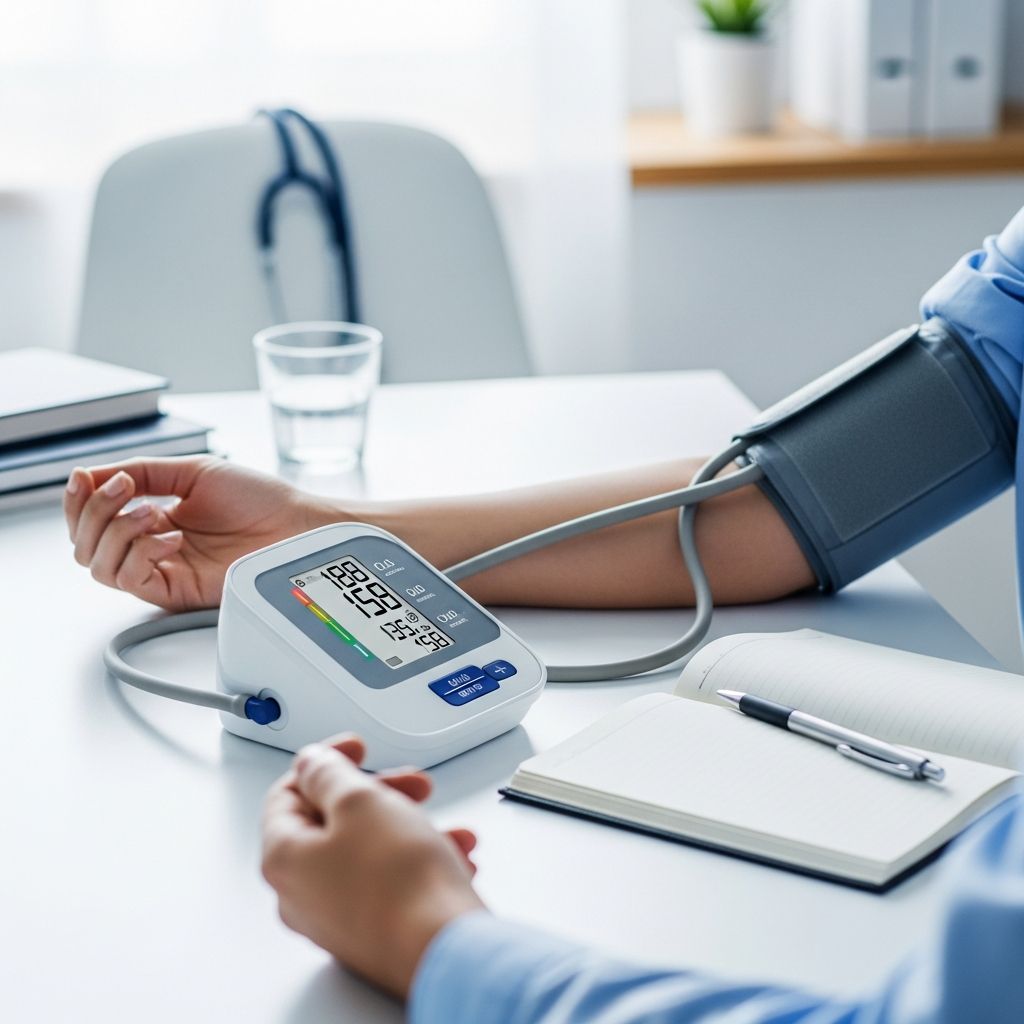
Your arm position is critical for accurate blood pressure measurement. Rest your arm on a table or armrest so that the cuff is positioned at approximately heart level. This means the middle of your upper arm should be at the same height as your heart. When your arm hangs at your side, it can lead to overestimated systolic readings by up to 6.5 millimeters of mercury and overestimated diastolic readings by approximately 4.4 millimeters of mercury. Your arm should be relaxed and supported throughout the measurement, not held up by muscle tension alone. Bend your elbow slightly so your arm forms approximately a 90-degree angle. Never measure blood pressure with your arm extended straight out or held high above your head.
Related Stories



Cuff Placement
The blood pressure cuff should be placed directly on your bare skin, never over clothing. Remove any long sleeves or roll them up completely to expose your upper arm. Position the cuff approximately half an inch to an inch above the crease of your elbow, centered over the brachial artery. Most modern cuffs have a marking indicating where the artery should be positioned. If your cuff is too loose, it will provide falsely elevated readings. If it’s too tight, it may cut off circulation or cause discomfort. It should fit snugly against your arm with enough room to fit one finger underneath.
Timing Your Blood Pressure Measurements
When you measure your blood pressure is just as important as how you measure it. The timing of your measurements can significantly influence the results and the patterns you observe.
Best Times to Measure
Most healthcare providers recommend measuring your blood pressure in the morning, before eating breakfast or taking medications. Morning measurements typically reflect your baseline blood pressure before the day’s activities and stressors affect your readings. If possible, measure in the morning and again in the evening to get a more complete picture of your daily blood pressure patterns. Some people may be asked to measure at specific times related to medication schedules, so follow your doctor’s recommendations if they provide specific timing instructions.
Frequency of Measurements
The frequency of blood pressure monitoring depends on your individual health situation. People with newly diagnosed hypertension or those adjusting medications might benefit from daily measurements. Once your blood pressure is well-controlled, you may be able to reduce frequency to several times per week. Always follow your healthcare provider’s recommendations regarding how often you should measure your blood pressure. Consistency in measurement timing and frequency helps your doctor identify true patterns versus temporary fluctuations.
Avoiding Measurement Interference
Do not measure your blood pressure immediately after consuming caffeine, nicotine, or alcohol, as these substances can affect your readings. Caffeine can elevate systolic blood pressure by 5-10 millimeters of mercury. Similarly, avoid measuring within 30 minutes of exercise, as physical activity temporarily raises blood pressure. Don’t measure when you’re emotionally stressed or anxious, as stress significantly elevates readings. Wait at least five minutes after stressful activities before taking your measurement.
Choosing and Using the Right Equipment
Home blood pressure monitors come in various styles, and selecting the right one ensures accurate measurements. Modern automated monitors are generally preferred over manual mercury sphygmomanometers because they’re easier to use and less prone to operator error.
Types of Home Blood Pressure Monitors
Automatic arm monitors are widely recommended because they’re user-friendly and provide consistent results. Wrist monitors are portable and convenient but tend to be less accurate than arm monitors, especially if not positioned correctly. Finger monitors are the least accurate option and are generally not recommended for regular monitoring. When choosing a monitor, look for devices that have been validated by independent organizations and approved by your healthcare provider.
Monitor Maintenance and Accuracy
Check your monitor’s accuracy annually, especially if it’s dropped or hasn’t been used for an extended period. Most medical centers or your doctor’s office can verify your home monitor against their professional equipment. Keep your monitor clean and store it properly in a cool, dry location. Avoid exposing it to extreme temperatures or humidity. Replace batteries regularly to ensure consistent power and accurate readings.
Common Measurement Mistakes to Avoid
Understanding what not to do is just as important as knowing the correct procedure. Several common mistakes can significantly compromise your blood pressure readings.
Clothing and Cuff Placement Errors
Never place the cuff over clothing or long sleeves, as this creates a barrier between the cuff and your skin and can lead to inaccurate readings. Some people mistakenly measure over multiple layers or thick fabric, which prevents proper contact between the cuff and the brachial artery. Always roll up your sleeves completely and measure directly on bare skin.
Positioning Mistakes
Allowing your arm to dangle at your side instead of supporting it at heart level is a common error that inflates your readings. Similarly, crossing your legs while seated or holding tension in your measuring arm can elevate your blood pressure artificially. Talking during measurement, even briefly, can increase systolic readings by several millimeters of mercury. Remain completely quiet and still from the moment you start the measurement until it’s complete.
Environmental and Timing Errors
Measuring in an uncomfortable, loud, or stressful environment introduces unnecessary variability. Measuring immediately after caffeine consumption, physical activity, or emotional stress skews your results. Taking measurements at random times rather than consistently makes it difficult to establish reliable baseline data and identify genuine patterns in your blood pressure.
Recording and Tracking Your Results
Accurate record-keeping is essential for meaningful blood pressure monitoring. Create a simple log where you record the date, time, systolic reading, diastolic reading, pulse rate, and any relevant notes about how you were feeling or what you’d eaten or done before measurement. Many home monitors now include digital memory that stores readings automatically. Review your recordings regularly with your healthcare provider to identify patterns and trends.
Understanding Your Blood Pressure Readings
Blood pressure is expressed as two numbers: systolic pressure (the top number) represents the pressure when your heart contracts, while diastolic pressure (the bottom number) represents the pressure when your heart relaxes between beats. Both numbers are important, though recent guidelines emphasize systolic readings slightly more. Normal blood pressure is generally considered less than 120 systolic and less than 80 diastolic. Elevated readings are 120-129 systolic with less than 80 diastolic. Stage 1 hypertension is 130-139 systolic or 80-89 diastolic, while Stage 2 hypertension is 140 or higher systolic or 90 or higher diastolic. If you consistently get readings above normal, consult your healthcare provider about management strategies.
Communicating With Your Healthcare Provider
Bring your blood pressure log to your healthcare appointments. Provide your doctor with context about your readings, including any patterns you’ve noticed. Discuss the best times and frequency for measurement based on your specific health situation. Ask whether medication adjustments should be made based on your home readings. Be honest about any challenges you face with consistent monitoring, as your doctor may suggest solutions or modifications to make the process easier.
Frequently Asked Questions About Blood Pressure Measurement
Q: How many times should I measure my blood pressure?
A: Most experts recommend taking two readings, one to two minutes apart, at the same time of day. Use the average of these readings as your recorded measurement. This approach helps eliminate anomalies from a single reading.
Q: What if my blood pressure is different in each arm?
A: Slight variations between arms are normal. Some people naturally have higher readings in one arm than the other. Discuss significant differences with your doctor, as they may indicate circulatory issues. Consistently measure in the same arm for baseline comparison purposes.
Q: Can I measure my blood pressure while lying down?
A: Measurements taken while lying down are typically 5-10 millimeters of mercury lower than sitting measurements. Sitting is the standard position recommended by medical organizations. Lying down should only be used if specifically recommended by your healthcare provider.
Q: How accurate are wrist and finger blood pressure monitors?
A: Wrist and finger monitors are generally less accurate than upper arm monitors because blood pressure in these areas is more easily affected by positioning and arm movement. Upper arm monitors are the gold standard for home monitoring and provide the most reliable readings.
Q: What should I do if I get an unusually high reading?
A: Don’t panic. Wait a few minutes, ensure you’re properly positioned, and retake the measurement. If the second reading is also high, contact your healthcare provider. A single elevated reading doesn’t necessarily indicate a problem, but multiple elevated readings warrant medical attention.
References
- Measuring Blood Pressure at Home — Harvard Health Publishing, Harvard Medical School. 2008. https://www.health.harvard.edu/heart-health/tips-to-measure-your-blood-pressure-correctly
- Certain Arm Positions Commonly Used for Blood Pressure Checks May Lead to Inaccurate Results — Harvard Street. 2024. https://harvardstreet.org/certain-arm-positions-commonly-used-for-blood-pressure-checks-may-lead-to-inaccurate-results-heres-the-right-way-to-do-it/
- Understanding Blood Pressure Numbers — National Heart, Lung, and Blood Institute (NHLBI). 2024. https://www.nhlbi.nih.gov/
- Home Blood Pressure Monitoring Guidelines — American Heart Association. 2024. https://www.heart.org/
Similar Articles








Read full bio of Sneha Tete