Tongue Health Conditions: Signs, Causes, Treatments
Discover common tongue health conditions, their symptoms, causes, and treatments for better oral and overall health awareness.
Your tongue is a vital organ that aids in tasting, speaking, and swallowing. Changes in its color, texture, or size can signal underlying health issues ranging from nutritional deficiencies to serious diseases like cancer. Recognizing these signs early allows for timely intervention. This article covers common tongue conditions, drawing from medical insights to help you understand symptoms, causes, and treatments.
What a Healthy Tongue Looks Like
A healthy tongue is typically pink with a slightly rough texture due to small bumps called
papillae
. These papillae house taste buds and help with grip during eating. The tongue should move freely without pain, and saliva should keep it moist. Any deviation—such as unusual color, coating, or swelling—warrants attention.During dental exams, professionals check tongue appearance and mobility. For instance, the Mallampati score assesses tongue size relative to the oral cavity to predict airway obstruction risks, useful in sleep apnea evaluations.
Glossitis (Smooth, Red Tongue)
**Glossitis** refers to inflammation causing a smooth, red, glossy tongue due to loss of papillae. It often presents with pain, burning sensation, and altered taste.
Causes:
- Vitamin B12 deficiency, often from pernicious anemia (autoimmune condition blocking B12 absorption).
- Iron or folate deficiency.
- Infections (bacterial, fungal, or viral).
- Allergies, irritants like spicy foods, or tobacco.
A patient with one month of tongue pain and reduced taste was diagnosed with severe B12 deficiency.
Treatment: Address the underlying cause—B12 injections for deficiency, antifungals for infections, or avoiding irritants. Most cases resolve with proper care.
Macroglossia (Enlarged Tongue)
**Macroglossia** is an abnormally large tongue that may protrude or impair speech, swallowing, or breathing. Acute swelling requires emergency care to prevent airway blockage.
Causes:
- Acute: Allergic reactions (anaphylaxis), infections, or trauma.
- Chronic: Hypothyroidism (low thyroid hormone), acromegaly (excess growth hormone), amyloidosis (protein deposits), Down syndrome, or tumors.
Slow enlargement over time points to endocrine disorders like hypothyroidism. Diagnosis involves blood tests, imaging, and sometimes biopsy.
Treatment: Epinephrine for acute allergies; hormone therapy or surgery for chronic cases.
White Tongue
A
white tongue
appears coated, often due to debris, but persistent cases signal issues. Common in poor oral hygiene but linked to systemic conditions.Causes:
- Dehydration or dry mouth.
- Oral thrush (Candida yeast overgrowth, common in diabetics or antibiotic users).
- Leukoplakia (white patches from irritation, e.g., tobacco; precancerous risk).
- Lichen planus (autoimmune).
Gently brush the tongue to differentiate coating from fixed patches. Leukoplakia feels flat and hard.
Treatment: Improve hygiene, hydrate, antifungals for thrush. Monitor leukoplakia with biopsies if persistent.
Strawberry Tongue
**Strawberry tongue** features a white coating with red, swollen papillae resembling a strawberry. It’s a hallmark of scarlet fever but occurs in other conditions.
Related Stories



Causes:
- Kawasaki disease (in children; also causes fever, rash).
- Scarlet fever (strep throat complication).
- Toxic shock syndrome.
The tongue starts white then turns red. Urgent evaluation is needed for Kawasaki to prevent heart complications.
Treatment: Antibiotics for infections; IVIG and aspirin for Kawasaki.
Geographic Tongue
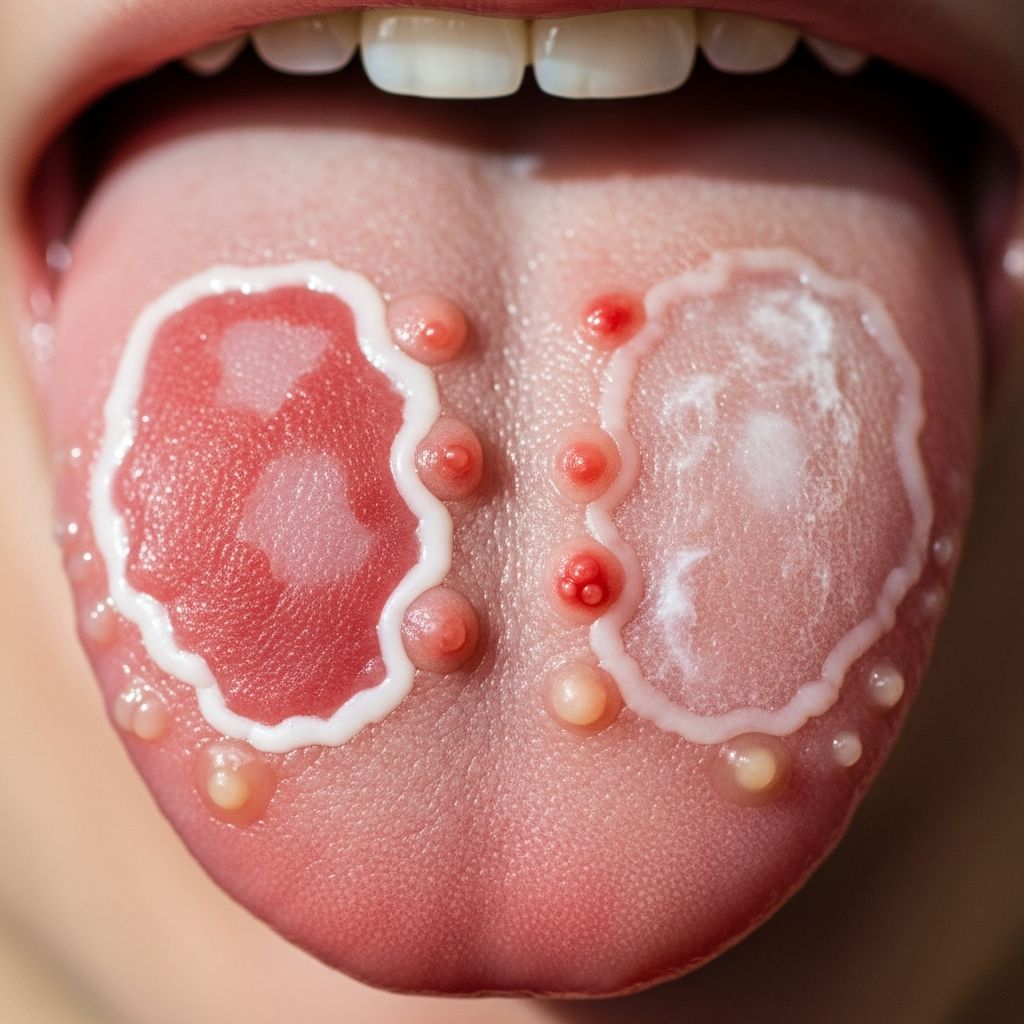
**Geographic tongue** (benign migratory glossitis) shows map-like red patches with white borders due to papillae loss. It’s painless or mildly sensitive to spicy foods.
Causes: Unknown; linked to stress, allergies, or psoriasis. Affects 1-3% of people.
Patches migrate, changing appearance daily. No serious implications.
Treatment: Usually none; topical steroids or avoidance of triggers for discomfort.
Hairy Tongue
**Black hairy tongue** (or hairy leukoplakia) features elongated papillae trapping debris, appearing hair-like and stained black/brown.
Causes:
- Poor hygiene, soft diet, smoking, or antibiotics disrupting bacteria.
- Excess coffee/tea staining.
Common and harmless but unsightly.
Treatment: Tongue scraping, brushing, rough foods, or biopsy if suspicious. Resolves quickly with hygiene.
Canker Sores (Aphthous Ulcers)
**Canker sores** are painful, round ulcers on the tongue or mouth, white/yellow with red borders. Recurrent in 20% of people.
Causes:
- Stress, acidic foods, vitamin deficiencies (B12, iron), or autoimmune factors.
- Not contagious (unlike cold sores).
Heal in 1-2 weeks.
Treatment: OTC gels, salt rinses, or prescription steroids for severe cases.
Tongue Cancer
**Tongue cancer**, often squamous cell carcinoma, appears as persistent red/white sores, ulcers, or lumps. Risk factors: tobacco, alcohol, HPV.
Symptoms: Painless sore >2 weeks, bleeding, numbness, or swallowing difficulty.
Early detection via biopsy improves survival (80% stage I vs. 20% late-stage).
Treatment: Surgery, radiation, chemotherapy.
Dry Tongue and Sjogren’s Syndrome
**Dry mouth** (xerostomia) leads to a cracked, painful tongue. Under the tongue, lack of saliva pooling signals issues.
Sjogren’s syndrome: Autoimmune attack on salivary glands, causing profound dryness, dental decay, and systemic symptoms (joint pain, fatigue).
Treatment: Artificial saliva, pilocarpine drugs, or immunosuppressants.
Other Tongue Signs
- Gorlin Sign: Extreme tongue flexibility in Ehlers-Danlos syndrome (connective tissue disorder).
- Raynaud’s on Tongue: Color changes (white-blue-red) to cold; can follow radiation therapy.
- Tongue Tie (Ankyloglossia): Restricted movement from short frenulum; may affect speech/breastfeeding.
Diagnosis and When to See a Doctor
Dentists check tongue during routine exams (every 6 months). Red flags: Persistent changes >2 weeks, pain, swelling, or bleeding. See a dentist first; they may refer to ENT or physician.
Tools: Visual exam, biopsy, blood tests, imaging.
Prevention and Home Care
- Brush tongue daily with soft brush.
- Stay hydrated; avoid tobacco/alcohol.
- Balanced diet rich in vitamins.
- Regular dental visits for early detection.
Simple hygiene prevents most issues.
Frequently Asked Questions (FAQs)
What does a white coating on the tongue mean?
A white coating often indicates poor hygiene, thrush, or leukoplakia. Brush gently and consult a dentist if persistent.
Is geographic tongue dangerous?
No, it’s benign and harmless, though it may cause sensitivity.
How is tongue cancer diagnosed?
Via biopsy of suspicious lesions during oral exam.
Can vitamin deficiencies cause tongue problems?
Yes, especially B12 causing glossitis.
Should I worry about a hairy tongue?
Usually not; improve oral hygiene to resolve it.
References
- What your TONGUE says about your HEALTH: Doctor Explains — YouTube (Medical professional explanation). 2023. https://www.youtube.com/watch?v=QWOC9YnRpZE
- Your Tongue Says a Lot About Your Health — Commerce Dentistry Blog. Accessed 2023. https://commercedentistry.com/blog/your-tongue-says-a-lot-about-your-health/
- Tongue Disorders — MedlinePlus (U.S. National Library of Medicine). 2024-01-10. https://medlineplus.gov/tonguedisorders.html
Similar Articles








Read full bio of Sneha Tete