Safe Stuffing: Essential Guide To Holiday Stuffing Safety
Expert tips from registered dietitians to prepare stuffing safely and deliciously for holidays like Thanksgiving.
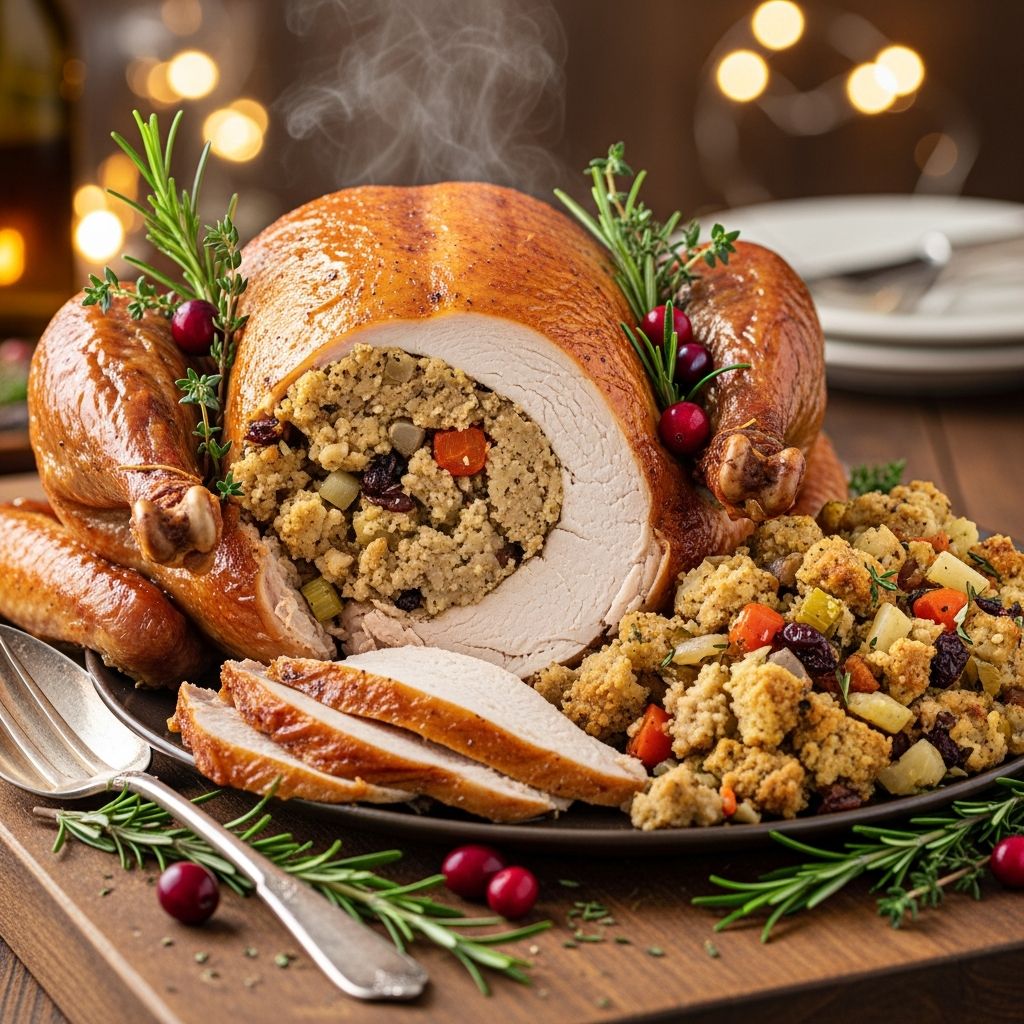
Stuffing is a beloved holiday staple, especially during Thanksgiving, but improper handling can lead to foodborne illness risks from bacteria like Salmonella. Registered dietitians recommend cooking stuffing separately from the turkey to ensure it reaches safe internal temperatures and stays out of the bird’s danger zone.
Why Stuffing Safety Matters
Stuffing mixtures, with their bread, vegetables, meats, and moisture, create an ideal environment for bacterial growth if not handled correctly. The USDA advises against stuffing turkeys in advance, as the stuffing can remain in the temperature danger zone (40°F to 140°F) too long, promoting pathogens. Instead, bake stuffing in a separate dish for even cooking and safety.
Key risks include undercooking inside the bird, where the turkey’s juices may contaminate the mixture without reaching 165°F internally. Cooking separately allows precise temperature control and crispy edges without sogginess.
Bake Stuffing Separately from Poultry
The safest method is to prepare stuffing as a side dish, or “dressing,” baked outside the turkey. This prevents bacterial cross-contamination and ensures the stuffing cooks to 165°F throughout.
- Use a casserole dish or muffin tins for individual portions, increasing crunchy surface area while maintaining safety.
- Butter the pans generously for flavor and non-stick release.
- Bake at 350°F for 45-50 minutes, until golden and internal temperature hits 165°F.
After baking, drizzle with turkey pan drippings for moisture and flavor mimicking in-bird stuffing, without the risks. This approach aligns with USDA guidelines for holiday meals.
Handle Ingredients with Care
Prepare wet and dry ingredients separately until just before baking to minimize bacterial growth time. Chop vegetables like onions, celery, and herbs fresh, and store bread cubes uncovered overnight to stale them for better absorption.
- Avoid using fresh bread; stale or day-old cubes prevent a mushy texture.
- Combine only right before baking to keep the mix dry until oven-ready.
- Refrigerate uncooked components separately if prepping ahead.
Celery is a traditional ingredient adding crunch and flavor—don’t skip it if it’s part of family recipes, as omissions can alter taste profiles expected by guests.
Achieve Perfect Texture and Flavor
Balance moisture without sogginess: Use enough broth for cohesion but not excess, which leads to custard-like results. Incorporate butter, fresh herbs like sage, thyme, and parsley for rich, aromatic notes.
| Common Texture Issues | Solutions |
|---|---|
| Soggy or mushy | Stale bread, less broth, bake uncovered partway |
| Dry or crumbly | Proper broth ratio (1.5-2 cups per loaf), eggs for binding |
| No crunch | Muffin tins or high bake time for edges |
Mix gently to distribute flavors evenly. For lighter versions, reduce butter slightly and add fruits like cranberries or apples, paired with a fresh salad side.
Timing and Cooking Best Practices
Related Stories



Prep stuffing a day ahead but bake fresh on holiday. Common mistakes include oversalting (use low-sodium broth and taste before baking), undercooking (always check 165°F), or leaving covered too long, trapping steam.
- Bake uncovered for the last 20 minutes for crisp top.
- If browning too fast, tent with foil.
- Make extra—stuffing is popular and reheats well.
Avoid diet-friendly swaps that compromise texture; traditional richness is key for holidays, balanced with veggie sides.
Storage and Reheating Safety
Cool stuffing quickly post-bake: Spread in shallow containers to drop below 40°F within 2 hours. Refrigerate in airtight containers up to 4 days; freeze for 1 month.
- Reheat to 165°F in oven or microwave.
- Portion into servings for quick thawing.
- Discard if left out over 2 hours.
These steps prevent bacterial regrowth, ensuring leftovers are safe.
Common Mistakes to Avoid
Many home cooks repeat errors that compromise safety and taste:
- Cooking inside the turkey: Risks undercooking stuffing while turkey reaches doneness.
- Fresh bread only: Leads to mush; dry it out first.
- Mixing too early: Wet ingredients soften bread prematurely.
- Insufficient broth: Dry result; measure precisely.
- Overmixing: Breaks bread into paste.
Make from scratch for seasoning control, avoiding boxed mixes’ high salt.
Recipe Inspiration: Buttery Herb Stuffing
For a crowd-pleasing base: Cube 1-2 loaves stale bread. Sauté onions, celery in 1-2 sticks butter with garlic, herbs. Toss with broth-egg mix, bake as directed. Customize with sausage, nuts, or oysters regionally.
Frequently Asked Questions (FAQs)
Can I stuff the turkey safely?
No, the USDA strongly recommends against it due to bacterial risks. Bake separately for safety.
How do I get crispy stuffing?
Bake in muffin tins or uncovered; stale bread helps absorb moisture without sogginess.
Can I prepare stuffing ahead?
Yes, assemble dry mix day before; add wet ingredients and bake fresh.
What’s the safe internal temperature?
165°F throughout, checked with a food thermometer.
How long does stuffing last in the fridge?
Up to 4 days when cooled properly; reheat to 165°F.
References
- Stuffing and Food Safety — USDA Food Safety and Inspection Service. 2024-10-15. https://www.fsis.usda.gov/food-safety/safe-food-handling-and-preparation/food-safety-basics/stuffing-and-food-safety
- The Biggest Mistakes Everyone Makes With Stuffing — Food Network (via YouTube transcript). 2022-11-16. https://www.youtube.com/watch?v=kmsVwonCups
- Thanksgiving Food Safety Tips — Centers for Disease Control and Prevention (CDC). 2025-11-01. https://www.cdc.gov/foodsafety/foods/thanksgiving.html
- Top Tips for Safe Stuffing — Academy of Nutrition and Dietetics. 2023-11-20. https://www.eatright.org/food/cultural-cuisines-and-traditions/holidays-and-celebrations/top-tips-for-safe-stuffing
- Food Safety During Power Outages — FDA. 2024-07-10. https://www.fda.gov/food/buy-store-serve-safe-food/food-and-water-safety-during-power-outages-and-floods
Similar Articles








Read full bio of medha deb