Topical Calcineurin Inhibitors: Expert Guide For Eczema Relief
Effective non-steroidal treatments for eczema and inflammatory skin conditions, offering steroid-sparing options for long-term management.
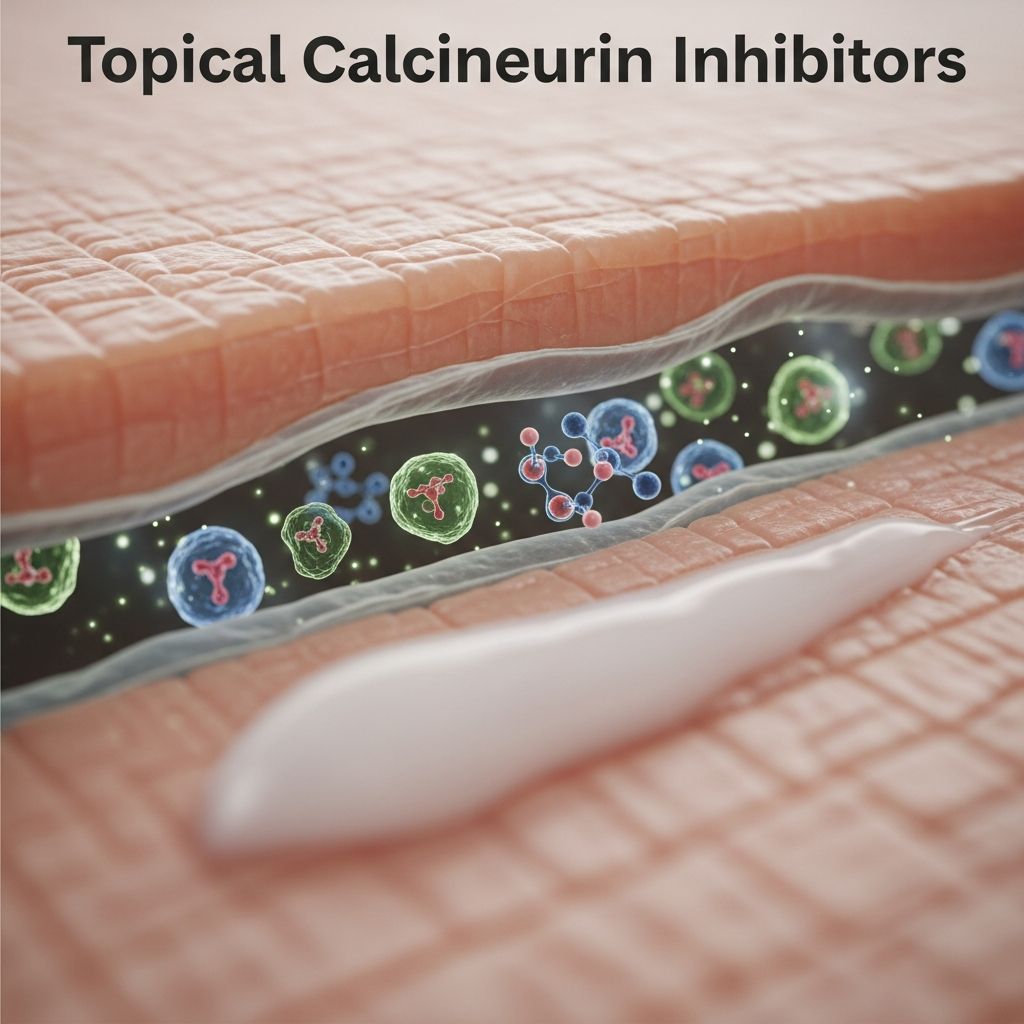
Topical calcineurin inhibitors (TCIs) represent a vital class of non-steroidal anti-inflammatory medications primarily used in the management of atopic dermatitis, commonly known as eczema. These agents, including tacrolimus ointment (Protopic) and pimecrolimus cream (Elidel), offer a steroid-sparing alternative for patients requiring long-term therapy, particularly in sensitive areas like the face and genitals.
What are topical calcineurin inhibitors?
TCIs are immunomodulatory drugs that target the enzyme calcineurin in T-lymphocytes, preventing the activation of inflammatory pathways without the atrophy-inducing effects associated with topical corticosteroids. Approved by the FDA for patients aged 2 years and older, tacrolimus is indicated for moderate to severe atopic dermatitis, while pimecrolimus suits mild to moderate cases.
Unlike steroids, TCIs do not thin the skin or cause telangiectasia, making them suitable for prolonged use. They are particularly beneficial in pediatric populations and for facial or intertriginous areas where steroid side effects are a concern.
Mechanism of action
Atopic dermatitis arises from an overactive immune response to environmental triggers such as allergens, dust mites, or pollen. This triggers calcineurin, a phosphatase enzyme that dephosphorylates nuclear factor of activated T-cells (NFAT), allowing its translocation to the nucleus and subsequent transcription of pro-inflammatory cytokines like IL-2, IL-4, and TNF-α.
TCIs bind to FK-binding protein (FKBP-12), forming a complex that inhibits calcineurin. This blocks NFAT activation, reducing cytokine production, T-cell proliferation, and downstream inflammation. Additionally, they suppress mast cell degranulation and histamine release, alleviating pruritus.
Pimecrolimus exhibits greater lipophobicity, confining its action to the skin with minimal systemic absorption, whereas tacrolimus penetrates slightly deeper but remains primarily topical.
Indications
- Atopic dermatitis (eczema): First-line for maintenance therapy post-flare control with steroids; proactive intermittent use on affected areas.
- Sensitive skin areas: Face, eyelids, genitals, flexures – where steroids risk atrophy or striae.
- Off-label uses: Psoriasis (facial/genital), seborrheic dermatitis, lichen planus, vitiligo.
- Pediatric eczema: Safe from age 2; tacrolimus 0.03% for children 2-15 years.
Available preparations
| Agent | Brand | Strengths | Formulation | Approved Age |
|---|---|---|---|---|
| Tacrolimus | Protopic | 0.03%, 0.1% | Ointment | ≥2 years |
| Pimecrolimus | Elidel | 1% | Cream | ≥2 years |
Tacrolimus 0.1% is preferred for adults and severe disease; 0.03% for children. Ointment vehicles are occlusive, enhancing penetration in dry, eczematous skin.
Dosing and administration
Apply a thin layer twice daily to affected areas until clearance, then taper to maintenance: once or twice weekly (proactive therapy). Combine with emollients for optimal barrier repair. Avoid occlusion unless directed; do not apply to mucous membranes.
- Acute flares: Twice daily until improvement (typically 1-3 weeks).
- Maintenance: Apply to previously affected skin 2-3 times weekly to prevent relapses.
- **Children:** Start with lower strength; monitor response.
Related Stories



Pre-treatment with emollients reduces burning sensation. Store tacrolimus refrigerated to mitigate application discomfort.
Efficacy
Clinical trials demonstrate TCIs are at least as effective as moderate-potency corticosteroids for atopic dermatitis. 0.1% tacrolimus improves symptoms in 73-93% of patients vs. 52-88% with steroids at 3-12 weeks (NNT=3-4).
Pimecrolimus 1% outperforms vehicle (48-67% improvement vs. 16-38%) but is slightly less potent than tacrolimus or moderate steroids. Long-term studies (up to 12 months) confirm sustained efficacy with reduced flares via proactive use.
In off-label psoriasis, TCIs significantly reduce severity scores, especially in facial/genital areas, comparable to or better than vitamin D analogs without irritation.
Comparison with topical corticosteroids
| Aspect | TCIs | Topical Corticosteroids |
|---|---|---|
| Onset of action | Slower (days) | Faster (hours-days) |
| Skin atrophy risk | None | High with prolonged use |
| Sensitive areas | Preferred | Low-potency only |
| Long-term use | Safe | Limited |
| Efficacy in severe disease | Tacrolimus equivalent | Slightly superior acutely |
TCIs serve as steroid-sparing agents, ideal for rotation therapy.
Side effects
Most common: Transient burning/stinging (30-50% initially, <10% at 6 months), resolving with continued use or refrigeration. Other local effects: pruritus, erythema, folliculitis, acne.
Rare systemic risks: Theoretical immunosuppression (black box warning for malignancy, infections), but long-term data (including pediatrics) show no increased lymphoma/skin cancer risk beyond eczema baseline. Minimal absorption confirmed.
- Avoid in active cutaneous infections (herpes, warts).
- Flu-like symptoms or alcohol intolerance rare.
Contraindications and precautions
- Active viral/bacterial/fungal skin infections.
- Immunosuppressed patients (caution).
- Children <2 years (not approved).
- Pregnancy: Category C; use if benefits outweigh risks.
- Sun exposure: Use sunscreen; phototoxicity rare.
Special populations
Children
Safe and effective from age 2; extensive trials up to 12 months show low absorption and good tolerability. Preferred over steroids for face/body.
Pregnant/Breastfeeding
Limited data; topical use minimizes exposure. Consult specialist.
Off-label in psoriasis
Effective for facial/genital plaques; well-tolerated short-term.
Patient education
- Apply thinly after emollients; wash hands post-use.
- Expect initial burning – persists <2 days.
- Continue emollients daily.
- Report infections, worsening, or lymphadenopathy.
- Proactive use prevents flares.
Frequently Asked Questions (FAQs)
Q: Are TCIs safe for long-term use?
Yes, studies up to 4 years show no systemic risks; safer than chronic steroids for skin thinning.
Q: Can children under 2 use TCIs?
Not FDA-approved; use alternatives like low-potency steroids.
Q: Do TCIs cure eczema?
No, they control symptoms; combine with trigger avoidance and moisturizers.
Q: How do I manage burning sensation?
Refrigerate ointment, apply post-moisturizer, use sparingly.
Q: Are TCIs covered by insurance?
Often prior authorization required as second-line.
Conclusion
TCIs fill a critical niche in eczema management, providing effective, safe control without steroid drawbacks. Proactive regimens enhance outcomes.
References
- Topical Calcineurin Inhibitors: A Treatment for Eczema — Sanova Dermatology. 2023. https://www.sanovadermatology.com/skin-care/topical-calcineurin-inhibitors-a-treatment-for-eczema/
- Topical calcineurin inhibitors for atopic dermatitis — PMC – NIH. 2023-10-01. https://pmc.ncbi.nlm.nih.gov/articles/PMC10645448/
- Topical Calcineurin Inhibitors – Eczema Treatment — WebMD. 2024. https://www.webmd.com/skin-problems-and-treatments/eczema/topical-calcineurin-inhibitors-eczema
- Off-Label Uses of Topical Calcineurin Inhibitors — Skin Therapy Letter. 2023. https://www.skintherapyletter.com/off-label-use/topical-calcineurin-inhibitors/
- Safety and Efficacy of Topical Calcineurin Inhibitors in the Treatment… — PMC – NIH. 2023-03-01. https://pmc.ncbi.nlm.nih.gov/articles/PMC10026016/
- Topical Calcineurin Inhibitors — Rady Children’s Health. 2024. https://www.rchsd.org/programs-services/dermatology/eczema-and-inflammatory-skin-disease-center/treatment/topical-calcineurin-inhibitors/
- Eczema treatment: Topical calcineurin inhibitors (TCIs) for children — AAD. 2024. https://www.aad.org/public/diseases/eczema/childhood/treating/topical-calcineurin-inhibitors
Similar Articles








Read full bio of medha deb