Topical Fusidic Acid: Uses, Dosage & Safety
Comprehensive guide to fusidic acid for treating bacterial skin infections effectively.
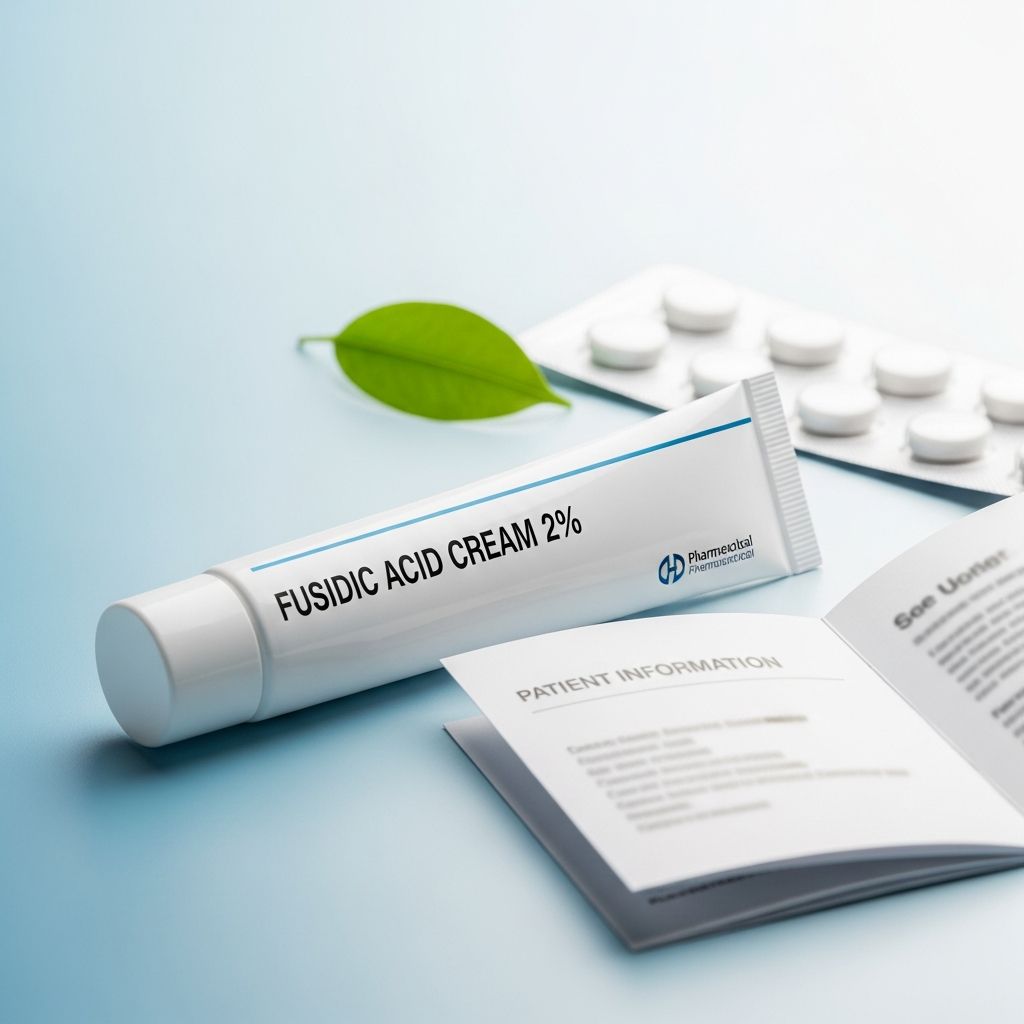
Introduction to Topical Fusidic Acid
Fusidic acid is an
antibiotic
that can be administered systemically or applied topically to treat various skin conditions. The topical formulation, available as 2% cream and sodium fusidate 2% ointment, is particularly effective against a wide range of bacteria commonly found in cutaneous skin infections. In many countries, including New Zealand, fusidic acid is available only with a doctor’s prescription, ensuring appropriate medical supervision during treatment.The antibiotic properties of fusidic acid make it a preferred choice for dermatologists treating bacterial skin infections. Its unique characteristic is that it acts as both a hydrophilic and lipophilic compound, allowing it to penetrate deeply into the skin and reach all layers of skin and subcutaneous tissue. This penetration capability makes fusidic acid particularly effective for both superficial and deeper skin infections.
What is Fusidic Acid?
Fusidic acid is an
antibiotic extracted from the fungus Fusidium coccineum
. The drug works by preventing the growth of bacteria that cause infection. Sodium fusidate, a salt form of fusidic acid, operates through a similar mechanism. As a topical antibacterial agent, fusidic acid is used to prevent and treat mild to moderate skin infections caused by susceptible bacteria.The compound is particularly effective against gram-positive bacteria, including Staphylococcus and Corynebacterium species. Its broad-spectrum activity against various bacterial strains makes it a versatile treatment option in dermatological practice.
Bacteria Susceptible to Fusidic Acid
Fusidic acid demonstrates efficacy against several important bacterial pathogens. The medication is
active against sensitive strains of Staphylococcus aureus and Streptococcus species
. Additionally, it is effective against Corynebacterium minutissimum. It is particularly valuable in treating infections caused by methicillin-resistant Staphylococcus aureus (MRSA).The broad spectrum of bacterial coverage makes fusidic acid suitable for treating primary and secondary skin infections caused by these sensitive bacterial strains. Primary skin infections are those that occur in healthy skin, while secondary infections develop on previously damaged or compromised skin.
Skin Conditions Treated with Fusidic Acid
Fusidic acid is utilized for treating numerous skin conditions, both infectious and inflammatory in nature. Common applications include:
- **Impetigo** – a highly contagious superficial bacterial skin infection
- **Folliculitis** – inflammation of hair follicles
- **Cellulitis** – spreading bacterial infection of the skin and underlying tissues
- **Superficial wounds and cuts** – infected abrasions and minor injuries
- **Boils and abscesses** – localized collections of pus
- **Traumatic or postoperative wounds** – injuries from accidents or surgical procedures
- **Burns** – thermal injuries to the skin
- **Varicose ulcers** – ulceration associated with venous insufficiency
- **Nail fold inflammation** – paronychia affecting the skin around nails
- **Acne** – particularly effective due to its activity against Corynebacterium species
Fusidic acid is also employed in treating various dermatological conditions such as discoid eczema, stasis eczema, seborrheic dermatitis, allergic dermatitis, contact dermatitis, chronic lichen simplex, psoriasis, sunburn, and discoid lupus erythematosus. The medication can address skin inflammation, swollen patches on the skin, and reddish sores on the face, hands, and feet.
Related Stories



Forms and Formulations
Fusidic acid is available in multiple formulations to suit different treatment needs and preferences:
- **Cream formulation** – prescribed for treating larger areas of infected skin due to its lighter, less greasy consistency
- **Ointment formulation** – recommended for smaller infected areas because it is greasier and provides occlusive properties
- **Gel formulation** – offers an alternative for patients who prefer lighter textures
- **Eye drops** – available as 1% solution for treating eye infections
- **Oral and injectable forms** – available for systemic treatment when topical application is insufficient
The choice between cream and ointment depends on the extent and location of the infection. Doctors typically prescribe cream for extensive infected areas and ointment for smaller, localized lesions.
How to Use Fusidic Acid
Application Instructions
Proper application of topical fusidic acid is essential for optimal therapeutic outcomes. Follow these steps for correct usage:
- **Wash hands thoroughly** before applying the medication (unless treating hand infections)
- **Apply a thin layer** of cream or ointment directly to the infected area
- **Gently rub** the medication into the skin surface
- **Avoid contact with eyes** when applying medication to facial areas
- **Wash hands again** after application unless treating hand infections
It is important to
use only as directed by your doctor
. Indiscriminate use can lead to the development of bacterial resistance, reducing the medication’s effectiveness for future use.Dosage and Frequency
The standard dosage for topical fusidic acid involves applying a thin layer of the 2% cream or ointment
3 to 4 times daily
. When covering the lesion with a gauze dressing, less frequent application (once or twice daily) may be adequate.For eye infections, the usual dosage for adults using the 1% eye drop form involves instilling 1 drop into the affected eye every 12 hours for 7 days.
Duration of Treatment
Treatment with fusidic acid cream or ointment is typically prescribed for
1 to 2 weeks
, although sometimes it may extend longer. The treatment process usually lasts approximately 7 to 10 days. Your skin should start to improve after a few days of treatment.It is
essential to complete the full course of treatment
even if you feel better. Stopping treatment early increases the risk of infection recurrence. Any ointment left over at the end of treatment should be discarded.Efficacy and Expected Results
Healing typically begins within one or two weeks of starting topical treatment. However, individual response times may vary depending on the severity of the infection, the size of the affected area, and the patient’s overall health status.
The antibiotic activity of fusidic acid works by inhibiting bacterial protein synthesis, preventing the growth and multiplication of susceptible bacteria. This mechanism allows the body’s natural immune response to clear the infection more effectively.
Side Effects and Adverse Reactions
Local Reactions
Fusidic acid is
generally well tolerated
. Local reactions to fusidic acid includemild stinging and irritation
. In most cases, therapy may be continued despite these mild reactions. However, if the reaction is severe, treatment should be stopped and the cream or ointment rinsed off.**Contact allergic dermatitis to fusidic acid is rare**. However, there is a small incidence of hypersensitivity or allergic reactions to the drug, although this remains uncommon.
Systemic Concerns with Prolonged Use
Prolonged use and high doses can cause
thinning of the skin, skin striae, and dilation of superficial blood vessels
, especially when used under occlusive dressings or applied to areas with many folds. To minimize these risks, limit treatment duration and use only as directed by your healthcare provider.Contraindications and Precautions
Fusidic acid should
not be used topically
in the following situations:- Skin infections caused by viruses
- Skin infections caused by tuberculosis
- Skin infections caused by fungi
- Perioral dermatitis
- Rosacea
- Skin ulcers
- Cases of hypersensitivity to any ingredients in the drug
When using fusidic acid, exercise caution with the following considerations:
- Use only on the skin; do not apply to the eyes
- Avoid application to facial skin unless directed otherwise
- Limit treatment duration to 7 days, except for acne treatment
- Limit treatment duration to avoid selection of resistant bacterial strains
Drug Interactions
Fusidic acid has important interactions with other medications that patients and healthcare providers should consider:
- **Antagonistic effect with ciprofloxacin** – concurrent use should be avoided or used cautiously
- **Interactions with penicillin** – combined use may require medical supervision
- **High doses or prolonged use of paracetamol** – can be toxic to the liver when combined with fusidic acid
- **Oral diabetes medications or insulin** – may increase blood sugar levels when combined with fusidic acid
Always inform your healthcare provider of all medications, supplements, and over-the-counter drugs you are taking before starting fusidic acid treatment.
Storage and Handling
Proper storage of fusidic acid ensures medication effectiveness and safety:
- Store at room temperature away from excessive heat and moisture
- Keep the medication in its original container with the cap tightly closed
- Check that the seal is not broken before first use
- Use the small spike in the top of the cap to push through the seal on the tube
- Discard any unused medication at the end of the prescribed treatment course
- Keep out of reach of children
When to Seek Medical Attention
Contact your healthcare provider if you experience any of the following while using fusidic acid:
- Severe allergic reactions or anaphylaxis
- Severe local irritation or burning that does not improve with continued use
- Signs of worsening infection despite treatment
- No improvement in symptoms after several days of treatment
- Development of new skin symptoms or rash
- Concerns about drug interactions with other medications
Frequently Asked Questions
Q: Can fusidic acid be used on the face?
A: Fusidic acid can be applied to facial skin, but you should be careful to avoid the eyes when applying it. Some healthcare providers may recommend limiting facial use or using shorter treatment courses to minimize potential side effects like skin thinning.
Q: How quickly does fusidic acid work?
A: Your skin should start to improve after a few days of treatment. Full healing typically occurs within one to two weeks of starting topical application.
Q: Can I stop using fusidic acid once I feel better?
A: No, you should carry on using this medicine until you have finished the course, even if you feel better. Stopping treatment early can result in infection recurrence.
Q: Is fusidic acid safe for children?
A: Fusidic acid can be used for children with skin infections. For children, the 2% ointment/cream/gel form should be applied to the infected area 3–4 times daily until improvement is seen, or 1–2 times daily if using a dressing. Always follow your doctor’s specific recommendations for your child.
Q: What should I do if I miss a dose?
A: Apply the medication as soon as you remember, then continue with your regular schedule. If it is almost time for your next dose, skip the missed dose and apply it at the next scheduled time.
Q: Can I use fusidic acid for viral infections?
A: No, fusidic acid is an antibiotic and will not work for viral infections. It is specifically designed to treat bacterial infections.
Q: What is the difference between fusidic acid cream and ointment?
A: The main difference is texture and consistency. Fusidic acid cream is lighter and less greasy, making it suitable for larger infected areas. The ointment is greasier and should be applied to small areas.
References
- What does fusidic acid do? — Vinmec. 2025. https://www.vinmec.com/eng/blog/what-does-fusidic-acid-do-en
- Topical fusidic acid — DermNet. 2008. https://dermnetnz.org/topics/topical-fusidic-acid
- What are the uses of Fusidic Acid? — Yashoda Hospitals. 2022-03-21. https://www.youtube.com/watch?v=QUGSEYqLNsc
- How and when to use fusidic acid — NHS. 2024. https://www.nhs.uk/medicines/fusidic-acid/how-and-when-to-use-fusidic-acid/
- Fusidic acid: Uses, Interactions, Mechanism of Action — DrugBank. 2025. https://go.drugbank.com/drugs/DB02703
- Fusidic acid (oral route, injection route) — Mayo Clinic. 2024. https://www.mayoclinic.org/drugs-supplements/fusidic-acid-oral-route-injection-route/description/drg-20067601
Similar Articles








Read full bio of medha deb